
Septic Root Removal
Clear invasive tree roots from your septic tank, main sewer line, and drain field safely without damaging pipes or harming beneficial tank bacteria across the Texas Hill Country.
TCEQ Licensed
Affordable Prices
Expert Team
Customer Focus
Residential & Commercial
Complete Septic Root Removal Services
Tree roots naturally seek out moisture, and a small crack or loose joint in your septic line is all they need to get inside. Once they enter, they keep growing, leading to slow drains, recurring clogs, and costly damage to your system.
Dillon Septic helps Central Texas homeowners find the problem and fix it the right way. Our team inspects your septic tank, underground pipes, and drain field, looks for signs of root intrusion, and recommends the best removal or repair option for your system’s condition.
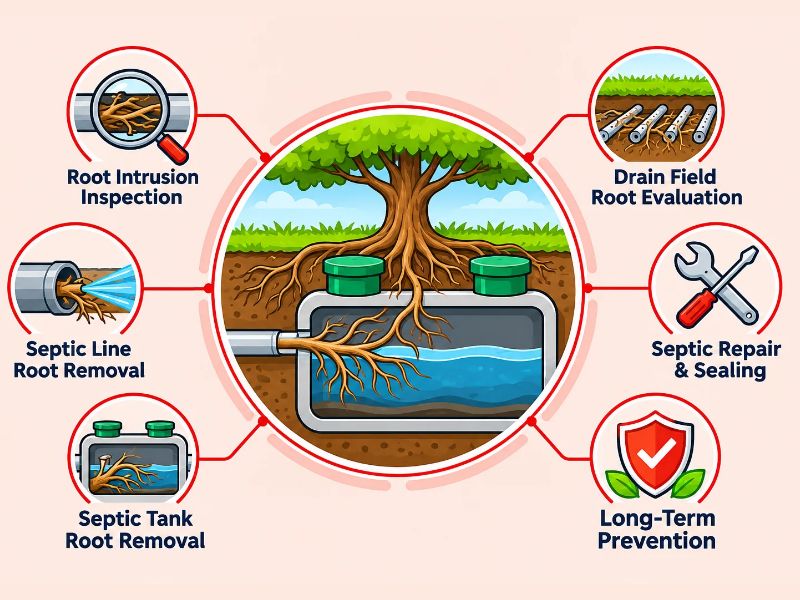
Our Septic Root Removal Services Include
01
Septic Tank Root Removal
Roots can sneak into your tank through damaged lids, worn seals, cracks, or pipe connections. We check the accessible parts of your tank and let you know whether you need root removal, sealing, or further repairs.
02
Septic Pipe and Line Root Removal
Roots inside your pipes can slow wastewater flow and cause repeated backups. We pinpoint the affected sections and recommend the right clearing or pipe repair method.
03
Septic Tank and Pipe Inspection
Root trouble often hides below the surface. A thorough inspection helps us spot entry points, damaged connections, and other issues that need attention.
04
Septic Drain Field Root Evaluation
Roots near your drain field pipes can lead to blockages or damage. We look at visible symptoms and system conditions to decide whether you need more testing, repairs, or replacement.
Signs Tree Roots May Be Damaging Your Septic System
Slow Drains Throughout Your Home
When roots restrict wastewater flow, sinks, showers, and toilets may drain more slowly than usual.
Recurring Sewage Backups
Repeated backups can indicate a persistent obstruction in a septic line or another system problem.
Gurgling Toilets and Plumbing
Unusual gurgling noises may occur when wastewater or air cannot move normally through the drainage system.
Sewage Odors Around Your Property
Persistent odors near the septic tank or underground pipes may indicate a leak, blockage, or another septic problem.
Unusually Wet Areas in the Yard
Standing water or consistently damp soil around septic components may indicate poor wastewater movement or leakage.
Problems Returning After Pumping
If drainage problems return shortly after septic pumping, the cause may involve damaged pipes, root intrusion, or another issue that pumping alone cannot resolve.
Our Professional Septic Root Removal Process
01.
Septic System Evaluation
We discuss the symptoms, review available system information, and evaluate accessible components to identify possible root-related problems.
02.
Root Intrusion Assessment
Our team investigates suspected blockages and damaged areas to determine where roots may have entered the system.
03.
Removal and Repair Recommendations
We explain the findings and recommend appropriate root removal, pipe clearing, sealing, or component repairs based on the system’s condition.
04.
Follow-Up and Prevention
After the necessary work, we discuss any remaining concerns and recommend practical steps to reduce future root intrusion.
Why Choose Dillon Septic for Septic Root Removal?
Tree roots can cause more than a simple pipe blockage. Removing them without addressing damaged components may allow the same problem to return. Dillon Septic focuses on understanding the source of septic problems and recommending appropriate solutions for each property.
Local Septic Experience
Root Problem Assessment
Practical Repair Recommendations
Clear Communication
Residential and Commercial Services
Complete Septic System Care
// Satisfied Clients
What Our Clients Say


Empower Aesthetics
1 week ago

⭐⭐⭐⭐⭐ 5 Stars — Finally Found the Right Company! I cannot say enough wonderful things about Dylan Septic, especially Rick Nemmer! After spending so much money trying to get issues with my septic system resolved, I finally found someone who truly knows what he’s doing! Rick was incredibly knowledgeable and took the time to explain things about my system that other plumbers had never even mentioned or addressed. His expertise, professionalism, and genuine friendliness were such a breath of fresh air! He quickly identified the issues and worked to address them as efficiently as possible. It is such a relief to finally have someone I can trust who genuinely understands my system. I am beyond happy to have Dylan Septic saved in my phone as one of my trusted companies! Finding knowledgeable, honest, and dependable professionals these days is priceless. Thank you so much, Rick, for your outstanding service! You have absolutely earned my trust and future business. I highly recommend Dylan Septic to anyone looking for someone who truly knows their stuff!

Trey Rios
1 week ago
Highly recommend Dillon Septic! We had an emergency septic issue, and they came through by making the repairs the very next day. Their team was professional, responsive, and affordable. They did a great job, charged a fair price, and made a stressful situation much easier. If you need dependable septic service, Dillion Septic is the company to call!

Cathy Heshmat
1 month ago
This team was amazing. Repair was less than $2k where the other company quoted $20+ because they wanted to replace


Glenn Horrigan II
2 months ago
Excellent above and beyond service. Zach gets the job done right. Thank you!

Sally Keller
2 months ago
I’m very thankful that they came out on a Sunday to help us and explain everything to us. I would recommend them to anybody.

Kristen Bodoczy
3 months ago
Rick was very helpful and was great at keeping me updated while he was working on my septic. Also so helpful to answer questions I had after via text. Will definitely use them again.

Joe Testa
3 months ago
Great company and great experience. Explained the issue and solutions, with none of the extra BS. Highly recommend Dillon for all your septic needs.

Stephanie Baker
3 months ago
Zach, Rick, and the Dillion team are always fantastic. Pros who know how to take care of customers quickly and professionally. From system education, do’s and don’t s, to pump service, and control panel replacement. This is the team to call. Had a full control panel and air pump replacement needed after Zach’s inspection found our control box was not properly sealed installed (NOT DONE BY DILLON SEPTIC) Everything was rusted out and falling apart, which most likely lead to our air pump failure. Not great news, but Zach was great about explaining why it had happened and made quick arrangements to come out a replace, so we would not have any issues. Would suggest to anyone needing septic service or help contact the Dillon Team, you will not be disappointed. Thanks again Zach! Byron-Stallion Estates

Mario Rico
3 months ago
I can’t say enough good things about Dillon Septic, especially their technician Zach, who performed a complete inspection of my aerobic septic system. From start to finish, the experience was outstanding. Zach was on time, professional, and extremely knowledgeable, and he took the time to clearly explain how my system works, what condition it’s in, and what I should keep an eye on moving forward. What really stood out was Zach’s honesty and attention to detail—no scare tactics, no pressure to buy unnecessary repairs, just straightforward answers and practical advice. It’s refreshing to work with someone who truly knows their craft and takes pride in doing things the right way. If you’re looking for a septic company you can trust, especially for aerobic systems, I always highly recommend Dillon Septic. I will absolutely be using them again!

Have Any Questions?
Frequently Asked Questions
How do you remove tree roots from a septic tank?
Removing tree roots from a septic tank starts with pumping out the tank so technicians can safely inspect the interior walls, inlet and outlet baffles, and lid seals. A licensed specialist then cuts and extracts the root mass manually or mechanically, seals the crack or pipe joint where the roots entered, and replaces any damaged baffles.
How do you remove roots from a septic drain field?
Clearing roots from a septic drain field requires locating the affected distribution line, carefully excavating down to the clogged pipe section, and either mechanically clearing the lateral or replacing the root-filled pipe segment. If aggressive trees sit directly over the drain field, installing a root barrier or trimming back overhanging roots helps prevent repeat intrusion.
Can roots be removed from a septic tank without replacing it?
Yes, in some cases. If the tank remains structurally sound, accessible roots may be removed and damaged entry points repaired. However, extensive cracking, deterioration, or structural damage may make tank replacement necessary. A professional inspection helps determine the appropriate solution.
How do professionals remove roots from septic lines?
Professionals first identify the affected pipe and evaluate its condition. Depending on the pipe material and damage, they may use suitable mechanical clearing equipment or recommend replacing the affected section. Root removal alone may not prevent regrowth if cracks or loose connections remain.
How do you remove roots from a septic drain field?
Drain field root problems require careful evaluation because the surrounding soil is part of the wastewater treatment system. Repairs may involve addressing damaged distribution components or replacing affected sections. Aggressive digging or improper chemical treatments can damage the system. A septic professional should determine the appropriate approach.
Can tree roots damage an entire septic system?
Tree roots can affect several septic components, including underground pipes, tank connections, and distribution lines. The extent of the damage depends on where roots entered and how far they spread. Early evaluation may help prevent a localized problem from becoming more extensive.
Will septic root removal permanently solve the problem?
Not always. Removing roots may clear an obstruction, but roots can return if the original entry point remains open. Repairing damaged pipes, joints, or tank seals is often necessary to reduce the risk of repeated intrusion.
Can I use a chemical root killer in my septic system?
Do not add chemical root killers to your septic system without professional guidance. Some products may interfere with wastewater treatment or create environmental concerns, and their use may be restricted by product labeling or local requirements. Chemical treatments also do not repair damaged pipes or tank components.
Who should I call to remove roots from septic lines?
Contact a septic service professional who can evaluate the affected components and determine whether root clearing or repairs are needed. If the problem involves the building’s plumbing rather than the septic system, a qualified plumber may also be necessary. Dillon Septic can discuss your symptoms and available service options.
Schedule Your Septic Root Removal Today
Speak directly with our licensed Texas Hill Country specialists for camera pipe inspections,
safe root clearing, and lasting line protection.