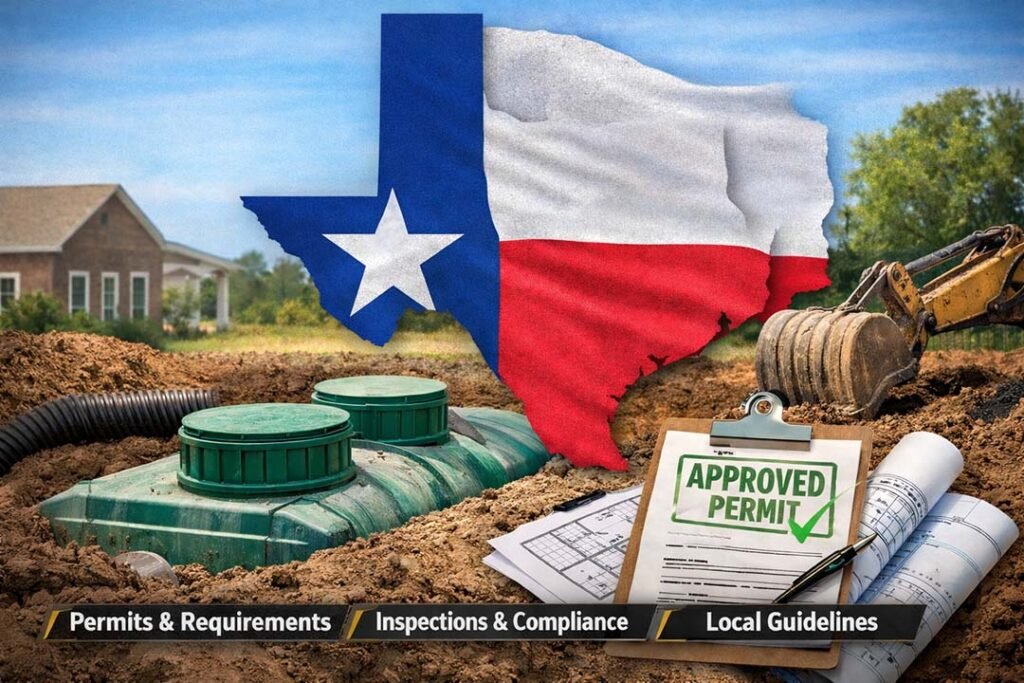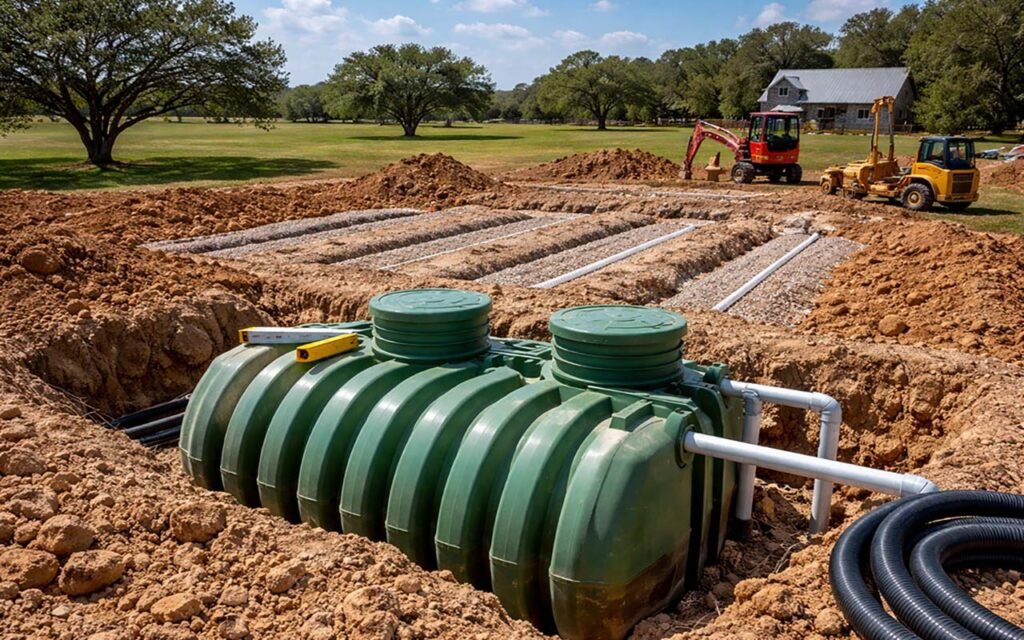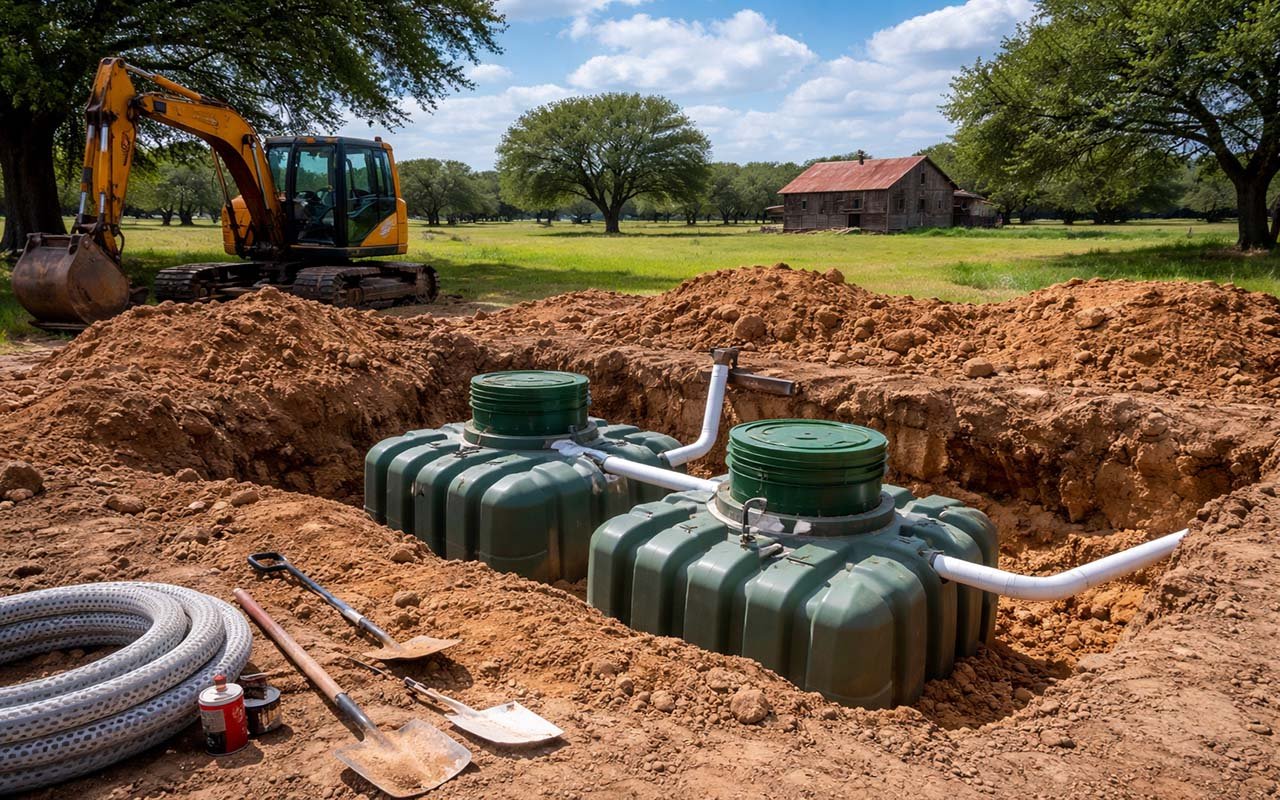
If you are asking, Can I install my own septic system in Texas, you are not alone. Many rural property owners want to save money and take control of their project. Septic installation can cost thousands of dollars, so the idea of doing it yourself is appealing.
However, Texas has strict regulations for on site sewage facilities. Before you rent equipment or start digging, it is critical to understand what the law allows, what permits are required, and what risks you take by installing a system on your own property.
As septic professionals working in Central Texas, we have seen DIY projects go smoothly and others turn into expensive corrections. This guide will walk you through what is legally possible, what is required, and what you should seriously consider before moving forward.
Is It Legal to Install Your Own Septic System in Texas
The short answer is yes, in certain situations. Texas allows property owners to install their own septic systems, but only if they meet specific state and local requirements.
Septic systems in Texas are regulated as On Site Sewage Facilities under the Texas Commission on Environmental Quality. The rules are outlined in Texas Administrative Code Chapter 285. You can review the official regulations directly on the Texas Commission on Environmental Quality website.
Even though state law allows owner installation, you must still:
- Apply for and receive a septic permit
- Have a site evaluation and soil test performed
- Submit an approved system design
- Follow all local health department requirements
- Pass final inspection before use
In many counties, the permitting authority is the local environmental health department or an authorized agent. Each county may enforce slightly different procedures.
When Can a Homeowner Install a Septic System
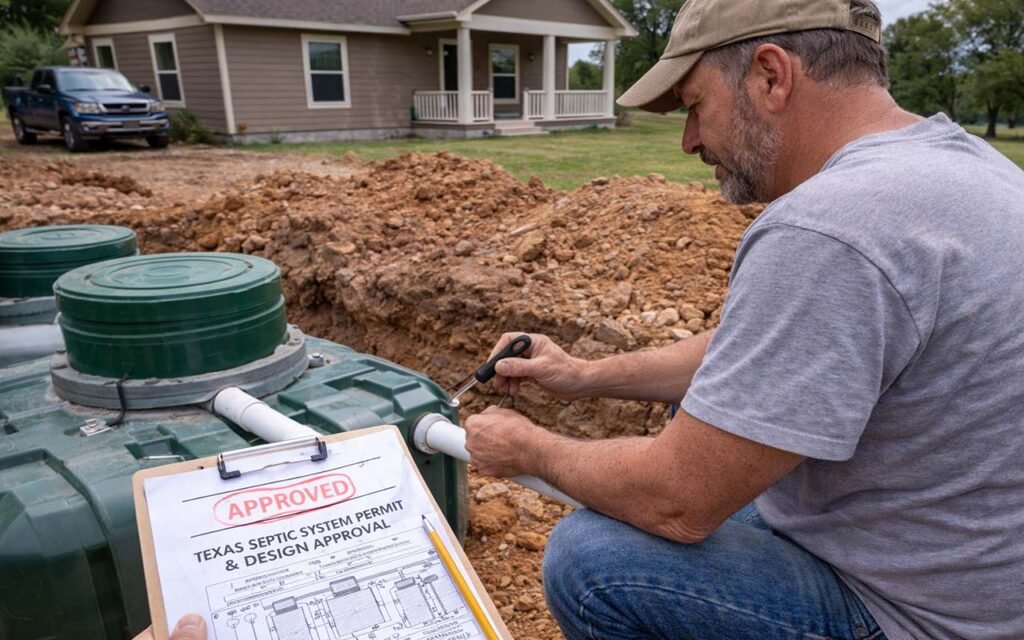
Texas allows owner installed systems under these conditions:
- The system serves only a single family residence
- The property owner lives in the home
- The installation follows approved design specifications
- All inspections are completed and approved
You cannot install a system for rental properties or for someone else unless you are a licensed installer.
From our field experience, many homeowners underestimate the complexity of the permitting process. The paperwork, inspections, and design approval often take longer than the physical installation itself.
Required Permits and Soil Testing in Texas
Before you break ground, you must complete a site and soil evaluation. This step determines the type of septic system allowed on your property.
A licensed site evaluator or professional engineer usually performs this evaluation. It measures:
- Soil texture and absorption rate
- Depth to groundwater
- Presence of rock or clay
- Drainage characteristics
- Slope and topography
Here is a simplified comparison of common septic system types in Texas.
| System Type | Typical Use Case | Soil Requirement | Estimated Cost Range |
|---|---|---|---|
| Conventional System | Good draining sandy soil | Permeable soil | 5000 to 8000 |
| Aerobic Treatment Unit | Poor soil or small lot | Can handle heavier soils | 10000 to 20000 |
| Low Pressure Dosing | Shallow soil depth | Moderate permeability | 8000 to 15000 |
| Drip Irrigation System | Environmentally sensitive areas | Designed engineered layout | 15000 to 25000 |
Costs vary by region and site conditions. According to industry data from the National Environmental Services Center, the average septic system nationwide ranges from 7000 to 15000 dollars depending on complexity.
In Central Texas, rocky soil and high clay content often require advanced systems rather than basic gravity systems.
Why Soil Conditions Matter More Than You Think
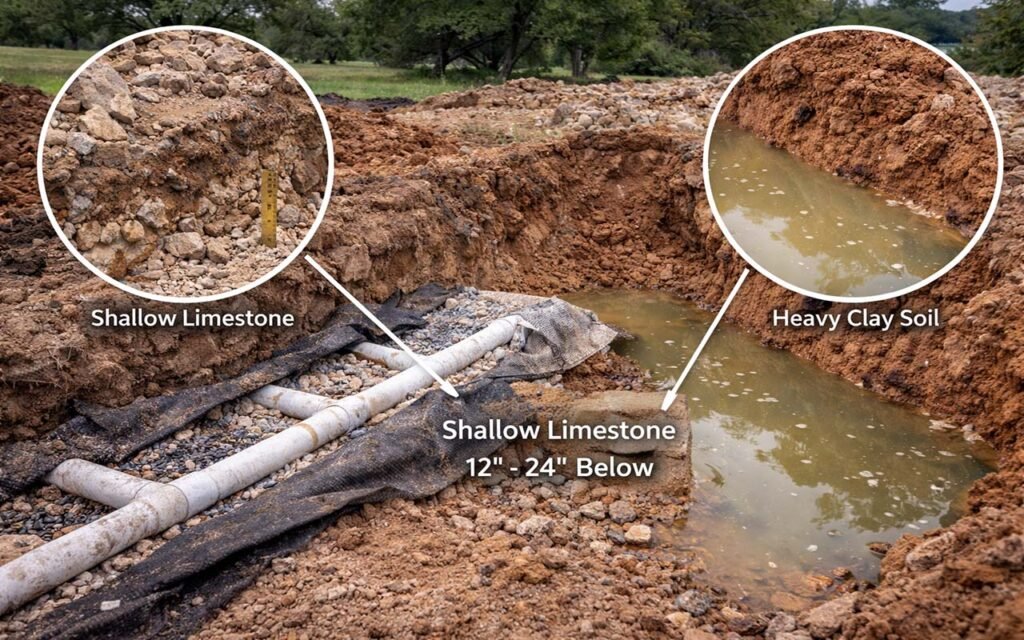
One of the biggest mistakes we see is homeowners assuming all septic systems are the same. They are not.
In areas like Spring Branch and Canyon Lake, shallow limestone can sit just 12 to 24 inches below the surface. Texas regulations require minimum separation distances between drain fields and groundwater or bedrock.
If your property has heavy clay, the soil may not absorb water fast enough. This can cause:
- Standing sewage in the yard
- Strong odors
- System backups into the house
- Premature system failure
A properly designed system matches your soil type. Skipping this step can lead to a failed inspection or worse, a complete system replacement.
Equipment and Technical Challenges of DIY Installation
Installing a septic system requires more than digging a hole and placing a tank.
You may need:
- Excavator or backhoe
- Laser level for slope accuracy
- Proper tank bedding material
- Correct pipe slope of one eighth to one quarter inch per foot
- Compaction equipment
- Electrical wiring for aerobic systems
Even small grading errors can affect performance. For example, drain field lines must maintain consistent slope. Too steep and wastewater flows too quickly. Too flat and solids can accumulate.
Aerobic treatment systems add another layer of complexity. These systems require:
- Electrical control panels
- Air pumps
- Disinfection systems
- Scheduled maintenance contracts
According to the Environmental Protection Agency, improper septic installation is a leading cause of early system failure and groundwater contamination.
Inspection and Approval Process
After installation, your system must pass inspection before it can legally operate.
Inspectors check:
- Tank size and placement
- Setback distances from wells and property lines
- Pipe slope and trench depth
- System components match approved design
- Electrical connections for aerobic systems
If something does not match the permitted design, you may be required to uncover sections of the system for correction. We have seen homeowners forced to re dig entire drain fields due to slope miscalculations.
Real World Example from Central Texas
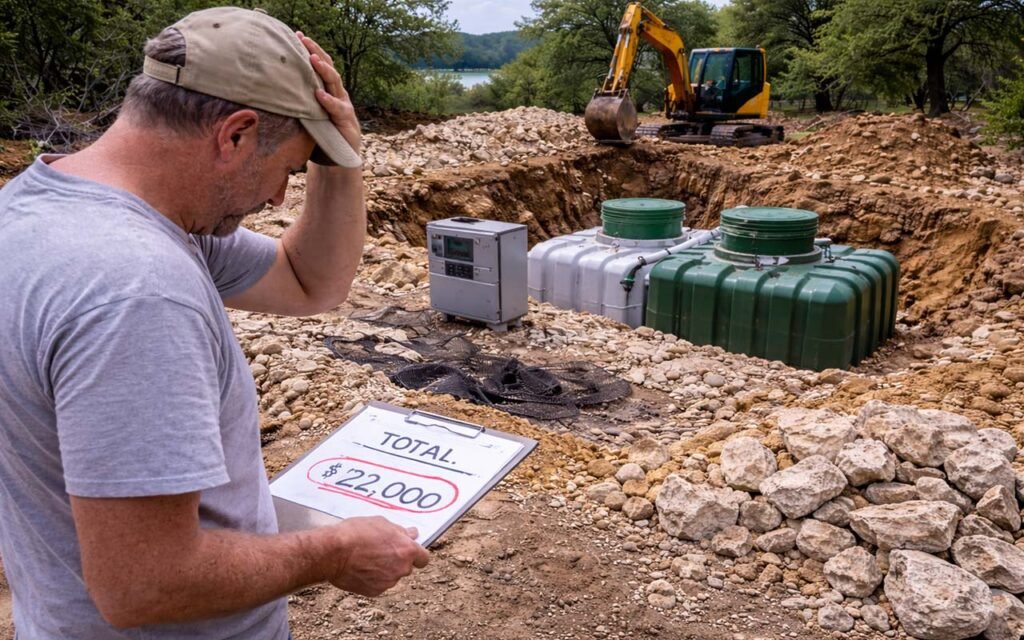
A homeowner attempted to install his own conventional system on rocky soil near Canyon Lake. He skipped a proper soil evaluation and assumed a gravity system would work.
During inspection, the county determined the soil depth above bedrock was insufficient. The entire drain field had to be removed. The homeowner then had to install an aerobic treatment unit instead.
The final cost exceeded 22000 dollars, nearly double what he would have paid for professional installation from the start.
This is not uncommon. Septic systems are hidden underground, but mistakes are expensive to fix.
Cost Comparison DIY vs Professional Installation
Many people consider DIY installation to save money. Here is a realistic breakdown.
| Expense Category | DIY Estimated Cost | Professional Cost |
|---|---|---|
| Permit and Design | 1000 to 3000 | Included |
| Equipment Rental | 2000 to 4000 | Included |
| Tank and Materials | 3000 to 10000 | Included |
| Inspection Corrections | Variable | Rare |
| Total Range | 6000 to 17000 | 8000 to 20000 |
The difference is often smaller than expected, especially if rework is required.
When installed professionally, you also receive:
- Workmanship warranty
- Code compliance assurance
- Proper documentation for resale
Risks of Installing Your Own Septic System
Before deciding, consider these risks:
- Failed inspection
- System design errors
- Groundwater contamination
- Property resale complications
- Voided manufacturer warranties
- Increased long term maintenance costs
Septic systems typically last 20 to 40 years when installed correctly. A poor installation can reduce that lifespan dramatically.
Should You Install Your Own Septic System in Texas
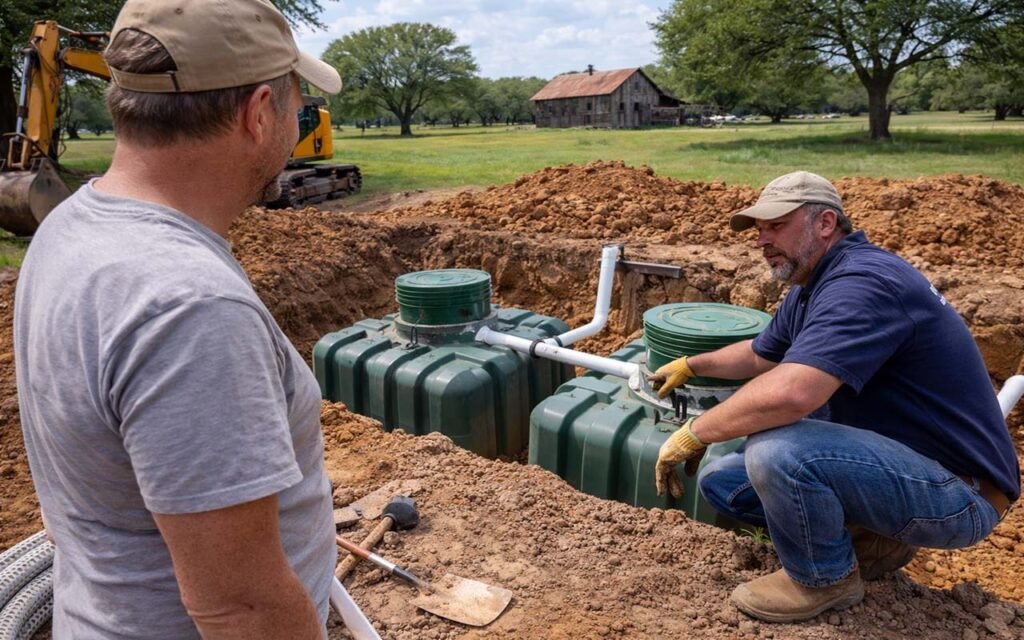
If you are experienced with excavation, understand engineering drawings, and are comfortable navigating permitting, it may be possible.
However, from a professional standpoint, most homeowners benefit from hiring a licensed installer. Septic systems protect your property, your water supply, and your health. They are not ideal learning projects.
A properly designed and installed system offers peace of mind and long term reliability. Install a septic system in Texas with confidence. Dillon Septic handles soil testing permits and full installation done right the first time.
Final Thoughts
So, can you install your own septic system in Texas. Legally, yes under specific conditions. Practically, it depends on your skill level, soil conditions, and comfort with regulatory requirements.
Before making a decision, consult your local permitting authority and request a professional site evaluation. The upfront investment in proper planning can prevent costly mistakes later.
If you are located in Spring Branch, Johnson City, Canyon Lake, or surrounding areas, our team has hands on experience designing and installing septic systems that meet Texas regulations and local soil conditions.
We encourage you to explore our related guides on septic system installation and septic maintenance tips to better understand your options.
When it comes to wastewater treatment, getting it right the first time matters.