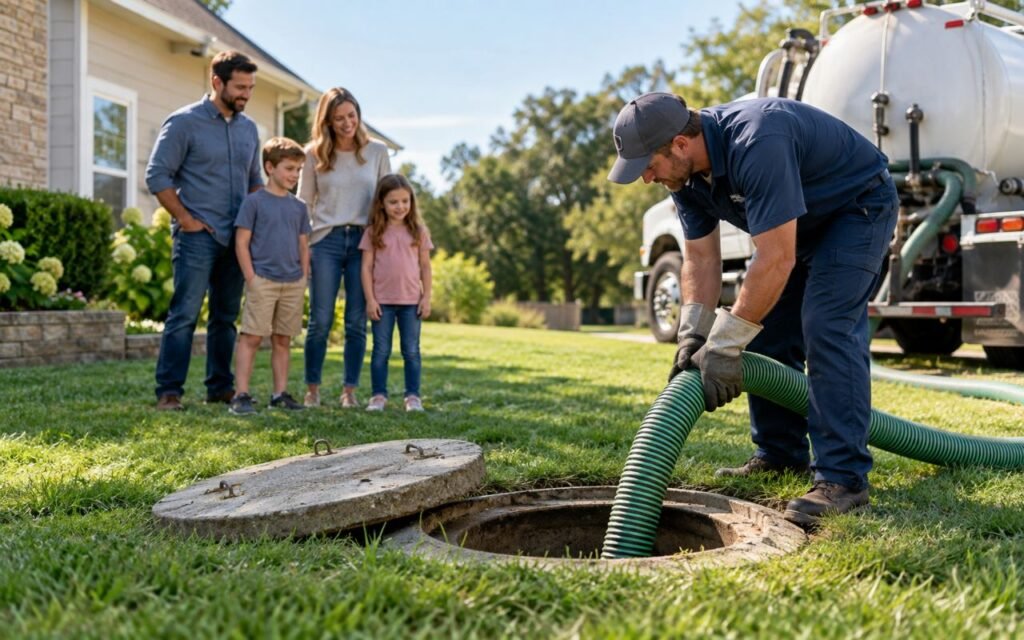
Slow drains do not always mean your septic tank needs pumping. Sometimes, a blocked outlet filter limits how much wastewater can leave the tank. Regular septic tank filter cleaning helps keep that outlet flowing while reducing the solids that reach your drainfield.
The challenge is knowing whether the filter is causing the problem. Slow toilets, gurgling pipes, and backups can also point to blocked lines or other septic faults. This guide explains what the filter does, which signs deserve attention, and how to plan safe, timely service.
What Does a Septic Tank Filter Do?
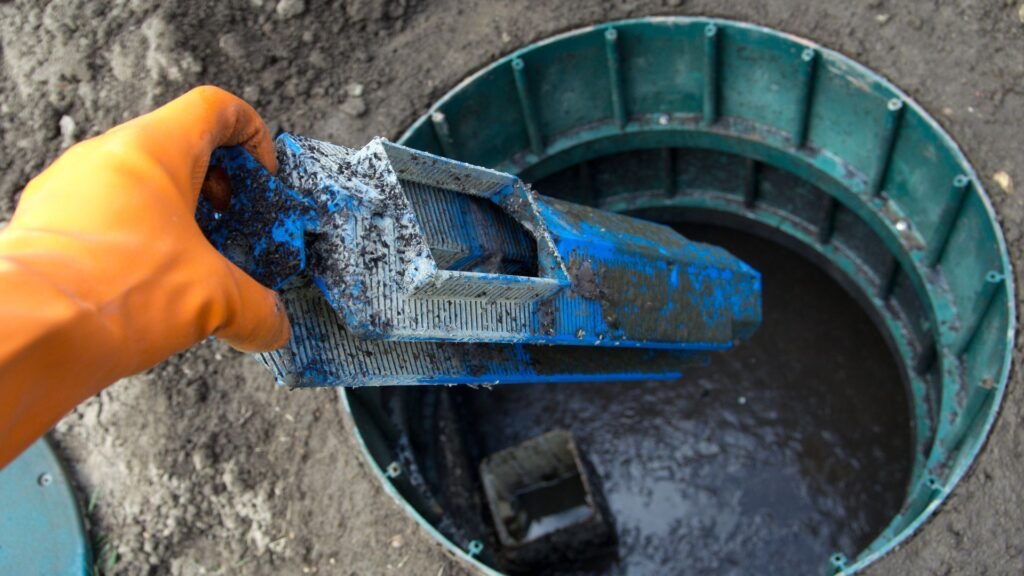
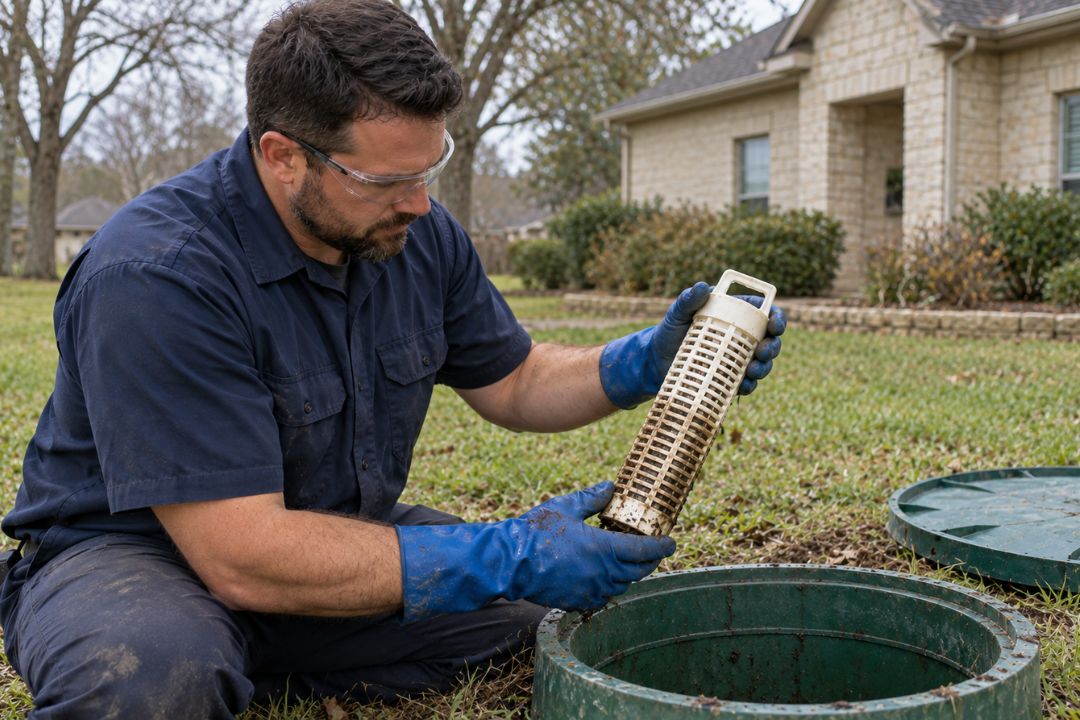
A septic effluent filter is a screen fitted at the tank’s outlet, often inside the outlet tee. It catches some of the suspended solids before liquid wastewater moves toward the drainfield. Not every septic tank has one, and designs vary between systems.
Inside the tank, heavier waste settles as sludge while fats and lighter material form a floating scum layer. The filter adds another barrier at the outlet. EPA guidance explains that these screens help reduce solids entering the drainfield, where buildup can cause blockages.
Think of the filter as a protective checkpoint. It does not replace pumping, treat every contaminant, or fix damaged pipes. It needs its own maintenance so trapped material does not restrict flow.
Signs You Need Septic Tank Filter Cleaning
A clogged septic filter can restrict wastewater flow out of the tank, leading to slow drains and possible backups. These symptoms can also result from blocked pipes, pump faults, or drainfield problems. A professional inspection helps identify the cause and determine whether septic tank filter cleaning is needed.
Several Drains Become Slow at the Same Time
A single slow sink often points to a blockage near that fixture. When toilets, showers, and sinks throughout the home drain slowly, the problem may be farther along the main wastewater line or within the septic system.
Pay attention to when the slowdown occurs. If several fixtures struggle after showers or laundry, share that pattern with your service provider. It can help guide the inspection, although it does not confirm that the filter is clogged.
Toilets Gurgle or Flush Poorly
Gurgling toilets and weak flushing can signal a drainage restriction or plumbing vent problem. When these sounds occur alongside slow drains in other rooms, the septic outlet filter is one component worth checking.
Avoid repeated flushing to test the problem. Adding more water when drainage is restricted could make a backup worse. Note which fixtures are affected and whether the symptoms are constant or occur during heavy water use.
Wastewater Backs Up Into Showers or Tubs
Sewage backing up into a shower, bathtub, or floor drain needs prompt attention. A blocked filter is one possible cause, but a clogged main line or another septic fault may also prevent wastewater from moving away from the house.
Stop unnecessary water use and contact a septic professional. Keep people and pets away from contaminated areas. Cleaning the filter alone may not resolve the problem, so the cause should be confirmed before normal water use resumes.
Your Septic Alarm Sounds
A septic alarm means a condition monitored by the system needs attention. Depending on the equipment installed, it may warn of high water levels, a pump problem, or another fault. Some filters have their own alarms to signal restricted flow.
An alarm does not automatically mean the filter needs cleaning. Contact your service provider and explain which light or alarm is active so they can recommend the appropriate next step.
Sewage Appears Around the Septic System
Standing wastewater, sewage odors, or unusually wet ground near septic components can indicate a serious malfunction. These signs should not be treated as proof of a clogged filter because other system problems can produce similar conditions.
The University of Minnesota’s Onsite Sewage Treatment Program identifies surfacing sewage, backups, and active alarms as warning signs of septic trouble. Keep people and pets away from affected ground and arrange professional service promptly.
Drainage Problems Return Soon After Cleaning
If drains improve after filter cleaning but slow down again soon afterward, the system needs further assessment. Repeated cleaning may relieve the symptom without addressing what is causing it.
Ask your provider to check the filter’s condition, tank solids, wastewater load, and other potential restrictions. The goal is to understand why the problem keeps returning and establish a maintenance plan based on the findings.
How Often Is Septic Tank Filter Cleaning Needed?
There is no single schedule for every filter. Start with the manufacturer’s instructions, then adjust the interval using service records and professional advice.
The University of Maryland Extension’s septic maintenance guide notes that a septic professional can clean an outlet filter annually. Treat that as general guidance rather than a fixed rule for every property.
Filter size, wastewater flow, and the material entering the system can affect cleaning needs. EPA’s effluent-screen guidance also makes clear that maintenance frequency depends on the filter and site conditions.
Ask your provider to record three details after service.
- The filter’s make and model
- How much buildup was present
- The recommended date for the next check
Those notes make future decisions more useful than a reminder based only on the calendar. If household use changes, mention that before the next visit.
What Happens During Professional Filter Service?
Septic tank filter cleaning should include checking why the filter needs attention and whether it remains fit for use. The exact method depends on the equipment installed.
A service visit may include the following checks.
- Confirm the filter location and model
The technician identifies the correct access point and reviews any available system records. - Assess conditions before removal
The tank level and outlet condition help determine how to proceed without releasing trapped solids downstream. - Clean according to the manufacturer’s instructions
The screen is handled and rinsed using the method specified for that design. - Check for damage and proper fit
Cracks, broken parts, or poor seating may affect performance. - Reinstall and document the work
The technician secures the components and notes any further concerns.
Ask whether filter service is included when booking a visit. Pumping and filter maintenance are related tasks, but one should not be assumed to include the other.
Can You Clean the Filter Yourself?
Some filters are designed for owner maintenance, while others should be serviced by a professional. Before attempting any work, confirm the manufacturer’s instructions and whether the access arrangement is safe. University of Minnesota guidance recognizes both owner-maintained and professionally maintained filter designs.
Never enter a septic tank or lean into its opening. Dangerous gases and low oxygen can be fatal. Keep children and pets away from access points, and leave heavy, damaged, or uncertain lids to a professional.
If wastewater is backing up or the liquid level is unusually high, call for service rather than pulling out the filter. Removing the screen without assessing conditions may allow retained material to move toward the drainfield.
Do not leave the filter out to improve drainage. Restoring flow while removing a protective component does not resolve the underlying maintenance problem.
Filter Cleaning and Tank Pumping Serve Different Purposes
Filter cleaning removes buildup from the outlet screen. Pumping removes accumulated sludge and scum from inside the tank. A clean screen cannot make up for excessive solids in the tank.
The EPA’s septic system care guide states that household tanks are typically pumped every three to five years. Actual needs depend on tank size, household use, and measured solids. That interval is not a filter-cleaning schedule.
For example, a homeowner may need filter attention between pumping visits. Another property may need both services at the same appointment. Inspection findings should guide the decision.
How to Reduce Repeat Filter Problems
Good septic filter maintenance starts with daily habits. Keep wipes, grease, paper towels, and other unsuitable waste out of the system. Limit garbage disposal use, fix leaking fixtures, and spread laundry loads through the week.
These steps help control the solids and water entering the tank. EPA guidance recommends careful waste disposal and efficient water use as core parts of septic care.
Keep access points clear and save service reports. When calling about a problem, explain when it started, which fixtures are affected, and whether an alarm is active.
For a broader care plan, read Dillon Septic’s guide to septic maintenance in Texas. Explore the Dillon Septic blog for related advice on system care and warning signs.
Frequently Asked Questions
Does every septic tank have a filter?
No. Some systems have an outlet screen, while others do not. Check installation records or ask your provider to confirm what is fitted.
Does a dirty filter mean the system has failed?
No. Trapped material shows that the screen is catching solids. Restricted flow, rapid repeat clogging, or other symptoms call for further assessment.
Should a clogged filter be replaced?
Not always. Cleaning may restore a sound filter. A damaged screen or housing may need repair or replacement after inspection.
Can a clean filter rule out other septic problems?
No. The filter is only one component. Persistent drainage trouble still needs investigation, even if the screen looks clear.
Final Thoughts
Septic tank filter cleaning is a small but important part of system care. The best schedule reflects the filter design, property use, and findings from previous visits.
Do not wait for a backup to ask about the outlet filter. If drains slow together, an alarm sounds, or sewage appears, arrange an assessment. Contact Dillon Septic for help with septic maintenance, inspections, pumping, and repairs across its Central Texas service area.