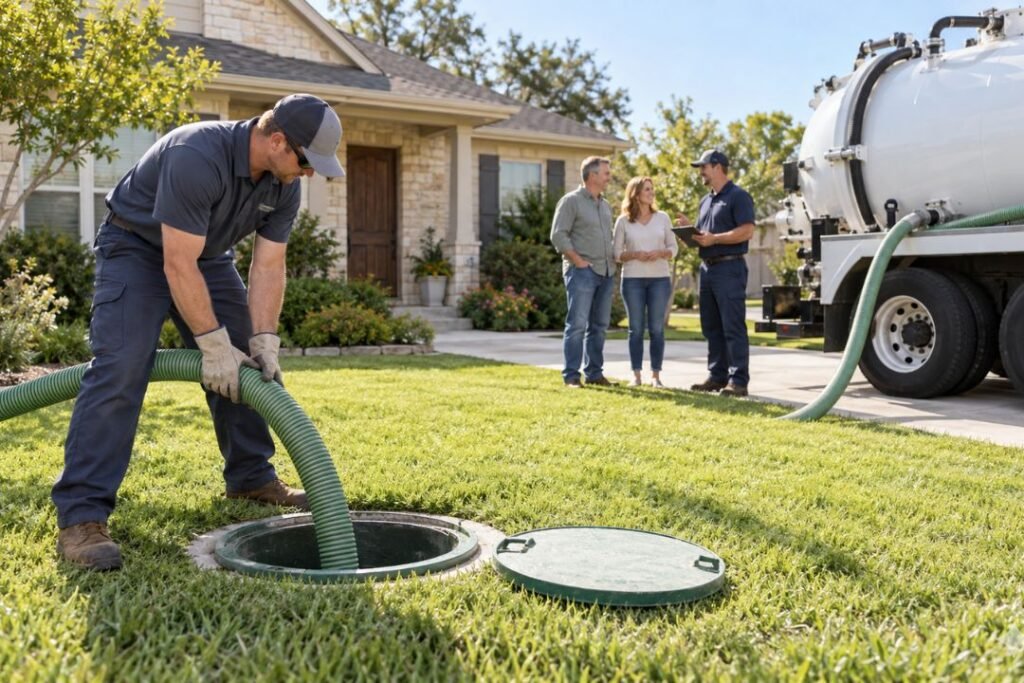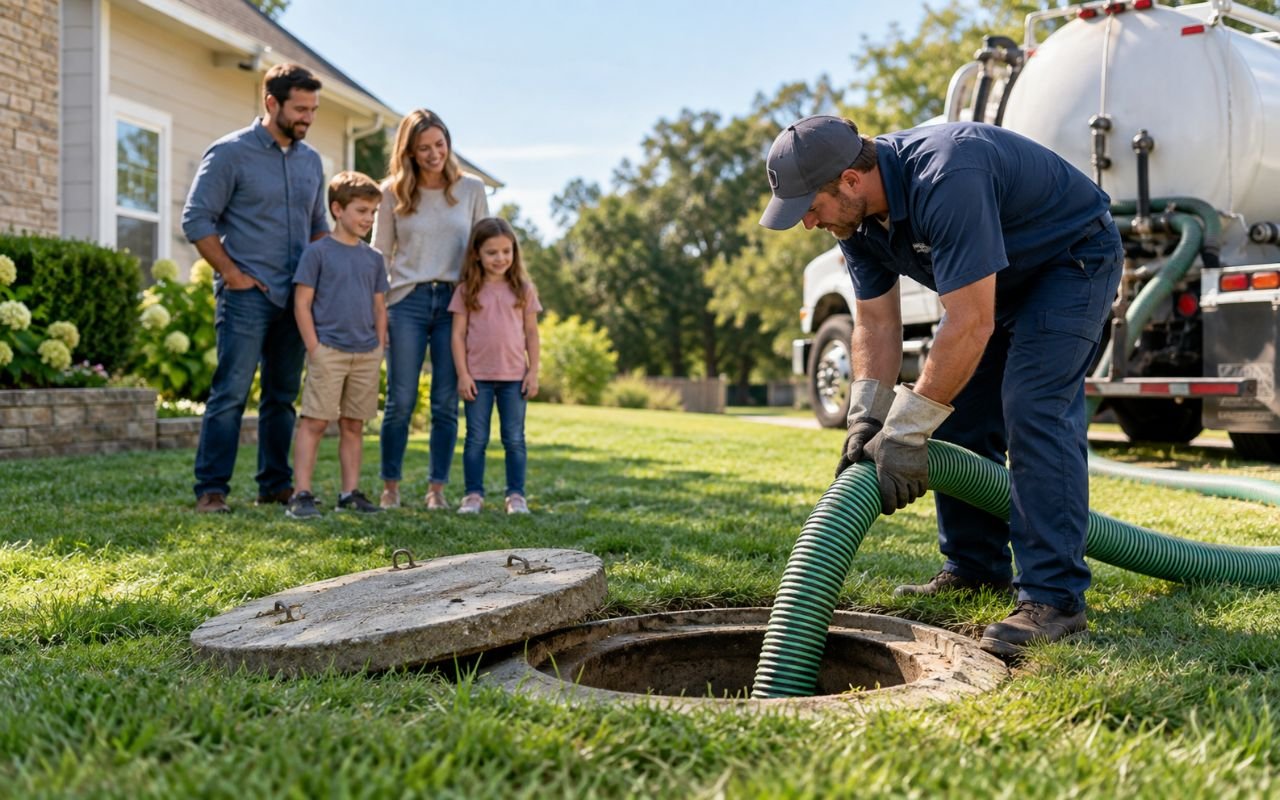
A family of four generally puts more wastewater and solids into a septic system than a smaller household, so regular maintenance becomes especially important. As a general guideline, household septic tanks are commonly pumped every 3 to 5 years, but that range should not be treated as a fixed schedule for every property.
For four people, tank capacity can make a significant difference. Water use, garbage disposal use, laundry habits, the amount of solids entering the tank, and the tank’s maintenance history can all shorten or extend the interval between pumpings.
EPA identifies household size, total wastewater generated, solids volume, and septic tank size as the main factors affecting pumping frequency.
That means the better question is not simply how many years a family of four can wait. It is whether the tank has enough capacity for the household’s usage and how quickly sludge and scum are accumulating.
How Often Should a Family of 4 Pump a Septic Tank?
For a family of four, the familiar 3 to 5 year range is a reasonable general starting point, but some households may need service sooner.
EPA recommends that the average household septic system be inspected at least every three years and says household tanks are typically pumped every three to five years. It also notes that pumping frequency varies according to household size, wastewater generation, solids, and tank capacity.
Texas guidance provides an even more useful picture.
TCEQ publishes estimated intervals based on both household size and tank capacity. For a household of four, its table lists approximately:
| Septic tank size | TCEQ estimated interval |
|---|---|
| 750 gallons | 1.8 years |
| 1,000 gallons | 2.6 years |
| 1,250 gallons | 3.4 years |
| 1,500 gallons | 4.2 years |
These figures represent average situations for pumping or inspection. They should not be interpreted as guarantees that every tank will need pumping on exactly that schedule.
The table illustrates an important point for a family of four. Tank size matters.
Four people using a smaller tank may need a considerably different maintenance schedule from four people using a larger tank.
How Often to Pump a 1,000-Gallon Septic Tank for a Family of 4
A 1,000-gallon tank is a particularly important example because homeowners frequently ask whether it can simply follow the standard 3 to 5 year rule.
TCEQ’s table estimates about 2.6 years between pumping or inspections for a four-person household using a 1,000-gallon tank.
That does not mean every 1,000-gallon tank serving four people must be pumped every 2.6 years.
Instead, use the estimate as a maintenance-planning reference. Actual pumping needs depend on how much wastewater and solid material the household generates and what an inspection finds inside the tank.
A household that uses a garbage disposal frequently, sends a large amount of wastewater through the system, or has no reliable maintenance history deserves closer attention.
If you do not know your tank capacity, locating and identifying the tank is a useful first step before establishing a pumping schedule.
Why Four-Person Households Can Need More Frequent Septic Service
The number of people living in the house matters because virtually all household wastewater eventually reaches the septic system.
Four people can mean more showers, toilet flushing, laundry, dishwashing, cooking, and other daily water use. But occupancy alone still does not tell us exactly when pumping is required.
How that water is used matters too.
For example, running several loads of laundry within a short period sends a large amount of water through the septic system. EPA recommends spreading washing machine use throughout the week because doing all household laundry in one day can overload the system and potentially affect the drainfield.
Leaks can create another source of unnecessary wastewater. EPA notes that even one leaking or continuously running toilet can add substantial water to a septic system.
For a busy four-person household, repairing leaks and avoiding concentrated periods of high water use can help the system manage wastewater more effectively.
Garbage Disposal Use Can Change the Schedule
A garbage disposal deserves special attention because it introduces additional solid material into the septic tank.
EPA advises limiting garbage disposal use because food waste can increase the amount of fats, grease, and solids entering the tank. That can contribute to sludge and scum accumulation and influence how frequently pumping is needed.
This is why two families with four people and identical 1,000-gallon tanks may not end up with identical pumping schedules.
One household may generate significantly more solids than the other.
Rather than relying exclusively on the number of occupants, consider how the household actually uses the system.
How to Determine When Your Septic Tank Needs Pumping
The calendar is useful for planning, but the material accumulating inside the tank provides stronger evidence.
Wastewater entering a conventional septic tank separates into layers. Heavier solids settle at the bottom and form sludge. Fats, oils, grease, and other floating material form a scum layer near the top. Liquid effluent between those layers eventually leaves the tank for the drainfield.
The problem occurs when sludge and scum accumulate to levels that reduce the tank’s effective treatment space or allow solids to move toward the outlet and drainfield.
EPA provides practical measurements for deciding when pumping is necessary. It recommends pumping when the bottom of the scum layer comes within six inches of the bottom of the outlet, when the top of the sludge layer comes within 12 inches of the outlet, or when sludge and scum exceed 25 percent of the liquid depth.
This gives a family of four a much better long-term maintenance strategy.
Have the system serviced appropriately and keep records of what the septic professional finds.
Record:
The date of service
Tank capacity
Sludge and scum measurements
Whether pumping was performed
Tank condition
Any problems identified during service
Over time, those records show how quickly your particular household accumulates solids.
That information is much more useful than repeatedly guessing based on a national average.
Warning Signs Should Lead to an Evaluation
You should not wait for a septic problem before thinking about maintenance.
Sewage backing up into plumbing fixtures, unusually slow drainage throughout the house, sewage odors, or wastewater appearing around the septic area can indicate that something is wrong.
However, these symptoms should not automatically be interpreted as proof that routine pumping is the only solution.
A septic system includes more than the tank. Problems can involve plumbing, tank components, pipes, the drainfield, or other parts of the system.
EPA explains that an overloaded drainfield can flood and lead to wastewater surfacing outside or backing up into toilets and sinks.
If your family notices potential septic problems, have the system evaluated rather than assuming that pumping alone will correct the underlying cause.
For homeowners who are uncertain about the system’s condition, a professional septic inspection can provide a clearer picture.
Septic Maintenance Habits for a Family of 4
With four people regularly using the system, small household habits can have a meaningful effect over time.
Water efficiency is one of the most useful places to start. Repair leaking toilets and faucets, use appropriate washing-machine load settings, and avoid concentrating several water-intensive activities into the same short period.
EPA recommends spreading laundry throughout the week and using water efficiently because all household water entering the plumbing ultimately reaches the septic system.
What your family puts down the drains matters just as much.
Toilets should primarily receive human waste and toilet paper. Wipes, diapers, paper towels, hygiene products, cigarette butts, cat litter, cooking grease, and other household waste should be kept out of the septic system.
The drainfield also needs protection. Avoid parking vehicles, building structures, or placing heavy loads over septic components. TCEQ specifically advises Texas property owners not to drive or park over an OSSF or construct driveways, barns, storage buildings, sidewalks, and patios over the system.
You Do Not Need Septic Additives to Avoid Pumping
Families sometimes use septic additives hoping to reduce sludge or extend the time between pumpings.
That is not a substitute for proper maintenance.
TCEQ advises homeowners not to add chemical additives or so-called enzymes to an OSSF and notes that some additives may be harmful to tank operation.
EPA similarly explains that septic tanks already contain the microorganisms needed for treatment and that periodic pumping remains part of proper septic maintenance.
For a family of four, appropriate pumping, efficient water use, responsible waste disposal, and protection of the drainfield are more useful than trying to extend the schedule artificially.
Building the Right Pumping Schedule for Your Family
There is no single pumping interval that applies perfectly to every four-person household.
Start by identifying the tank size and reviewing the property’s maintenance records.
If you have a 1,000-gallon tank, TCEQ’s 2.6-year estimate for an average four-person household provides a useful reference point. A 1,500-gallon tank has a different estimate of approximately 4.2 years.
Then consider how the household uses the system.
A family with frequent guests, high water consumption, regular garbage disposal use, or significant laundry demand may accumulate solids differently from another four-person household.
Finally, use professional measurements and previous service records to refine the schedule.
If your previous service report shows how much sludge and scum had accumulated after a particular number of years, that information can help determine when the next inspection or pumping should occur.
For broader information covering other household sizes and pumping factors, read our guide on how often to pump a septic tank.
Frequently Asked Questions
How often should a septic tank be pumped for a family of 4?
Household septic tanks are generally pumped every 3 to 5 years, but a four-person household may need a different interval depending on tank size, wastewater use, garbage disposal use, and solids accumulation. EPA recommends considering these factors rather than relying on household size alone.
How often should a family of 4 pump a 1,000-gallon septic tank?
TCEQ’s homeowner table estimates approximately 2.6 years between pumping or inspections for a four-person household with a 1,000-gallon tank under average conditions. Treat that number as a planning reference rather than a mandatory schedule.
Is a 1,500-gallon tank different for four people?
Yes. Tank capacity is one factor affecting pumping frequency. TCEQ’s table estimates approximately 4.2 years between pumping or inspections for four people using a 1,500-gallon tank, compared with approximately 2.6 years for a 1,000-gallon tank.
Does having children change how often a septic tank needs pumping?
Age alone does not determine the schedule. What matters is the household’s overall wastewater generation and solids entering the system. Laundry frequency, water use, garbage disposal use, guests, and other household habits can influence maintenance needs. EPA identifies wastewater generation and solids volume as important pumping-frequency factors.
Should we wait for slow drains before pumping the septic tank?
No. Routine maintenance should not depend on waiting for warning signs. EPA recommends regular inspection and pumping based on factors such as tank size, household occupancy, wastewater use, and solids accumulation.
Can septic additives extend the time between pumpings?
They should not be used as a replacement for pumping and routine maintenance. TCEQ advises against adding chemical additives or so-called enzymes to an OSSF because some may be harmful to system operation.
Final Thoughts
So, how often should you pump a septic tank for a family of 4?
The commonly cited 3 to 5 year range is a useful general guideline, but four-person households should pay particular attention to tank capacity. Texas guidance illustrates why. A 1,000-gallon tank and a 1,500-gallon tank serving the same four people can have substantially different estimated maintenance intervals.
Instead of choosing an arbitrary date, use your tank size, household water habits, garbage disposal use, maintenance history, and actual sludge and scum measurements to develop a schedule appropriate for your property.
Keep records every time the system is inspected or pumped. Those records can eventually tell you more about your own septic system than a generic online pumping schedule.
If your system is due for service, Dillon Septic provides septic pumping services within our Central Texas service area.