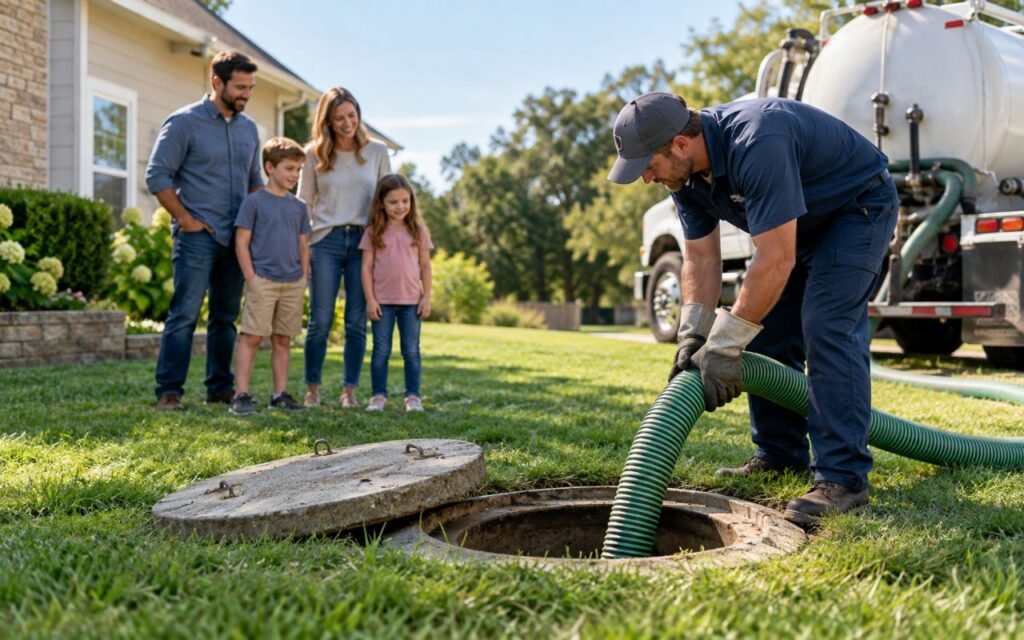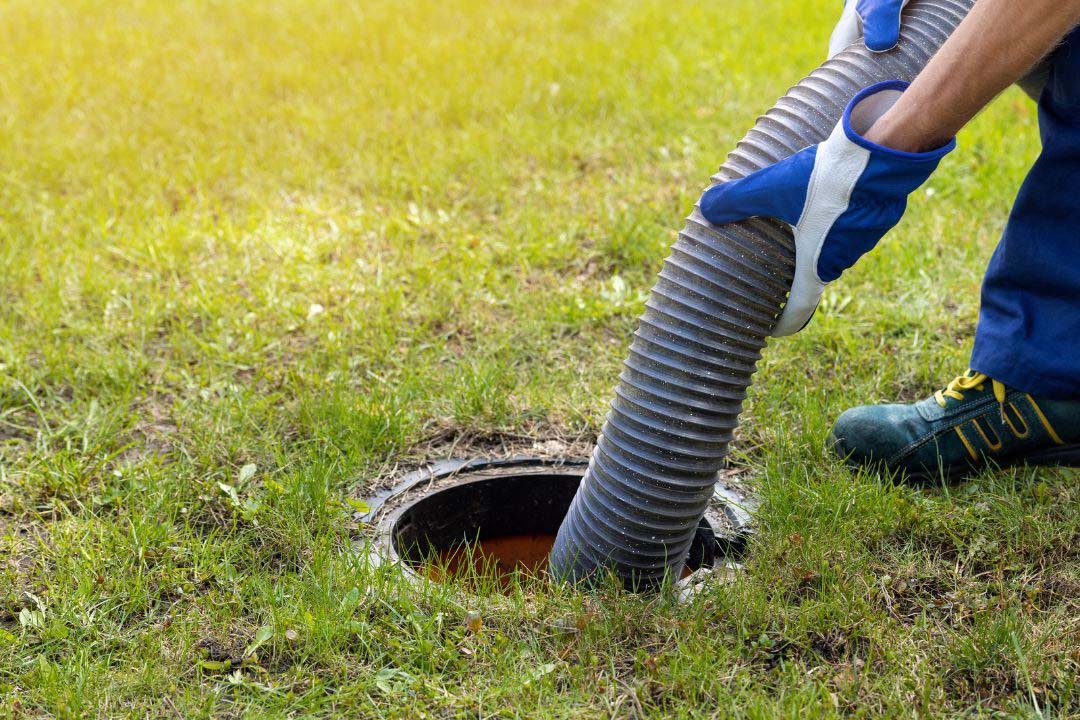
The cost to pump a septic tank varies from one property to another. Tank capacity, access to the lids, the amount of accumulated material, property location, and whether additional work is needed can all affect the final price.
You may see national septic pumping averages online, but they should be treated as general planning information rather than a guaranteed price for your property. A straightforward pump-out from an accessible residential tank can involve considerably less work than servicing a difficult-to-access system that has not been maintained for many years.
For homeowners in Central Texas, the best way to understand septic pumping cost is to look at the actual system and what will be required to access and pump it properly.
If you need service rather than general pricing information, visit Dillon Septic’s septic pumping service in Texas.
What Is the Average Cost to Pump a Septic Tank?
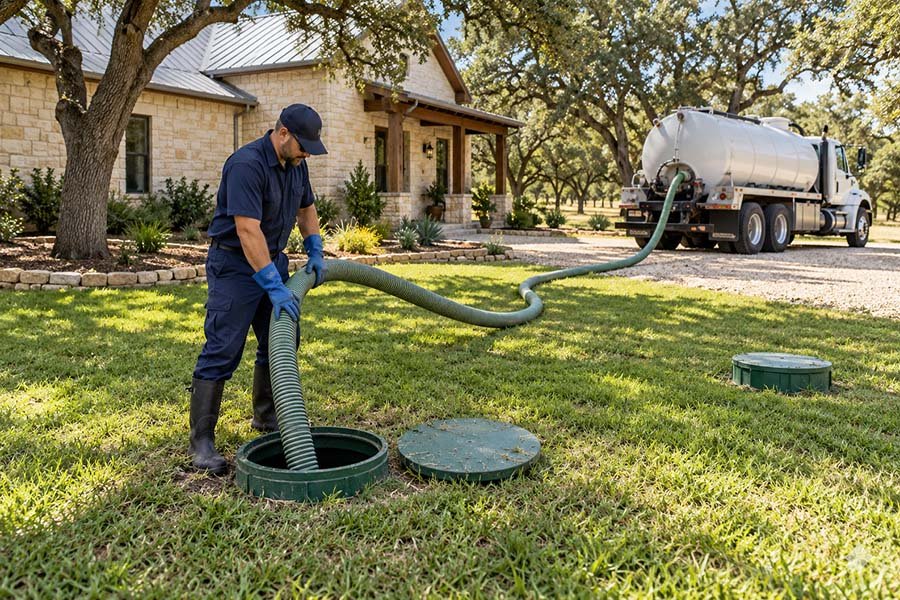
There is no single septic tank pumping price that applies to every property.
EPA uses approximately $250 to $500 every three to five years as a general example of routine septic maintenance cost. However, that is national educational guidance, not a Dillon Septic price quote and not a guarantee of what pumping will cost in Central Texas.
Actual pumping prices can vary because two septic tanks of similar capacity may require very different amounts of work.
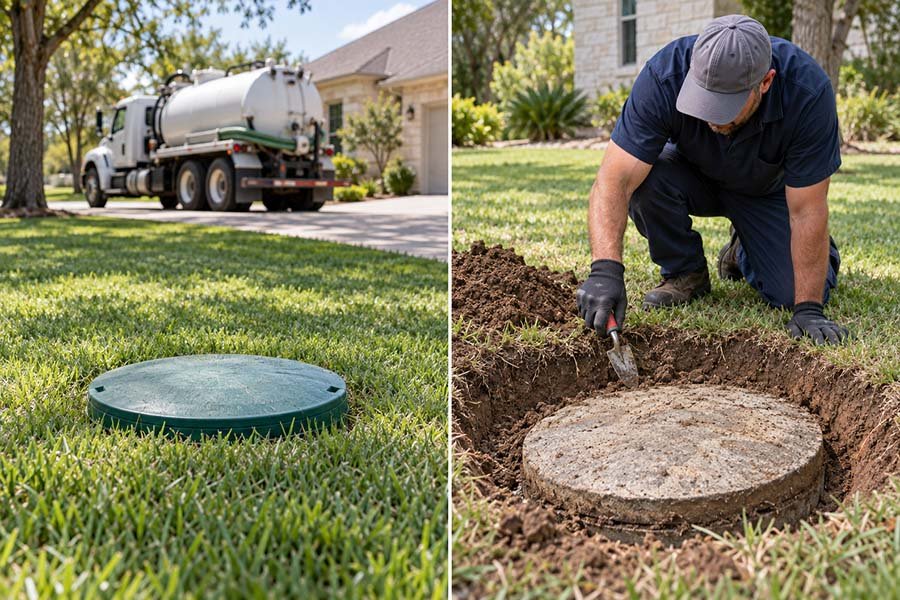
One tank may have easily accessible risers near ground level. Another may have buried lids that need to be located and exposed before pumping can begin.
The amount of accumulated sludge and scum can differ as well. Property access, tank configuration, equipment requirements, and additional septic work can further change the scope of service.
For that reason, we recommend using online averages for budgeting only and getting a property-specific estimate when you are ready to schedule pumping.
What Affects Septic Tank Pumping Cost?
Several factors can influence how much it costs to pump a septic tank. Understanding them also makes it easier to compare service estimates.
Septic Tank Size
Tank capacity is one consideration because larger tanks can contain more wastewater and accumulated material.
However, tank size alone does not determine the final pumping price.
A larger tank with convenient access may be relatively straightforward to service, while a smaller tank with deeply buried access points or difficult site conditions can require additional work.
This is why pricing septic pumping strictly by gallons can be misleading.
Access to the Septic Tank
Accessibility can have a significant effect on the amount of work required before pumping starts.
A system with accessible risers and secure lids is generally easier to reach than an older tank with buried access points.
If the lids are underground, technicians may need to identify the tank location and expose the appropriate access points.
Homeowners who are unsure how far underground their system is can read our guide on how deep a septic tank is.
Tank Location
Knowing that a property has a septic system does not always mean the homeowner knows exactly where the tank is located.
Older properties may have limited records, landscaping may conceal signs of the system, and buried lids may not be visible from the surface.
If the tank must first be found before service can begin, locating work may affect the overall scope of the appointment.
Dillon Septic provides septic tank locating services in Texas for properties where the access point cannot be readily identified.
Amount of Accumulated Material
Septic tanks separate wastewater into different layers. Heavier solids settle as sludge while lighter materials form a scum layer.
These materials gradually accumulate and must eventually be removed.
A tank that has gone a long time without pumping may require a different level of service from one maintained according to its actual needs.
This is another reason maintenance records are useful. Knowing when the tank was last pumped gives the service provider valuable background before work begins.
Property Accessibility
The pump truck must be positioned so the tank can be serviced with appropriate equipment.
Long distances, gates, steep grades, landscaping, structures, or other access limitations can make a property more complicated to service.
Accessibility is therefore different from lid depth. Both can influence the amount of work required.
Additional Septic Work
Pumping removes accumulated material from the tank, but it does not repair every septic problem.
If inspection reveals a damaged component, access problem, broken lid, clogged component, or another issue, additional service may be recommended separately.
Homeowners should ask what is included in a pumping estimate rather than assuming pumping automatically includes every type of septic maintenance or repair.
Does Septic Tank Size Affect Pumping Cost?
Yes, but it is only one pricing factor.
Larger tanks have greater capacity, and the amount of material that needs to be removed can influence the time and work involved. However, there is no reliable universal rule stating that every tank of a particular size costs the same amount to pump.
For example, two 1,000-gallon septic tanks can have very different service conditions.
One may have clearly marked risers at an accessible location. The other may have buried lids that first need to be found and exposed.
Their maintenance histories can also differ.
This is why I would not use a chart promising a specific pumping price for 500, 1,000, 1,500, or 2,000-gallon tanks.
Tank capacity helps determine the scope of the job, but an accurate estimate should consider the entire service situation.
Does a Buried Septic Lid Increase Pumping Cost?
The tank needs to be accessed before its contents can be pumped. If the appropriate openings are buried, additional work may be required to locate and expose them.
How much work is necessary depends on the existing system.
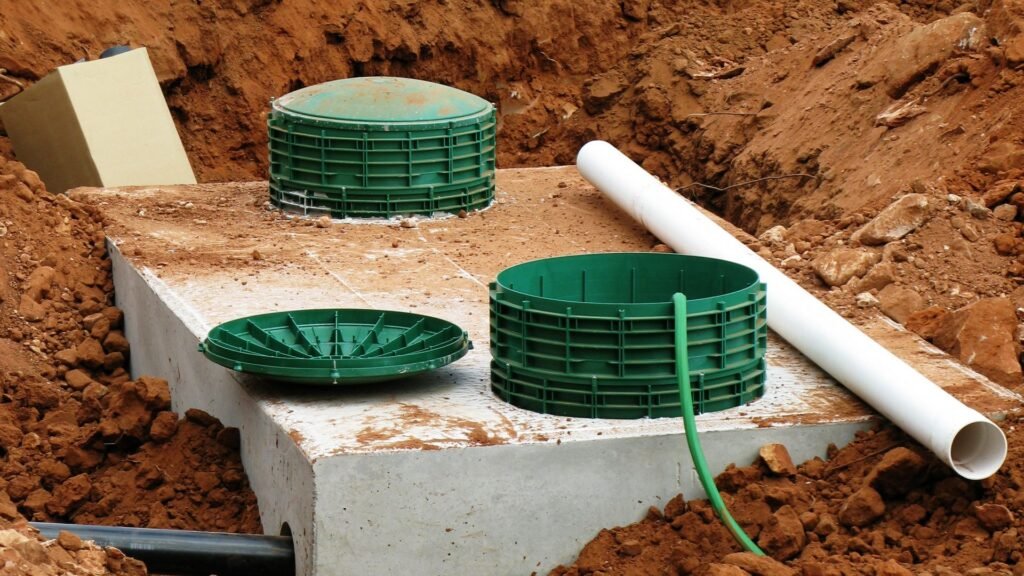
Some tanks have risers that bring the access openings close to ground level. Older systems may have lids below the soil surface.
Texas OSSF rules also contain access provisions for tanks buried more than 12 inches below ground. In applicable situations, inspection and cleanout openings require risers extending toward the ground surface. This helps make the system accessible for maintenance.
If your access cover is cracked or deteriorated, our septic tank lid replacement guide explains when the lid itself may need attention.
For long-term maintenance, improving access may reduce the amount of excavation required during future service visits.
Septic Tank Pumping vs Septic Tank Cleaning
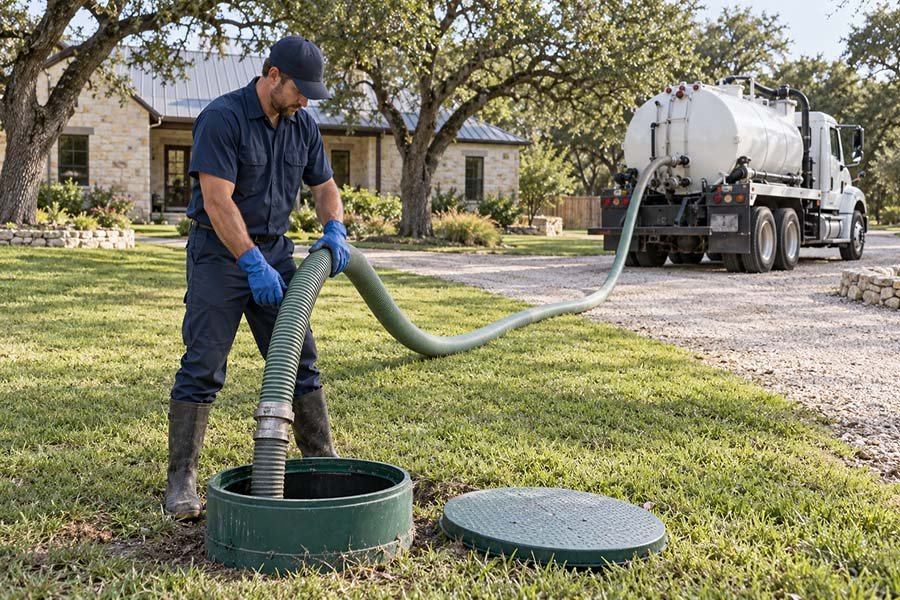
Homeowners frequently use septic pumping and septic cleaning to describe similar services.
The terminology can vary between companies, so the most useful approach is to ask what the service actually includes.
Septic pumping generally refers to using vacuum equipment to remove wastewater, sludge, and scum from the tank through its access openings.
Some companies may use the word cleaning to describe a more thorough removal process or may include additional tasks under that term.
The name alone does not tell you exactly what is included.
If you are comparing a septic tank cleaning cost with a pumping price, ask whether both estimates cover the same tank access, waste removal, disposal, and related work.
This is more reliable than assuming that “cleaning” always means one service and “pumping” always means another.
How Often Should You Pay for Septic Pumping?
You should not schedule pumping solely because a certain number of years has passed.
EPA says the average household septic system should generally be inspected at least every three years and household septic tanks are typically pumped every three to five years. EPA also notes that actual pumping frequency depends on household size, wastewater generated, the volume of solids, and septic tank size.
That distinction matters.
A household producing more wastewater and solids may need pumping sooner than another property with a similar tank. Garbage disposal use can also increase the amount of solids entering the system.
Instead of treating three to five years as a fixed deadline, use it as a general maintenance guideline and consider your particular household and system.
We have a separate guide explaining how often to pump a septic tank in much more detail.
Keeping the scheduling discussion there also prevents this cost article from trying to answer every septic pumping question.
Is It Cheaper to Pump a Septic Tank Before Problems Develop?
Routine maintenance is generally easier to plan than responding after a serious septic problem develops.
However, pumping should not be described as insurance against every failure.
A wastewater backup, slow drain, sewage odor, or unusually wet area can have multiple causes. A full or overdue tank may be involved, but damaged lines, components, drainage problems, or other system conditions can create similar symptoms.
Simply pumping the tank will not repair those problems.
If symptoms are already present, the goal should be to determine what is happening rather than assuming pumping is automatically the solution.
A septic inspection may be appropriate when the condition of the system is uncertain.
How Can You Keep Septic Pumping Costs More Predictable?
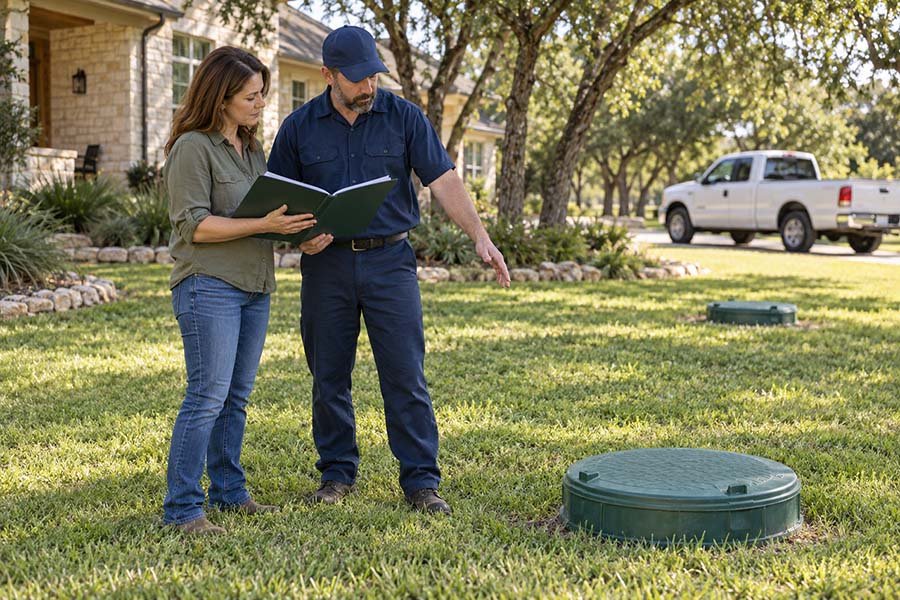
The best approach is to know your system and maintain good records.
Keep a record of when the tank was pumped, what condition was observed, and whether the technician recommended any follow-up work.
Know where the tank and access points are located. If your system has buried lids, consider whether properly installed risers would make future maintenance easier.
Water use matters too.
EPA recommends using water efficiently because all household water eventually enters the septic system. Spreading laundry throughout the week rather than doing many loads in a short period can also reduce stress on the system.
Be careful about what enters the plumbing as well.
Avoid flushing wipes, feminine hygiene products, diapers, paper towels, cigarette butts, grease, and other materials that do not belong in the septic system.
These habits are useful for system care, but they do not eliminate the need to remove accumulated sludge and scum when pumping becomes necessary.
What Should Be Included in a Septic Pumping Estimate?
When comparing septic pumping prices, ask what the estimate actually covers.
A clear estimate should help you understand the pumping service itself and whether additional charges could apply for locating the tank, uncovering buried access points, difficult site access, additional tanks, or separate repair work.
You can ask questions such as:
Is tank locating included if I don’t know where the lid is?
Does the tank need to be uncovered before the appointment?
Is waste disposal included in the quoted price?
Does the property have more than one tank or compartment that needs access?
Will I be told before additional work is performed?
These questions make it easier to compare estimates based on scope instead of looking only at the advertised starting price.
Frequently Asked Questions
How much does it cost to pump a septic tank?
The price varies according to tank capacity, access, location, accumulated material, property conditions, and whether additional work is required. EPA uses approximately $250 to $500 every three to five years as a general national example of routine septic maintenance cost, but that should not be interpreted as a guaranteed Central Texas pumping price.
What is the average cost to pump a septic tank?
National averages can be useful for preliminary budgeting, but they cannot determine the cost for a specific property. An actual estimate should account for tank size, accessibility, lid depth, property location, maintenance condition, and the scope of service.
How much does it cost to pump a 1,000-gallon septic tank?
A 1,000-gallon tank does not have one universal pumping price. Access, accumulated material, location, excavation requirements, and other site conditions can change the cost. Tank capacity should be considered together with those factors.
Does septic pumping cost more if the lid is buried?
It can. If the access points need to be located and excavated before pumping, the additional work may affect the service cost. Tanks with accessible risers generally require less digging to reach the appropriate openings.
Is septic tank cleaning more expensive than pumping?
It depends on what the company means by cleaning. Terminology varies, so compare the actual scope of service. Ask what material will be removed and whether tank access, disposal, inspection, or other work is included.
How often should a septic tank be pumped?
EPA says household septic tanks are typically pumped every three to five years, but actual frequency depends on tank size, household size, wastewater generation, and solids accumulation.
Will pumping fix a septic backup?
Not necessarily. A backup can result from an overdue tank, but it can also involve a blockage, damaged line, drainfield issue, or another system problem. The cause should be evaluated rather than assuming pumping will solve every backup.
Do septic tank risers make pumping easier?
They can make the tank’s service openings easier to access by bringing them closer to ground level. This can reduce repeated excavation when a tank would otherwise have deeply buried access points.
Final Thoughts
So, how much does it cost to pump a septic tank?
There is no single price that accurately applies to every property.
Tank capacity matters, but so do lid accessibility, tank location, accumulated material, property access, maintenance history, and any additional work needed during the service.
Online averages can help with preliminary budgeting, but they should not be mistaken for an actual quote.
For Central Texas homeowners, knowing where the tank is located, keeping maintenance records, and maintaining accessible service openings can make future pumping easier to plan.