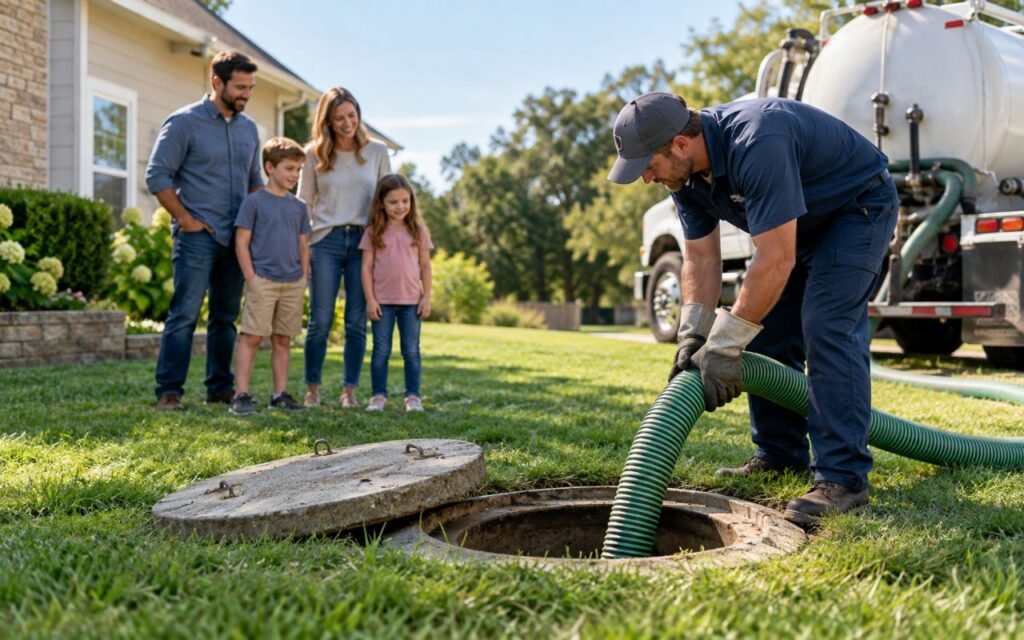
If you need to know how to find your septic tank, start with your property’s septic records or as-built drawing. If records are unavailable, identify where the main waste line leaves your home and use that direction to narrow the search area outside. You can then look for visible risers, lids, access covers, or other clues that may indicate the tank’s location.
The EPA recommends checking septic system records or an as-built drawing first. It also suggests looking for lids and manhole covers, determining where the plumbing outlet leaves the house, and contacting a septic professional if the system remains difficult to locate.
Avoid assuming that every septic tank is a certain distance from the house or buried at the same depth. Septic system layouts vary according to the property, system design, plumbing outlet, site conditions, and applicable requirements.
How to Find a Septic Tank Step by Step
Finding a septic tank does not need to begin with digging up the yard. Property records and information about the home’s plumbing can often narrow the search considerably.
1. Check the As-Built Drawing and Property Records
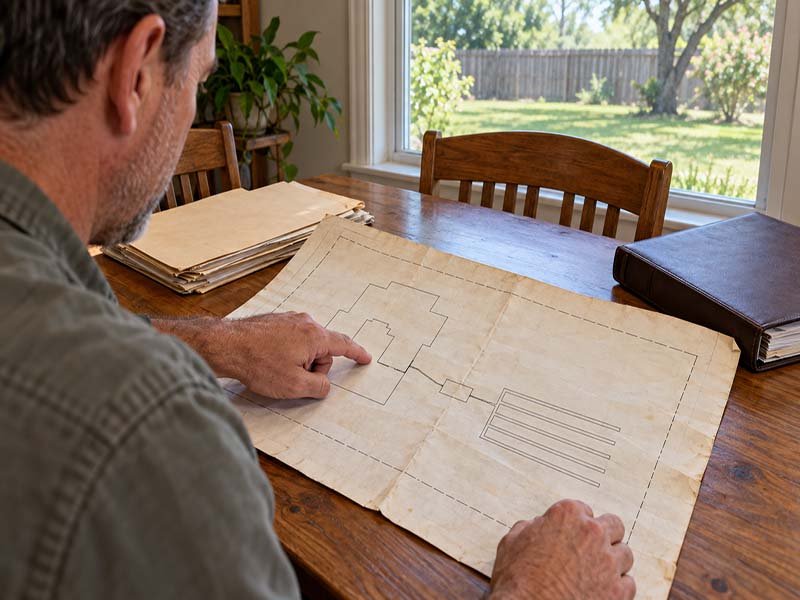
The best place to start is with existing septic records.
An as-built drawing or record drawing can show the approximate location of the septic tank and other system components in relation to the house and property.
EPA recommends checking with the local permitting authority for records related to the septic system. Depending on the property and jurisdiction, available records may include permits, design information, or an as-built drawing.
In Texas, OSSF programs are frequently administered by local authorized agents. The appropriate permitting authority can vary depending on where the property is located.
If you recently purchased the home, also review documents provided during the sale. Previous septic inspection, pumping, installation, or maintenance records may contain useful information about the system’s location.
Even when an old drawing is available, remember that landscaping, additions, fences, and other property features may have changed since the system was installed.
2. Find Where the Main Waste Line Leaves Your Home
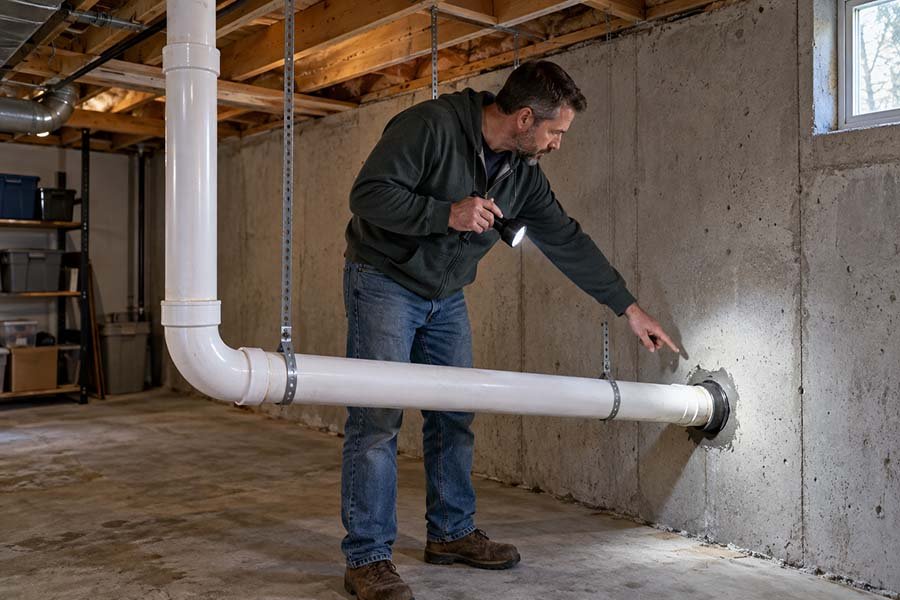
If records are unavailable or do not clearly identify the tank, the home’s plumbing can provide another useful clue.
Look for the main building sewer or waste line leaving the house. In homes where this piping is visible in a basement or crawlspace, its direction can help establish which side of the building to search outside.
EPA homeowner guidance recommends locating the plumbing outlet from the home and using its direction as a clue when searching for the septic system.
The septic tank receives wastewater from this main building sewer before the wastewater moves through the rest of the onsite system.
Use the waste line as a directional clue, not as proof that the tank is a particular number of feet from the house. Pipe routing and tank placement can vary from property to property.
3. Look for Risers, Lids, and Access Covers
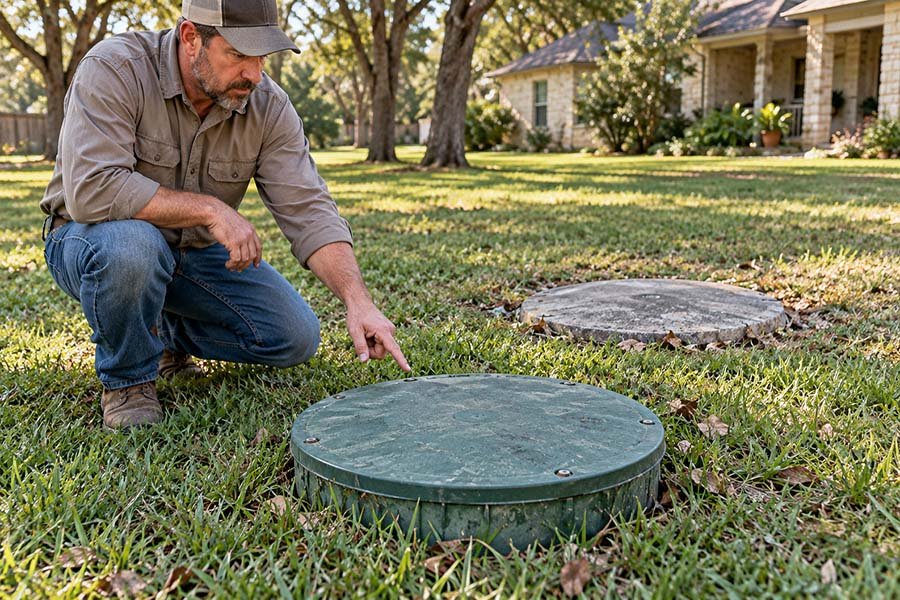
Once you have identified the likely area, inspect the yard for visible septic access features.
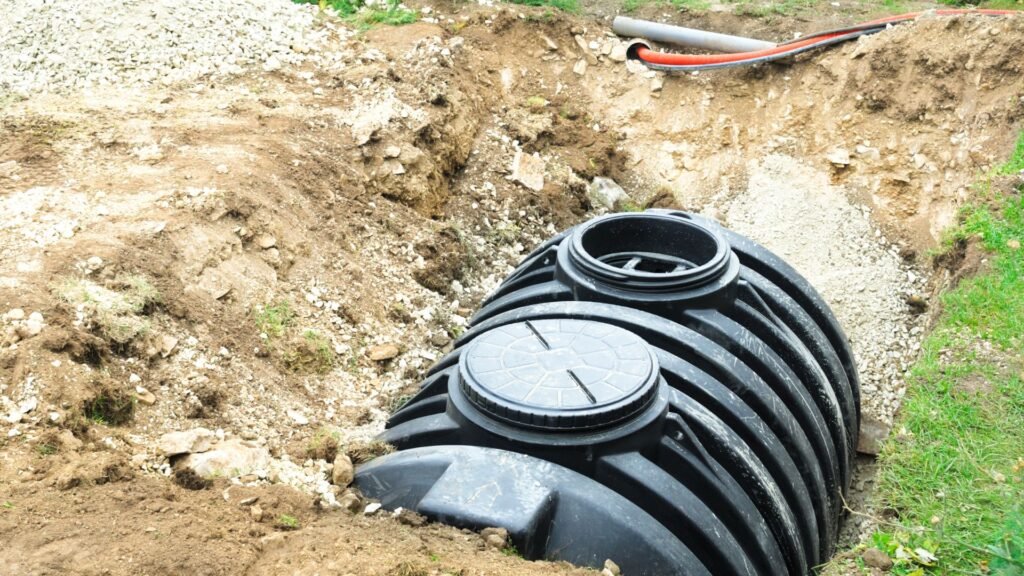
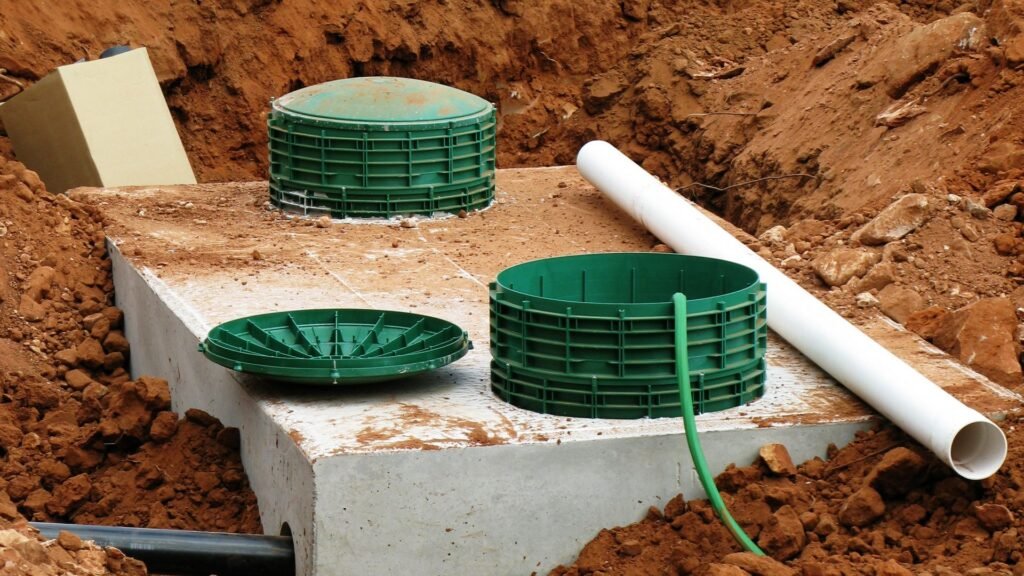
Depending on the system, you may see a riser, lid, inspection port, manhole cover, or another access point. EPA specifically recommends looking around the property for lids and manhole covers when trying to identify a septic system.
Some access points are visible at or near ground level. Others may be covered.
Do not assume every septic tank lid is buried at the same depth. Tank and access depths depend on the installation and system configuration.
If you find an older or damaged access cover, avoid unnecessarily disturbing it. For information about damaged covers and replacement considerations, see our guide to septic tank lid replacement.
4. Use the Known System Layout to Narrow the Search
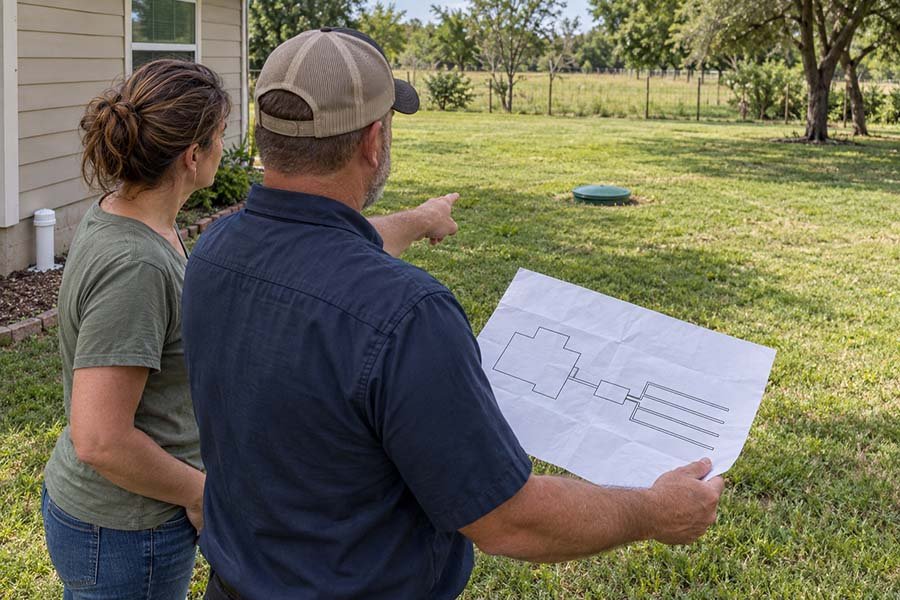
If you know where the main waste line exits the home and have information about the disposal area, use those clues together.
In a conventional septic system, household wastewater travels through the main drainage pipe into the septic tank. Liquid effluent then leaves the tank and moves toward the drainfield for additional treatment in the soil.
Understanding this sequence can help you make sense of an old site drawing or visible system features.
However, not every Texas OSSF has the same layout. Aerobic treatment units and other system types can have tanks, pumps, treatment equipment, and disposal components arranged differently.
Do not assume the location of one component automatically identifies every other part of the system.
5. Call a Professional If the Tank Is Still Difficult to Find
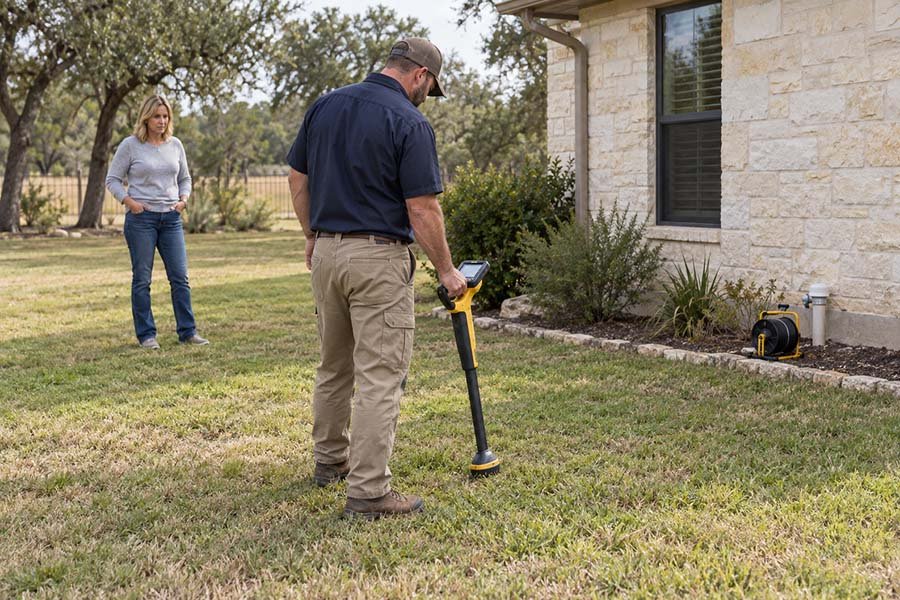
If records, plumbing direction, and visible access points do not reveal the tank’s location, professional locating is the safer next step.
EPA recommends contacting a septic service provider if you are still having difficulty locating the system.
This can be particularly useful when the tank is buried, the property is older, records are missing, previous landscaping has changed the site, or the system layout is unclear.
Professional locating can also be helpful before pumping, inspection, repairs, construction, or other work where knowing the exact tank location is important.
Dillon Septic provides septic tank locating services within our Central Texas service area.
How to Find a Buried Septic Tank
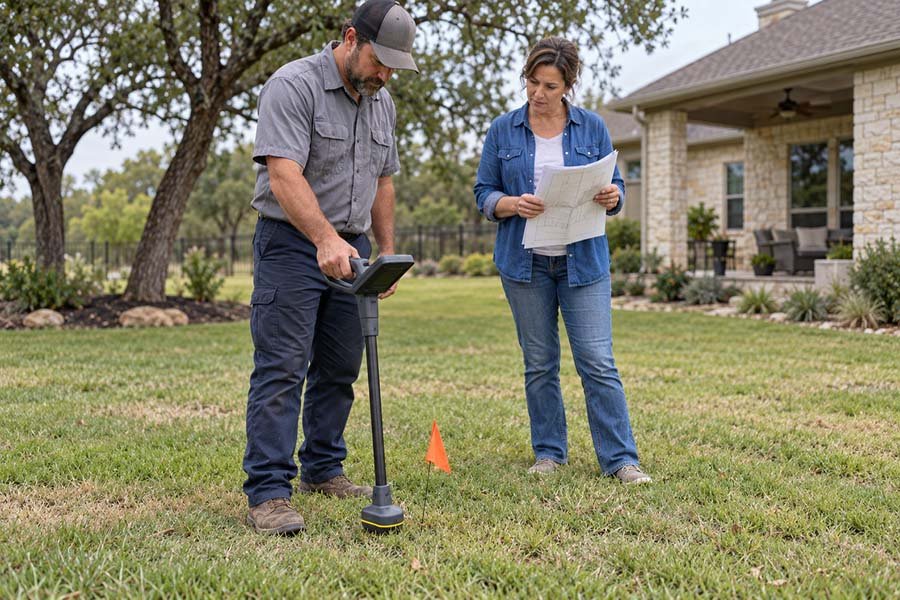
If you are trying to determine how to find a buried septic tank, begin with records rather than excavation.
Look for the system’s as-built drawing, installation documents, previous inspection reports, or pumping records. These can provide a starting point without disturbing the property.
If those records are unavailable, determine where the main waste line exits the house. Follow its general direction outside and look for visible or partially visible access features.
Avoid blindly digging across the yard or driving rods into the soil simply because you think the tank is nearby. Underground properties can contain septic piping and other buried utilities or infrastructure.
You also do not need to open the septic tank simply to determine where it is.
When the tank remains difficult to identify, professional locating can help establish its position without relying on guesswork.
How to Find a Septic Tank in Your Yard
If you know the property uses a septic system but do not know where the tank is located, divide the search into a few simple steps.
Start at the house rather than randomly searching the entire yard. Determine where the main waste line exits the building, then check the corresponding area outside.
Look for septic access points such as risers or covers. Compare what you see with any available property records or system drawings.
Also consider whether landscaping has changed. Soil, grass, mulch, or other landscaping can make older access points less obvious.
Avoid relying on visual differences in grass alone. An unusual patch of vegetation does not establish the precise location of a septic tank.
If you need the exact location for pumping, inspection, repairs, or another project, professional locating is more reliable than estimating from landscaping clues.
How to Find a Septic Tank Lid
Knowing the approximate tank location makes finding the access lid much easier.
Start by checking the as-built drawing or septic records to determine how the tank is positioned. Then inspect the area for risers, access covers, or inspection openings.
A septic tank can have more than one access point depending on its design.
Do not assume that every septic tank lid is a fixed number of inches below the surface. Some systems have risers extending close to or above grade, while other access points can be buried.
Texas also has requirements affecting access to tanks installed at greater burial depths. For a detailed explanation of tank depth and access risers, see How Deep Is a Septic Tank?.
If a lid is damaged, cracked, deteriorated, or unsafe, avoid treating it as a simple cosmetic issue. Secure tank access is important for safety and system maintenance.
Are Septic Tank Locations Public Record?
Septic records may be available from the authority responsible for permitting onsite wastewater systems in the property’s jurisdiction.
EPA recommends contacting the local permitting authority to ask for the septic system’s record drawing or as-built design.
In Texas, OSSF permitting can be administered by local authorized agents. The correct authority therefore depends on the property’s location.
Not every property will have the same type or quality of historical documentation. Older systems may have incomplete records, and changes to the property may not always be reflected clearly in an old drawing.
If records are available, use them as the starting point and verify the actual system location before excavation, repair, or construction work.
How Far Is a Septic Tank From the House?
There is no universal distance from a house that can be used to locate every septic tank.
The tank’s position depends on factors such as where the building sewer exits the home, the approved system design, property layout, site conditions, and applicable setback requirements.
This is why searching a fixed distance from the house can be unreliable.
Instead, identify the direction of the main waste line and combine that information with the system’s as-built drawing or other records.
EPA notes that septic tanks are generally located underground and that the plumbing outlet from the house can help homeowners determine where to look.
If the exact location matters, verify it rather than relying on a generic distance estimate.
How Deep Is a Septic Tank?
Septic tanks are installed underground, but there is no single burial depth that applies to every tank.
It is also important to distinguish between the depth of the tank lid, the amount of soil covering the tank, the height of the tank itself, and the depth of the bottom of the tank. These measurements are not interchangeable.
In Texas, TCEQ has specific access requirements for tanks buried more deeply. Tanks buried more than 12 inches below ground generally require inspection and cleanout ports or risers extending from the tank surface to no more than six inches below ground.
For a complete explanation, read our guide to how deep a septic tank is.
Septic Tank vs Drainfield Location
The septic tank and drainfield are different parts of a conventional septic system.
Wastewater leaves the home through the main drainage pipe and enters the septic tank. In the tank, solids settle and wastewater undergoes primary treatment. Liquid effluent then leaves the tank and travels toward the drainfield, where additional treatment occurs as wastewater moves through the soil.
Finding the drainfield therefore does not necessarily tell you the exact position of the septic tank.
Likewise, finding the tank does not mean you should assume the disposal area begins immediately beside it.
Other types of OSSFs can have different configurations. Aerobic systems, for example, can include multiple treatment tanks, pumps, controls, and different disposal methods.
Property records and the approved system layout are useful for understanding how the components are arranged.
What Not to Do When Looking for a Septic Tank
Finding a septic tank should not create a new problem for the system or property.
Avoid random excavation across the yard. Without knowing what is underground, unnecessary digging can damage septic piping, irrigation, utilities, landscaping, or other buried components.
Do not assume that a green patch of grass proves the tank is directly underneath it. Vegetation can vary for many reasons.
Do not rely on a universal distance from the house or a universal lid depth. Septic installations vary.
Avoid opening access covers unnecessarily. Finding the tank does not require entering it or leaning into the tank.
Most importantly, never enter a septic tank. Septic tanks can contain hazardous gases and unsafe conditions. EPA warns that septic tanks are confined spaces and should only be entered by trained professionals with appropriate safety equipment.
If you cannot confidently locate the system from records and visible clues, professional locating is the safer option.
Why Knowing Your Septic Tank Location Matters
Knowing the location of your septic tank makes routine maintenance easier.
A septic professional needs access to the tank for pumping and certain inspections. If the tank location is unknown, additional time may be required to find the access points before maintenance can begin.
Knowing the system layout can also help homeowners protect septic components.
TCEQ advises homeowners not to drive or park vehicles over an OSSF and not to construct driveways, barns, storage buildings, patios, sidewalks, or similar structures over the system.
Once you know where the tank and other system components are located, keep a copy of the drawing or make an accurate record for future maintenance.
This can save time when the system needs pumping, inspection, repairs, or eventual property evaluation.
When to Have a Professional Locate Your Septic Tank
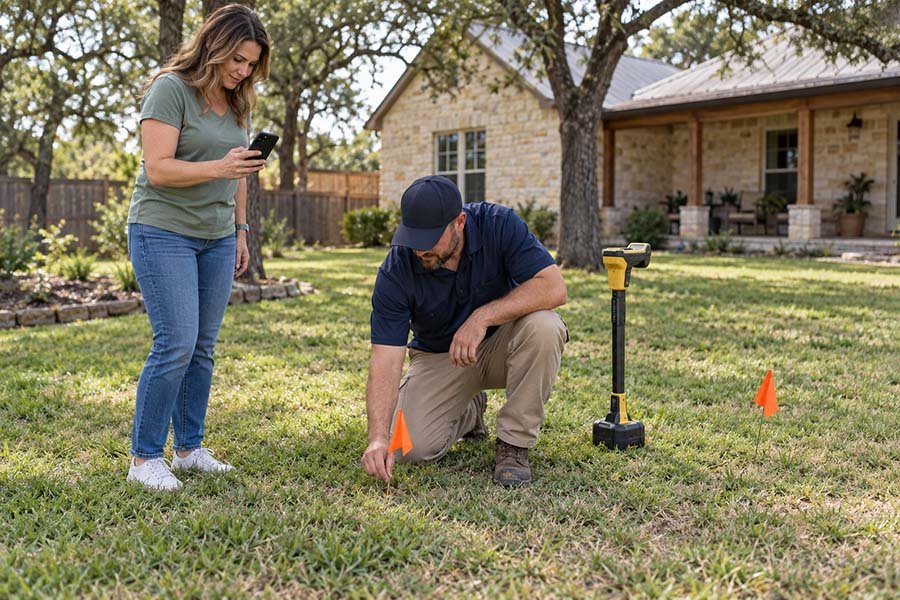
Professional septic tank locating is worth considering when the available records are missing or unclear, access lids are buried, the system is older, the property has undergone significant landscaping changes, or the tank needs to be found before service.
It can also be useful when you have purchased a property and have little information about the existing septic system.
A professional can use the known system layout, plumbing direction, visible components, and appropriate locating methods to determine where the tank is located.
After the tank has been found, record its location so it does not need to be rediscovered every time the system is serviced.
For homeowners within Dillon Septic’s Central Texas service area, our septic tank locating service can help when the system cannot be located confidently from available records and visible clues.
Frequently Asked Questions
How do I find a buried septic tank?
Check the as-built drawing and permitting records first. Then identify where the main waste line exits the house and inspect the likely area for access points. Avoid random digging or blind probing. Professional locating is appropriate when the tank cannot be identified safely.
How do I find a septic tank in my yard?
Begin at the house and determine where the main waste line exits. Search the corresponding area for risers, lids, or other access points and compare those clues with any available system drawings. Do not rely only on grass patterns or a fixed distance from the home.
How do I locate my septic tank lid?
First determine the approximate tank location using records and the main waste-line direction. Then look for risers or access covers. Access points may be visible or buried depending on the system, so there is no universal lid depth.
Where is my septic tank located?
The exact location varies by property. The tank is connected to the main building sewer leaving the house, but its position depends on the system design, property layout, site conditions, and applicable requirements. An as-built drawing is usually the best starting point.
Can a septic professional locate a buried tank?
Yes. EPA recommends contacting a septic service provider when homeowners cannot locate their system from records and property clues.
Final Thoughts
Finding your septic tank should start with property records, not digging. Review permits, as-built drawings, and previous service documents. If the location remains unclear, check where the main waste line leaves the house and look outside for visible risers or access covers.
Tank locations and burial depths vary, so avoid relying on fixed distances or guessing where to excavate. Landscaping changes and incomplete records can make older systems harder to locate.
Once found, document the tank’s location and other known components for future pumping, inspections, and maintenance. If records and visible clues are insufficient, homeowners in Dillon Septic’s Central Texas service area can arrange a professional septic tank locating service to find the system without unnecessary digging or avoidable guesswork.