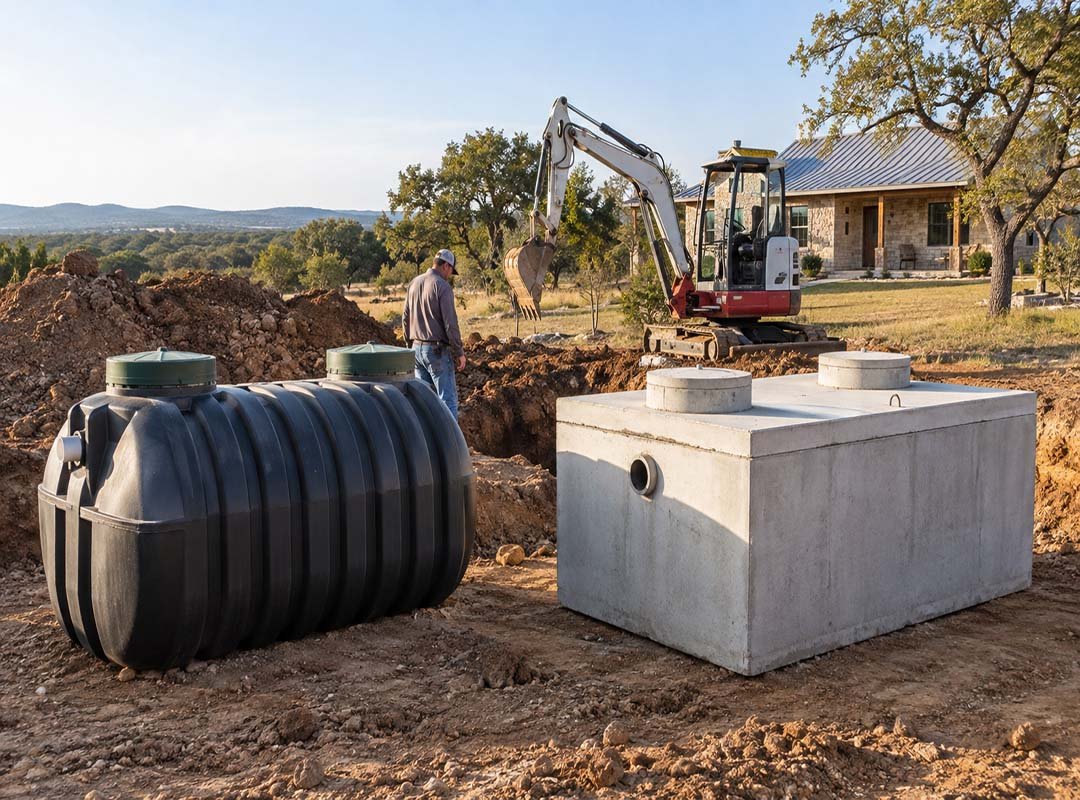
Choosing between plastic and concrete is an important part of planning a new septic system. The tank must support the wastewater needs of the property while remaining stable beneath the soil for many years.
When comparing plastic vs concrete septic tanks for Texas properties, there is no single material that is right for every location. Soil movement, groundwater, site access, tank size, installation quality, and local regulations can all influence the decision.
Concrete tanks offer weight and structural strength. Plastic tanks are lighter, resist corrosion, and may be easier to install on properties with limited access. However, each material also has risks that must be considered before work begins.
From our experience, the tank material is only one part of a reliable septic system. A good site evaluation, correct sizing, approved equipment, and careful installation are just as important as the tank itself.
How Septic Tank Materials Affect System Performance
A septic tank receives wastewater from the home or business. Inside the tank, heavier solids settle at the bottom while grease and lighter material rise to the surface. The liquid wastewater then leaves the tank and moves into the treatment or disposal area.
The tank must remain watertight throughout this process. If groundwater enters through cracks or damaged connections, it can overload the system. If wastewater leaks out, it may contaminate the surrounding soil.
Tank material affects several parts of system performance, including structural strength, resistance to soil pressure, transportation, and installation. Concrete and plastic can both work well when the tank is designed for underground use and installed according to its specifications.
Texas properties present different installation conditions. Some sites have rocky ground, while others have expansive clay that changes volume as moisture levels rise and fall. Low-lying sites may also experience seasonal groundwater or saturated soil after heavy rain.
These conditions make a professional site assessment essential. A tank that performs well on one property may need additional preparation or a different installation approach on another.
Plastic vs Concrete Septic Tanks for Texas Properties
The following table gives homeowners a practical overview of the main differences. Exact weights, capacities, prices, and installation requirements vary by manufacturer and project.
| Comparison factor | Plastic septic tank | Concrete septic tank |
|---|---|---|
| Typical material | Polyethylene or similar molded material | Precast reinforced concrete |
| Tank weight | Often a few hundred pounds | Often several thousand pounds |
| Transportation | Easier to transport to restricted sites | Usually requires a heavy delivery truck |
| Installation equipment | May require lighter equipment | Commonly requires a crane truck or heavy machinery |
| Corrosion resistance | Does not rust and resists many wastewater chemicals | Does not rust but may deteriorate under harsh internal conditions |
| Structural strength | Depends heavily on correct bedding and backfill | High strength when properly manufactured and installed |
| Movement risk | More vulnerable to shifting or floating when empty | Weight helps resist movement and buoyancy |
| Crack risk | Flexible but can deform or be punctured | Can crack from movement, impact, age, or poor installation |
| Repairs | Some damage may be difficult to repair reliably | Certain cracks or components may be repairable |
| Site access | Useful where heavy equipment has limited access | Best where large equipment can safely reach the site |
This comparison should be used as a starting point. The final selection should reflect the approved system design, manufacturer requirements, local permitting rules, and actual site conditions.
Advantages of a Plastic Septic Tank
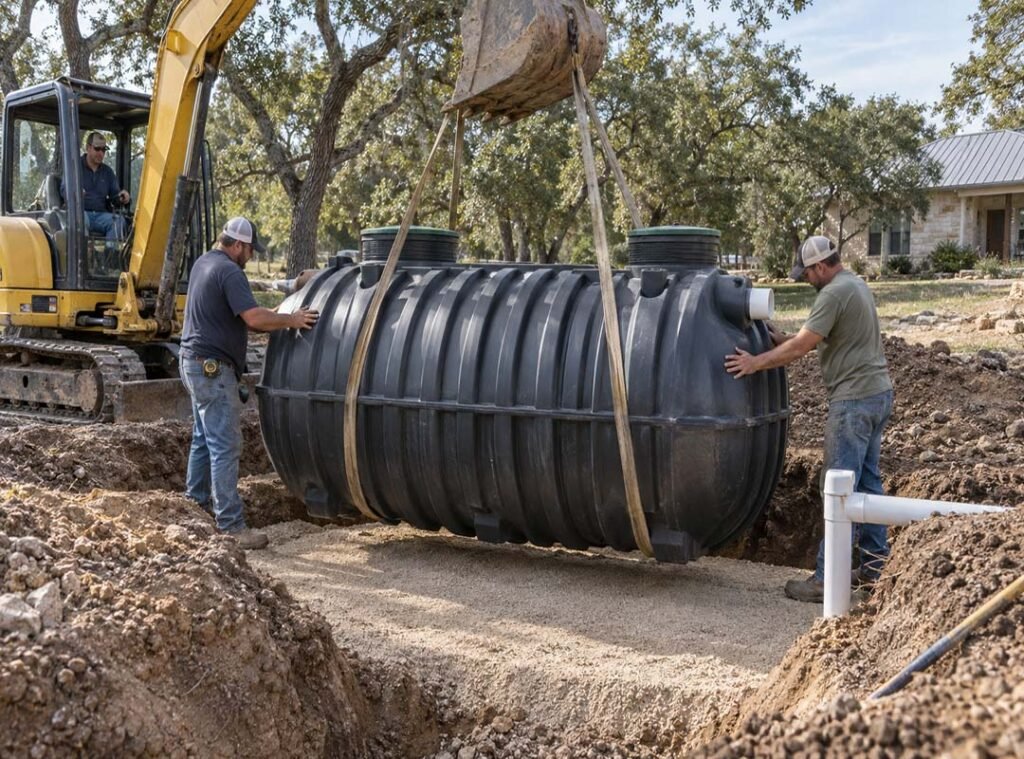
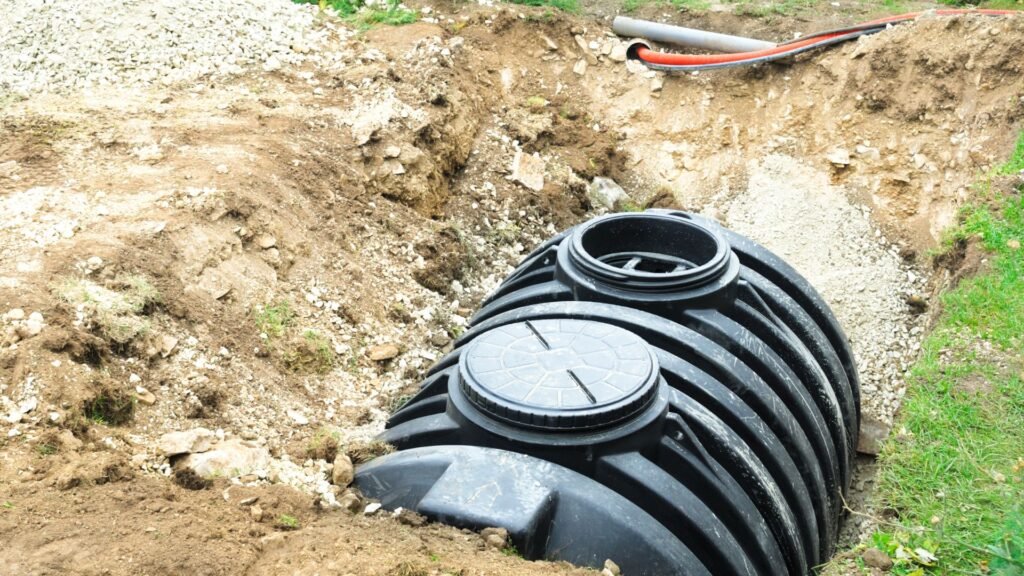
A plastic septic tank is generally made from a durable molded material such as polyethylene. Because it is much lighter than concrete, it can reduce some of the transportation and equipment demands involved in installation.
This lighter weight can be helpful on rural properties where access is narrow, steep, soft, or limited by trees and existing structures. A smaller machine may be able to position the tank where a large delivery vehicle cannot safely travel.
Plastic also resists rust and is not affected by corrosion in the same way as a metal component. A properly manufactured tank has no concrete joints that can separate. Its flexibility may allow it to tolerate a limited amount of ground movement without cracking.
Another possible advantage is installation speed. When the excavation, base, and system design are ready, a light tank can often be positioned efficiently. This does not mean that installation should be rushed. Plastic tanks require careful bedding, leveling, anchoring when necessary, and controlled backfilling.
In the field, we pay close attention to how evenly the tank is supported. A plastic tank should not rest on rocks, construction debris, or an uneven base. Pressure concentrated in one area can deform or damage the shell over time.
Limitations of Plastic Tanks
The low weight of a plastic tank can also create its main weakness. In wet soil or high groundwater conditions, an empty or partly empty tank may be affected by buoyancy. The upward pressure of groundwater can cause the tank to shift or rise if the installation does not address that risk.
A plastic tank may also deform when it is installed too deeply, backfilled with unsuitable material, or exposed to loads beyond its rating. Driving or parking above a standard tank can damage the tank, risers, or connecting pipes.
Manufacturer instructions matter greatly with plastic tanks. The required burial depth, bedding material, backfill procedure, and water-filling sequence must be followed. These details help balance pressure inside and outside the tank during installation.
Advantages of a Concrete Septic Tank
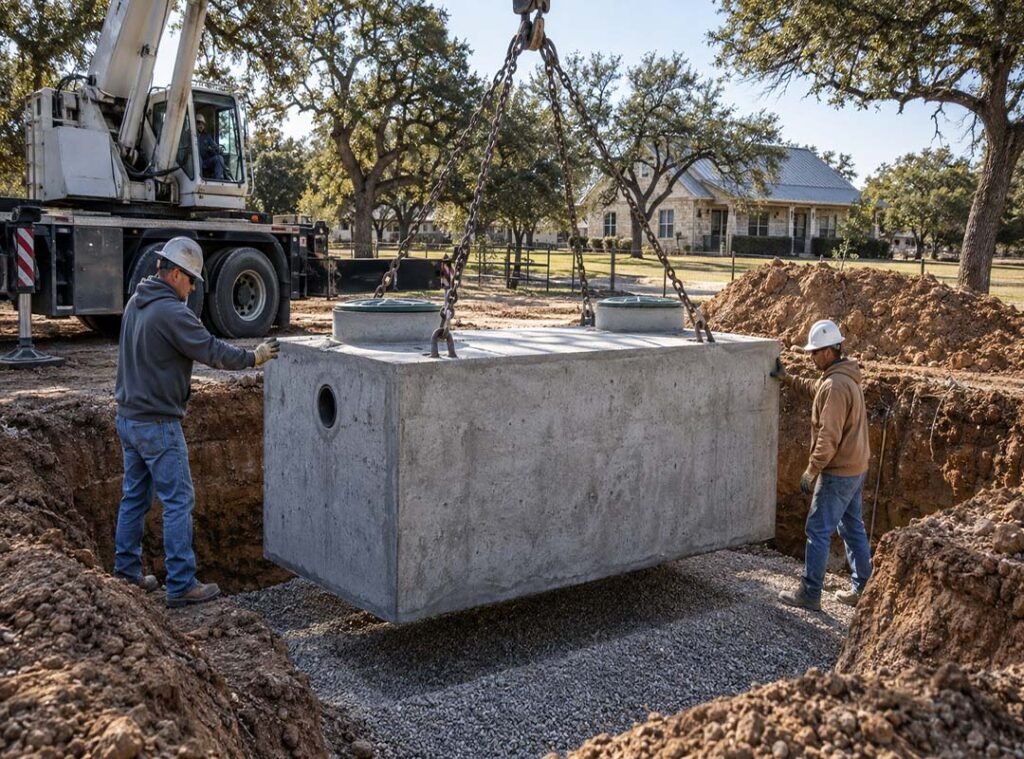
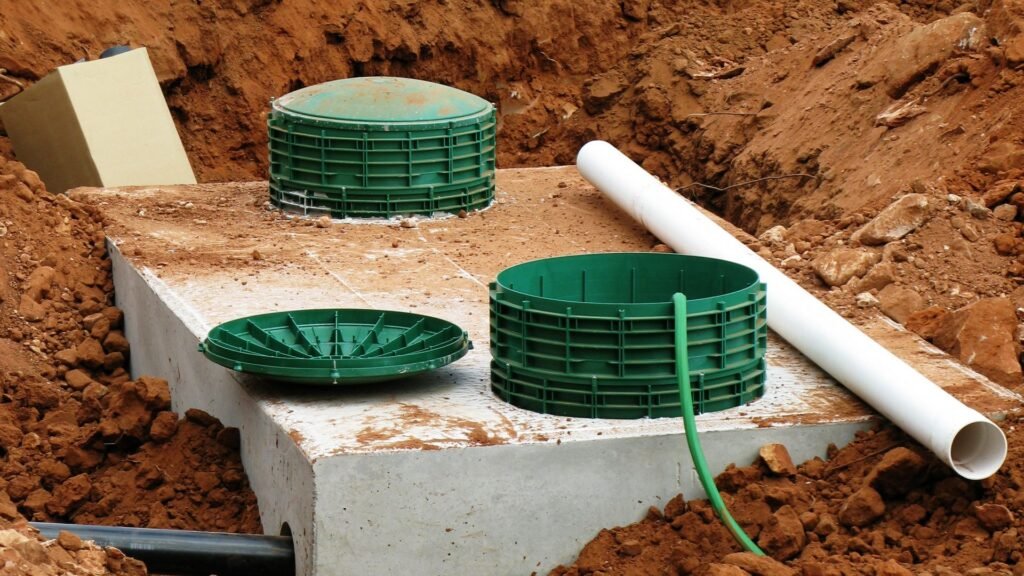
Concrete septic tanks have been used for many years because they offer substantial weight and structural strength. Once placed correctly, their mass can help them remain stable in the ground.
This stability can be useful in areas where groundwater creates buoyancy concerns. A concrete tank is not immune to movement, but its weight generally makes it less likely to float than a light plastic tank.
Concrete tanks are also available in a wide range of capacities and configurations. They can support residential and commercial applications when they are properly engineered for the expected flow and soil loads.
The rigid structure can perform well beneath deeper soil cover when the tank has the correct load rating. Special traffic-rated tanks may also be available for sites where vehicle loading cannot be avoided. A standard tank should never be assumed to support traffic without written confirmation.
From an installation perspective, concrete is often a practical choice when a delivery truck and lifting equipment can reach the excavation safely. The tank can be set into place as a complete unit or in approved sections, depending on its design.
Limitations of Concrete Tanks
The weight of concrete requires suitable access and heavy lifting equipment. Soft ground, narrow gates, steep slopes, overhead lines, and nearby buildings can complicate delivery.
Concrete can also crack. Poor manufacturing, impact during placement, unsupported areas beneath the tank, or soil movement may lead to structural damage. Openings and joints must be properly sealed to prevent groundwater infiltration and wastewater leakage.
Internal conditions may affect concrete over a long period. Wastewater gases can contribute to deterioration, especially in poorly ventilated or harsh environments. Quality manufacturing and regular inspections help identify problems before they become severe.
We have also seen older concrete tanks with damaged baffles or deteriorated access components. This does not mean all concrete tanks fail in the same way. It shows why tank condition should be checked during routine pumping rather than judged by age alone.
Texas Soil and Weather Conditions Matter
Texas has a wide range of soil and weather conditions. A material that suits a dry, rocky site may not be the best choice for a property with clay soil and poor drainage.
Expansive clay deserves special attention. Clay can swell when it absorbs water and shrink during dry periods. This repeated movement may place stress on the tank, pipes, and connections. Proper excavation, bedding, and backfill can help distribute those forces more evenly.
Rocky ground creates a different challenge. Sharp material should not press directly against a plastic tank. It can create pressure points or puncture risks. Concrete tanks can also be damaged if they are placed on an uneven rock surface without suitable base preparation.
Heavy rainfall can saturate the soil around a septic system. For plastic tanks, this raises concerns about buoyancy. For either material, saturated soil may affect access, excavation safety, and the performance of the disposal area.
Texas heat does not usually affect a buried tank as sharply as exposed equipment. However, long dry periods followed by heavy rain can cause significant soil changes. Planning for these local conditions is more reliable than selecting a tank based on material alone.
Which Septic Tank Lasts Longer
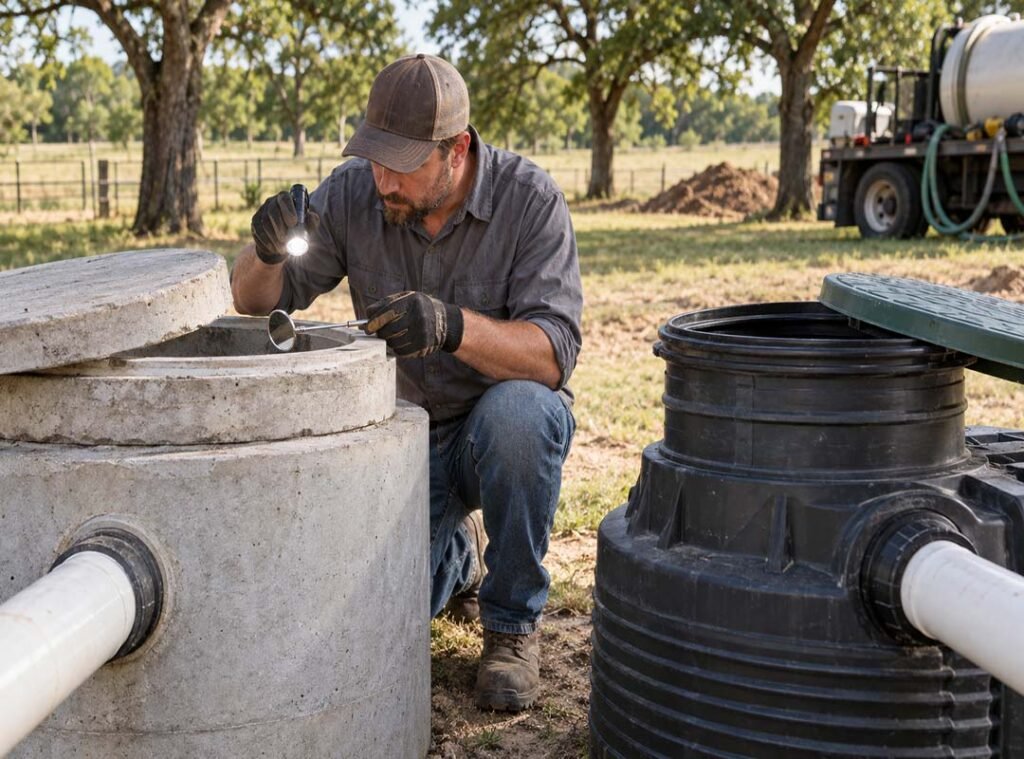
Homeowners often want a clear number for septic tank life. In practice, lifespan depends on tank quality, wastewater conditions, installation, soil movement, maintenance, and physical loading.
A well-made concrete tank may remain in service for several decades. However, cracks, leaking joints, and deteriorated baffles can reduce its useful life. A plastic tank may also provide decades of service when it is properly supported and protected from excess pressure.
It is more accurate to judge longevity through condition than through age alone. A 20-year-old tank that remains watertight and structurally sound may be more dependable than a much newer tank that was installed incorrectly.
The Environmental Protection Agency recommends having a typical household septic system inspected at least every three years. It also notes that household tanks are generally pumped every three to five years. Actual timing depends on tank size, household size, water use, and the volume of solids entering the system.
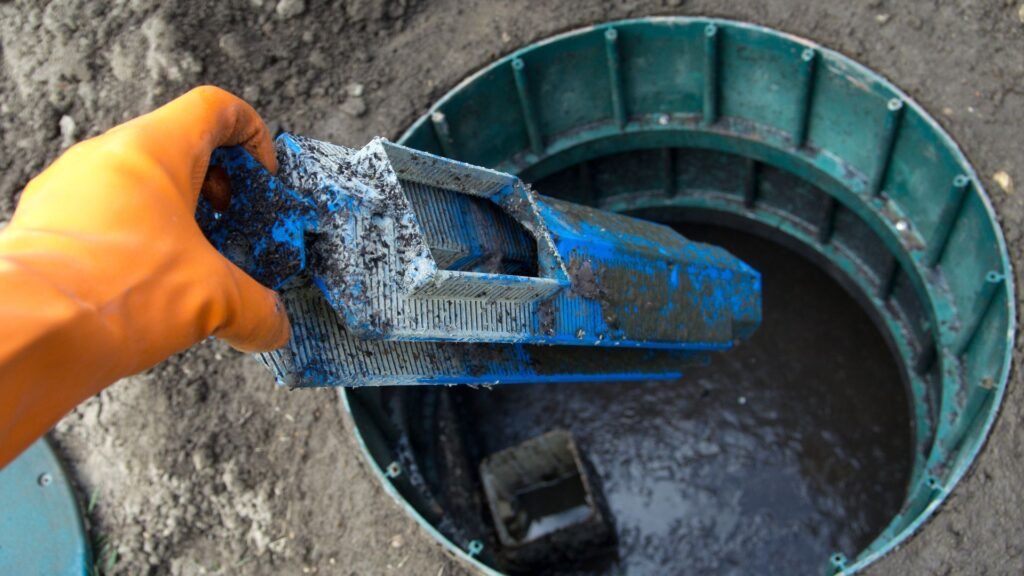
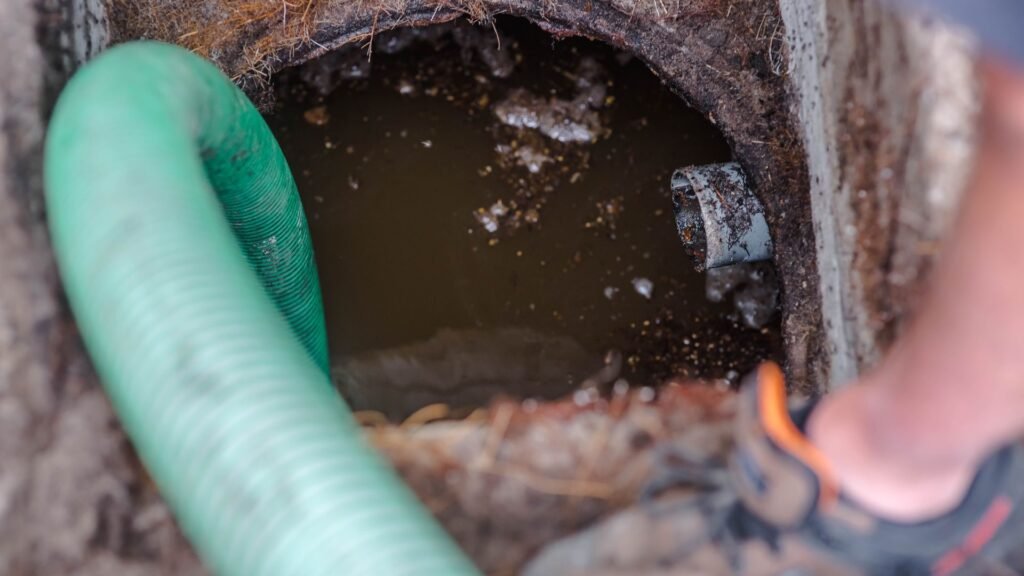
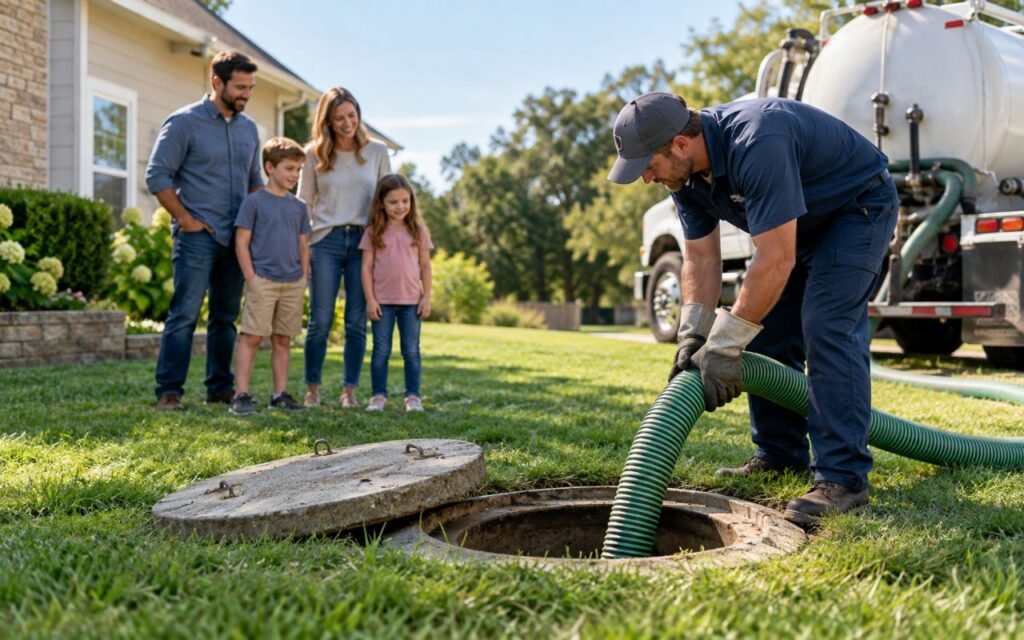
Regular service provides an opportunity to examine accessible components. A technician may identify damaged baffles, leaking risers, unusual liquid levels, or signs that solids are leaving the tank.
Cost and Installation Considerations
Tank price alone does not show the full cost of a septic project. The total may include site evaluation, permits, system design, excavation, delivery, lifting equipment, bedding, backfill, plumbing connections, inspections, and restoration.
Plastic tanks may cost less to transport and position, especially where access is limited. However, special anchoring, approved backfill, or additional site preparation can change the final amount.
Concrete tanks may require larger equipment and a clear delivery route. If access is easy, the installation can still be efficient. When access is poor, equipment needs and property protection may add time and expense.
Homeowners should compare written estimates based on the complete project rather than the tank price alone. The cheapest tank can become an expensive choice if it is unsuitable for the soil or installed outside the manufacturer’s instructions.
An accurate quote normally requires information about the property, number of bedrooms or expected wastewater flow, available space, access, soil conditions, existing system, and local requirements.
Texas Rules and Local Approval
Septic systems in Texas are regulated as on-site sewage facilities. State standards are administered through the Texas Commission on Environmental Quality, while authorized local agencies often handle permits, plan reviews, and inspections.
Tank selection cannot be based only on personal preference. The tank and complete system must meet the rules that apply to the property. Local requirements may affect tank capacity, system design, setbacks, installation, testing, and final approval.
Before purchasing a tank, confirm that the model is suitable for the planned use and accepted by the relevant permitting authority. Buying an unapproved or incorrectly sized tank can lead to delays and unnecessary costs.
Property owners can review the Texas Commission on Environmental Quality guidance for on-site sewage facilities for information about state rules and local permitting responsibilities.
How to Choose the Right Tank
Start with the property rather than the material. A professional evaluation should consider the soil, slope, groundwater conditions, system type, expected daily flow, excavation depth, and equipment access.
A plastic tank may be a good option when access is limited and the site can support the required bedding, backfill, and buoyancy protection. A concrete tank may be better where maximum weight and rigidity are important and heavy equipment can safely reach the installation area.
Ask the installer several practical questions.
- Is this tank approved for the proposed system?
- What burial depth and load rating does it have?
- Does the site have a known groundwater or buoyancy risk?
- What bedding and backfill materials are required?
- Can vehicles travel over the tank location?
- How will inspection and pumping access be provided?
- What warranty is supplied by the manufacturer?
- Who will handle permits and required inspections?
The answers should relate to the specific property. A recommendation made without examining the site may miss conditions that affect long-term performance.
Caring for Plastic and Concrete Septic Tanks
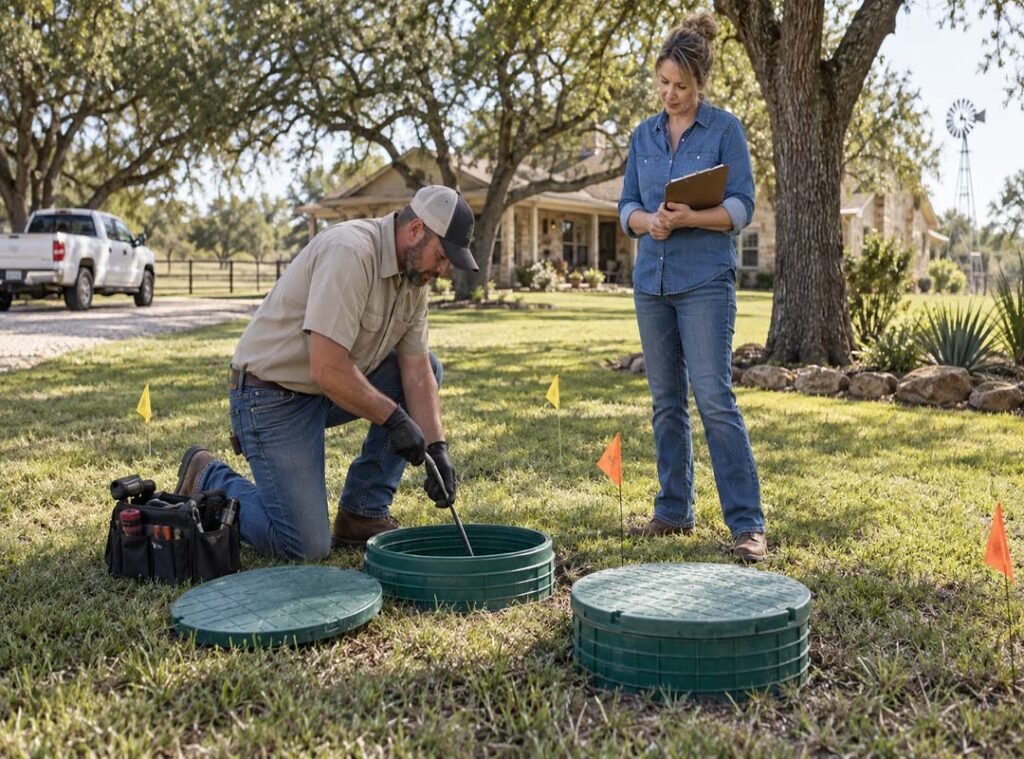
Both tank types require responsible use and maintenance. Tank material does not eliminate the need for pumping, inspections, or water management.
Avoid flushing wipes, hygiene products, grease, paint, solvents, or harsh chemicals into the system. Even products labeled flushable may not break down quickly enough to protect septic equipment.
Spread laundry and other high-water activities across the week. A sudden surge of water can disturb settling inside the tank and push solids toward the drain field.
Keep vehicles, trailers, and heavy equipment away from the tank and treatment area unless those components were specifically engineered for traffic loads. Marking the system location can help prevent accidental damage during landscaping or construction.
Maintain clear access to tank lids and risers. Keep records of inspections, pumping, repairs, and changes to the property. For more practical guidance, read the EPA’s information about caring for septic systems.
Related Dillon Septic Services
Planning a new system or comparing tank options for your property? Learn more about septic system installation in Spring Branch and explore Dillon Septic’s complete septic services.
For ongoing system care, visit our septic pumping service page. Reading these related resources can help you understand what happens after tank selection and how routine service protects the complete septic system.
Frequently Asked Questions
Are plastic septic tanks legal in Texas?
Plastic septic tanks may be used when the tank and system meet applicable state and local requirements. Approval depends on the tank model, system design, proposed use, and permitting authority. Confirm acceptance before purchasing or installing the tank.
Can a plastic septic tank collapse?
A plastic tank can deform or collapse if it is installed too deeply, placed on an unsuitable base, exposed to excessive loads, or backfilled incorrectly. Following the manufacturer’s installation requirements helps control these risks.
Can a concrete septic tank crack?
Yes. Concrete tanks can crack because of manufacturing defects, impact, uneven support, ground movement, or excessive loading. Watertightness and structural condition should be checked when a problem is suspected.
Can you drive over a septic tank?
Do not drive over a septic tank unless the entire installation has been specifically designed and rated for traffic. This includes the tank, lid, risers, pipes, and surrounding structure.
How often should a septic tank be pumped?
Many household tanks are pumped every three to five years, according to the EPA. A smaller tank, larger household, garbage disposal, or heavy wastewater use may require more frequent service.
Is concrete always better for Texas clay soil?
Not always. Concrete provides weight and rigidity, but expansive clay can place stress on any underground structure. Tank selection and installation should reflect the soil evaluation, drainage conditions, and approved system design.
Final Thoughts
The decision between a plastic and concrete septic tank should be based on site conditions, system design, local approval, and long-term service needs. Plastic offers low weight, corrosion resistance, and easier handling. Concrete provides substantial weight, rigidity, and strong resistance to buoyancy.
Neither material can compensate for poor sizing or careless installation. Proper bedding, watertight connections, suitable backfill, safe access, and required inspections play a major role in the life of any tank.
Dillon Septic can evaluate your property and explain which tank type is better suited to the site. Our team considers access, soil conditions, expected wastewater flow, system requirements, and long-term maintenance before recommending an installation plan.