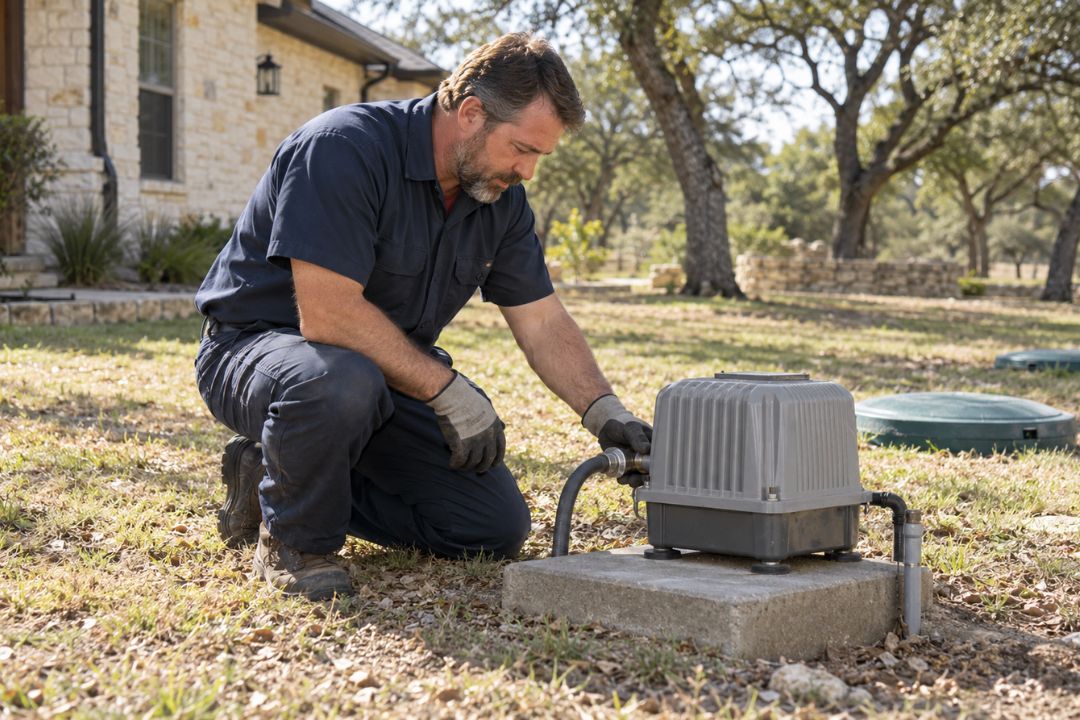
A septic tank aerator supplies oxygen to the treatment chamber in an aerobic septic system. When it stops working, waste treatment can suffer even while toilets still flush and sinks still drain. A new alarm, unusual noise, or strong odor deserves attention before a small fault becomes a larger problem.
At Dillon Septic, our approach is to identify the cause before recommending a repair. A silent compressor does not always need replacement, and a running motor does not prove that enough air reaches the tank. This guide explains common warning signs, safe checks, and when to arrange professional service.
What Does the Aerator Do?
An aerobic treatment unit uses oxygen to support bacteria that break down waste. Depending on the design, an external air pump pushes air through a line and diffuser, or a mechanical unit mixes air into the wastewater.
The air supply is one part of the treatment process. Solids separation, disinfection where required, and wastewater disposal must also work correctly.
Most conventional septic systems do not use powered aeration. Adding an aerator for septic tank treatment is not a simple upgrade for every property. Any proposed change needs an assessment of the existing design and applicable approval requirements.
For more background, read our guide to what an aerobic septic system is.
Common Septic Tank Aerator Problems
Several faults can reduce airflow. Their symptoms often overlap, which makes testing more useful than guessing from sound alone.
Loss of Electrical Power
A tripped breaker, damaged wiring, failed control, or interrupted supply can stop the equipment. An alarm may also lose power, so silence does not always mean normal operation.
If the outage affects only your septic equipment, contact your service provider. Repeated breaker trips need investigation. Do not keep resetting a breaker or use an extension cord as a permanent workaround.
Worn Internal Parts
Some air pumps use diaphragms that flex during operation. These can wear or tear, leaving the unit with weak airflow or no output. Other designs have different wear parts.
A septic tank aerator pump may still hum when its air delivery is poor. A technician can check output against the manufacturer’s specifications and determine whether a repair kit suits the unit.
Blocked Filters or Poor Ventilation
A dirty intake filter can restrict air entering the compressor. Leaves, insects, or stored items around its housing can also obstruct ventilation and contribute to heat buildup.
Keep the area clear from outside the enclosure. Follow the owner’s manual for accessible filter care, and leave unfamiliar equipment or internal electrical parts to a professional.
Leaking Lines or Clogged Diffusers
Air can escape through a cracked hose, loose fitting, or damaged connection before reaching the treatment chamber. A blocked diffuser can also restrict delivery.
Replacing the compressor alone will not fix these faults. The air path needs inspection so the same problem does not strain the repaired or replacement equipment.
Warning Signs of Septic Tank Aerator Failure
A change from your system’s normal behavior is often the first clue. Watch for these signs.
- An air pressure or aeration alarm
- A compressor that becomes silent during its expected operating period
- New rattling, grinding, or unusually loud vibration
- Strong sewage odors around the treatment or disposal area
- Repeated breaker trips or a burning smell
- Wastewater surfacing in the yard or backing up indoors
An alarm does not identify the failed part by itself. A high water warning, for example, may point to a discharge pump, float, or flow problem rather than the air supply.
Record the light label, displayed message, and time the problem began. Share those details when calling for service. Do not open a tank to look for bubbles or judge treatment quality.
Safe Checks Before Calling for Service
You can gather useful information without dismantling equipment. Start with the owner’s manual and your most recent service report.
- Note whether your home has experienced a power outage.
- Read visible alarm labels without opening the control panel.
- Listen from a safe position for changes in normal equipment sound.
- Look for blocked ventilation around the external housing.
- Check whether heavy water use or a plumbing leak preceded the warning.
Only observe electrical equipment from a dry, safe location. Do not handle plugs, wiring, or controls near standing water.
Never enter a septic tank or lean into an opening. Dangerous gases and low oxygen can cause fatal injuries. Keep lids secured and leave tank access to trained personnel.
While waiting for advice, postpone laundry and other heavy water use. If sewage is backing up or surfacing, stop unnecessary water use and keep people and pets away.
When to Call a Septic Professional
Contact your maintenance provider promptly when an aeration alarm appears, airflow seems to have stopped, or a new odor persists. Do not wait for a scheduled inspection to report a known fault.
Seek urgent help for sewage backups, surfacing wastewater, repeated breaker trips, smoke, or a burning smell. Stay clear of affected electrical equipment. For an active fire, move away and call emergency services.
There is no universal safe number of days to run without aeration. Treatment performance depends on the system, wastewater load, and fault. Normal drainage does not prove the discharged water is adequately treated.
Professional service should establish both what failed and whether other treatment components need attention.
Repair or Septic Tank Aerator Replacement?
The right choice depends on test results, equipment condition, and parts availability. Age alone is not enough to decide.
A repair may be suitable when a serviceable diaphragm, filter, hose, or fitting is the confirmed cause. Replacement may make more sense when the motor has failed, corrosion is severe, or repeated repairs have become poor value.
A septic tank aerator replacement must match the treatment unit’s requirements. Airflow, operating pressure, electrical rating, connections, and alarm compatibility all matter. Choosing a larger pump without checking specifications can create new problems.
Ask for an estimate that explains the fault, recommended part, labor, and warranty. It should also state whether related line or diffuser work is needed. Compare complete repair options rather than online pump prices alone.
What a Service Visit Should Include
A useful inspection goes beyond checking whether the motor runs. Depending on the system and symptoms, the technician may inspect the intake, measure air delivery, examine connections, and check controls and alarms.
They may also assess sludge levels, wastewater levels, and other treatment stages. Pumping removes accumulated solids, but it does not repair an electrical fault or restore a damaged air pump.
After repairs, the provider should confirm operation and explain any follow-up checks. Ask whether treatment recovery or additional testing affects how you should use the system.
Keep the service report with the equipment model, repair details, and warranty information. Those records make future diagnosis easier. Keep them somewhere easy to find.
How to Reduce Future Aerator Problems
Follow the maintenance schedule for your specific treatment unit. Avoid switching aeration off to save electricity or changing timers without professional guidance.
Spread laundry through the week, fix leaking toilets, and keep grease, wipes, solvents, and excessive chemical waste out of drains. These habits reduce avoidable stress on the treatment process.
The EPA’s septic care guidance explains how inspections, responsible waste disposal, and efficient water use support system performance.
Texas owners should also review TCEQ’s septic system guidance and ask their local permitting authority about maintenance requirements. Local conditions and rules can affect what work is required and who may perform it.
For a broader view of component care, read Dillon Septic’s guide to aerobic wastewater treatment systems. Use it alongside your service records to prepare questions for your next inspection.
Final Thoughts
A septic tank aerator problem deserves prompt attention, but it does not automatically mean the entire system needs replacing. Power faults, worn parts, air leaks, and blocked diffusers require different solutions.
Notice changes early, record alarm details, and avoid repeated resets or unapproved modifications. A proper diagnosis helps you choose a repair that addresses the cause and supports reliable treatment.
If your Central Texas property has an alarm, unusual equipment noise, or persistent septic odors, contact Dillon Septic to discuss the symptoms and arrange service. Our team can assess your system and explain the next steps clearly.