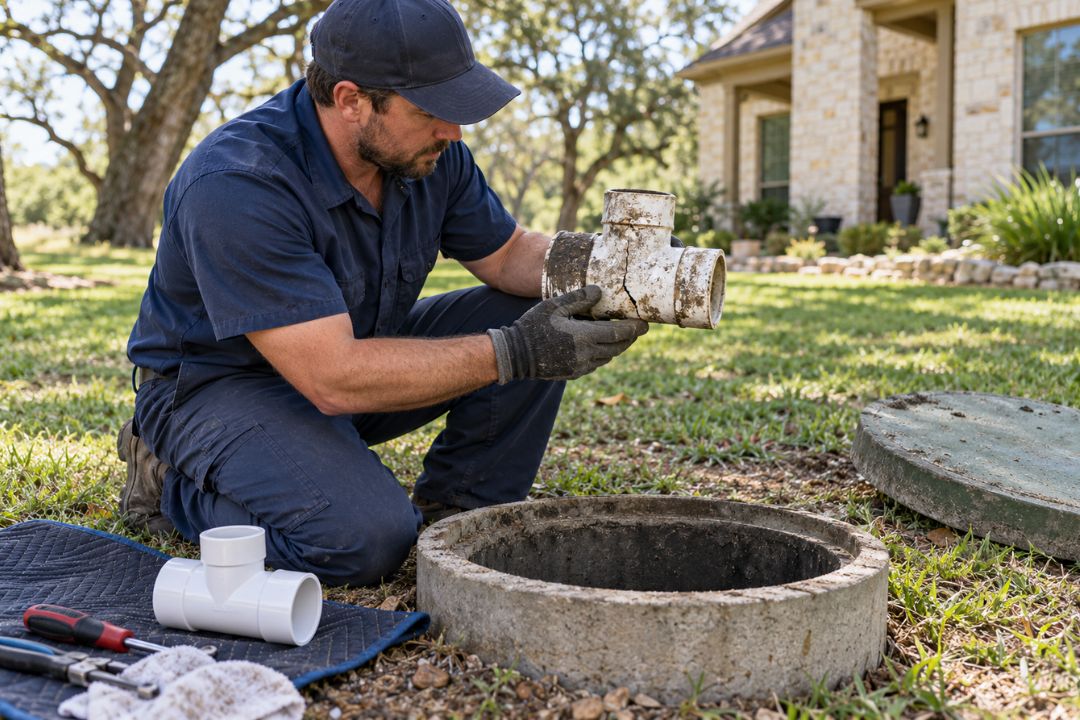
A septic tank baffle helps control wastewater flow and keeps floating waste from leaving the tank too soon. Although this part is small, it protects a much larger system. When it breaks, shifts, or goes missing, solids may travel toward the drain field and cause problems that are hard to reverse.
For homeowners in Spring Branch and nearby Central Texas communities, knowing what baffles do can make septic care less confusing. Below, we explain how these parts work, which warning signs deserve attention, and what to expect when a professional checks them.
What Does a Septic Tank Baffle Do?
Wastewater from your toilets, sinks, showers, and washing machine enters the septic tank. Inside, heavier solids settle at the bottom as sludge. Grease and other floating waste form a scum layer at the top. Between those layers sits liquid wastewater, often called effluent.
Baffles help maintain that separation by directing flow at the tank’s entrance and exit. They do not clean the wastewater or replace the need for pumping. Their purpose is to support settling and limit the escape of floating material.
Many tanks use vertical pipe fittings called sanitary tees. Others have built-in baffle walls. El Dorado County’s guide to septic baffles explains how these components help manage flow and retain scum. The exact layout depends on the tank’s design.
How Inlet and Outlet Baffles Work
The inlet directs incoming wastewater
The inlet sits where the household sewer pipe enters the tank. Its baffle directs incoming wastewater downward and helps reduce disturbance near the surface.
Without that flow control, incoming water can disturb the layers that should remain separated. A blocked or damaged inlet can also interfere with wastewater entering the tank. The condition of the connecting pipe matters, too, so an inspection should assess both.
The outlet protects downstream components
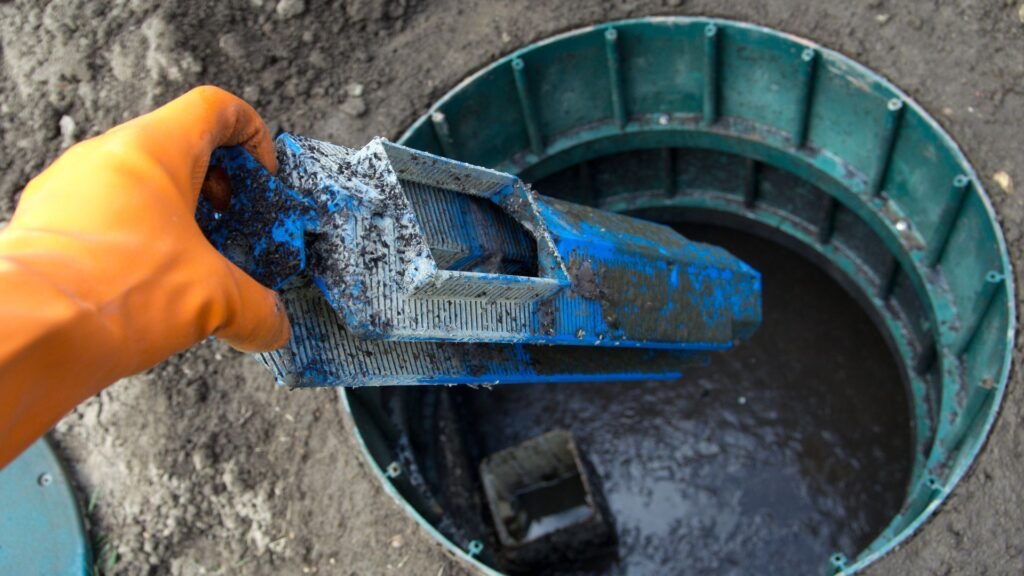
The outlet draws liquid from below the floating scum layer and above the settled sludge. Its baffle helps keep floating waste inside the tank while liquid moves toward the next treatment stage.
In a conventional system, that next stage usually leads toward a drain field. Other systems have different treatment components. Some outlet tees also hold an effluent filter, which traps additional solids. A filter needs maintenance and does not eliminate the need for a sound outlet assembly.
Signs Your Septic Tank Baffle May Need Repair
A damaged baffle may cause no clear symptoms at first. That is why inspection matters even when household drains seem normal. When symptoms do appear, they often overlap with other septic faults.
Several drains become slow
One slow sink may have a local clog. When toilets, showers, and sinks all drain slowly, the problem may be farther along the wastewater path.
A blocked inlet, clogged outlet filter, restricted pipe, or drain field issue could be involved. Slow drainage alone cannot identify which part has failed.
Toilets gurgle or sewage backs up
Gurgling can occur when wastewater flow or air movement is restricted. Sewage backing into a low shower or tub needs prompt attention.
Reduce water use and arrange service. Repeated flushing or running more water to test the drains can make a backup worse.
Odors or wet areas develop outdoors
Persistent sewage smells, damp ground, or wastewater at the surface may point to a system problem. Possible causes include leaks, blockages, excess water use, or poor drainage.
These signs do not prove baffle damage. However, they justify a broader inspection, especially if the system has missed routine care.
An inspection reveals missing or broken parts
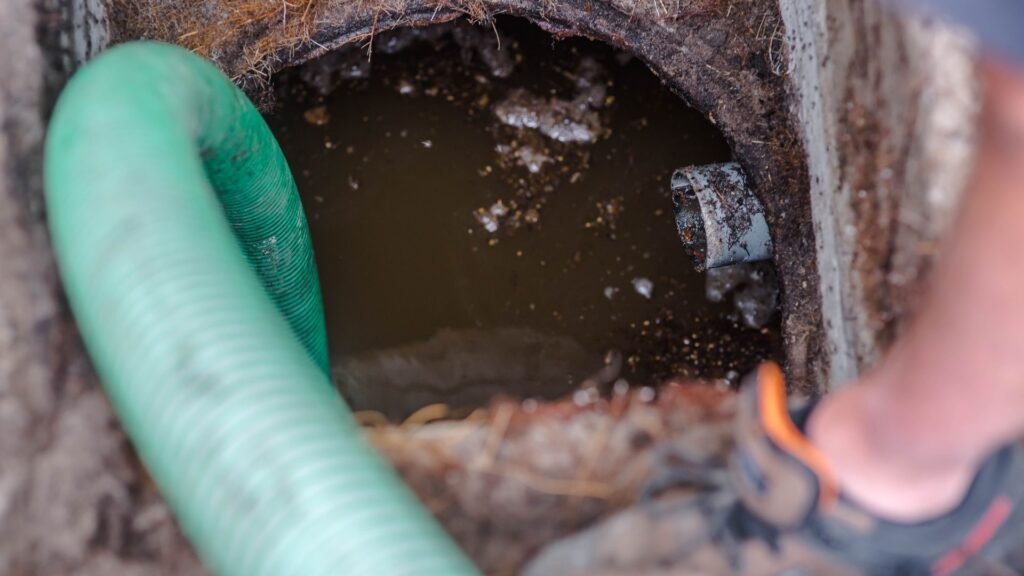
Direct inspection offers stronger evidence than household symptoms. A technician may find a cracked tee, a loose fitting, crumbling concrete, or an outlet that no longer extends to the correct depth.
Ask for photos and a clear explanation of the finding. Knowing which part failed helps you understand the proposed repair.
What Causes Baffles to Fail?
Age can weaken some materials, especially when tank surfaces have deteriorated. Concrete baffles may crack or erode, while plastic tees can break or become detached from their connections.
Poor installation can also leave a fitting loose or at the wrong height. Ground movement, damaged pipe connections, and careless contact with service equipment may contribute to failure. The cause should be checked rather than assumed.
Other problems involve blockage instead of breakage. Wipes, grease, and accumulated waste can restrict flow around the inlet or outlet. A dirty filter may need cleaning, while a broken fitting needs repair. Those are different jobs, even when the symptoms look similar.
What Happens During a Professional Inspection?
The technician first reviews the symptoms, service history, and system layout. Useful details include when trouble began, whether every drain is affected, and when the tank was last pumped.
Depending on access and conditions, the inspection may include checks of the following.
- Inlet and outlet fittings
- Visible tank walls and pipe connections
- Sludge and scum levels
- Effluent filter condition
- Liquid level and signs of restricted flow
Pumping may be needed to inspect parts safely and clearly. The technician should explain what can be assessed and whether further checks are needed.
Never enter a septic tank or lean into an open access point. Dangerous gases, unstable covers, and fall hazards make this work unsuitable for homeowner inspection.
Repair, Replacement, and What They Can Fix
Septic baffle repair depends on the tank’s condition and the type of damage. A detached fitting may need a secure replacement. A deteriorated concrete baffle may require an approved alternative suited to the existing tank.
The new component must fit the system and sit at the proper depth. A generic fitting installed without checking the design may fail to control flow as intended. Your contractor should also confirm any local approval or permit requirements that apply.
Replacing a baffle can restore its function, but it cannot reverse every downstream problem. If solids have already reached the drain field, further assessment may be needed. A sound repair plan considers both the failed part and any effects beyond it.
How Much Does Septic Tank Baffle Replacement Cost?
There is no single price that fits every property. Access, tank depth, material condition, pumping needs, and the extent of the damage all affect the work.
A reachable plastic tee may involve less labor than a deteriorated built-in component. Buried lids, damaged pipes, or structural concerns can add complexity.
Ask for an estimate that explains the scope. It should identify whether pumping, excavation, parts, labor, and any required approvals are included. Comparing that scope is more useful than comparing a low starting price with a complete repair quote.
How to Reduce Future Problems
Routine care gives a technician a chance to spot damage before clear symptoms appear. Keep service records and ask whether the inlet, outlet, and filter were checked during your visit.
The EPA’s septic care guidance recommends regular inspection, pumping when needed, efficient water use, proper waste disposal, and drain field protection. Your schedule should reflect your system type, household use, and inspection findings.
At home, flush only human waste and toilet paper. Keep grease, wipes, and hygiene products out of drains. Fix leaking toilets and spread laundry loads through the week. These habits reduce avoidable strain, though they cannot prevent every component from wearing out.
Related Reading and Septic Help
Do not wait for a backup to learn more about your system. Visit the Dillon Septic blog for related septic care articles and practical maintenance guidance.
If you already have symptoms or an inspection report showing damage, explore our septic repair services. Share the report and recent service records so our team can better understand the concern before discussing the next step.
Final Thoughts
Baffles are easy to overlook because they work out of sight. Yet their role in controlling flow and retaining waste makes them worth checking during routine service.
Slow drains, odors, and backups deserve attention, but none confirms a baffle problem on its own. A professional inspection helps separate a damaged fitting from a blockage or a larger system fault.
If you suspect trouble at your Spring Branch property, contact Dillon Septic. An early assessment can help you understand the problem and make a clear repair decision.