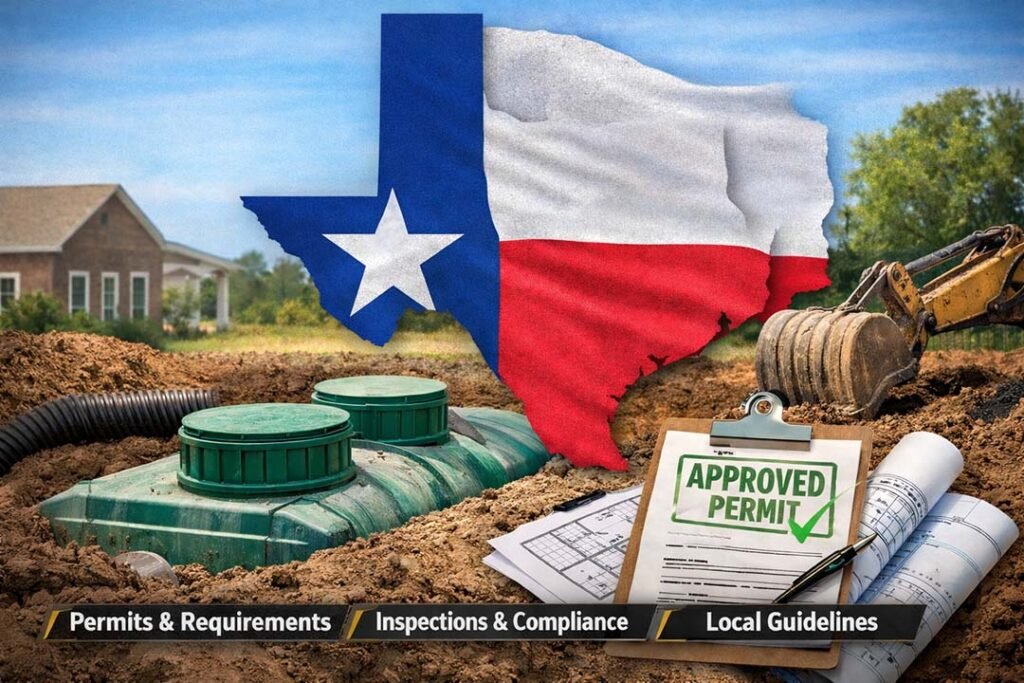
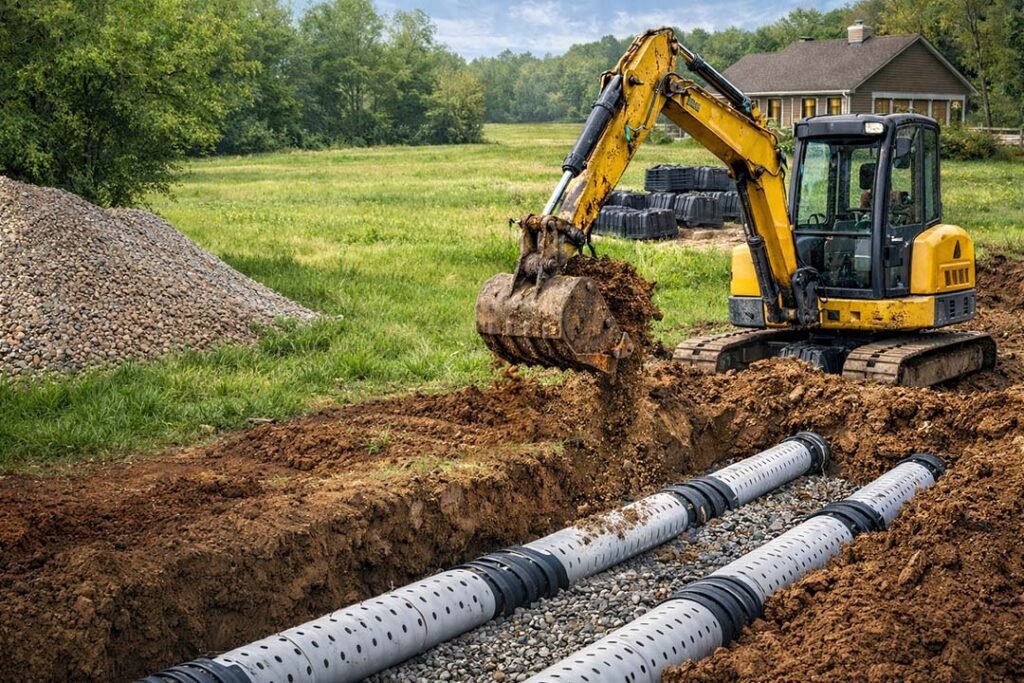
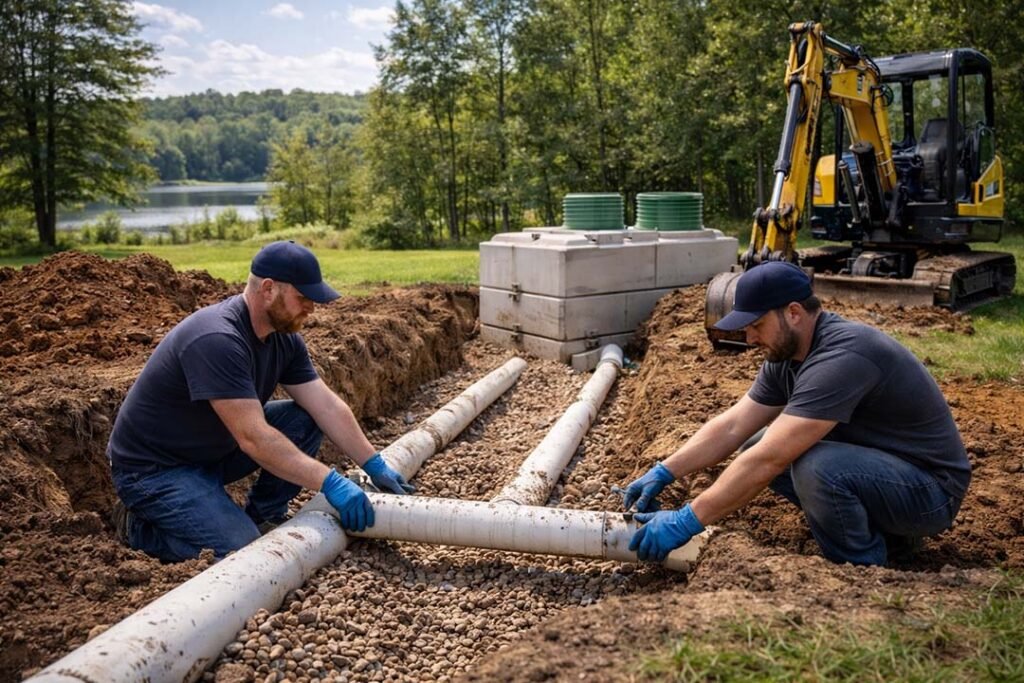
The average cost to install a septic system in Texas varies significantly because every property has different site conditions, wastewater requirements, and system needs.
For preliminary budgeting, many complete residential septic installations in Central Texas can fall around $10,000 to $20,000. A relatively straightforward conventional system may fall closer to $7,000 to $12,000, while an aerobic system can commonly require a budget of approximately $10,000 to $20,000. More complex projects can reach $26,000 or more.
These figures are planning ranges rather than guaranteed prices or statewide averages published by Texas regulators.
The actual cost to install a septic system depends on the site evaluation, system type, treatment and disposal methods, system capacity, soil and subsurface conditions, excavation, property access, electrical requirements, permitting, and other project-specific work.
That is why two homes in the same part of Texas can receive very different septic installation estimates.
How Much Does It Cost to Install a Septic System in Texas?
A useful starting budget for many complete residential installations in Central Texas is approximately $10,000 to $20,000.
The system type can provide additional context.
| Installation | Planning Range |
|---|---|
| Conventional septic system | $7,000 to $12,000 |
| Aerobic septic system | $10,000 to $20,000 |
| Many complete residential installations | $10,000 to $20,000 |
| More complex installations | Up to $26,000+ |
These numbers should be used for early budgeting only.
TCEQ does not establish a standard statewide septic installation price. Instead, the appropriate OSSF is determined by property conditions and applicable design requirements.
TCEQ’s system-selection guidance considers factors such as soil texture, groundwater, fractured rock, restrictive horizons, slope, and the proposed treatment and disposal method when determining which options are suitable for a site.
A property suitable for a relatively simple conventional system can therefore have a very different installation cost from a site requiring an aerobic treatment unit, pumps, electrical controls, or another disposal method.
What Is Included in Septic System Installation Cost?
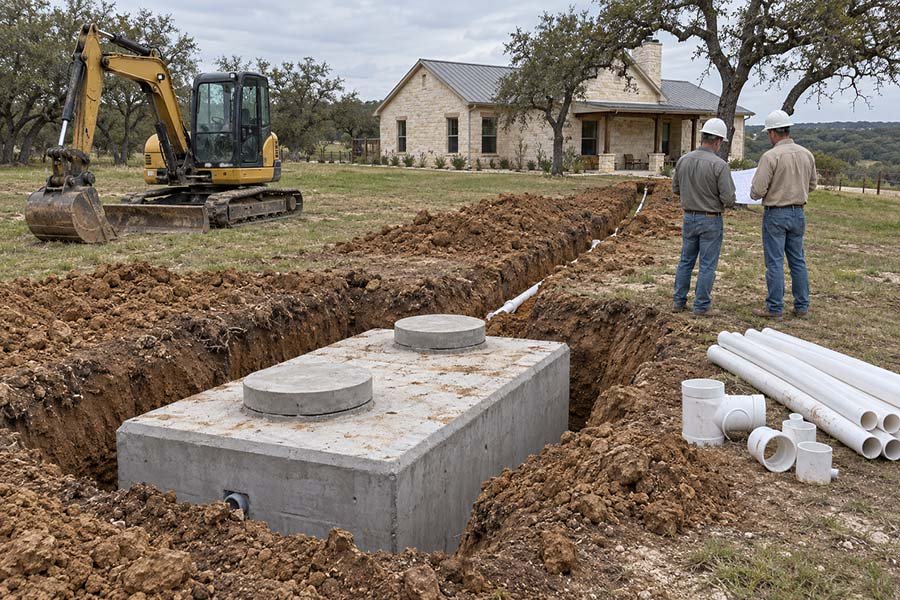
A complete septic installation involves much more than purchasing a tank.
Depending on the approved system and property, the project can include site evaluation, planning or design, permitting, treatment components, the septic tank, disposal components, excavation, labor, electrical work, inspections, and final site work.
Site Evaluation
The site needs to be evaluated before the appropriate septic system can be selected.
TCEQ requires a preconstruction site evaluation for an OSSF. The evaluation includes examination of the property and soil in the proposed disposal area to determine which systems are suitable.
Site conditions can therefore influence the project before installation begins.
Planning and Design
Once the property conditions are understood, the appropriate treatment and disposal methods can be determined.
Some systems are relatively straightforward. Others require additional design work or specialized components.
The design stage should be based on the property rather than selecting whichever system has the lowest advertised price.
Permitting
A Texas septic installation generally requires an authorization to construct before installation begins, subject to limited exemptions under state rules.
The application process typically includes the required planning materials and site evaluation. Local authorized agents administer many OSSF programs and can have requirements more stringent than the state’s minimum requirements.
Permit fees are therefore not identical throughout Texas.
Treatment Components
A conventional system and an aerobic system use different treatment processes and equipment.
The required treatment method can substantially affect the installation cost.
Disposal System
The disposal portion of the OSSF can also affect pricing.
Texas recognizes multiple disposal methods, and not every method is suitable for every site.
The materials, excavation, equipment, and labor required can therefore vary with the approved disposal design.
Excavation
Installation requires excavation for tanks, piping, and disposal components.
Rock, slopes, difficult access, existing improvements, and other site conditions can increase the amount of labor or equipment needed.
Electrical Work
Aerobic treatment units and some other system configurations can require pumps, alarms, controls, aerators, or additional electrical equipment.
A gravity-based conventional system may have fewer powered components.
Inspection
The installed system must meet the approved plans and applicable requirements before the installation process is complete.
When comparing estimates, homeowners should confirm which parts of the process are included rather than assuming every contractor is quoting exactly the same scope.
Conventional Septic System Installation Cost
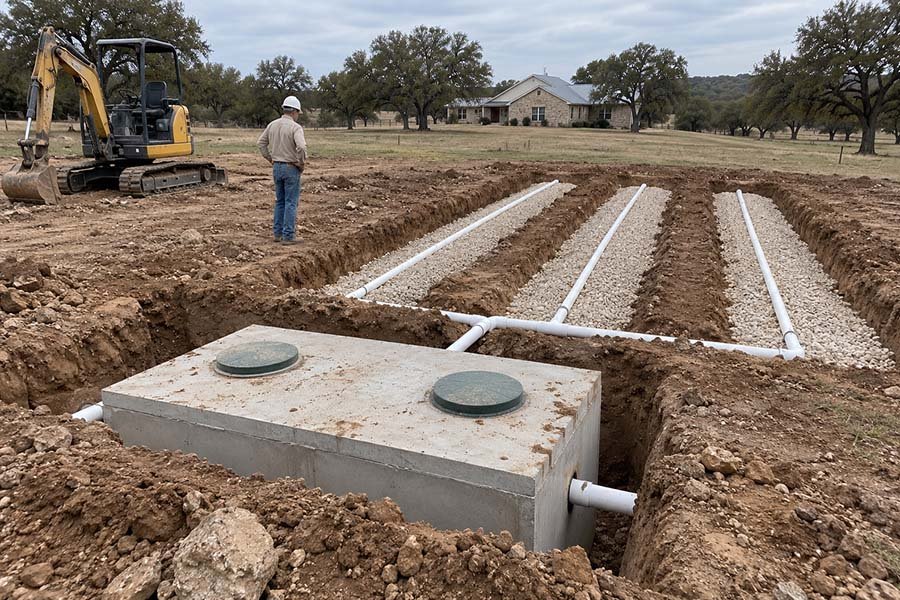
A conventional septic system can be one of the more economical options when the site is suitable for conventional treatment and disposal.
For preliminary budgeting, approximately $7,000 to $12,000 is a useful planning range for many conventional residential installations.
The actual cost can be lower or higher depending on the property and project.
A conventional system commonly uses a septic tank for primary treatment followed by an approved soil-based disposal area.
Because these systems can have fewer mechanical components than aerobic treatment systems, both installation and ongoing operating requirements may be simpler.
However, price should not determine whether a conventional system is selected.
The property first needs to be suitable for the proposed treatment and disposal method.
If you want to understand the system itself before comparing prices, read our guide to conventional septic systems.
Aerobic Septic System Installation Cost
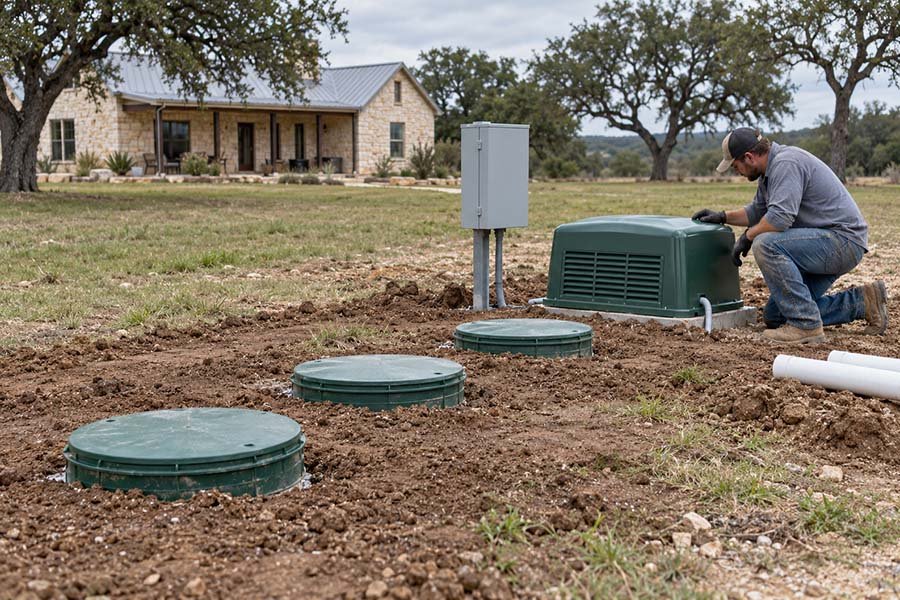
Aerobic septic systems generally contain more treatment and mechanical equipment than basic conventional systems.
For many Central Texas residential projects, approximately $10,000 to $20,000 is a useful preliminary planning range for an aerobic installation.
Depending on the approved configuration, an aerobic treatment system can include an aerator, pumps, alarms, controls, disinfection equipment, and a suitable disposal system.
Those components can affect both installation and long-term ownership expenses.
An aerobic system should not automatically be described as better than a conventional system. The appropriate choice depends on site conditions and applicable requirements.
Because aerobic pricing is its own search intent, we cover it separately in our aerobic septic system cost in Texas guide.
What Affects the Cost to Install a Septic System?
The system itself is only part of the installation cost.
The property can be just as important.
Soil Conditions
Soil plays an important role in determining which disposal methods are appropriate.
TCEQ’s OSSF suitability guidance considers soil texture and other site characteristics when identifying suitable treatment and disposal options.
This means a contractor should not simply assume that the least expensive system can be installed on every property.
Rock and Restrictive Conditions
Central Texas properties can contain rock and other subsurface conditions that complicate excavation or affect system selection.
TCEQ’s suitability guidance specifically considers fractured rock and restrictive horizons.
Additional excavation difficulty can increase labor and equipment requirements.
Groundwater
Groundwater conditions can also affect which disposal options are appropriate.
Again, this is why a site evaluation needs to come before a reliable installation estimate.
System Type
A conventional gravity system, aerobic treatment unit, low-pressure system, drip system, or other approved configuration can require different components.
More equipment and more complicated installation generally change the project budget.
For a broader explanation of these options, see our guide to the types of septic systems in Texas.
System Capacity
The system needs to be designed for the wastewater load it will serve.
Larger or more demanding applications can require different tank capacities, treatment components, or disposal-area sizing.
This is why septic installation cost should not be reduced to a simple number based only on the number of bedrooms.
Disposal Method
Treatment and disposal are different parts of an OSSF.
The disposal method selected for the property can change the materials, equipment, design, and excavation required.
Property Access
Installation equipment needs to reach the work area.
Narrow gates, fences, structures, steep grades, utilities, landscaping, and limited working space can complicate an otherwise straightforward installation.
Electrical Requirements
Systems requiring pumps, aerators, controls, or alarms introduce electrical work that may not exist in a basic gravity system.
The estimate should make clear whether applicable electrical work is included.
Site Evaluation and Septic System Design
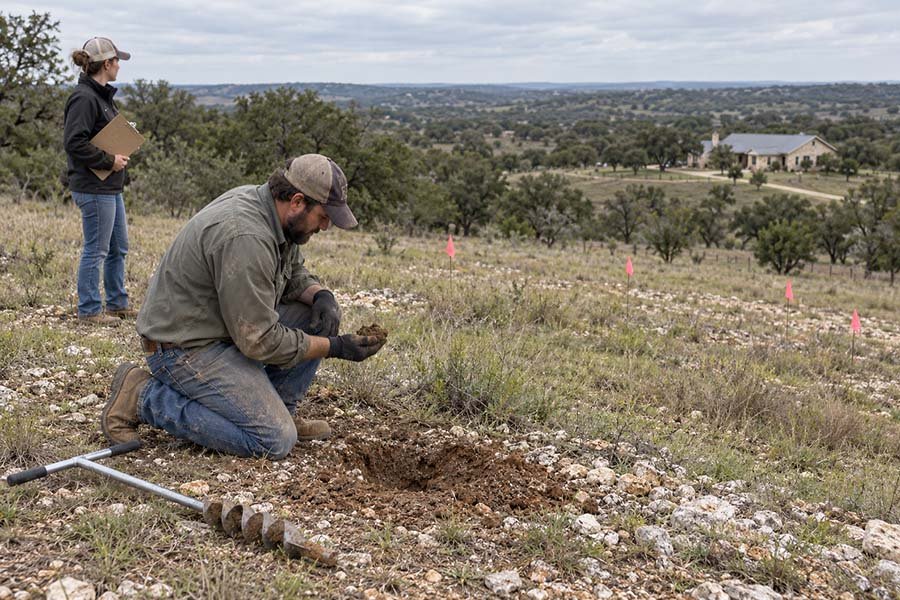
A site evaluation is one of the most important steps before installing a septic system in Texas.
TCEQ says the preconstruction site evaluation includes a survey of the property, soil analysis in the proposed disposal area, and other criteria needed to determine the site’s suitability.
This information helps determine which treatment and disposal methods can be used.
The process matters to cost because a property that supports a straightforward design can have very different requirements from one with challenging soil, rock, groundwater, slope, or space constraints.
Some configurations also require professional design.
TCEQ identifies professional design requirements for certain secondary treatment and nonstandard systems.
For homeowners, this means the most reliable estimate usually comes after the property has been evaluated, not before.
An online price can provide a preliminary budget. It cannot determine which OSSF your property requires.
Septic System Permit Costs in Texas
There is no single septic permit price that applies throughout Texas.
OSSF programs are administered by different permitting authorities, and fees can vary by jurisdiction and project.
TCEQ explains that most OSSF construction requires an authorization to construct before installation begins and that the application includes planning materials for the proposed system.
Local authorized agents can also adopt requirements that are more stringent than state minimums.
This is why a statewide article should not tell every homeowner that a septic permit costs one specific amount.
Before comparing installation estimates, find out whether permitting fees and permitting-related services are included in the contractor’s price.
For more information, read our Texas septic system permit guide.
How Soil and Rock Affect Septic Installation Cost
Soil and subsurface conditions can influence both which system is appropriate and how difficult it is to install.
A common mistake is assuming that one particular soil condition automatically means the homeowner must install an aerobic system.
Texas system selection is more nuanced.
TCEQ evaluates suitability based on multiple factors and recognizes numerous treatment and disposal combinations.
For example, soil texture, groundwater, fractured rock, restrictive horizons, and slope can affect whether a particular disposal method is appropriate.
Rock can also affect excavation.
A site requiring additional equipment or more difficult excavation can involve more labor than an accessible property with easier digging conditions.
The financial effect therefore comes from both sides of the project.
Site conditions can influence what needs to be installed and what it takes to install it.
How Much Does It Cost to Install a Well and Septic System?
The GSC data shows that homeowners also reached this page while researching the cost to install a well and septic system.
These should be treated as two separate projects when developing a budget.
The septic portion can often fall within the ranges discussed in this guide, depending on the property and required system.
Well pricing is different.
It can depend on drilling depth, geology, casing, pump equipment, water testing, site access, and the well contractor. Dillon Septic does not provide a universal well-drilling price, so we would not combine an unsupported well estimate with the septic-system cost.
Property planning also needs to account for applicable separation requirements between water wells and OSSF components.
If you need both, coordinate the site planning early rather than independently choosing locations for the well and septic system.
New Septic Installation vs Septic System Replacement
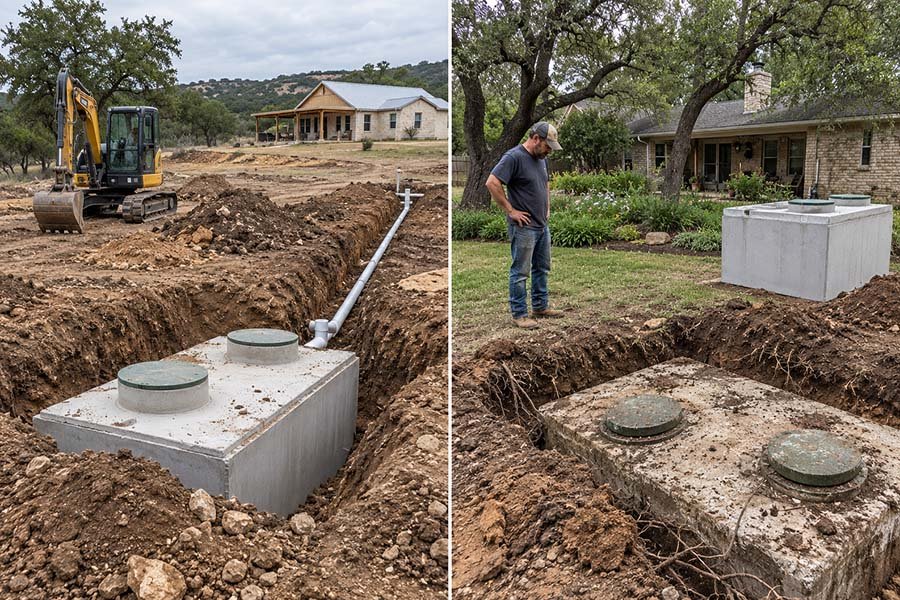
Installing a septic system on a property and replacing an existing system can involve different work.
A new installation begins with the property evaluation and the system proposed for the site.
A replacement can also involve evaluating existing tanks, disposal components, damaged equipment, available replacement area, and what portions of the existing OSSF can remain.
That means a replacement should not automatically be priced using the same assumptions as a new installation.
If your existing system is failing rather than planning a new installation, read our guide explaining how much it costs to replace a septic system.
If the problem is specifically the disposal area, see our septic drain field replacement cost guide.
How to Compare Septic Installation Quotes
The lowest estimate is not automatically the least expensive project.
First make sure you are comparing the same system and the same scope of work.
TCEQ recommends obtaining at least three estimates, comparing them, and investigating why one estimate differs substantially from the others.
When comparing quotes, look beyond the final number.
Ask what treatment and disposal system is included.
Check whether site work, excavation, electrical work, permits, inspections, startup, and final site restoration are included or billed separately.
Also determine whether the quotes are based on the same approved design.
One contractor quoting a conventional installation and another quoting an aerobic or specialized system are not necessarily quoting comparable projects.
A good estimate should make it possible to understand what you are paying for.
How Long Does It Take to Install a Septic System in Texas?
There is no single timeline for every septic installation.
The complete process can include:
- site evaluation
- planning and design
- permit application
- review and approval
- contractor scheduling
- excavation
- installation
- required inspections
- final approval
TCEQ says the permitting authority should approve or deny submitted planning materials and permit applications within 30 days after receipt, but this should not be interpreted as a guarantee that an entire septic project will be completed within 30 days.
Incomplete applications, revisions, site conditions, system complexity, contractor availability, weather, and inspection scheduling can all affect the overall timeline.
Once the project is approved and scheduled, the physical installation may represent only one part of the total process.
For more detail, see our guide explaining how long it takes to install a septic system.
Planning a Septic System Installation in Central Texas
The most useful time to request a detailed septic installation estimate is after the property requirements are understood.
Start by determining:
- what the site evaluation shows
- which treatment system is suitable
- which disposal method is appropriate
- what capacity is required
- what the permitting authority requires
- whether electrical components are needed
- what excavation conditions exist
- what the contractor’s quote includes
For many residential projects in Central Texas, approximately $10,000 to $20,000 can be used as an initial complete-system planning range.
A relatively straightforward conventional system may fall closer to $7,000 to $12,000, while aerobic systems commonly require approximately $10,000 to $20,000. More complicated projects can reach $26,000 or more.
But those numbers should help establish a budget, not dictate which system gets installed.
The property and approved design come first.
Dillon Septic provides septic installation services in Texas within our Central Texas service area.
Frequently Asked Questions
How much does it cost to install a septic system?
The cost depends on the system type, site evaluation, treatment method, disposal method, capacity, soil and subsurface conditions, excavation, access, electrical requirements, permits, and project scope. A property-specific estimate is more reliable than a generic online average.
How much does a conventional septic system cost to install?
Approximately $7,000 to $12,000 can be used as an early planning range for many conventional residential projects. Actual cost depends on the approved design and property conditions.
How much does an aerobic septic system cost to install in Texas?
Approximately $10,000 to $20,000 is a useful planning range for many Central Texas residential aerobic projects. More complicated installations can cost more depending on the site, equipment, disposal method, and project requirements.
How much does it cost to install a well and septic system?
Well and septic installation should be budgeted as separate projects. Septic cost depends on the factors covered in this guide. Well cost can vary with drilling depth, geology, casing, pump equipment, testing, and other well-specific requirements. A universal combined price would therefore be misleading.
Does soil affect septic installation cost?
Yes. Soil and subsurface conditions influence which disposal systems are suitable and can also affect excavation. TCEQ’s system-selection guidance considers soil texture, groundwater, fractured rock, restrictive horizons, and slope when evaluating system suitability.
Do I need a permit to install a septic system in Texas?
Generally, yes. Most Texas OSSF installations require authorization to construct and approved planning materials before installation, although limited exemptions exist. Requirements are administered by the applicable permitting authority.
How long does septic system installation take?
There is no universal timeline. Site evaluation, planning, permit review, revisions, contractor scheduling, system complexity, weather, physical installation, and inspections can all affect completion time. TCEQ’s review timeframe for submitted planning materials should not be confused with the total project duration.
Final Thoughts
The average cost to install a septic system in Texas cannot be represented accurately by one price for every property.
For many residential installations in Central Texas, $10,000 to $20,000 is a useful preliminary complete-project budget.
A relatively straightforward conventional system may fall closer to $7,000 to $12,000, while an aerobic installation can commonly require approximately $10,000 to $20,000. More complicated projects can reach $26,000 or more.