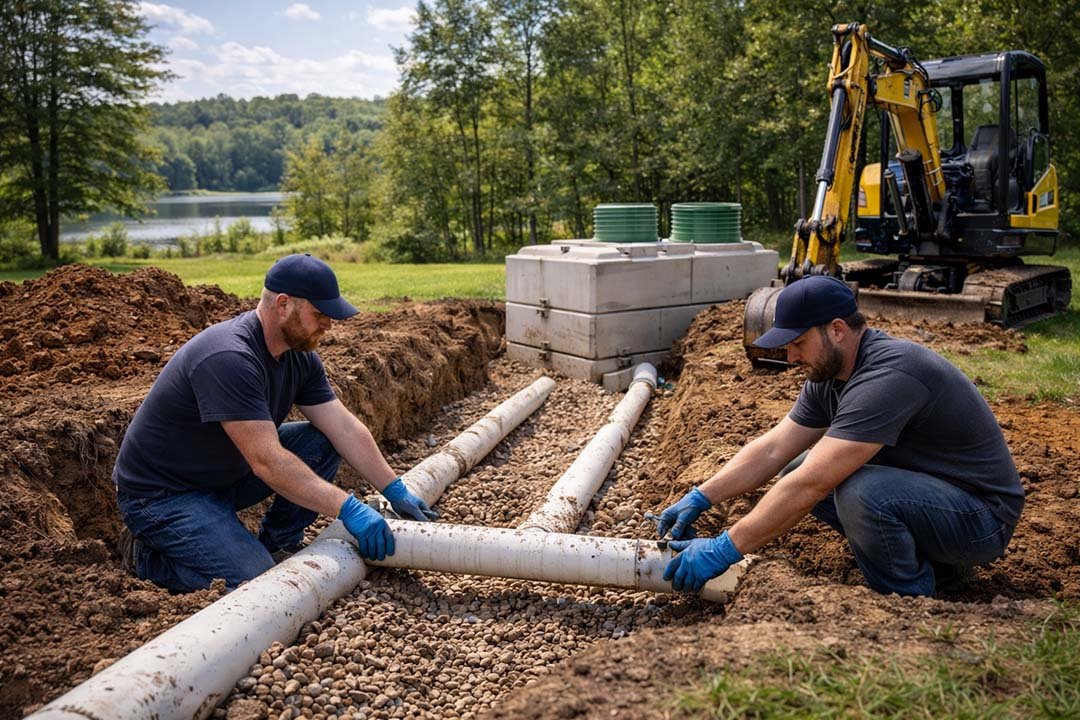
Septic system replacement cost depends on what has failed, what can remain in service, and what the property needs. Replacing a damaged tank is different from replacing the tank, treatment equipment, and drainfield together. Before comparing prices, homeowners need a clear understanding of the proposed work.
For preliminary budgeting, the installation ranges used in our Central Texas cost guides are approximately $10,000 to $20,000 for many complete residential projects. However, replacement can involve additional work on the existing system. These figures are starting points for planning, not a replacement quote or a guaranteed price range.
What Is the Average Septic System Replacement Cost?
A straightforward project on suitable ground may fall near the $7,000 to $12,000 conventional installation planning range. Aerobic projects often use approximately $10,000 to $20,000 as an initial budget, while complicated installations can reach $26,000 or more. Replacement conditions can move the final price outside those ranges.
The important question is what those figures include. Pumping the old tank, handling abandoned components, reconnecting usable lines, and restoring an established yard can change the scope. An estimate should identify those tasks rather than apply a new-installation price to an existing property without evaluation.
For broader context, read our guide to septic system costs in Texas. When budgeting specifically for replacement, ask which existing components need attention and whether the proposed price covers the entire corrective project.
What Does Septic System Replacement Include?
The process begins with determining why the existing system is malfunctioning. A contractor needs to understand the condition of the tank, treatment equipment, distribution components, and disposal area. That assessment helps establish whether replacement is necessary and whether any suitable components can remain.
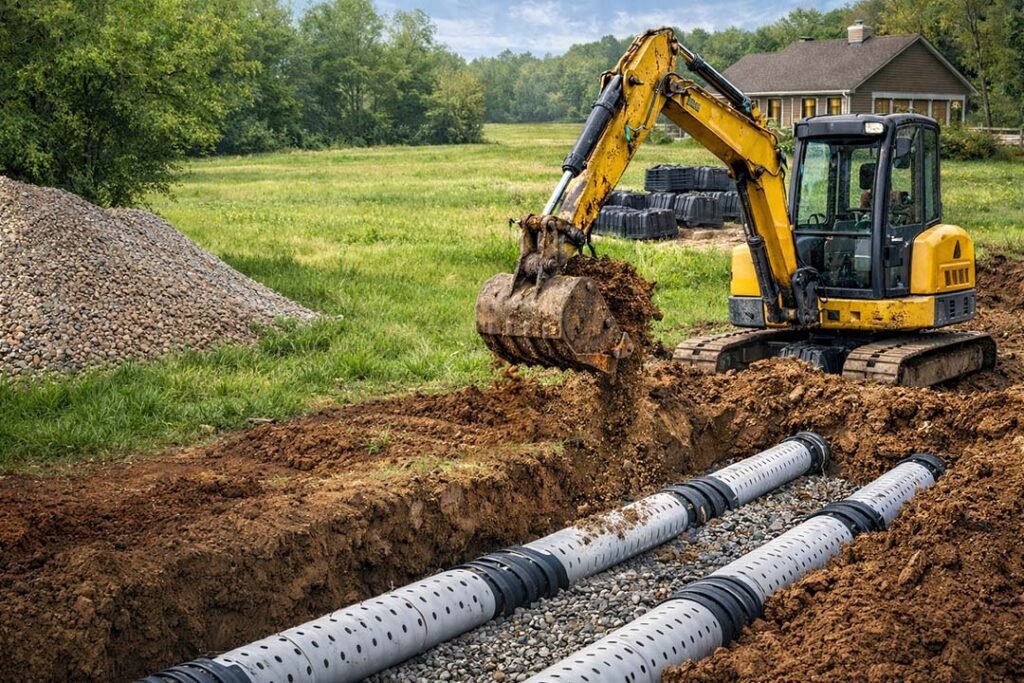
Depending on the project, work can include site evaluation, design, permitting, pumping, excavation, old-system handling, new equipment, piping, and electrical connections. Required inspections and backfilling are also part of completing the installation. Lawn repair, irrigation repairs, and landscaping may be separate, so confirm the restoration scope.
What Affects Septic System Replacement Cost?
Site conditions are a major factor. Soil texture, fractured rock, groundwater, restrictive soil layers, slope, and available area can influence the treatment and disposal methods suitable for a property. TCEQ’s system-selection guidance bases suitability on the site evaluation rather than choosing a system by price alone.
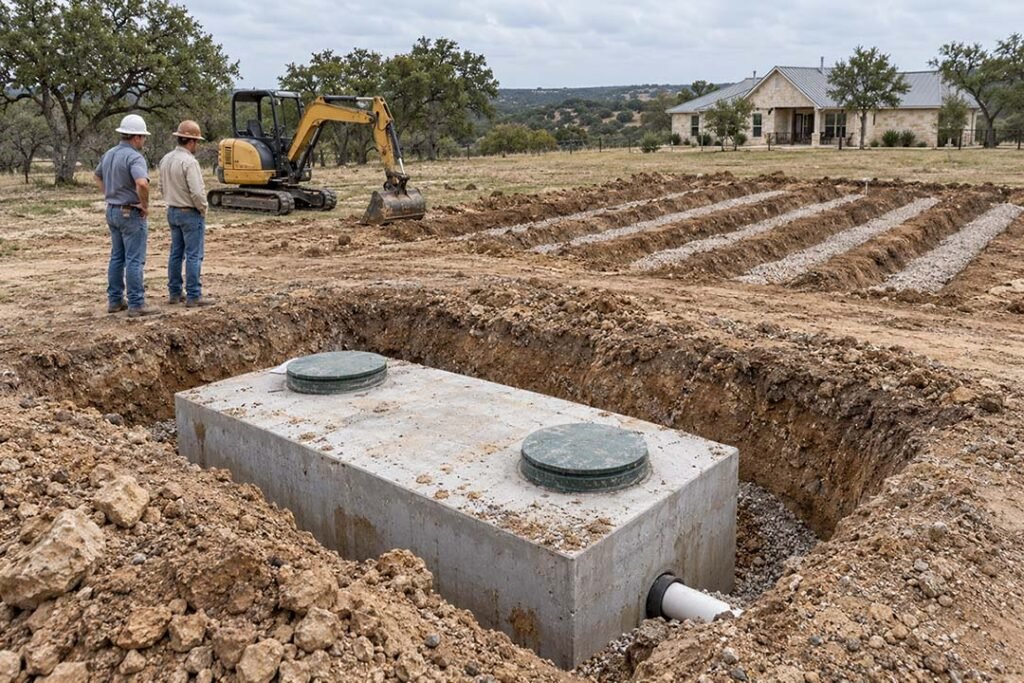
Excavation conditions affect the physical work too. Rock, deep burial, and difficult terrain can require more equipment time and labor. Access through a narrow gate or around existing buildings may complicate delivery and placement. These conditions should be considered during the estimate instead of discovered after construction begins.
System capacity and configuration also matter. The replacement must accommodate the applicable wastewater load and approved design. Pumps, controls, disinfection equipment, specialized distribution components, or longer pipe connections can change material and labor requirements. Lot size alone does not determine how large the septic system needs to be.
Conventional and Aerobic Replacement Options
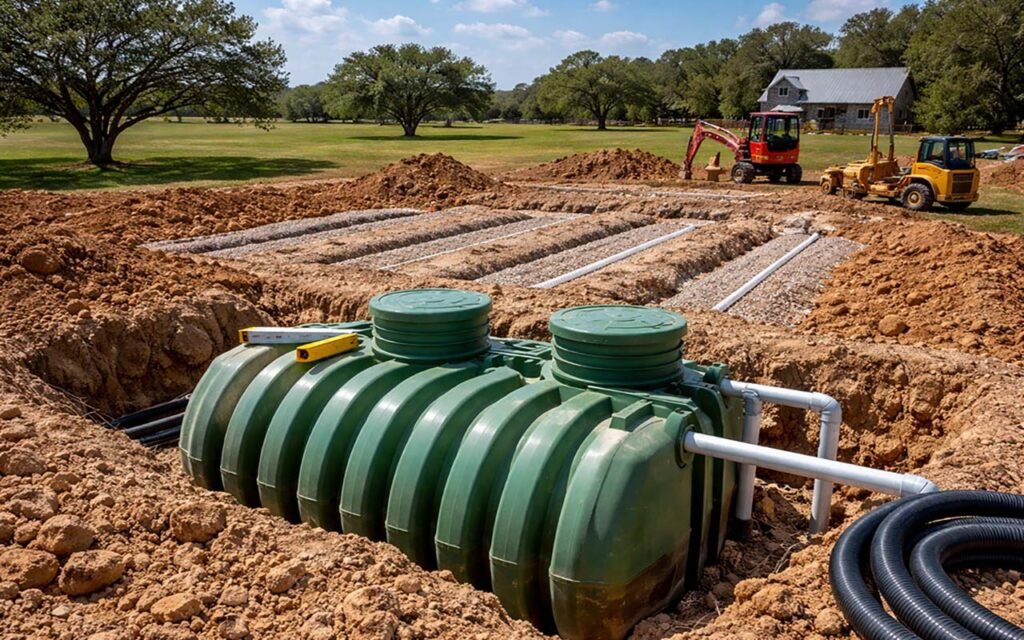
A conventional gravity system generally uses a septic tank followed by an appropriate soil absorption area. Its relatively simple configuration can mean fewer mechanical components to purchase and maintain. However, it is only an option where the site and approved design support that arrangement.
An aerobic treatment unit introduces oxygen into treatment and can involve an aerator, pumps, alarms, controls, and disinfection equipment. Treated wastewater still needs a suitable disposal method. An aerobic unit should therefore be evaluated as part of a complete system, not as a universal solution to difficult ground conditions.
The appropriate choice depends on the property and approval requirements. Ask why the proposed configuration is suitable and what ownership responsibilities it creates. Our aerobic septic system cost guide explains those equipment and maintenance considerations in more detail.
Repair or Replace the Existing System?
A malfunction does not automatically justify complete replacement. A damaged pipe, failed pump, faulty control, or broken access component may be repairable without replacing everything. The diagnosis should connect the observed symptoms to a specific problem and explain how the proposed work will correct it.
Broader replacement may be appropriate when major components cannot be suitably repaired or the existing arrangement cannot provide adequate treatment and disposal. Age is relevant background, but it should not be the sole reason for replacing a system. Review the findings and available options before committing to extensive work.
Can You Replace Only the Tank or Drainfield?
Sometimes, yes. The tank and drainfield perform different functions, and failure of one does not prove that both need replacement. If other components remain suitable and functional, the approved project may focus on the failed portion and the connections necessary to integrate it.
This distinction can substantially affect the estimate. A tank-only quote should not be compared directly with a complete replacement quote. Read our guides to septic tank replacement cost and drainfield replacement cost when evaluating a project limited to either component.
Does Replacement Require a Permit in Texas?
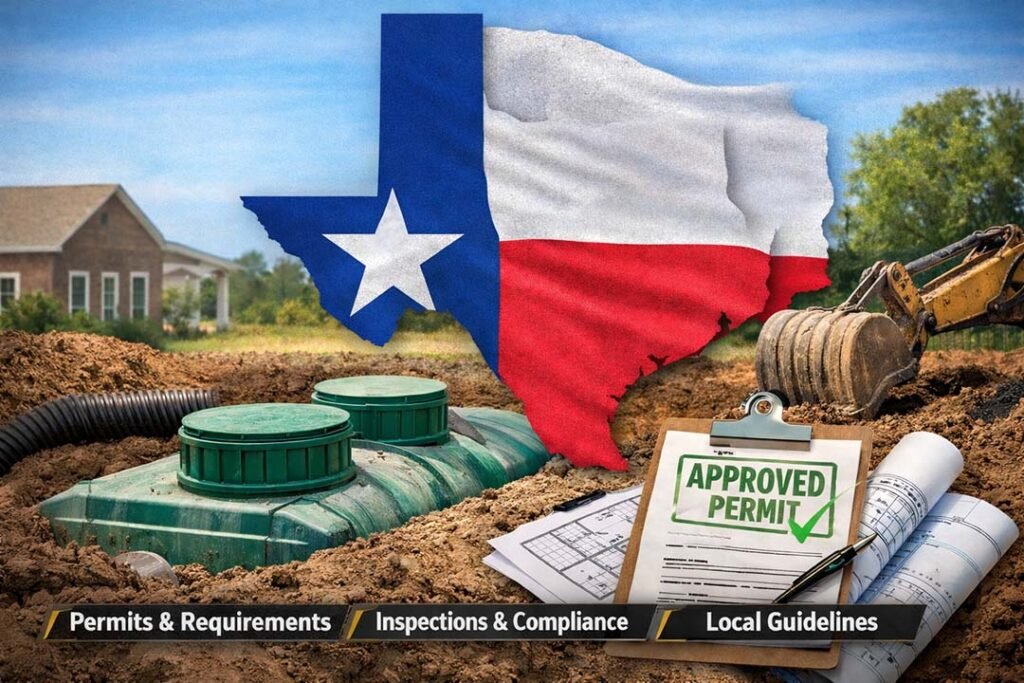
TCEQ states that replacing an existing septic tank or repairing or replacing a drainfield requires a permit. Its guidance also notes that work on a disposal area must bring the system into current standards. Confirm the requirements with the permitting authority responsible for your property before work begins.
The estimate should explain who handles planning materials, applications, and inspection coordination. Ask whether the associated services and fees are included. Our Texas septic permit guide provides more background on preparing for this stage.
Is Replacement More Expensive Than New Installation?
Replacement can be more complicated because the contractor is working around an existing home, utilities, landscaping, and buried equipment. The old system also needs to be addressed. However, replacement is not automatically more expensive in every case, particularly when suitable components can remain.
New construction can have its own challenges, including difficult rock, limited suitable disposal space, or specialized design requirements. The fairest comparison looks at the actual work involved. Avoid assuming either project will cost less before the site and system requirements are understood.
How Long Does Septic System Replacement Take?
The overall schedule includes evaluation, planning, permit review, equipment delivery, construction, and inspections. Excavation and installation are only part of that process. Weather, site access, unexpected damage, and inspection availability can affect completion.
Ask for an estimated schedule that separates approval time from on-site work. Also discuss when household wastewater use must be restricted and how the contractor will communicate changes. Knowing those details helps you plan daily routines while the system is being replaced.
How to Compare Contractor Estimates
Start by comparing scope rather than totals. Each estimate should identify the proposed system, components being retained, old-system handling, excavation, connections, electrical work where needed, and restoration. A lower price may reflect excluded work rather than a more economical way to complete the same project.
Ask how unforeseen conditions will be handled and when your approval is required for additional charges. Keep the evaluation findings, approved plans, estimates, and final service records together. Clear documentation makes it easier to understand both the current project and future maintenance needs.
Consider Costs After Installation
Replacement is only part of the ownership budget. Depending on the configuration, ongoing expenses can include pumping, inspections, electricity, maintenance visits, disinfection supplies, and mechanical repairs. Ask the installer to explain what the proposed system will require after construction is finished.
The EPA recommends regular inspection and pumping, with household tanks typically pumped every three to five years. Actual frequency depends on occupancy, wastewater generation, solids, and tank size. Systems with mechanical components generally need more frequent attention.
Frequently Asked Questions
Will pumping fix a failing septic system?
Pumping removes accumulated wastewater and solids, but it does not repair damaged components or restore every failing drainfield. It may be part of the service needed. Diagnosis determines whether additional correction is necessary.
Does an old septic system automatically need replacement?
No. Age can help explain the system’s history, but condition and performance matter. An evaluation should determine whether repair, partial replacement, or complete replacement is appropriate.
What happens to the old septic system?
Existing components must be handled according to the replacement plan and applicable requirements. Ask the contractor which structures will be removed or abandoned and whether pumping, disposal, and related work are included.
Can the replacement go in the same location?
Possibly, but it should not be assumed. Existing conditions, available space, the disposal area, and the approved design determine where replacement components can be installed.
Final Thoughts
The most useful replacement budget starts with a diagnosis and a clear scope. Determine what has failed, which components can remain, and what the property requires before comparing contractor totals. That approach helps avoid both unnecessary replacement and incomplete corrective work.
Dillon Septic provides septic repair services in Central Texas. If your system is causing concern, arrange an assessment and discuss the options. A detailed estimate based on your property gives you a stronger basis for planning than a generic online average.