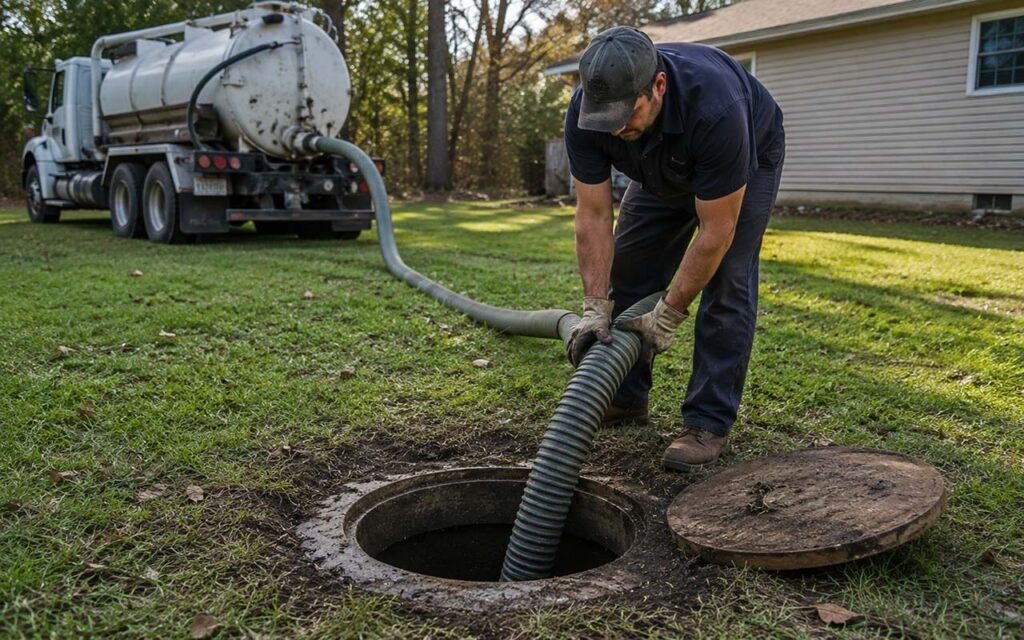
A septic tank lid provides safe access to the tank for inspection, pumping, and maintenance while keeping the opening securely covered between service visits. If the lid becomes cracked, broken, unstable, or no longer fits the opening properly, it should not be ignored.
Septic tank lid replacement may involve more than simply placing a new cover over the opening. The existing lid, tank opening, riser, fasteners, and surrounding components may need to be evaluated before the appropriate replacement can be determined.
This is especially important with older concrete tanks where the access cover may have deteriorated along with the material around the opening.
If you discover a damaged septic lid, keep people and pets away from the area and avoid standing or placing weight on the cover. An unstable or open septic tank presents a serious safety hazard.
When Does a Septic Tank Lid Need Replacement?
Not every old septic tank lid automatically needs replacement. The important question is whether the lid can still safely and securely cover the access opening.
Visible cracking is one of the most obvious reasons to have a lid evaluated. A small surface mark is different from a structural crack that extends through the cover or affects its ability to support normal conditions around the access point.
Broken edges and missing sections are another concern. They can prevent the cover from fitting correctly and may leave part of the tank opening exposed.
A lid should also be evaluated when it rocks, shifts, no longer sits securely, or cannot be properly fastened. The problem may involve the lid itself, but it can also involve the riser or the area supporting the cover.
Common reasons to investigate replacement include:
- Cracks extending through the lid
- Broken or deteriorating concrete
- Missing pieces
- A lid that no longer fits the opening
- Damaged locking or fastening components
- A warped or damaged plastic cover
- Damage around the riser or access opening
- A missing septic tank lid
If the condition is uncertain, avoid testing the lid by standing on it. A septic professional can examine the access point more safely.
Why a Broken or Missing Septic Tank Lid Is a Safety Concern
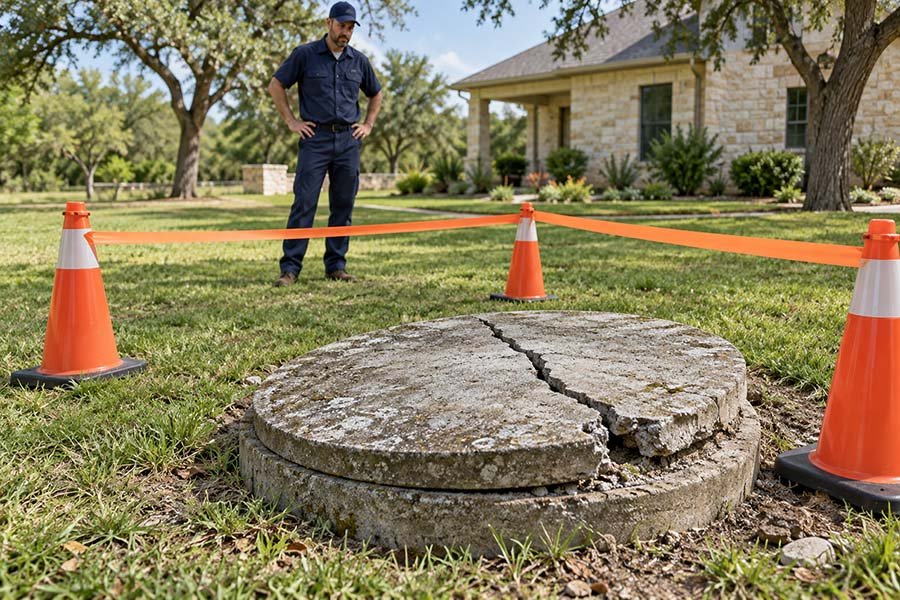
Safety is the most important reason not to ignore a damaged septic tank cover.
A septic tank is an underground wastewater structure. A missing, unsecured, or structurally damaged cover can create an opening through which a person or animal could fall.
EPA advises homeowners to ensure septic tank access lids are securely fastened and specifically warns against entering a septic tank because of dangerous gases and other hazards.
If you find an open or badly damaged lid, keep children and pets away from the area. Do not attempt to enter the tank or lean into the opening.
Do not assume a cracked concrete lid is safe simply because it still appears to be sitting in place. The condition of the material underneath the visible surface may not be obvious.
The appropriate response is to secure the area and have the lid and access opening evaluated.
What If the Lid Is Only Cracked?
Whether a cracked septic tank lid requires complete replacement depends on the extent and location of the damage.
Minor cosmetic deterioration is different from a crack that affects the structural integrity of the cover.
A lid deserves professional attention when the crack runs through the cover, sections are separating, concrete is crumbling, reinforcement is exposed, or the lid no longer sits securely over the opening.
The surrounding structure matters too. Replacing the cover alone may not solve the problem if the riser, tank opening, or supporting surface is also damaged.
This is why we would not recommend diagnosing the condition based only on the visible crack.
Concrete, Plastic and Other Septic Tank Lids
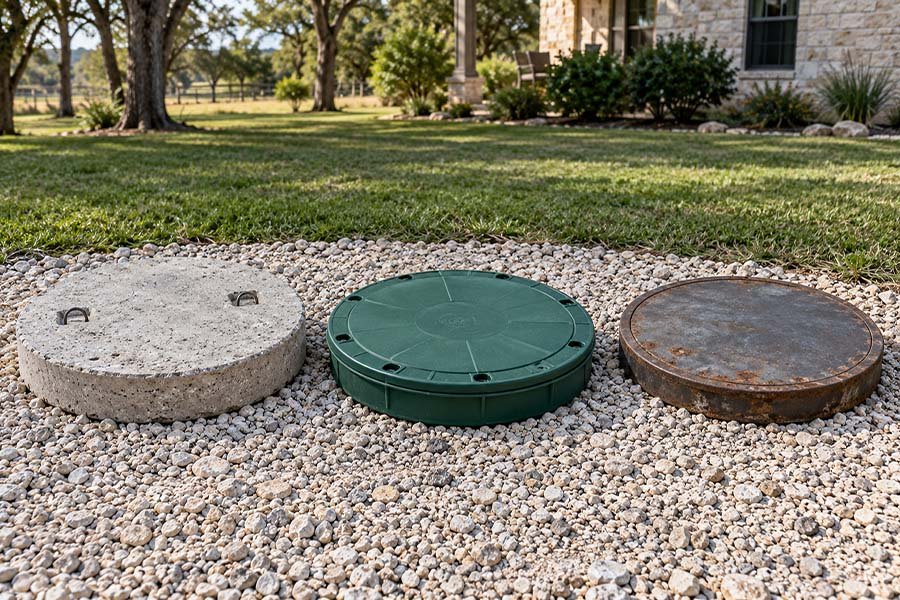
Septic tank lids are available in different materials and configurations. The appropriate replacement depends on the existing tank, access opening, riser system, dimensions, and how the lid is designed to be secured.
Concrete Septic Tank Lid Replacement
Concrete lids are common on older septic tanks and can be extremely heavy.
Over time, a concrete cover may crack, chip, deteriorate around its edges, or become difficult to remove safely. Damage can also occur around the tank opening rather than being limited to the lid.
Replacing a concrete septic tank lid therefore starts with inspecting both the cover and the structure supporting it.
The replacement must be appropriately sized and compatible with the existing access opening. Heavy concrete components can also require suitable lifting and handling equipment.
A homeowner should not attempt to lift a heavy or deteriorated concrete lid while standing directly over the septic tank opening.
Plastic and Polyethylene Septic Lids
Plastic or polyethylene access covers are commonly associated with septic riser systems and newer access arrangements.
They are considerably lighter than traditional concrete covers, but that does not mean any plastic lid can be used as a replacement.
Diameter, fastening method, riser compatibility, manufacturer specifications, and the condition of the existing riser all matter.
A damaged plastic lid may need replacement if it is cracked, warped, cannot be secured, or no longer properly fits its intended opening.
Metal Septic Tank Covers
Some older systems may have metal access components or covers.
Corrosion and deterioration can affect these materials over time. If a metal cover is badly rusted, weakened, unstable, or difficult to secure, the entire access arrangement should be evaluated rather than simply covering the damaged area.
The objective with any material is the same. The septic access point should be safely covered, appropriately fitted, and accessible for future maintenance.
How Septic Tank Lid Replacement Works
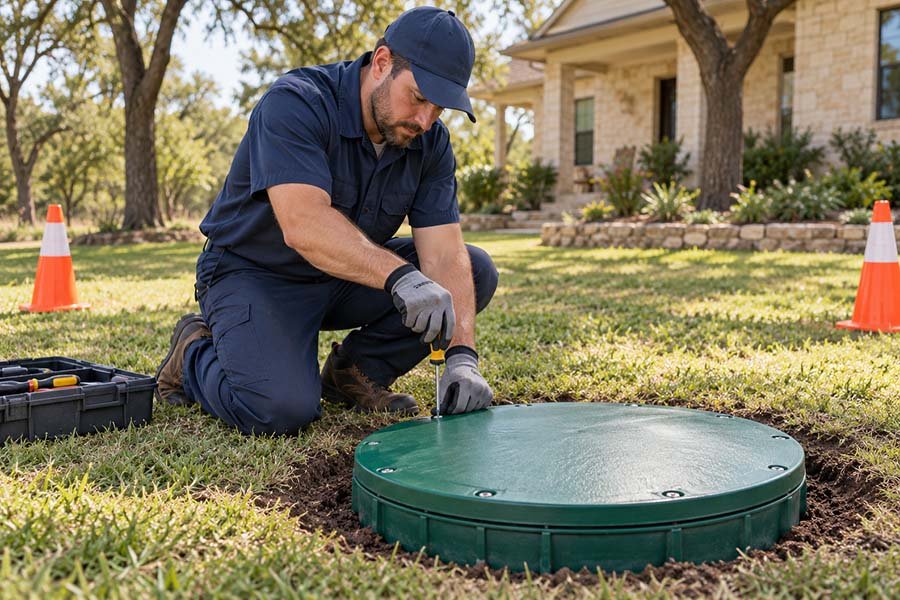
The exact replacement process depends on the type of septic tank and access system.
First, the tank access point needs to be identified. Some lids are visible at grade, while older tank covers may be buried beneath soil.
If the lid is buried, the area needs to be exposed carefully without damaging the tank, riser, plumbing, or other septic components.
Once accessible, the existing lid and surrounding opening can be inspected.
Measurements are particularly important. Septic lids are not universally interchangeable, so the replacement needs to match the dimensions and configuration of the existing access point.
The inspection should also determine whether the problem is limited to the lid.
For example, installing a new cover over a damaged riser or deteriorated concrete opening may leave the underlying problem unresolved.
Once an appropriate replacement is selected, the new lid should be installed and secured according to the applicable system or component requirements.
The final access point should remain usable for future septic pumping and inspection.
Should You Replace a Septic Tank Lid Yourself?
A lightweight lid may appear simple to replace, but the primary concern is working around an open septic tank.
EPA specifically warns people never to enter a septic tank because gases and low oxygen levels can be fatal.
There are additional concerns with heavy concrete lids, unstable covers, buried access points, damaged risers, and deteriorating tank openings.
If you are uncertain about the type of lid, its condition, how it is secured, or whether the surrounding structure has been damaged, professional evaluation is the safer option.
Homeowners should never climb into the tank to retrieve a dropped component, inspect damage, or attempt a repair.
What Affects Septic Tank Lid Replacement Cost?
There is no single septic tank lid replacement cost that accurately applies to every property.
A replacement plastic access cover and a heavy custom-sized concrete lid can involve very different materials, equipment, and labor.
Instead of relying on a broad national price range, consider the factors that actually determine the scope of the work.
Lid material affects both the replacement component and how it must be handled.
Lid size and configuration matter because the new cover must fit the existing opening or riser correctly.
Burial depth can increase the amount of excavation required to reach the access point.
Accessibility matters when landscaping, fences, structures, or other obstacles make the tank difficult to reach.
Riser condition can affect the project if the existing riser is cracked, unstable, incorrectly fitted, or otherwise damaged.
Condition of the tank opening is especially important with older concrete systems. If the area supporting the lid is deteriorating, replacing only the cover may not be sufficient.
Equipment and labor requirements can vary significantly between a lightweight access cover and a heavy concrete component.
For these reasons, a septic tank lid replacement estimate should be based on the actual tank and access point rather than a generic online price.
Should You Add a Septic Tank Riser When Replacing the Lid?
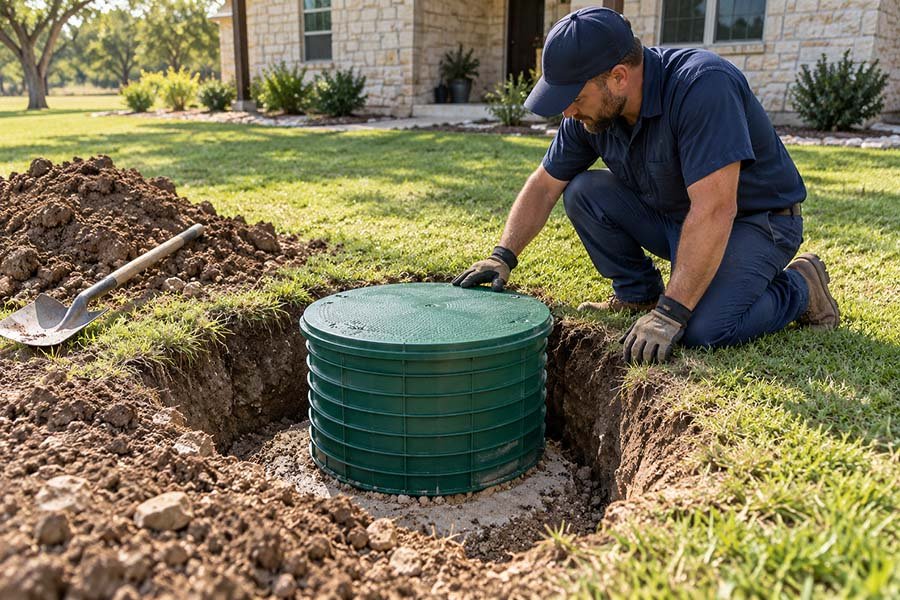
A lid replacement can also be an appropriate time to evaluate how easily the tank can be accessed for future service.
If an older septic tank access point is buried well below grade, technicians may need to locate and excavate the area each time the tank requires pumping or inspection.
A properly designed riser can bring the access point closer to the ground surface, making future maintenance easier.
However, adding a riser is not automatically necessary whenever a lid is replaced. The existing system configuration, tank design, access depth, and condition of the opening should be considered first.
The lid and riser also need to work together as a compatible access system.
If the existing access point is already convenient and secure, replacing a damaged lid may be all that is required.
What to Do If You Find a Damaged Septic Tank Lid
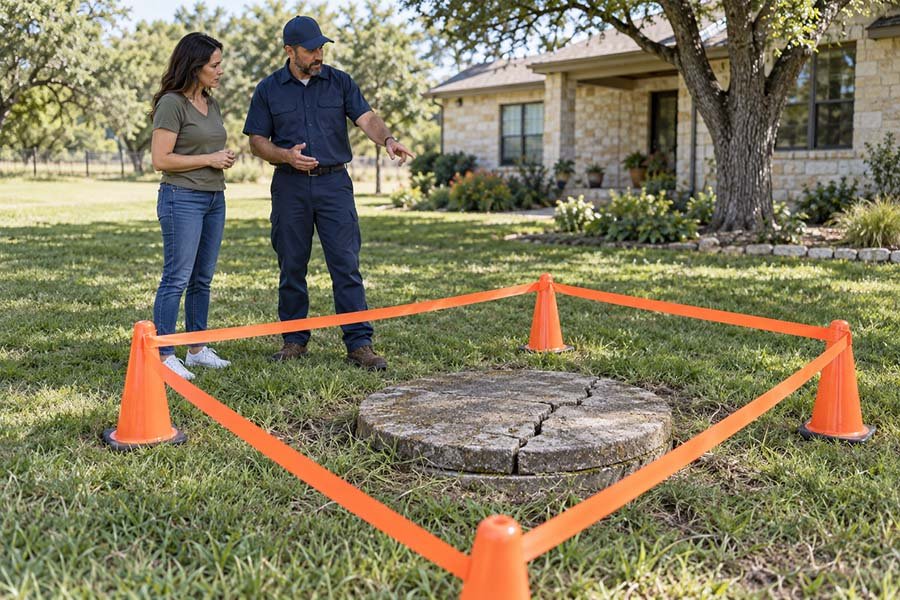
If you discover a cracked, broken, loose, or missing septic lid, start by treating the area as a potential safety hazard.
Keep children, pets, visitors, and vehicles away from the opening. Avoid walking over the damaged cover or testing whether it can still support weight.
Do not remove a questionable lid simply to look inside the tank.
If the opening is already exposed, do not enter the tank under any circumstances.
Next, have the access point evaluated to determine whether the problem involves only the lid or also the riser, tank opening, or surrounding structure.
If you do not know the condition of the rest of the system, this may also be an appropriate opportunity for a septic inspection.
A professional assessment can help determine what needs replacement without assuming that every damaged cover requires the same repair.
Frequently Asked Questions
How do I know if my septic tank lid needs replacement?
Replacement may be appropriate if the lid is structurally cracked, broken, badly deteriorated, missing sections, unstable, warped, or unable to fit and secure properly over the access opening. The surrounding riser or tank opening should also be checked for damage.
Can a cracked septic tank lid be repaired?
It depends on the material and severity of the damage. Minor surface deterioration is different from a structural crack through the cover. If the lid has lost structural integrity or cannot securely cover the opening, replacement may be the safer solution.
How much does septic tank lid replacement cost?
Cost depends on the lid material and size, accessibility, burial depth, excavation requirements, labor, equipment, and whether the riser or tank opening also needs attention. An inspection of the actual access point provides a more reliable estimate than a universal price range.
Can a concrete septic tank lid be replaced?
Yes, a damaged concrete septic tank lid can often be replaced. The tank opening and supporting structure should also be inspected to make sure they can safely accommodate the replacement cover.
Can I replace a concrete septic tank lid with a plastic lid?
Not automatically. The replacement must be compatible with the tank opening or riser system and appropriate for that particular application. A plastic cover should not simply be placed over an opening designed for a different type of lid without confirming that the access arrangement is suitable.
What does a septic tank lid look like?
Appearance varies by system. Older septic tanks may have heavy concrete covers, while systems with risers may have round plastic or polyethylene access lids closer to ground level. Some tanks have more than one access point.
How do I find the correct replacement lid size?
The access opening and existing components need to be measured accurately. Diameter alone may not be enough because fastening method, riser type, manufacturer specifications, and the condition of the opening can affect compatibility.
Should a septic tank lid be secured?
Yes. EPA advises homeowners to make sure septic tank access lids are securely fastened. Secure access helps reduce the risk associated with an open or improperly covered septic tank.
Final Thoughts
A damaged septic tank lid should not be treated as a cosmetic problem.
The lid provides access for pumping and inspection while keeping the tank opening safely covered between service visits. Cracks, deterioration, poor fit, damaged fasteners, or a missing cover deserve attention, particularly when the structural condition of the lid is uncertain.
The correct septic tank lid replacement depends on the existing tank, access opening, lid material, dimensions, riser configuration, and condition of the surrounding components.
Avoid standing on a damaged lid or entering an open septic tank. Keep children and pets away from an unsafe access point and have the condition evaluated.