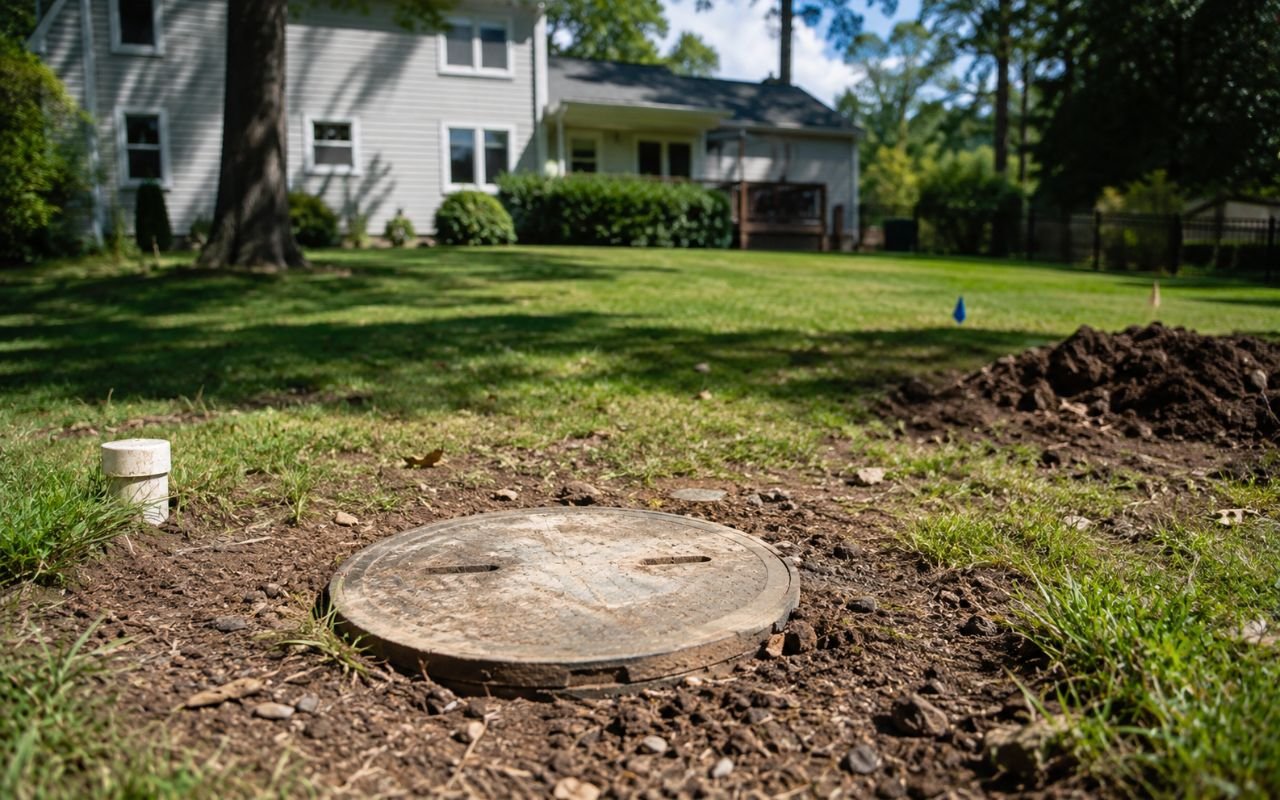
Finding a septic tank can be surprisingly difficult, especially on an older property where the access lids have been covered by years of soil, grass, or landscaping. Homeowners often know they have a septic system but have no idea where the tank was installed.
If you are trying to learn how to find a buried septic tank, the best approach is to start with records and visible clues before digging. In our experience working with septic systems, careful investigation can often narrow a large yard down to a relatively small search area.
Locating the tank is important before septic pumping, inspections, repairs, landscaping, or construction. It also helps prevent accidental damage from vehicles or heavy equipment. Below, we explain the methods homeowners can use and when professional locating equipment may be the better option.
Why Septic Tanks Can Be Difficult to Find
A septic tank is designed to operate underground, so many systems have little visible evidence at the surface. Modern systems may have risers that provide easy access, but older installations often have lids buried beneath several inches of soil.
Landscaping can make the problem harder. New sod, garden beds, patios, sheds, fences, and other improvements may change how a property looks compared with the time when the septic system was installed.
Records can also disappear as a home changes ownership. A homeowner may receive no septic diagram, pumping history, or installation paperwork when purchasing an older property.
The good news is that the tank is connected to your home’s plumbing. That physical connection gives us a logical starting point.
Start With Your Septic System Records
Before picking up a shovel, check whether an installation drawing or permit exists.
The U.S. Environmental Protection Agency recommends contacting the local permitting authority, which may be a county, town, health department, or environmental department. Septic records may include an “as-built” drawing showing where the tank and drainfield were installed.
Depending on your location, useful records may include:
- Septic installation permits
- Property surveys
- As-built drawings
- Previous inspection reports
- Septic pumping invoices
- Home inspection documents
- Repair and maintenance records
For Texas properties, septic systems are generally referred to as on-site sewage facilities, or OSSFs. The Texas Commission on Environmental Quality septic system resource provides information about OSSF permitting, maintenance, construction requirements, and local regulatory programs.
Records should be treated as a strong starting point rather than a guarantee. Older diagrams may be approximate, and property features can change over time.
How to Find a Buried Septic Tank From the House
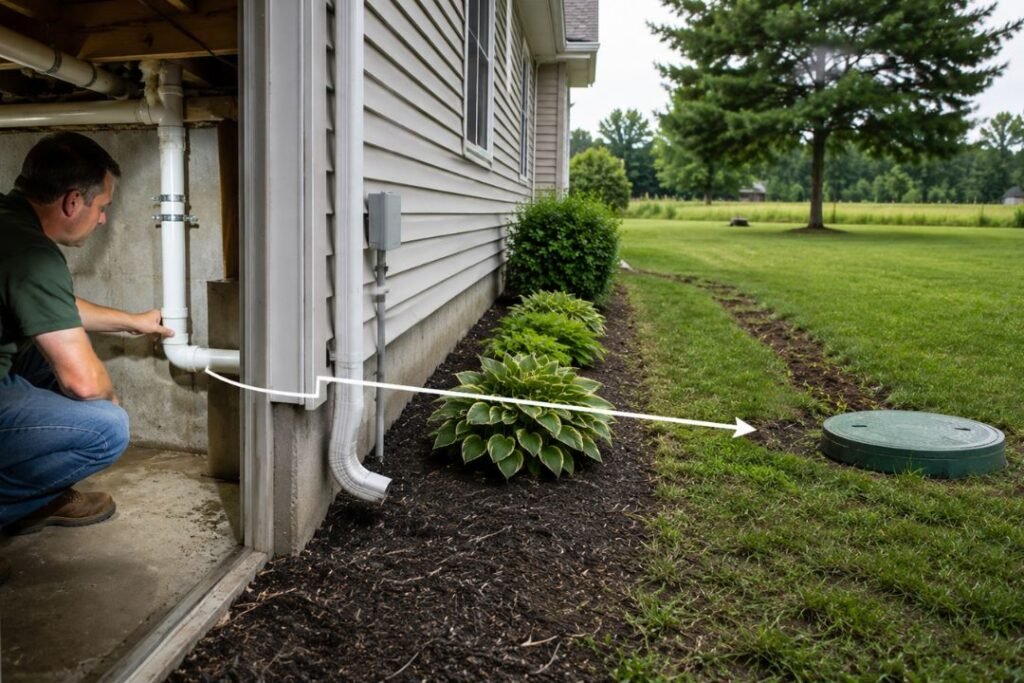
When paperwork does not provide an answer, the next step is to understand where wastewater leaves the building.
Most septic systems receive wastewater through a main building sewer pipe. That pipe runs from the house toward the septic tank. Finding its direction can significantly reduce the amount of yard you need to search.
Look in a basement, crawlspace, or accessible plumbing area for the main waste line. Determine which exterior wall it passes through and then inspect the yard on the other side.
The EPA notes that following the plumbing outlet from the home may lead you toward an access riser or the top of the tank. It also notes that a tank may commonly be found around 10 feet from a building, although actual placement depends on the site and local requirements.
Do not assume every tank will be exactly that distance away. System design, property layout, slope, soil conditions, setbacks, and local rules can all affect its position.
Look for Clues in the Yard
Once you know the general direction of the sewer line, walk the area slowly and look for changes in the ground.
A buried septic tank can sometimes leave subtle signs at the surface. You may notice a rectangular depression, slightly raised soil, a change in grass growth, or an area where the ground feels different.
Look for features such as:
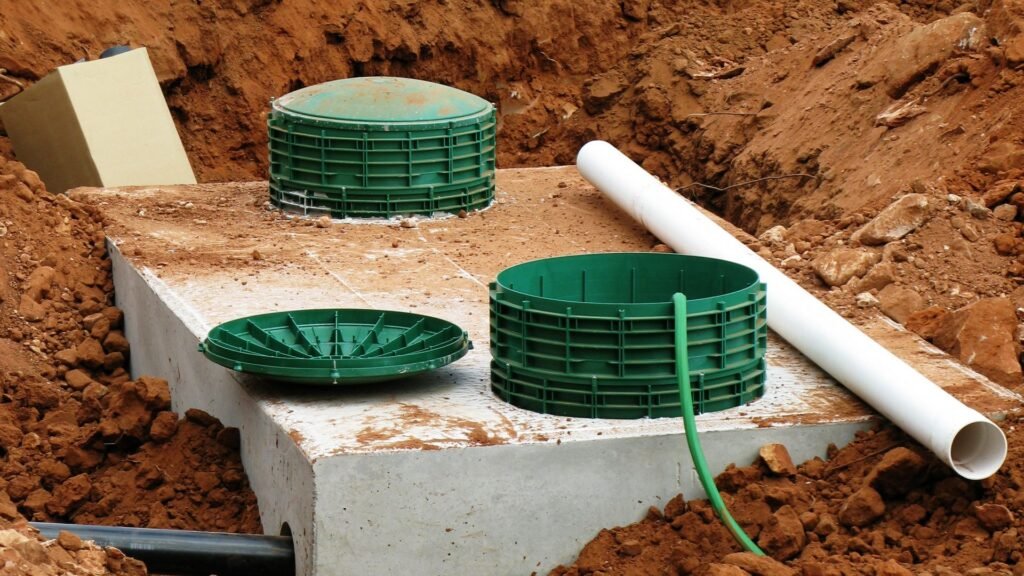
- Green or black access riser covers
- Inspection ports
- Rectangular changes in ground level
- Unusual patches of grass
- Areas with thinner or different vegetation
- Old disturbed soil
- Previous excavation marks
These clues are not proof of a tank location. Grass can grow differently for many reasons, including drainage, irrigation, shade, and soil depth.
We recommend using yard clues to narrow the search area rather than digging immediately.
Septic Tank Locating Methods Compared
There is no single locating technique that works for every property. The right method depends on the age of the system, available records, soil conditions, landscaping, and how deeply the components are buried.
| Locating Method | Best Use | Main Advantage | Limitation |
|---|---|---|---|
| Property records | Systems with available permits | No digging required | Older records may be incomplete |
| Main sewer line | Most conventional systems | Narrows the search area | Pipe direction can change |
| Visual yard inspection | Shallow or riser-equipped systems | Simple and free | Surface clues can be misleading |
| Soil probing | Suspected tank area | Can confirm a solid buried object | Requires care and experience |
| Electronic locating | Difficult sites | Can trace underground components | Specialized equipment is needed |
| Professional inspection | Uncertain or complex systems | Combines several methods | Requires a service appointment |
For many homes, combining two or three methods works better than relying on one.
Use a Soil Probe Carefully
A soil probe can help locate a buried tank once you have narrowed down the likely area.
A septic professional may gently insert a probe into the soil and compare resistance at different points. A large, consistent solid surface may indicate the top or edge of a tank.
This method requires caution.
Never aggressively drive a sharp metal rod into the ground. Underground electrical lines, gas lines, irrigation pipes, water lines, septic components, and other utilities may be present.
Before excavation, underground utilities should be properly identified according to local requirements.
We also avoid assuming that the first hard object is the tank. Rocks, concrete debris, roots, and buried construction materials can produce similar resistance.
How Deep Is a Buried Septic Tank?
There is no universal depth for every septic tank.
Tank depth depends on the original system design, building sewer elevation, terrain, grading changes, and whether access risers were installed. The top may be relatively close to the surface on one property and considerably deeper on another.
The slope of the inlet pipe also matters. Wastewater must reach the system correctly, which influences tank elevation and placement.
This is one reason excessive exploratory digging is rarely a good strategy. If you are digging several random holes across the yard, it is usually time to use a more precise locating method.
Finding the Septic Tank Lid
Finding the tank and finding its service opening are two different tasks.
A septic tank can have one or more access points depending on its design. The opening needed for inspection or pumping may not be located exactly where a homeowner expects.
Once the tank outline has been identified, the access areas can be exposed carefully.
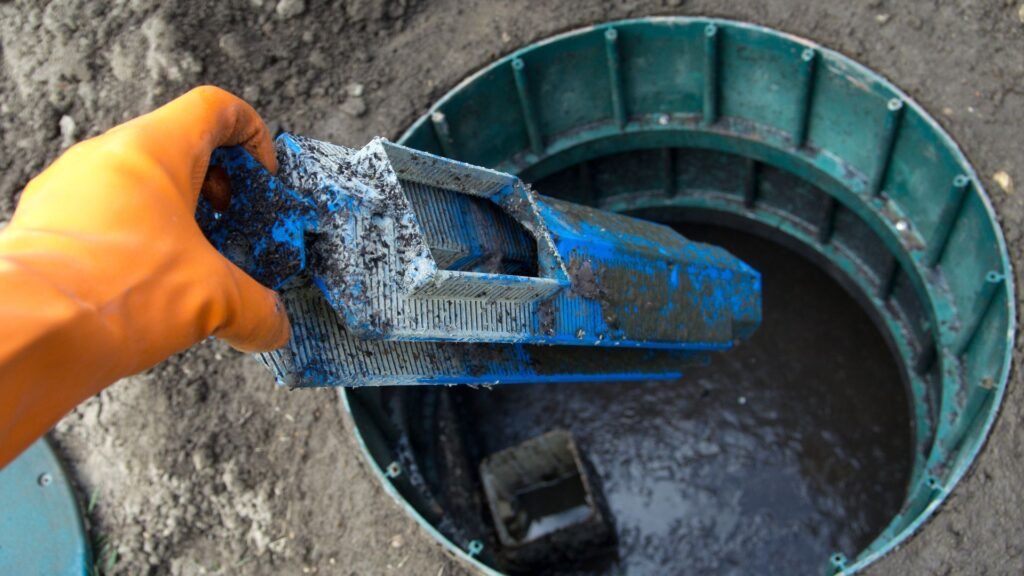
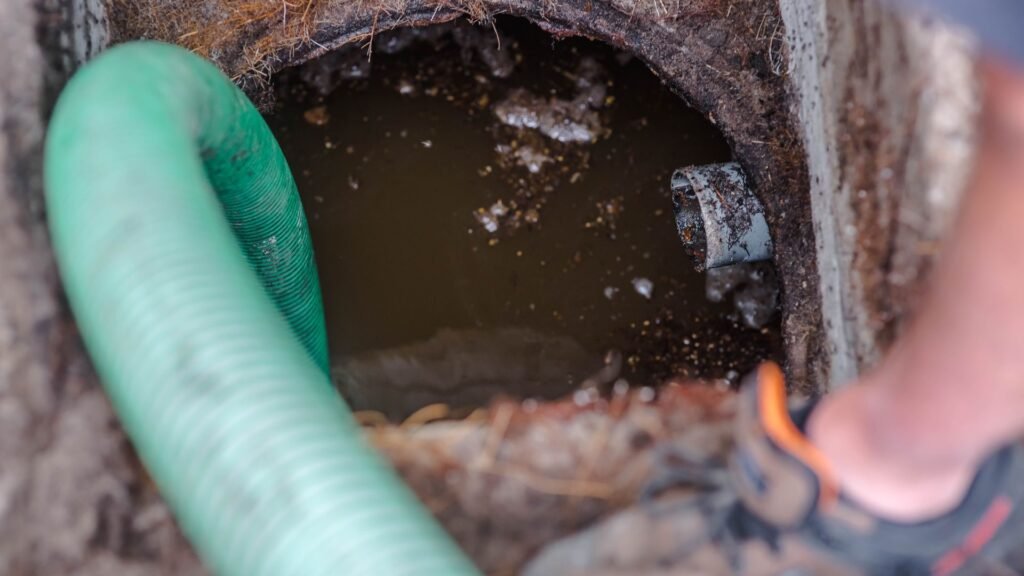
Do not attempt to enter a septic tank or lean into an open tank. Septic tanks can contain dangerous gases and present serious fall, exposure, and structural hazards. Access should remain limited to trained professionals.
If the lid is repeatedly buried after every service visit, ask whether installing an appropriate riser would make future maintenance easier.
Electronic Septic Tank Locating
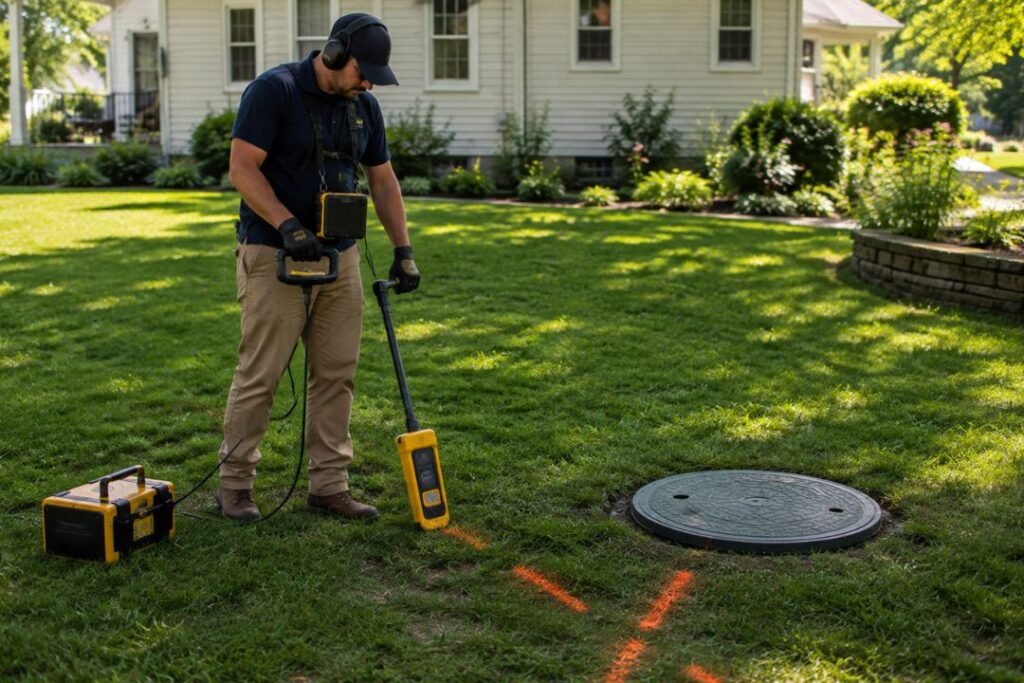
Some tanks are too difficult to find through records and basic probing alone.
Professional septic companies may use electronic locating equipment to trace system components. Depending on the situation, a transmitter or other locating device can help identify the route of a pipe or narrow down the position of underground infrastructure.
Ground penetrating radar may also be useful in certain underground locating applications. However, the best technology depends on the property and the materials being located.
Professional equipment becomes particularly valuable when the property has extensive landscaping, unclear records, unusual plumbing routes, or a large search area.
Common Mistakes When Searching for a Septic Tank
One mistake we often see is homeowners starting to dig before they have a good idea where the septic tank is located. They may choose a spot based on where they think the tank should be and continue digging around the yard until they find something. This can leave unnecessary holes in the lawn and may still fail to locate the tank.
Another common problem is relying too heavily on assumptions. Septic systems are installed according to the property layout, plumbing, soil conditions, and local requirements. This means the tank may not be directly behind the house or exactly where an old property drawing suggests.
Some other mistakes to avoid include:
- Confusing the septic tank with the drainfield
- Relying on an old septic diagram without checking current site conditions
- Pushing a soil probe forcefully into an unknown area
- Digging before underground utilities have been properly identified
- Using heavy equipment before locating septic components
- Excavating too close to the tank without knowing its exact position
- Attempting to open or enter a septic tank without professional assistance
From our experience, a careful search usually saves both time and unnecessary work. Start with septic records, follow the main sewer line, and look for clues around the property. If the location is still unclear, a septic professional can use proper locating methods to find the tank while reducing the risk of damage.
Septic Tank Location Versus Drainfield Location
The septic tank is only one part of the wastewater treatment system.
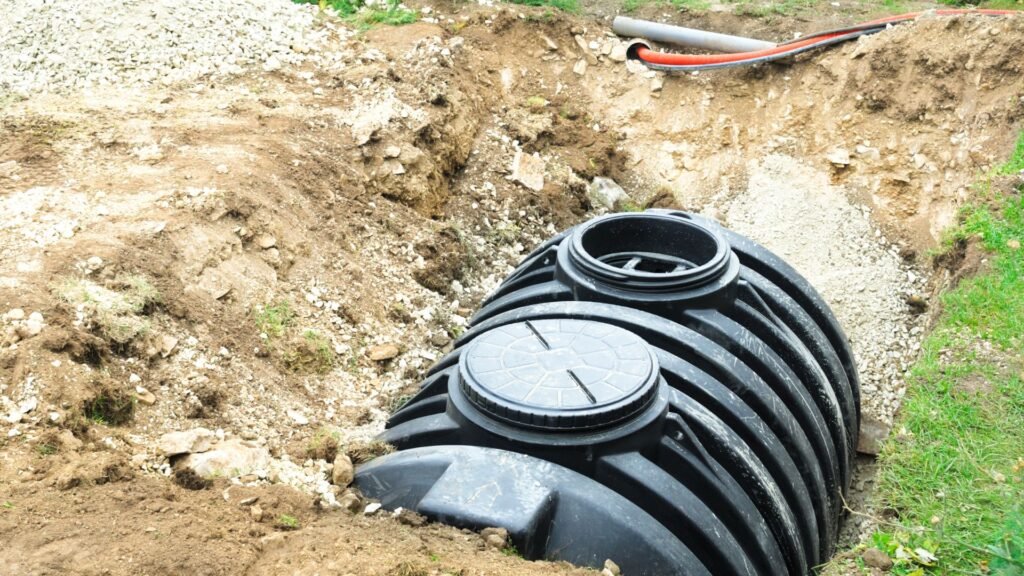
Household wastewater first enters the tank. Solids settle while lighter materials rise, and wastewater then moves to the next treatment stage. In a conventional system, effluent eventually reaches the drainfield, where soil provides further treatment.
The EPA’s septic system guidance explains that system layouts and records can help identify both the tank and drainfield.
Knowing both locations matters.
Vehicles, construction equipment, sheds, pools, and major landscaping projects should not be placed over septic components without proper evaluation. Protecting the drainfield is just as important as protecting the tank.
A Real-World Field Situation
A common situation we encounter involves a homeowner who has lived in a house for several years but has never needed to access the septic tank. When pumping becomes necessary, there are no visible lids and no useful markers in the yard.
Instead of excavating a wide area, we start by gathering information. We look at the home’s plumbing layout, available records, property conditions, and the likely direction of the building sewer.
Once the probable tank area is identified, more precise locating methods can be used.
This process illustrates an important point. Finding a buried septic tank is usually less about guessing and more about eliminating unlikely areas until the search becomes manageable.
When Should You Call a Septic Professional?
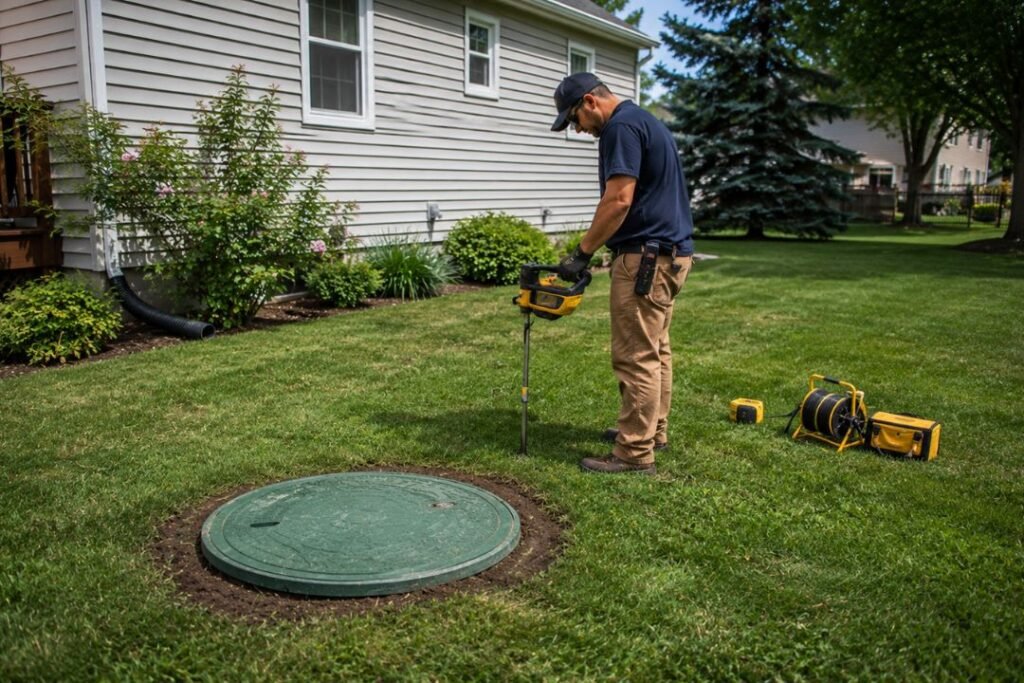
Sometimes, checking property records and looking for signs in the yard is enough to narrow down the location of a septic tank. However, not every system is easy to find. Older properties, deep tanks, missing records, and years of landscaping can make the search much more difficult.
It may be time to call a septic professional if:
- You cannot find reliable septic system records
- There is no visible tank lid or access riser
- You are unsure where the main sewer line leaves the house
- Landscaping has changed significantly over the years
- Previous owners added structures or changed the property layout
- The tank needs to be located before pumping or an inspection
- You notice slow drains, sewage odors, wet areas, or other signs of septic trouble
- You want to avoid unnecessary digging or damage to the yard
From our experience, professional help can save a lot of time when the tank location is uncertain. A septic technician can use the property’s plumbing layout, site conditions, probing methods, and locating equipment when needed to narrow down the search.
Finding the tank is also a good opportunity to check its accessible components and look for signs that further inspection or maintenance may be needed. This gives the homeowner a clearer picture of the system instead of simply uncovering the tank and covering it again.
What to Do After You Find the Septic Tank
Once the tank is found, document its location.
Take measurements from permanent reference points such as the house corners. Keep a simple diagram with your septic maintenance records and save photos that make the access points easy to identify.
The EPA recommends keeping records of septic repairs, inspections, pumping, permits, and other maintenance activities. Its homeowner guidance also recommends knowing the system’s location and keeping a sketch for future service visits.
This small step can save considerable time during the next inspection or pumping appointment.
You should also ask whether the tank access is suitable for future maintenance. In some cases, properly installed risers can make routine access much easier.
Why Locating the Tank Matters for Routine Maintenance
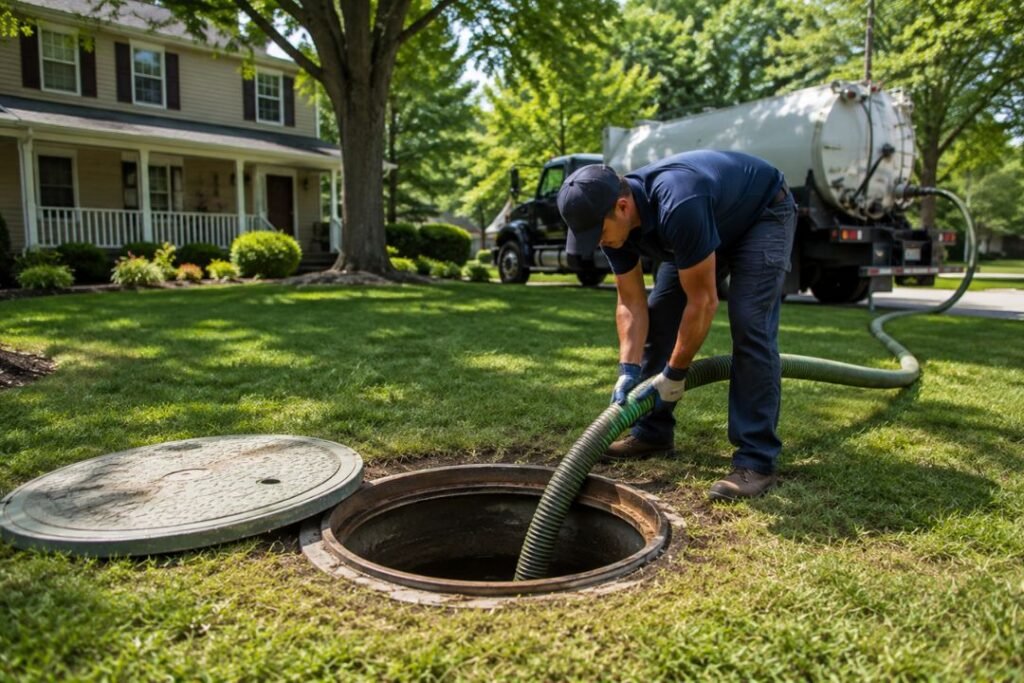
A hidden tank is easy to forget, but being underground does not make a septic system maintenance-free.
Regular inspection and pumping help manage accumulated solids and allow developing problems to be identified earlier. Pumping frequency varies with tank size, household occupancy, wastewater volume, and system use.
EPA homeowner guidance states that household septic systems are generally inspected at least every three years and pumped every three to five years, although actual maintenance needs vary by system.
Knowing the tank location makes those maintenance visits much easier to plan.
Related Septic Resources From Dillon Septic
If you want to learn more about finding and maintaining your system, read our guide on How to Find Your Septic Tank on Your Property Step by Step.
Homeowners who need pumping, inspections, installation, or ongoing septic care can also explore our Residential Septic Services page.
Reading these resources can help you understand not only where your system is located but also what it needs to continue operating properly.
Frequently Asked Questions
How can I tell where my system is located?
Start by checking property records, installation permits, inspection reports, or drawings from previous service visits. You can also identify where the main waste pipe leaves the house and follow its general direction into the yard. Changes in ground level or visible access covers may provide additional clues.
How far from the house is the system usually installed?
There is no single distance that applies to every property. Placement depends on the original design, available space, property layout, soil conditions, slope, and local requirements. Older systems may also differ from what you would expect based on current installation practices.
Is it safe to dig around the suspected location myself?
Light digging may seem simple, but caution is important. Underground utility lines, plumbing, irrigation, and system components may be nearby. Utilities should be identified before digging, and deeper or uncertain excavation is best handled by an experienced professional.
What should I do once I locate the access area?
Take photos and measurements from permanent points around your property, such as the corners of your home. Keep this information with your maintenance records. Clear documentation can save time during future inspections, pumping, maintenance, or repairs.
When is professional help the better option?
Professional help is a good choice when records are missing, the plumbing route is unclear, or landscaping makes the system difficult to locate. It is also worth calling an experienced technician when you notice slow drains, unusual odors, wet areas, or other signs that the system may need attention.
Final Thoughts
Learning how to find a buried septic tank starts with investigation rather than excavation. Check property and permit records first. Then identify where the main sewer pipe leaves the home, study the yard for clues, and narrow the search area carefully.
If those steps do not produce a clear answer, professional locating methods can save time and prevent unnecessary digging.
From our field experience at Dillon Septic, we have found that one of the best things a homeowner can do after locating a tank is document it. Record measurements, save photographs, keep your septic paperwork, and make sure future service providers can access the system.
A septic tank may be out of sight, but its location should never remain a mystery. Knowing exactly where your system sits makes inspections, pumping, repairs, and long-term maintenance safer and much easier.