Knowing how to find your septic tank is one of the most important responsibilities of owning a home with a septic system. Whether you need routine pumping, repairs, or an inspection, locating the tank is the first and most critical step. Many homeowners delay maintenance simply because they do not know where the tank is buried.
As septic professionals, we see this problem every week. Tanks are often hidden under soil, grass, or landscaping, especially in older properties. Over time, records get lost, and visible markers disappear. The good news is that finding your septic tank is usually easier than people think when you follow a systematic approach.
This guide walks you through proven methods used in the field. You will learn how to locate your tank safely, avoid common mistakes, and understand when it is best to call a professional.
Why Knowing Your Septic Tank Location Matters
A septic tank that cannot be located easily often leads to skipped maintenance. That can shorten the life of the system and create costly problems.
Here is why knowing the exact location matters:
- Septic tanks should be pumped every 3 to 5 years for most households
- Routine pumping can extend system life by 10 to 15 years
- Locating the tank prevents accidental damage from digging or construction
- Emergency repairs are faster when the tank is easy to access
From our experience, homeowners who know where their tank is spend less on repairs over time and avoid unexpected failures.
Start With Property Records and Documents

Before walking your yard, start with paperwork. This is often the fastest way to find accurate information.
Check the following sources:
- Original home inspection report
- Septic system permit from the county or city
- As built drawings from the installer
- Previous septic service invoices
Many county health departments keep septic permits on file, even for homes built decades ago. These records often show the tank location, drain field layout, and tank size.
If you recently purchased your home, your real estate agent or title company may also have access to these documents.
Look for Visual Clues in Your Yard

If records are unavailable, your yard can provide strong hints. Septic tanks are usually installed following consistent patterns.
Common signs include:
- A slightly raised or sunken area in the yard
- Grass that grows greener or faster in one spot
- Areas where snow melts faster in winter
- Rectangular depressions or patches of disturbed soil
Most septic tanks are buried 6 to 36 inches below the surface. In some cases, only the lid is buried shallow, while the rest of the tank sits deeper.
Avoid probing aggressively with tools. Tank lids can crack if struck with force.
Follow the Sewer Line From the House
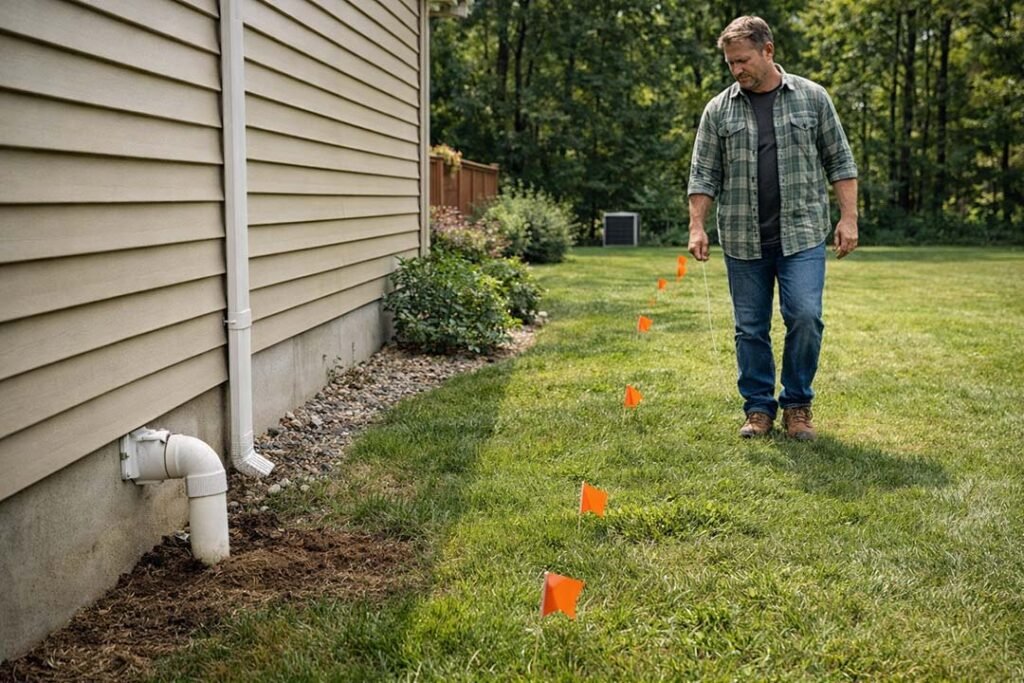
One of the most reliable field methods is tracking the main sewer pipe.
Steps we use on service calls:
- Locate where the sewer pipe exits the house, usually in the basement or crawl space
- Identify the direction the pipe travels
- Walk straight out from that exit point into the yard
Septic tanks are typically placed 10 to 25 feet from the home. In most cases, the tank sits in a straight line with the sewer pipe.
This method works well for newer homes and properties with simple layouts.
Use a Septic Probe With Caution

A septic probe is a long, narrow rod used to gently feel for solid surfaces underground. Professionals use this tool carefully to avoid damage.
If you choose to try this method:
- Use slow, controlled pressure
- Stop immediately if you hit a hard surface
- Never force the probe
Probing should only be done in areas where you reasonably expect the tank to be located. Excessive probing can crack lids or pipes.
Common Septic Tank Placement Guidelines
Based on building codes and installation standards, septic tanks follow predictable spacing rules.
| Feature | Typical Distance |
|---|---|
| From house foundation | 10 to 25 feet |
| From property lines | 5 to 10 feet |
| From wells | 50 to 100 feet |
| Burial depth | 6 to 36 inches |
| Tank size | 1,000 to 1,500 gallons |
These measurements are not exact but provide a reliable framework when searching.
Use Professional Tools for Accuracy
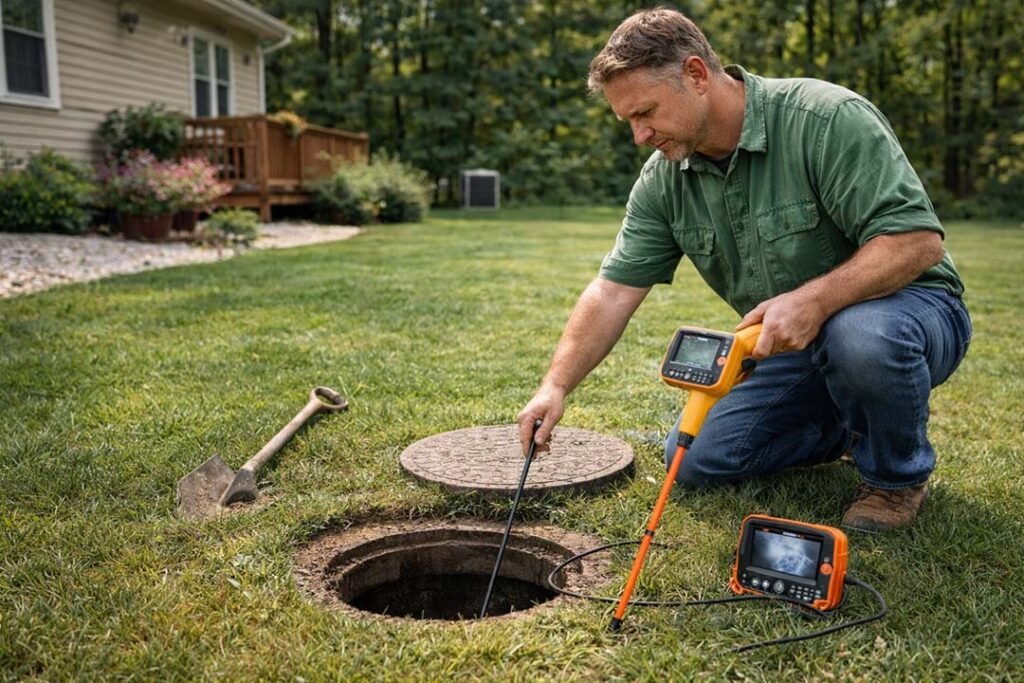
When manual methods fail, professionals use specialized equipment to locate tanks quickly and safely.
Common tools include:
- Electronic pipe locators
- Ground probing radar
- Camera inspections through cleanouts
In many cases, a professional can locate a tank in under 30 minutes using modern equipment. This approach minimizes yard disruption and eliminates guesswork.
Mistakes Homeowners Often Make

Over the years, we have seen several recurring mistakes when homeowners try to find their tank.
Avoid these common issues:
- Digging randomly without a plan
- Confusing drain field lines with the tank location
- Assuming the tank is centered in the yard
- Ignoring old records or permits
These mistakes can lead to damaged systems or unnecessary excavation costs.
When to Call a Septic Professional
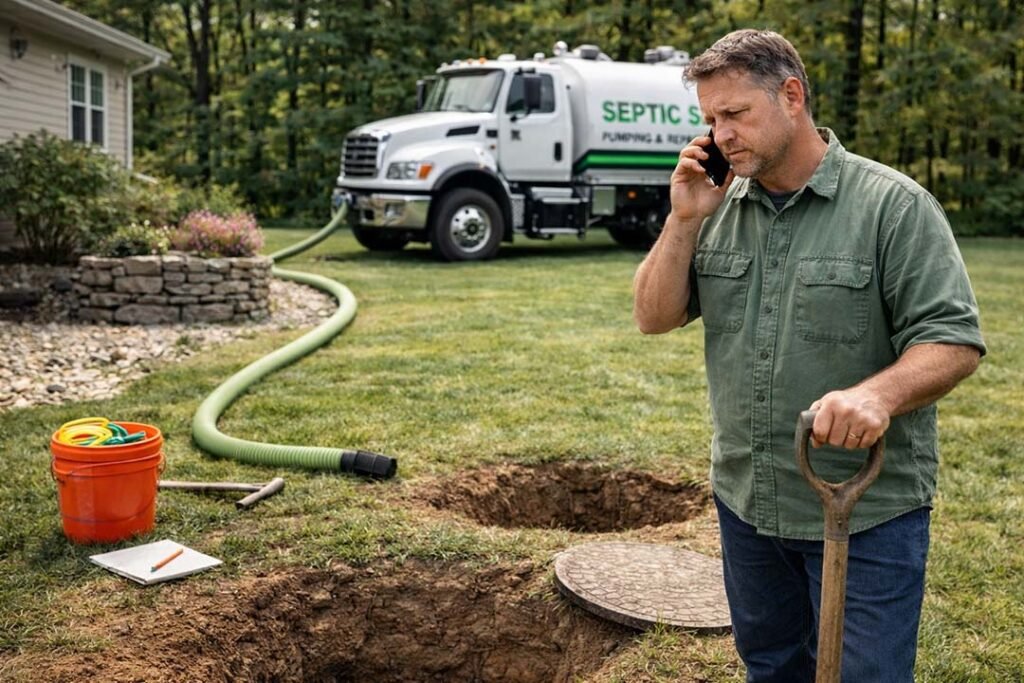
If you have tried records, visual inspection, and pipe tracking without success, it is time to call a licensed septic service provider.
You should also call a professional if:
- The yard has heavy landscaping or concrete
- The home is over 30 years old
- You suspect the lid may be damaged
- You need immediate pumping or repair
Professional locating services often cost far less than repairing accidental damage.
Expert Insight From the Field
In our field experience, more than 60 percent of homeowners do not know the exact location of their septic tank when they first call us. Once the tank is properly located and marked, future maintenance becomes faster and less expensive.
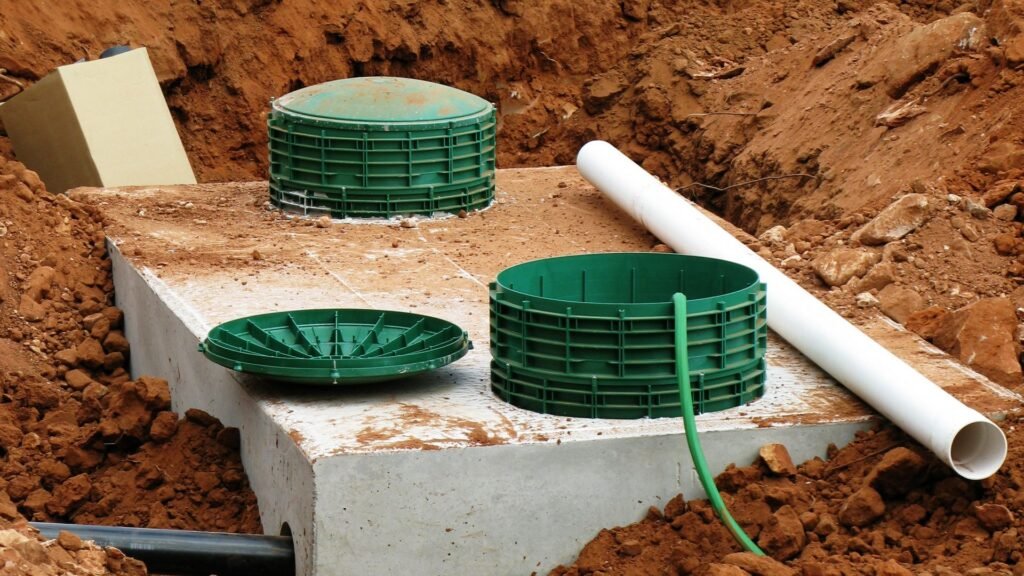
Installing risers after locating the tank can reduce future locating time to zero. Risers bring the access point to ground level, making inspections and pumping more efficient.
Frequently Asked Questions
How do I find my septic tank if I have no records?
If records are unavailable, start by locating where the sewer line exits your home and follow its direction into the yard. Septic tanks are usually installed 10 to 25 feet from the house in a straight line. Visual clues like slight soil depressions or greener grass can also help narrow the search.
Can I locate my septic tank without digging?
Yes, in many cases you can. Reviewing property permits, tracing the sewer pipe, or using professional locating tools can help identify the tank location without excavation. Avoid digging until you are confident about the exact spot.
How deep is a septic tank usually buried?
Most septic tanks are buried between 6 and 36 inches below ground. Older systems may be deeper, while newer installations often have shallower access points or risers for easier maintenance.
Is it safe to probe the ground to find a septic tank?
Light probing can work, but it must be done carefully. Applying too much force can crack tank lids or pipes. If you are unsure, hiring a septic professional reduces the risk of damage and unnecessary repairs.
How to find your septic tank before scheduling pumping?
Before scheduling pumping, confirm the tank location using records, visual inspection, or professional locating services. Accurate location helps technicians work faster and prevents delays or extra charges on service day.
Final Thoughts
Understanding how to find your septic tank empowers you to protect your property, save money, and maintain a healthy system. With the right approach, patience, and professional help when needed, locating your tank does not have to be stressful.
If you need assistance locating, inspecting, or maintaining your septic system, working with experienced professionals ensures accurate results and long-term peace of mind.