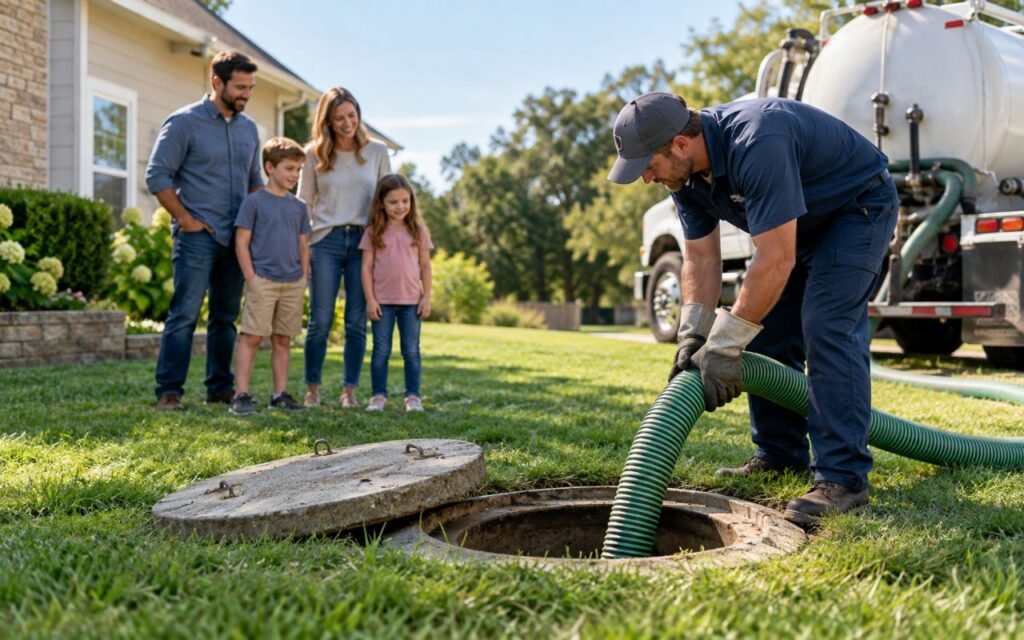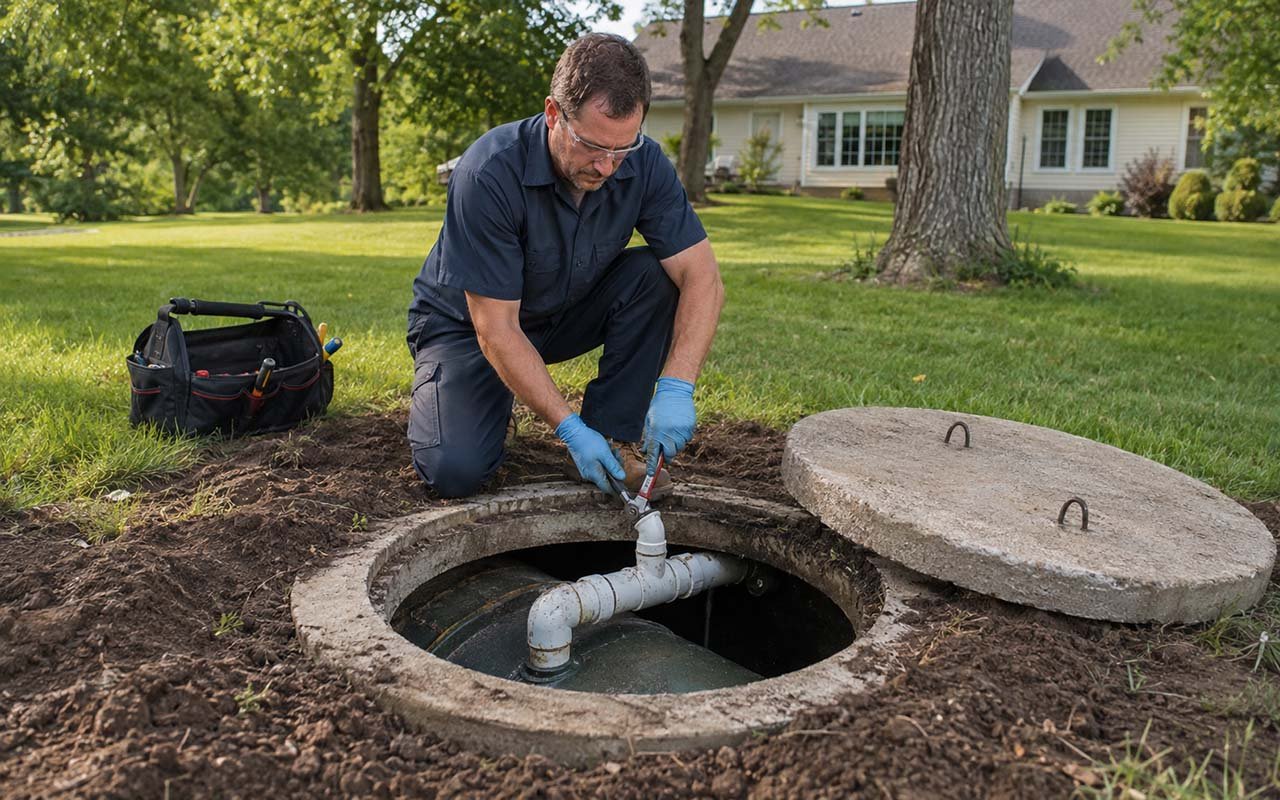
Fixing a septic tank begins with identifying what has actually gone wrong. Slow drains, unpleasant odors, standing water, and sewage backups may seem like obvious signs of a damaged tank. However, the problem could come from a clogged pipe, broken baffle, dirty filter, failed pump, or overloaded drain field.
From our experience working with septic systems, we know that early diagnosis can make a major difference. A small component failure may be repaired before it affects the rest of the system. When warning signs are ignored, wastewater and solids can move into areas where they cause more serious damage.
A professional inspection helps determine whether the system needs pumping, a targeted repair, or replacement. This guide explains the warning signs, repair process, safety concerns, and practical steps that can help prevent the same problem from returning.
What Fixing a Septic Tank May Involve
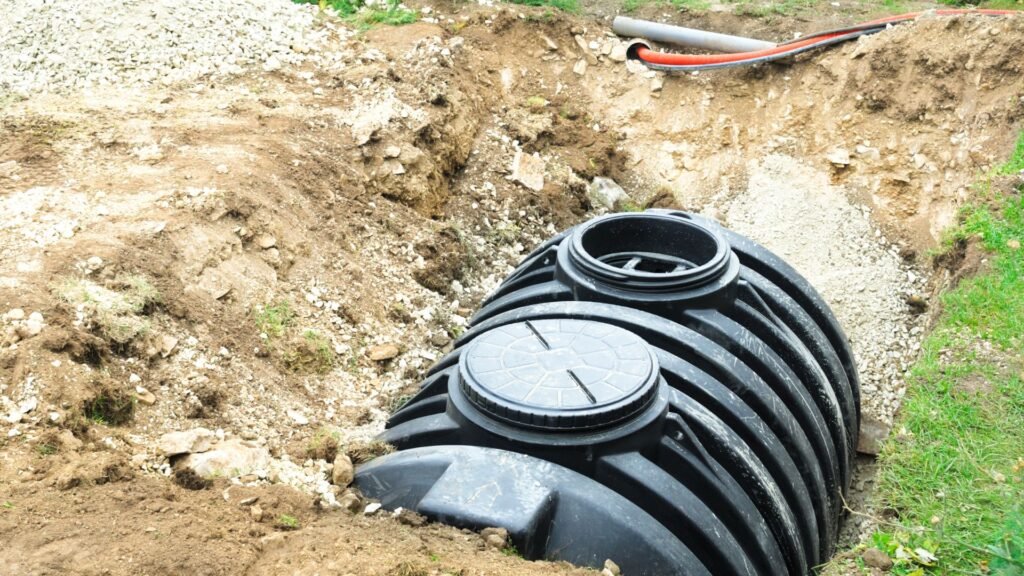
Your septic tank is only one part of a larger wastewater treatment system. Wastewater travels from the building through an inlet pipe and enters the tank. Solids settle at the bottom, lighter material rises to the top, and partially treated liquid moves through the outlet toward the drain field.
Several components must work together for this process to continue. The system may include inlet and outlet baffles, an effluent filter, a distribution box, field lines, pumps, floats, alarms, and electrical controls.
A problem with any one of these components may look like a tank failure. For example, a blocked outlet filter can raise the liquid level inside the tank. A failed pump can stop wastewater from moving forward. A clogged inlet pipe can cause sewage to back up even when the tank still has working capacity.
This is why pumping alone does not solve every septic problem. It removes accumulated waste, but it does not repair damaged components or restore a failing drain field.
Early Signs That Your Septic System Needs Repair
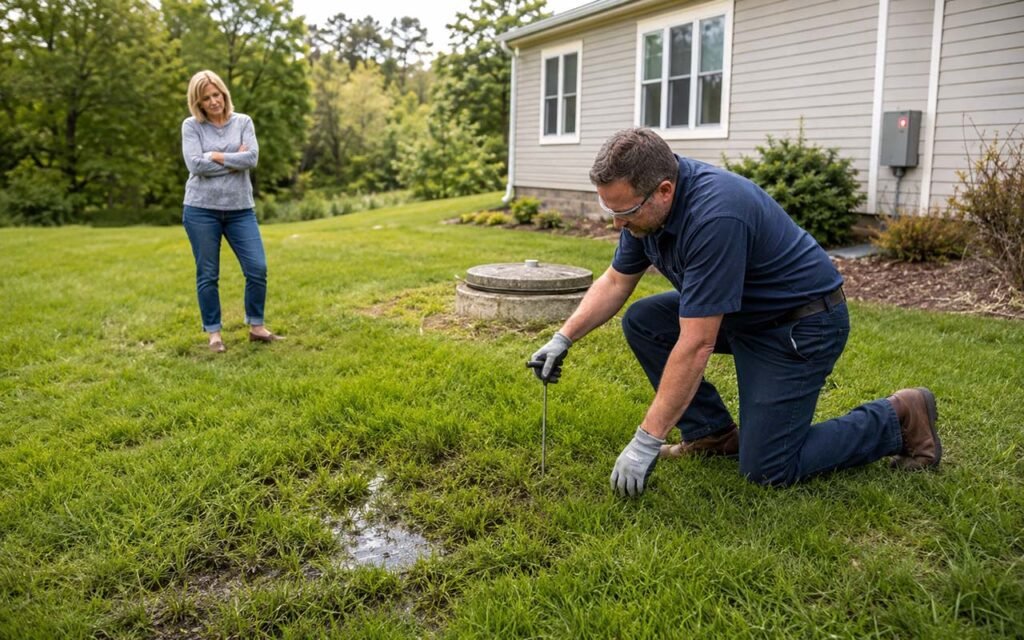
Septic problems often develop slowly. Homeowners may notice minor drainage changes before a complete backup occurs. Paying attention to these early signs can reduce the chance of wastewater entering the home or surfacing in the yard.
One slow sink is often a local plumbing problem. When several fixtures throughout the building drain slowly, the restriction may be in the main sewer line or septic system. Gurgling toilets can also indicate that wastewater and air are not moving normally through the pipes.
Odors around the tank or drain field deserve attention, especially when they occur with wet soil. An occasional outdoor smell may come from a vent under certain weather conditions. Persistent sewage odors combined with spongy ground can indicate that wastewater is no longer staying below the surface.
Other common warning signs include unusually green grass over the drain field, standing water during dry weather, repeated toilet backups, and a septic alarm that remains active.
The U.S. Environmental Protection Agency identifies slow drains, plumbing backups, odors, standing water, and bright green grass as possible signs of septic system failure.
When a Septic Problem Becomes an Emergency
Sewage entering the building or appearing on the ground requires immediate attention. Untreated wastewater may contain bacteria, viruses, and other contaminants that can affect people, pets, soil, and nearby water sources.
Reduce water use as soon as you notice an active backup. Avoid washing clothes, running the dishwasher, taking long showers, or flushing toilets unnecessarily. Every additional gallon entering the system can make the problem worse.
Keep children and animals away from wet areas near the tank or drain field. Do not walk through wastewater or attempt to wash it into the soil. If sewage has entered the home, avoid direct contact and arrange proper cleaning after the system has been repaired.
Never enter a septic tank. An open or recently pumped tank may contain toxic gases and dangerously low oxygen levels. Professional equipment and confined-space safety procedures are required for tank entry.
How Professionals Find the Source of the Problem
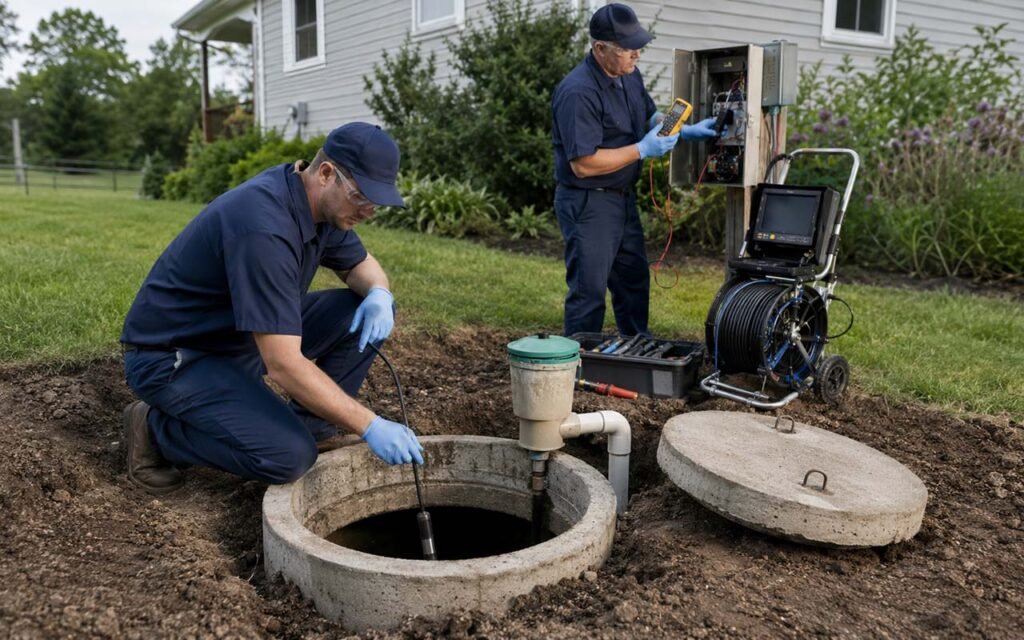
A dependable septic tank repair starts with evidence. Replacing a pump, cleaning a filter, or pumping the tank without confirming the cause may provide only temporary relief.
The technician will normally ask when the problem started, which fixtures are affected, and when the tank was last pumped. Household size and water use also matter. Recent heavy rain, leaking toilets, overnight guests, and several laundry loads in one day can place extra pressure on the system.
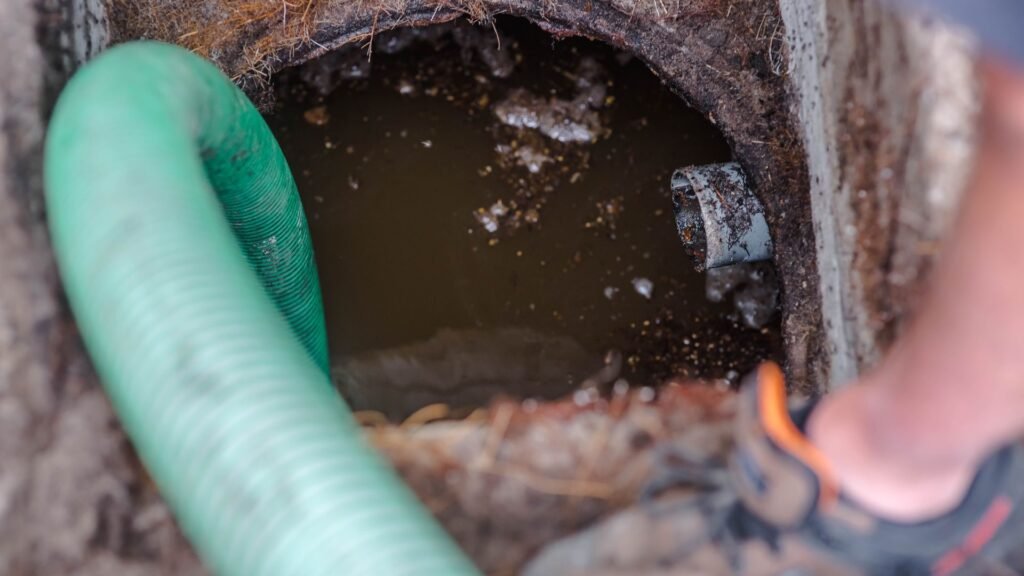
After locating the tank, the technician may inspect the liquid level, sludge depth, baffles, filter, lids, and visible tank surfaces. A liquid level above the outlet may indicate a blocked filter, restricted outlet, failed pump, or saturated drain field. An unusually low level can suggest that the tank is leaking.
Water-flow testing may help determine whether the inlet pipe is open. Electrical testing may be needed for pumps, floats, alarms, and control panels. Cameras can sometimes be used to inspect accessible pipes for damage, roots, or obstructions.
In our field experience, the visible symptom is rarely enough to confirm the repair. The entire wastewater path must be considered. That includes how water enters the tank, how it leaves, and whether the soil can still absorb and treat the outgoing wastewater.
Common Septic Tank Repairs
Many septic system problems can be repaired without replacing the entire system. The best option depends on which component failed and whether the tank and drain field remain usable.
Clearing a blocked inlet pipe
The pipe between the building and septic tank can become restricted by grease, roots, waste, or damaged sections of pipe. A blockage here may cause slow drainage and sewage backups inside the building.
The obstruction must be cleared carefully. Simply forcing the material forward may push unwanted solids into the tank or damage weakened piping. If roots entered through a cracked connection, the damaged section may also need repair.
Repairing damaged baffles
The inlet baffle directs incoming wastewater downward. The outlet baffle helps prevent sludge and floating material from leaving the tank. When the outlet baffle breaks, solids may enter the drain field and clog the soil.
A technician may install a compatible baffle or sanitary tee when the surrounding tank structure remains sound. Addressing this damage early can help protect the more expensive drain field.
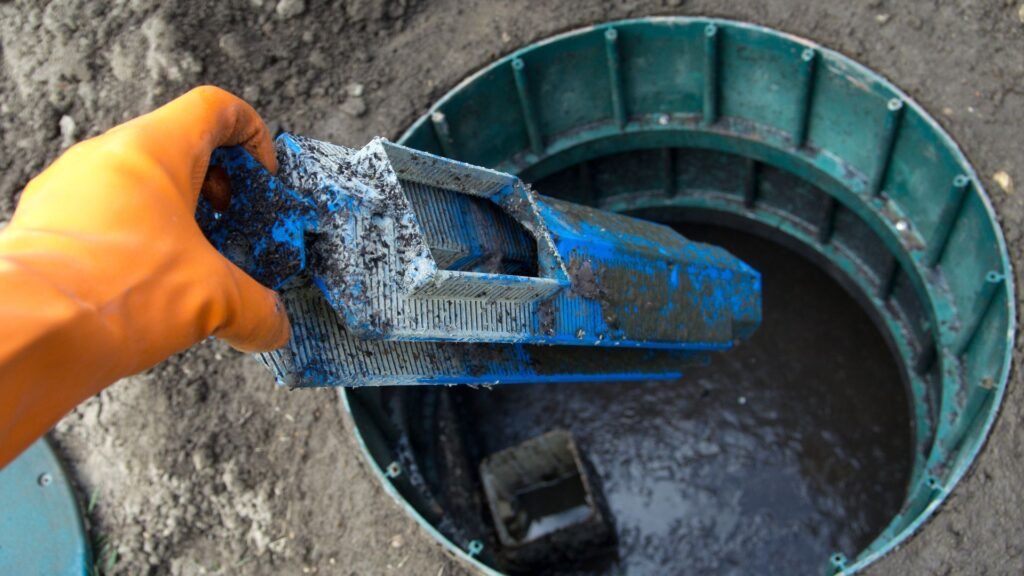
Cleaning a blocked effluent filter
Many septic tanks have a filter near the outlet. It helps stop suspended solids from entering the field lines. As material collects, wastewater may leave the tank more slowly.
Professional filter cleaning can restore flow if the component is still in good condition. A cracked, missing, or badly worn filter should be replaced. The filter should then be included in future inspections.
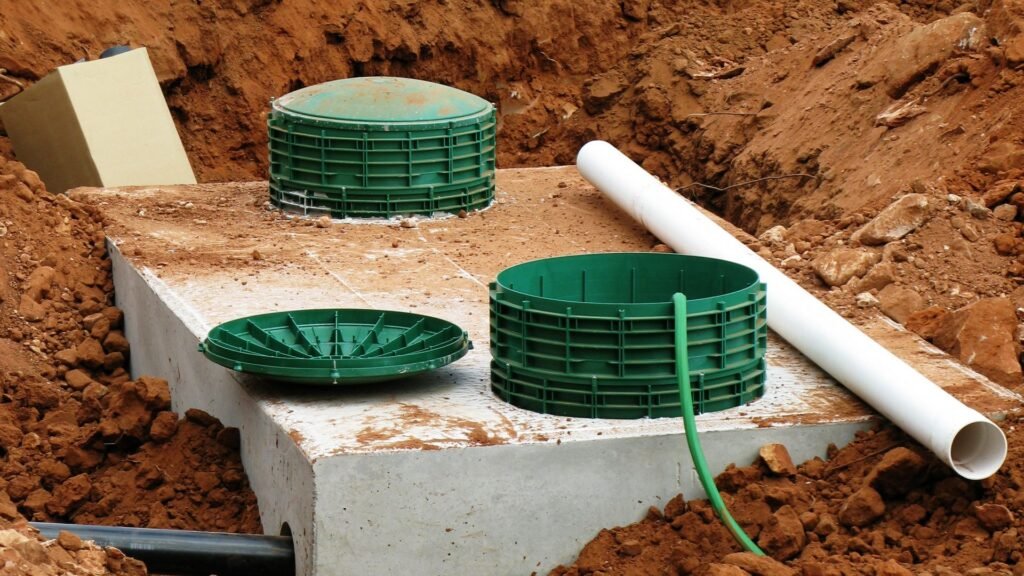
Replacing lids and risers
Cracked lids and damaged risers can allow rainwater, soil, and debris to enter the tank. They also create a serious safety risk for people and animals.
Replacement parts must fit securely and be suitable for the installation area. A standard tank lid should never be expected to support a vehicle. Traffic areas may require specially rated components and additional protection.
Repairing pumps and controls
Some septic systems depend on pumps to move wastewater to the next treatment stage. A failed float, alarm, electrical connection, or control panel can stop the system even if the pump itself still works.
A technician should test the full operating sequence before replacing equipment. This prevents an electrical problem from being mistaken for a failed pump.
Correcting drain field distribution
A distribution box divides wastewater among the field lines. When the box shifts or becomes damaged, one line may receive more wastewater than the others. That section can become overloaded while the remaining lines receive very little flow.
Releveling or replacing the box may restore balanced distribution when the field lines remain usable. Damaged laterals may require professional septic field line repair.
Should You Repair or Replace the Septic System
A repair usually makes sense when the problem involves one accessible component and the remaining system is in good condition. Common examples include a blocked pipe, broken baffle, dirty filter, damaged lid, failed pump, or shifted distribution box.
Replacement may be more practical when the tank has major structural cracks, severe corrosion, movement, or signs of collapse. It may also be necessary when wastewater repeatedly surfaces over the drain field or several field lines have stopped accepting water.
The age of the system provides useful context, but it should not be the only deciding factor. Some older systems continue to perform because they were properly installed and consistently maintained. Newer systems can fail early because of poor design, excessive water use, vehicle traffic, or improper waste disposal.
According to the EPA’s septic system guidance, a well-maintained concrete tank may last 50 years or longer. Drain fields that are more than 25 to 30 years old may gradually lose capacity as the biological layer within the soil becomes thicker.
A complete inspection should consider the tank material, structural condition, repair history, drain field performance, property use, and local requirements. If the system has needed several major repairs within a short period, replacement may offer better long-term value.
Read our guide on how long a septic system lasts to learn how installation, soil, water use, and maintenance affect its service life.
Why Homeowners Should Avoid DIY Septic Repairs
Homeowners can safely monitor their drains, reduce water use, and maintain service records. Opening tanks, handling sewage, excavating buried components, and repairing electrical equipment require professional training.
Septic work can expose a person to toxic gases, harmful microorganisms, unstable tank lids, buried wiring, and contaminated soil. Excavation may also damage electrical, gas, water, or communication lines.
Chemical drain cleaners and septic additives are not dependable repair methods. Strong chemicals may affect the natural treatment process and damage plumbing components. The EPA states that additives are not necessary for conventional systems treating household wastewater.
Repairs may also require permits and inspections. Local requirements depend on the type of work, system design, and property location. Working with an experienced septic provider helps ensure that the repair meets applicable safety and environmental standards.
How to Prevent Future Septic System Problems
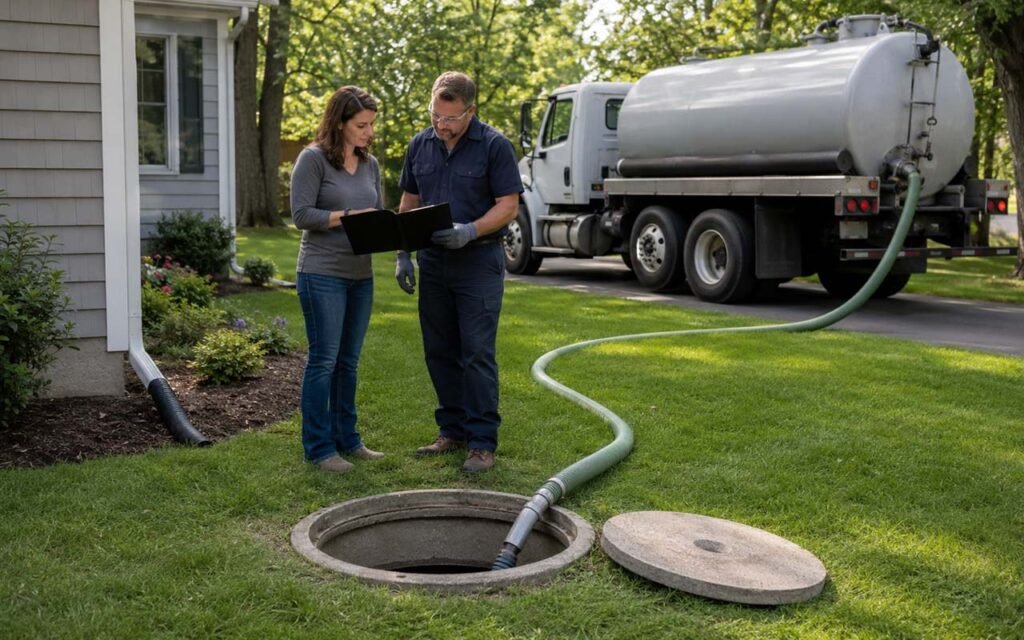
Routine care is usually less disruptive than an emergency repair. The EPA recommends that an average household septic system be inspected at least once every three years. Conventional tanks are commonly pumped every three to five years.
Systems with pumps, float switches, or mechanical treatment components may require annual attention. The proper schedule depends on household size, wastewater volume, tank capacity, and the amount of accumulated solids.
Water control is especially important. A single leaking toilet can send as much as 200 additional gallons of water into a septic system each day. That constant flow can disturb settling inside the tank and overload the drain field.
Property owners can protect their systems by following a few practical habits.
- Repair leaking toilets and faucets promptly.
- Spread laundry loads throughout the week.
- Flush only human waste and toilet paper.
- Keep grease, wipes, litter, and hygiene products out of drains.
- Divert roof runoff away from the drain field.
- Avoid parking vehicles over any septic components.
- Record every inspection, pumping visit, and repair.
These steps help reduce unnecessary strain, but they do not replace professional maintenance. The EPA provides additional advice in its guide to caring for a septic system.
Arrange a Professional Septic Inspection
Fixing a septic tank properly means correcting the cause instead of covering up the symptom. The tank, pipes, filters, baffles, pumps, controls, distribution box, and drain field must function as one system.
If you notice slow drains, sewage odors, standing water, plumbing backups, or an active alarm, act before the damage spreads. Reduce water use and arrange a professional inspection.
Dillon Septic provides dependable repairs, pumping, inspections, and maintenance for residential and commercial properties. Visit our septic service in Texas page to explore related services and learn how our team can help restore safe, reliable operation.
Frequently Asked Questions
Can pumping fix a septic tank problem
Pumping removes accumulated sludge and floating waste from the tank. It may restore working capacity when the tank is overdue for service. However, pumping cannot repair cracked tanks, broken pipes, failed pumps, or saturated drain fields. The technician should inspect the tank and important components during pumping. This helps determine whether maintenance alone is enough or another repair is required.
How long does septic tank repair take
A minor repair may be completed during one service visit. More complex work can take longer if it requires excavation, permits, replacement parts, electrical troubleshooting, or drain field assessment. Weather and property access can also affect the schedule. A technician should explain the expected work after diagnosing the problem.
Can a cracked septic tank be repaired
Limited damage may be repairable when the tank remains structurally stable. Large cracks, shifting walls, corrosion, and collapse usually require a more substantial solution. A crack should never be sealed without first determining why it formed. Soil movement, groundwater pressure, vehicle loading, or aging materials may continue damaging the tank.
How often should a septic tank be pumped
Many household tanks require pumping every three to five years. Homes with more occupants, smaller tanks, garbage disposals, or higher water use may need service sooner. The most accurate schedule comes from measuring the sludge and scum during inspections. Learn more about regular service through our Johnson City septic pumping page.
Should water use stop during a septic backup
Water use should be reduced immediately when sewage is backing up, wastewater is surfacing, or a high-water alarm is active. Additional water can increase pressure on the system and make property damage worse.
Use only the water needed for health and safety until a septic professional identifies the cause.
Final Thoughts
Fixing a septic tank properly begins with an accurate diagnosis. Slow drains, sewage odors, standing water, or plumbing backups can point to several different problems. A professional inspection helps determine whether the system needs pumping, a component repair, drain field work, or replacement.
Acting early can reduce property damage and protect the rest of the septic system. Regular inspections, timely pumping, careful water use, and responsible flushing habits also help prevent future problems.
If your septic system is showing warning signs, avoid waiting for a complete failure. Dillon Septic provides professional inspections, repairs, pumping, and maintenance for residential and commercial properties.