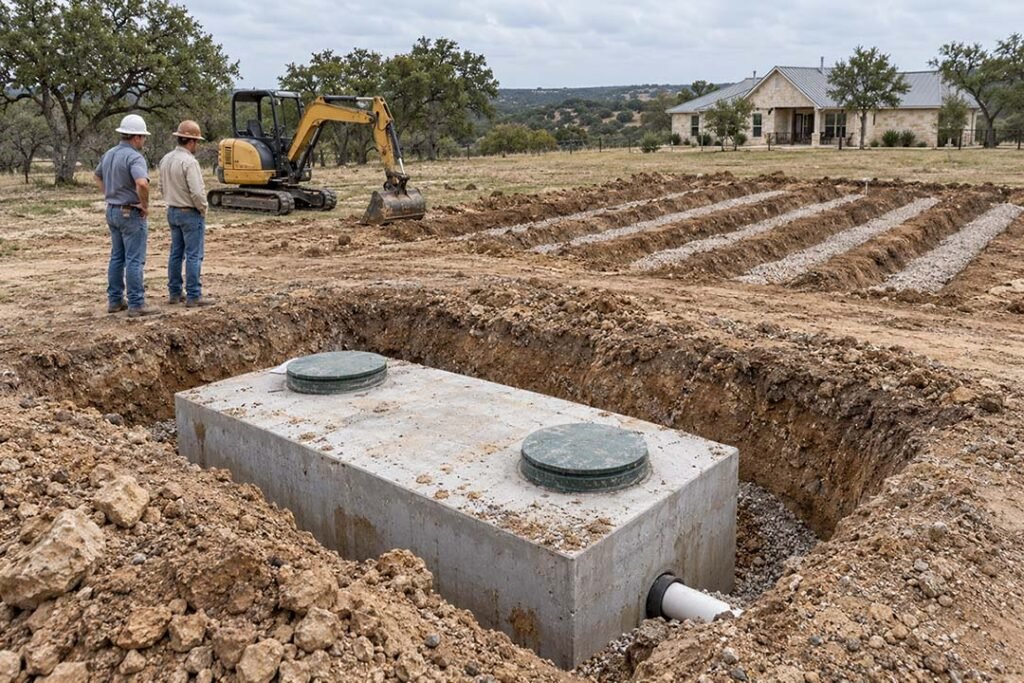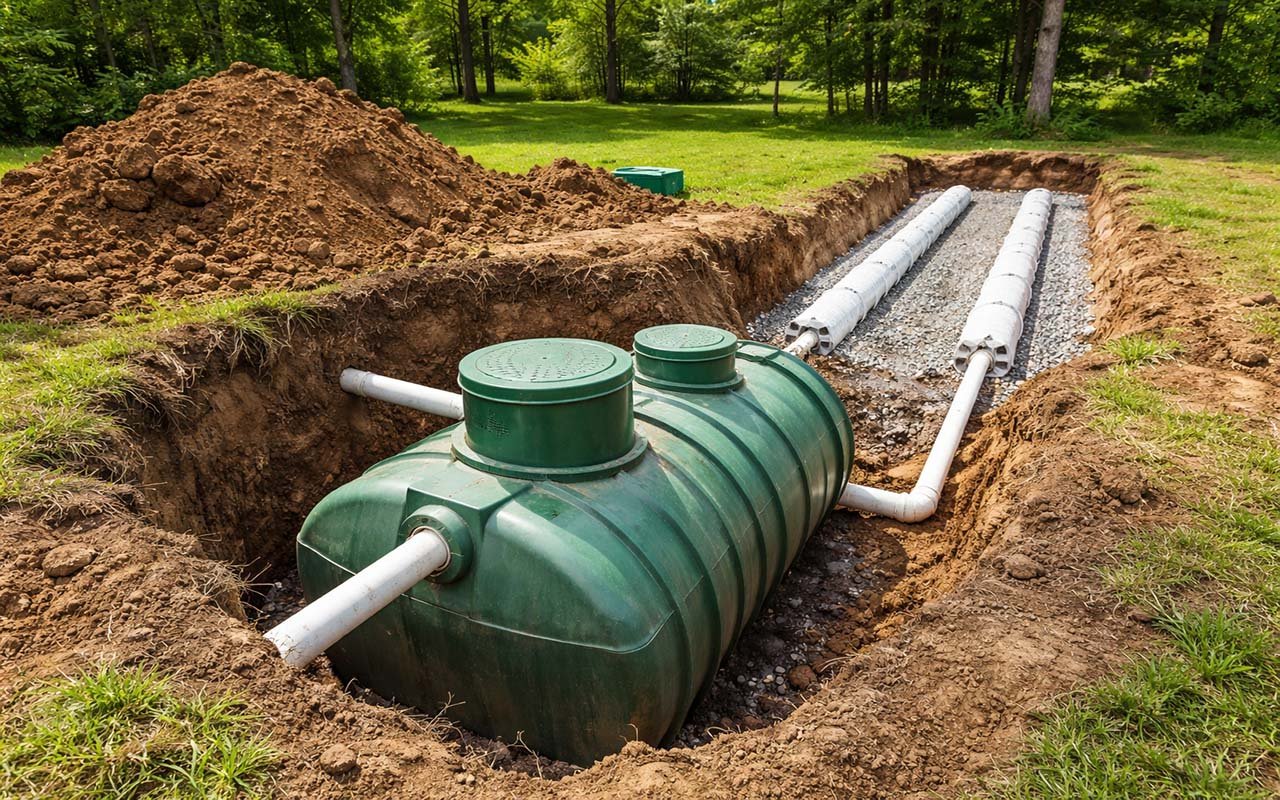
If you are wondering how long does a septic system last, there is no single number that applies to every system. A complete septic system contains several components, and those components can age at different rates.
According to the EPA, septic system lifespan depends on the materials used, system design, installation, service and exposure conditions, and maintenance. A concrete septic tank may typically last 50 years or more, while many pumps and controls may need replacement every 10 to 20 years. EPA also notes that drainfields more than approximately 25 to 30 years old can experience reduced wastewater absorption as the natural biomat in the trenches or beds becomes thicker.
This means the useful life of a septic system is better understood by looking at its individual components rather than assigning the entire system one fixed expiration date.
What Is the Average Lifespan of a Septic System?
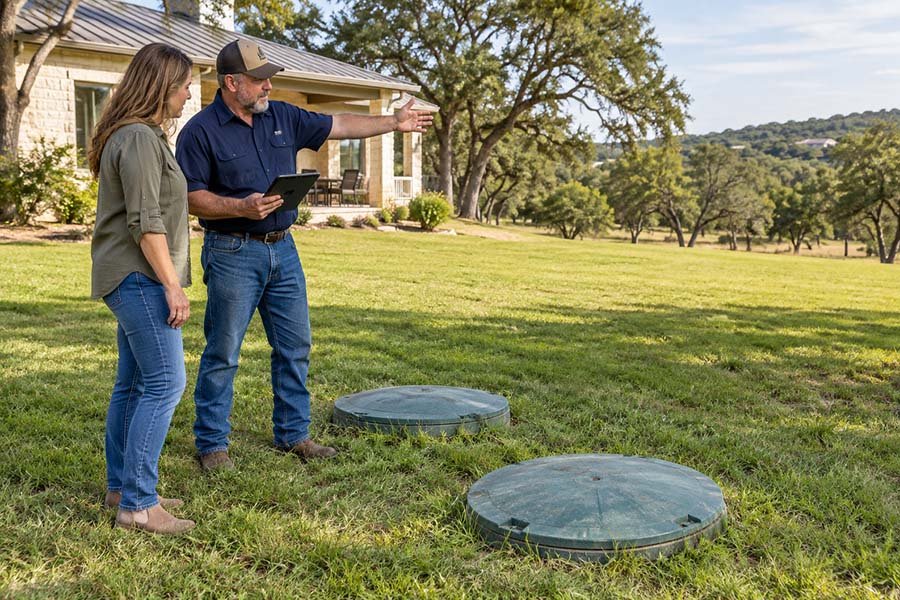
There is no universal average lifespan that accurately describes every septic system.
A conventional septic system generally includes a tank and a soil-based disposal area. Other systems may also contain pumps, controls, alarms, treatment equipment, dosing components, or different disposal methods. Each part can have a different service life.
EPA advises property owners with septic systems more than approximately 25 to 30 years old to start planning for a possible upgrade before an emergency occurs because the system may be approaching its useful lifespan. That does not mean every septic system automatically fails at 25 or 30 years.
A system’s actual condition, maintenance history, design, site conditions, and individual components matter more than age alone.
For Texas homeowners, TCEQ also recommends considering the expected lifespan of a system when selecting an OSSF, along with initial cost, ongoing maintenance, routine repairs, and replacement of mechanical parts.
Septic System Lifespan by Component
Looking at individual components provides a clearer picture of septic system lifespan.
| Septic system component | General lifespan guidance |
|---|---|
| Concrete septic tank | May typically last 50 years or more |
| Plastic septic tank | May last a similar timeframe, depending on manufacturer guidance |
| Pumps and controls | Many may need replacement every 10 to 20 years |
| Drainfield | At 25 to 30+ years, reduced absorption can become a concern |
| Advanced treatment components | Check manufacturer lifespan and warranty information |
These figures should not be treated as guaranteed replacement dates. EPA specifically says lifespan depends on material, design, installation, service and exposure conditions, and maintenance.
A system can therefore have an older tank that remains serviceable while a pump, control, drainfield, or another component needs attention.
How Long Does a Septic Tank Last?
The septic tank is often one of the longest-lasting parts of a septic system.
EPA says a concrete septic tank may typically last 50 years or more, although some older tanks may not have been constructed as well as newer tanks. Tanks made from other materials, including plastic, may have a similar lifespan. For other materials and specific products, EPA recommends checking manufacturer information for projected lifespan, design, strength, installation, and warranty details.
Tank lifespan should not be confused with complete septic system lifespan. A tank may remain structurally sound even when another component requires repair or replacement.
We cover concrete, plastic, fiberglass, steel, and 1,000-gallon tanks separately in our guide explaining how long septic tanks last.
How Long Does a Septic Drainfield Last?

A drainfield does not have a precise expiration date, but age can become increasingly important.
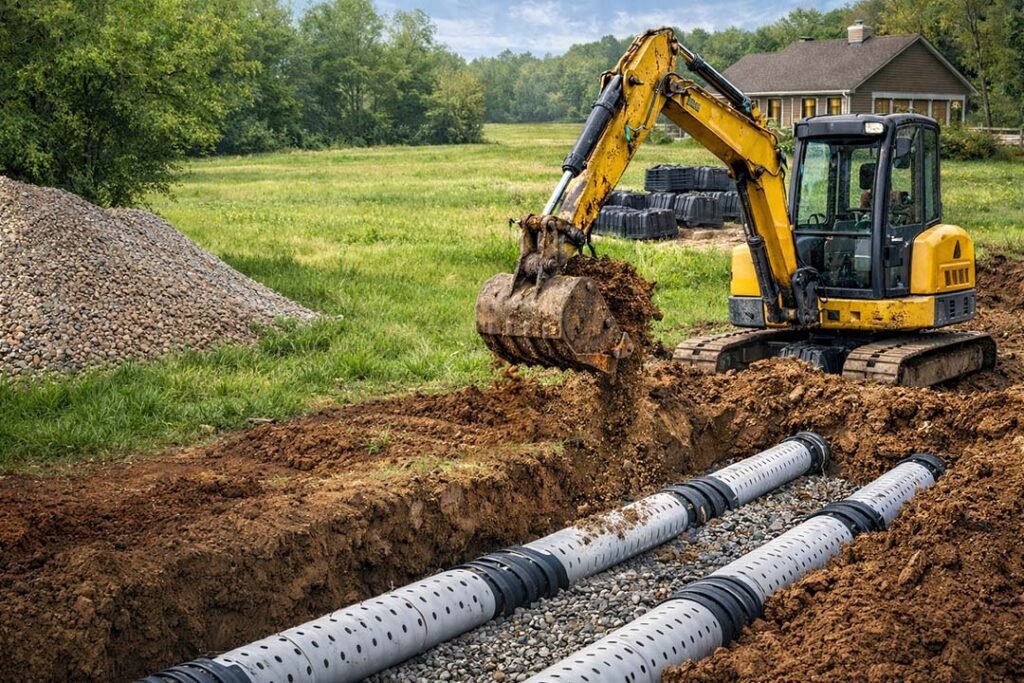
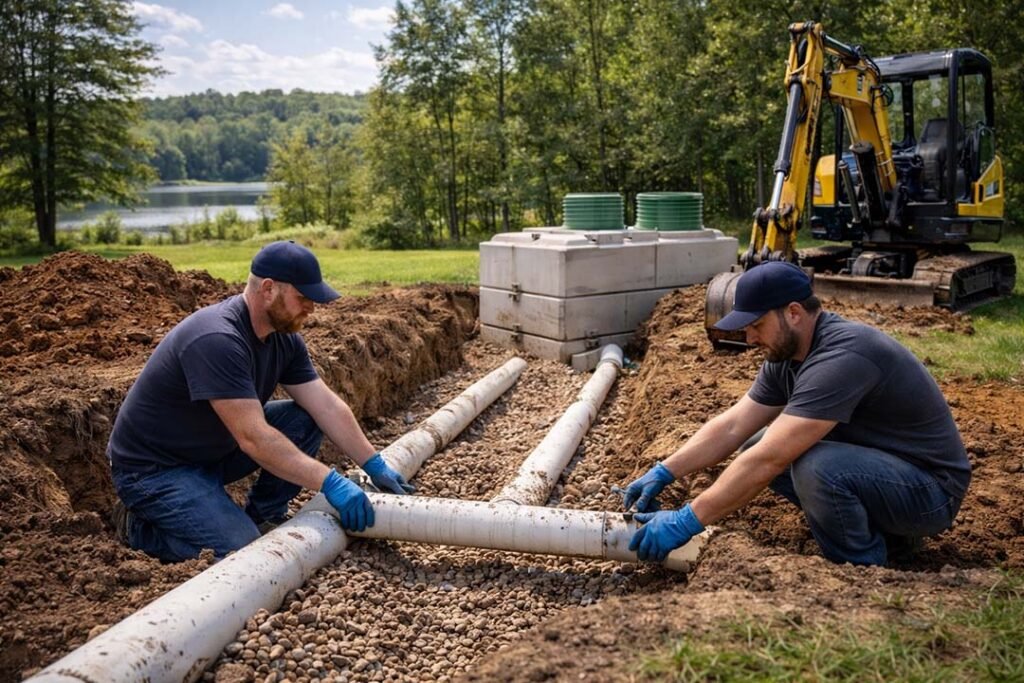
EPA says that when a drainfield is more than approximately 25 to 30 years old, the natural biomat that develops at the bottom of the trenches or beds can thicken. As this happens, the soil may become less able to accept wastewater properly.
Problems can include wastewater ponding in the drainfield, untreated wastewater reaching the surface, or wastewater backing up toward the tank and household plumbing.
Age is not the only factor. EPA identifies inappropriate soils, excessive slopes, high groundwater, excessive water use, and inadequate maintenance as factors that can contribute to septic-system malfunctions.
If a drainfield is experiencing problems, the cause should be determined before assuming complete replacement is necessary.
For replacement-specific information, see our guide to septic drain field replacement cost.
How Long Do Septic Pumps and Controls Last?
Some septic systems depend on pumps and electrical controls to move or manage wastewater.
EPA says many septic pumps and controls may need replacement every 10 to 20 years.
That does not mean the entire septic system has reached the end of its life when a pump fails.
A system may have a serviceable tank and disposal area while a pump, alarm, control, or another mechanical component needs repair or replacement.
Systems with electrical float switches, pumps, or mechanical components also generally require more frequent inspection than a basic conventional household system. EPA says alternative systems with these components should generally be inspected once a year.
How Long Do Aerobic Septic Systems Last?
There is no single lifespan that applies to every aerobic septic system.
An aerobic system contains multiple components. Depending on its design, these can include tanks, an aerator, pumps, controls, alarms, treatment components, and a disposal system.
EPA says many pumps and controls may need replacement every 10 to 20 years. For advanced treatment units, EPA recommends checking with the manufacturer for specific lifespan and warranty information.
This component-based approach is more accurate than saying every aerobic system lasts exactly 20, 30, or 40 years.
Maintenance also matters. TCEQ has specific maintenance requirements for certain Texas systems using secondary treatment, non-standard treatment, drip irrigation, and surface application. Local permitting authorities may adopt more stringent requirements.
For a broader explanation of these systems, read what is an aerobic septic system and our guide to aerobic septic systems in Texas.
How Long Does a Mound Septic System Last?
A mound septic system should also be considered as a group of components rather than given one universal lifespan.
Mound systems are used as an alternative disposal method when site conditions call for a different approach from a conventional absorptive drainfield. The long-term performance of a mound system can depend on its treatment components, dosing equipment, distribution system, mound absorption area, wastewater loading, site conditions, and maintenance.
Because system designs and components vary, assigning every mound system a fixed 20-year, 30-year, or 40-year lifespan would be misleading.
For an older mound system, its current performance and the condition of its individual components provide more useful information than age alone.
How Long Can a Septic System Sit Unused?
There is no universal number of years that determines how long a septic system can sit unused and then safely return to normal operation.
A period without wastewater entering the system does not create a simple expiration date.
The condition of an unused system can depend on its age, tank condition, drainfield condition, mechanical equipment, site conditions, and what was happening before the property became vacant.
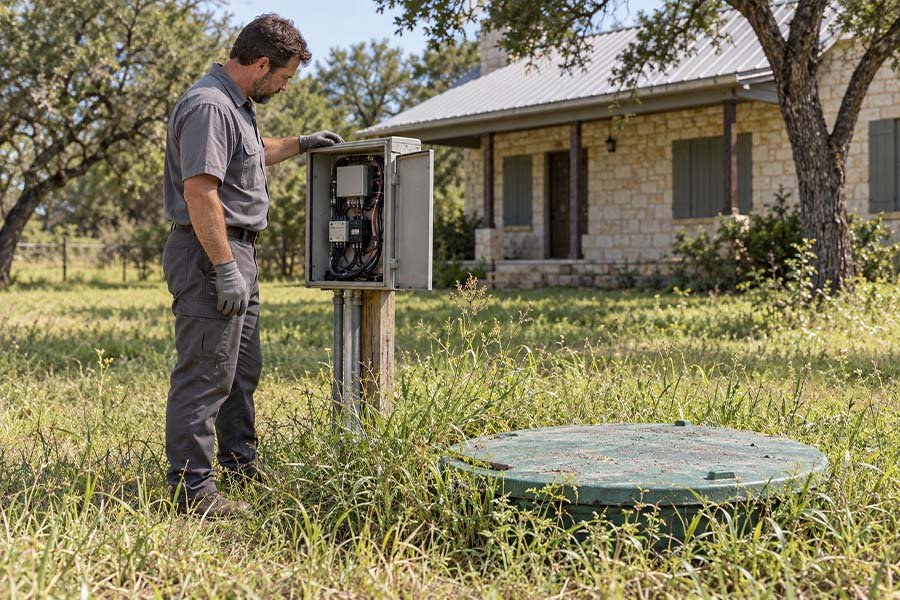
Systems with pumps, controls, alarms, aerators, or other mechanical equipment may require additional attention after extended inactivity.
For a property that has been vacant or unused for a long period, an evaluation before regular use is more useful than assuming the system is good or bad based only on how long it has been inactive.
What Affects How Long a Septic System Lasts?
Several factors can influence how long a septic system lasts.
System Design
A septic system should be appropriate for the property and expected wastewater load.
In Texas, TCEQ requires a site evaluation before an OSSF is constructed, installed, altered, extended, or repaired. The site evaluation helps determine which treatment and disposal systems are suitable for the property.
Installation
Proper installation is another important factor. EPA specifically includes installation among the factors affecting septic-system lifespan.
A system should be installed according to its approved design and applicable requirements.
Soil and Site Conditions
Soil characteristics, groundwater, restrictive conditions, slope, and other site characteristics can influence which disposal system is appropriate.
EPA notes that inappropriate soils, excessive slopes, and high groundwater can contribute to hydraulic failure in soil-based systems.
Wastewater Loading
A septic system is designed to handle a certain amount of wastewater.
TCEQ identifies hydraulic overloading as one possible cause of OSSF failure. When water use exceeds the amount for which the system was designed, the system can become overloaded.
Maintenance
Maintenance affects the long-term performance of the system.
TCEQ identifies poor maintenance as another potential cause of OSSF failure.
Regular inspection, appropriate pumping, and attention to mechanical components can help identify problems before they become more serious.
Does Regular Pumping Make a Septic System Last Longer?
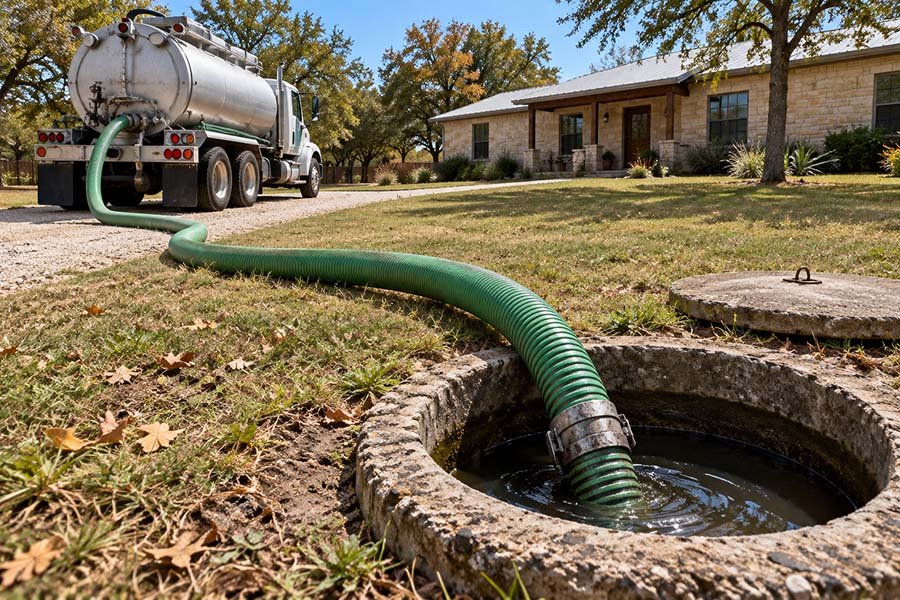
Pumping is an important part of septic maintenance, but it does not guarantee that every component will last a particular number of years.
A septic tank separates wastewater into different layers. Over time, sludge and scum accumulate and need to be removed.
EPA says household septic tanks are typically pumped every three to five years, although actual frequency depends on household size, wastewater generation, solids volume, and tank size.
TCEQ also recommends pumping conventional septic tanks every three to five years to help prevent short-circuiting of the treatment process. For aerobic treatment units, pumping depends on sludge depth and manufacturer recommendations.
Pumping does not repair an aging drainfield, damaged tank, failed pump, or malfunctioning treatment component. It is one part of maintaining the complete system.
For a detailed pumping schedule, read how often to pump a septic tank.
How Water Use Affects Septic System Lifespan
Water use matters because every gallon sent down household drains eventually has to be handled by the septic system.
Using too much water over a short period can increase the hydraulic load placed on the system.
TCEQ identifies hydraulic overloading as a common cause to investigate when an OSSF is failing. It recommends comparing actual water use with the amount specified in the system design.
EPA similarly recommends efficient water use as one of the four primary elements of septic-system care.
Homeowners can reduce unnecessary stress on the system by addressing leaking fixtures, using water efficiently, and spreading high-water-use activities across the week rather than sending unusually large volumes into the system at once.
Signs an Older Septic System Needs Evaluation
An older septic system does not automatically need replacement, but changes in performance should not be ignored.
EPA identifies several common signs of a malfunctioning septic system, including slow-draining sinks, tubs, and showers, gurgling plumbing, sewage backups, odors around the tank or drainfield, standing water or damp areas, and unusually green or spongy grass over septic components.
These symptoms indicate that the system needs evaluation.
They do not tell you which component has failed.
For example, a backup could be related to the tank, piping, excessive solids, hydraulic loading, drainfield performance, a pump, or another component. Determining the cause is more useful than assuming an old system needs complete replacement.
Does an Old Septic System Need to Be Replaced?
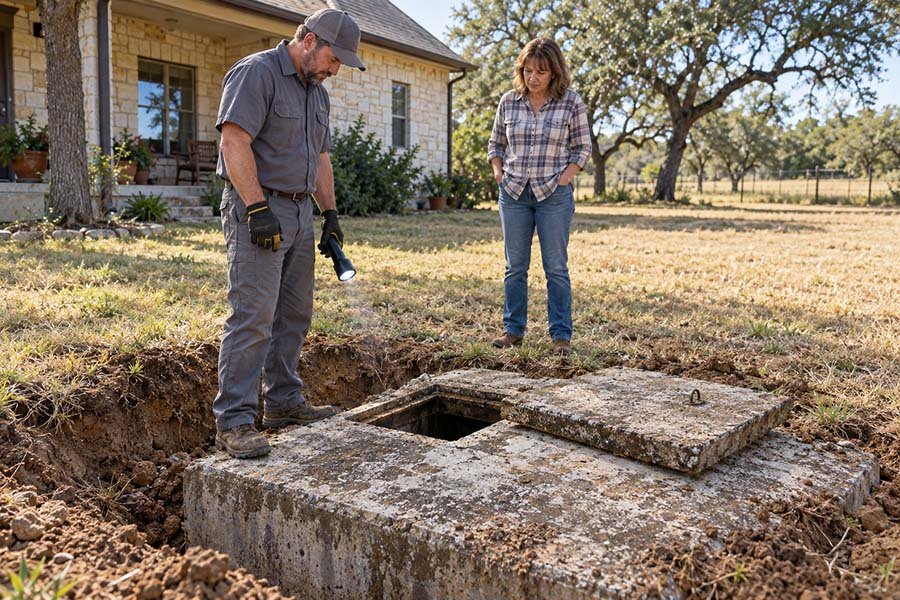
Not necessarily.
Age is useful context, but it is not a diagnosis.
TCEQ tells homeowners with a failing OSSF to determine what is causing the failure. Its guidance identifies hydraulic overloading, site or soil conditions, organic overloading, poor maintenance, and age as potential causes. TCEQ says a system more than 15 years old may need replacement. It does not say every Texas septic system must be replaced when it reaches 15 years.
EPA provides another useful perspective by advising owners of systems more than approximately 25 to 30 years old to start planning for a possible upgrade.
The correct next step depends on which component is causing the problem.
A tank problem may call for tank repair or replacement. A failed drainfield may require disposal-area work. A failed pump may require mechanical repair. In other cases, a complete system replacement may be appropriate.
For more information, see our guides to septic system repair cost and how much it costs to replace a septic system.
How to Help a Septic System Last
Good maintenance cannot guarantee that a septic system will last a specific number of years, but it can help protect the system from avoidable problems.
EPA summarizes septic care around four principles. Inspect and pump as needed, use water efficiently, dispose of waste properly, and maintain the drainfield.
In Texas, TCEQ advises homeowners to have tanks pumped and cleaned appropriately, conserve water, check for plumbing leaks, keep trash out of the system, avoid unnecessary chemical additives and enzymes, and keep vehicles and structures off the OSSF.
Homeowners should also keep maintenance and repair records. Knowing when the system was installed, when the tank was pumped, which components have been replaced, and whether previous repairs were completed can be particularly valuable when evaluating an older system.
Frequently Asked Questions
Does a 30-year-old septic system need replacement?
Not necessarily. A 30-year-old septic system should be inspected to assess its tank, drainfield, and any mechanical equipment. Some parts may still work well, while others need repairs or replacement. EPA recommends planning for a possible upgrade once a system is more than 25 to 30 years old, but age alone does not mean complete replacement is required.
Can a septic system last 50 years?
Some components can last 50 years or more, especially a well-built concrete septic tank. However, that does not mean every original part will last that long. Pumps, controls, and the drainfield may need attention sooner. A system that has served a property for 50 years may include components replaced along the way.
What is the average lifespan of a septic system?
There is no single average lifespan that applies to every complete septic system. Concrete tanks may last 50 years or more, while many pumps and controls need replacement after 10 to 20 years. Drainfield performance can become a concern after about 25 to 30 years. Design, installation, maintenance, and site conditions affect actual service life.
Can a septic system last 100 years?
Homeowners should not expect a complete septic system to last 100 years without major repairs or replacement. A property may have used septic treatment for a century, but its tank, drainfield, or equipment may have been replaced during that time. For a very old system, inspection findings and service records provide more useful information than age alone.
How long does a septic drainfield last?
A septic drainfield has no fixed expiration date. EPA notes that after about 25 to 30 years, the natural biological layer in its trenches can thicken and reduce wastewater absorption. Soil conditions, water use, and maintenance also affect performance. Wet patches, recurring backups, or sewage surfacing should prompt a professional assessment.
Final Thoughts
So, how long does a septic system last? There is no single expiration date that applies to every system. EPA says a concrete septic tank may typically last 50 years or more, while many pumps and controls may need replacement every 10 to 20 years. Drainfields more than approximately 25 to 30 years old can also experience reduced absorption as the natural biomat becomes thicker.
This is why septic system lifespan should be evaluated component by component. An older system may still have a serviceable tank while its pump, controls, drainfield, or another component needs attention. Likewise, reaching 25, 30, or even 50 years does not automatically tell you which part of the system needs replacement.