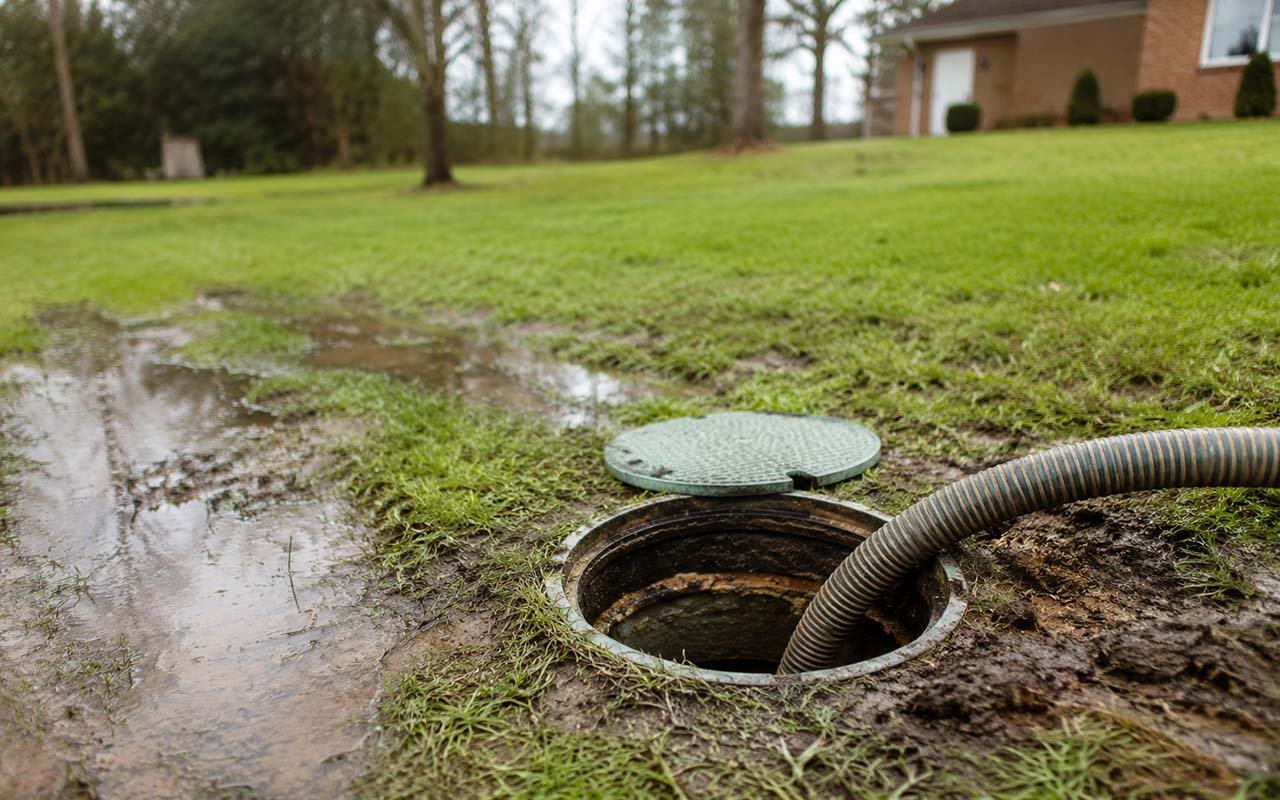
One of the most common questions homeowners ask is, how do you know if your septic tank is full? Unlike many household systems, a septic tank operates underground and out of sight. Because you cannot easily see what is happening inside the tank, problems often go unnoticed until they begin affecting your plumbing, yard, or daily routine.
A properly functioning septic system safely collects and treats wastewater from your home. Over time, solid waste accumulates inside the tank and must be removed through routine septic tank pumping. If pumping is delayed for too long, the tank can reach capacity and begin showing warning signs that should never be ignored.
In our experience working with residential and commercial septic systems, many costly repairs start with small symptoms that homeowners overlook. Understanding the signs of a full septic tank can help you take action before a minor issue becomes a major expense.
Understanding How a Septic Tank Works

Before identifying whether a tank is full, it helps to understand the basic operation of a septic system.
Wastewater from sinks, showers, toilets, washing machines, and other household fixtures flows into the septic tank. Inside the tank, solids settle to the bottom and form a sludge layer. Oils and grease rise to the surface, creating a scum layer. The liquid wastewater remains between these layers and eventually flows into the drain field for further treatment.
Over time, sludge and scum continue to accumulate. Since these materials do not completely break down, they must be removed periodically through professional pumping.
The average residential septic tank ranges from 1,000 to 1,500 gallons. Depending on household size and water usage, most systems require pumping every three to five years.
Why Septic Tanks Become Full

A septic tank becoming full is a normal part of system ownership. However, several factors can accelerate the process.
Large households generally fill tanks faster because more wastewater enters the system each day. Frequent laundry loads, long showers, and excessive water usage can also increase accumulation rates.
Certain items should never enter a septic system. Products such as wipes, paper towels, feminine hygiene products, and grease contribute to faster sludge buildup and may reduce available tank capacity.
We often find that homes with garbage disposals require more frequent pumping because food particles add additional solids to the tank.
Common Signs Your Septic Tank Is Full
The most reliable way to determine tank levels is through professional inspection. However, several warning signs often indicate a septic tank is nearing capacity.
Slow Drains Throughout the House
One of the earliest indicators is slow drainage.
If sinks, bathtubs, showers, and toilets begin draining more slowly than normal, a full septic tank could be restricting wastewater movement. While a single slow fixture may indicate a localized clog, multiple slow drains throughout the home often point to a larger septic issue.
Pay attention to gradual changes. Many homeowners adapt to slower drains over time and fail to recognize the warning signs until the situation worsens.
Frequent Toilet Backups
Toilets often provide some of the clearest clues when septic capacity becomes limited.
A toilet that regularly backs up despite plunging or clearing efforts may indicate wastewater has nowhere else to go. When a tank reaches capacity, incoming wastewater can struggle to flow properly through the system.
Recurring toilet backups should always be investigated promptly, especially if multiple bathrooms experience similar problems.
Gurgling Sounds in Plumbing Fixtures
Unusual noises coming from your plumbing system can signal trouble.
You may hear bubbling or gurgling sounds when flushing toilets or draining sinks. These sounds occur when wastewater movement becomes restricted and air becomes trapped within the plumbing system.
While gurgling does not always mean the tank is full, it frequently appears alongside other septic warning signs.
Septic Tank Full Warning Sign Comparison
| Warning Sign | Severity Level | Recommended Action |
|---|---|---|
| Slow drains | Moderate | Schedule inspection |
| Gurgling pipes | Moderate | Monitor and inspect |
| Toilet backups | High | Contact septic professional |
| Sewage odors | High | Immediate evaluation |
| Standing water | Very High | Emergency service recommended |
| Sewage backup indoors | Critical | Immediate professional response |
Sewage Odors Around the Property
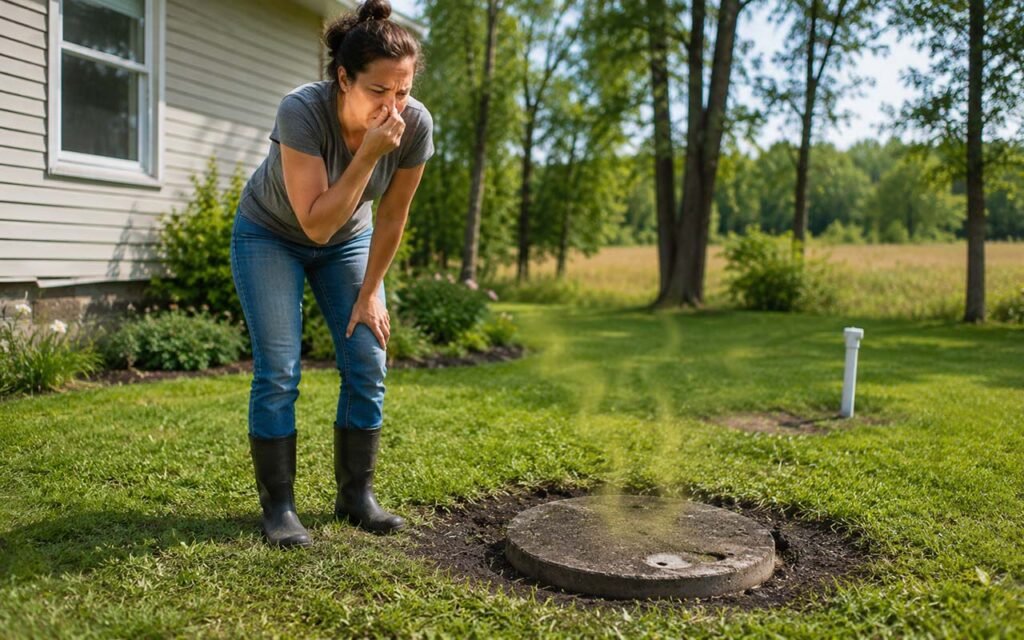
A healthy septic system should not produce strong sewage smells around your home.
If you notice persistent odors near the tank, drain field, or outdoor plumbing areas, it may indicate that the system is becoming overloaded. As the tank reaches capacity, wastewater treatment efficiency can decline, leading to unpleasant smells.
Odors are particularly noticeable during warm weather when bacterial activity increases.
From our field experience, homeowners often dismiss occasional odors as temporary issues. However, recurring sewage smells almost always warrant professional attention.
Standing Water Near the Drain Field
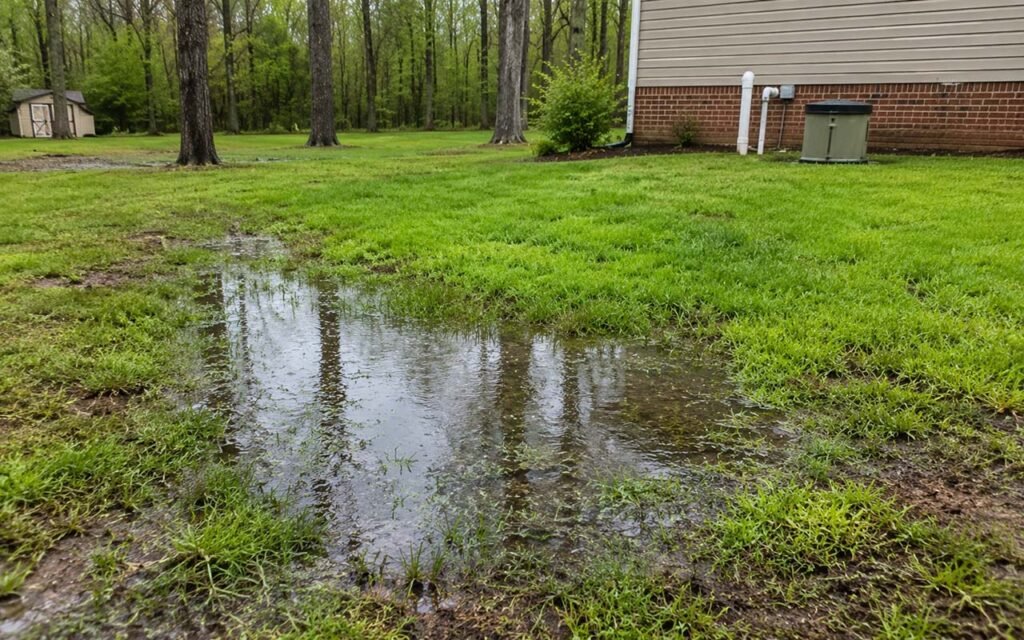
One of the more serious signs that a septic tank may be full is standing water around the drain field. When the tank becomes overloaded with solids, wastewater cannot move through the system as efficiently as it should. As a result, excess liquid may begin rising to the surface instead of being properly absorbed into the soil.
Homeowners may notice wet areas that remain long after rainfall has ended, soft or spongy ground underfoot, or puddles forming near the drain field. In some cases, sections of grass above the septic area may appear noticeably greener and grow faster than the surrounding lawn due to the additional moisture and nutrients.
These warning signs should not be ignored. A saturated drain field can reduce the effectiveness of the entire septic system and may eventually lead to wastewater backups or costly repairs. If you notice persistent wet spots or unusual lawn conditions near your septic system, it is a good idea to schedule a professional inspection as soon as possible.
Lush Green Grass Over the Septic Area
Many homeowners are surprised to learn that unusually healthy grass can indicate a septic problem.
When excess wastewater reaches the soil surface, nutrients act as fertilizer and promote rapid plant growth. If one section of your lawn appears greener, thicker, or grows faster than surrounding areas, wastewater leakage may be occurring.
This symptom often develops gradually and can be easy to overlook without regular observation of your property.
Sewage Backing Up Into the Home
Indoor sewage backup represents one of the most severe septic emergencies.
Wastewater may begin entering:
- Bathtubs
- Showers
- Floor drains
- Toilets
- Basement plumbing fixtures
This situation creates both property damage and health concerns. Raw sewage contains harmful bacteria and contaminants that require professional cleanup.
If sewage enters your home, contact a septic professional immediately and avoid using additional water until the issue is resolved.
At Dillon Septic, we provide reliable septic inspections, septic tank pumping, repairs, maintenance, and new septic system installations for residential and commercial properties. Our experienced team helps property owners keep their systems operating safely and efficiently.
How Professionals Determine Whether a Septic Tank Is Full
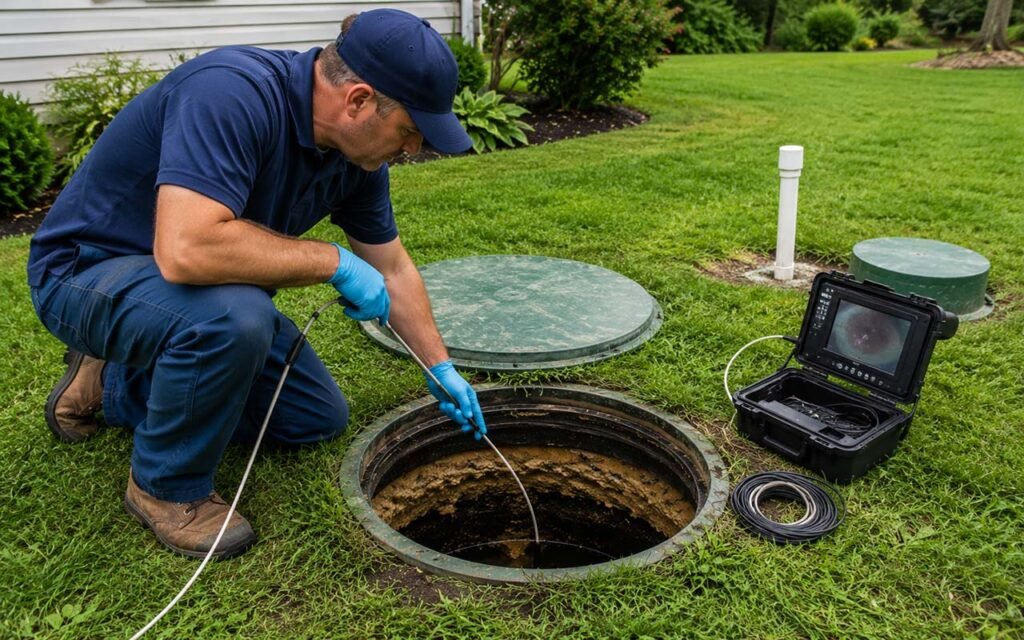
While warning signs can suggest a problem, the most accurate way to assess a septic tank is through a professional inspection.
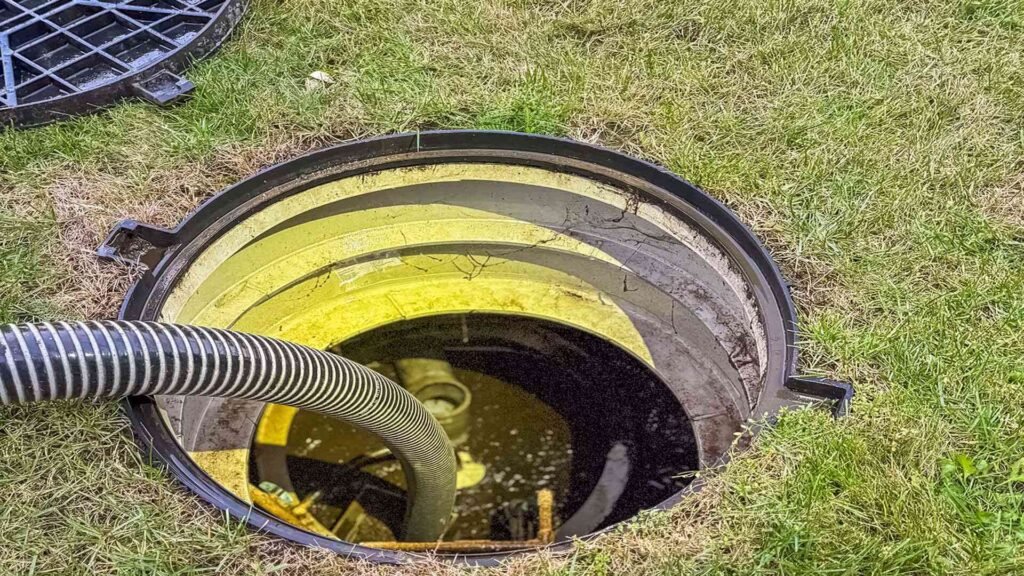
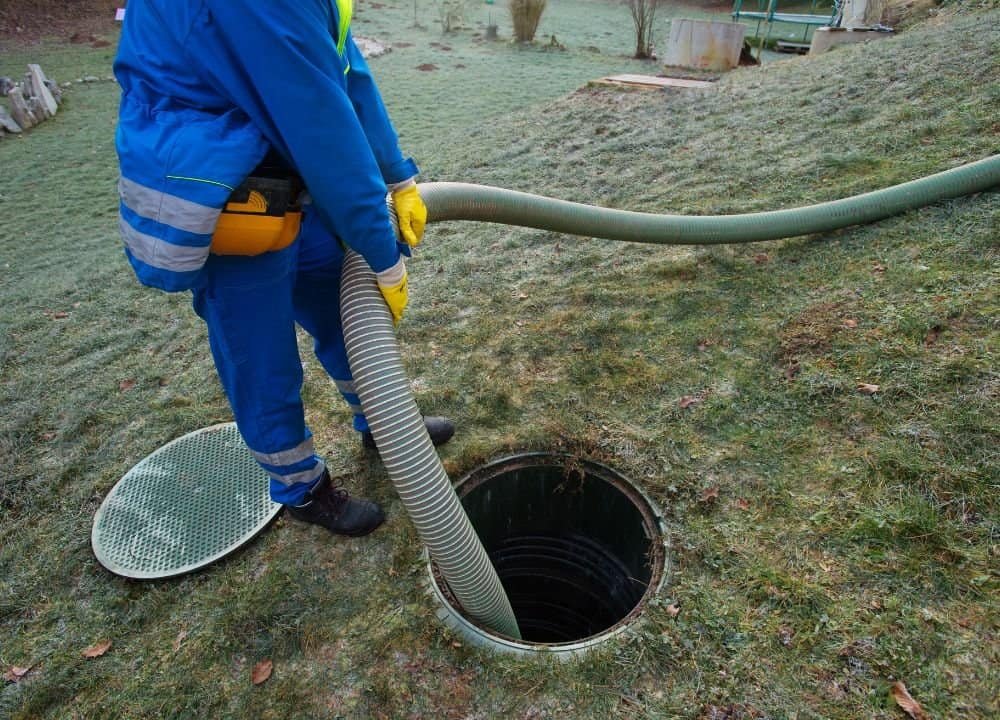
During an inspection, technicians locate the tank and measure the sludge and scum layers. Specialized tools allow them to determine how much usable capacity remains. In many cases, a tank may appear to function normally while being close to its pumping threshold.
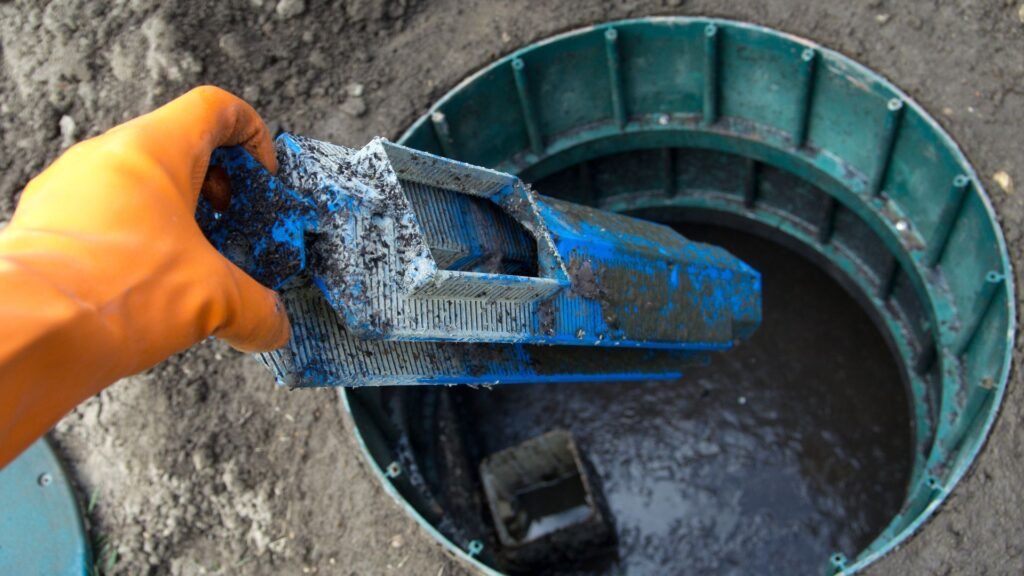
A septic inspection can also identify damaged baffles, root intrusion, excessive solids, or drain field issues that may contribute to performance problems.
As septic professionals, we often find that homeowners wait until symptoms appear before scheduling service. Preventive inspections are typically less expensive and far less stressful than dealing with a system failure.
How Often Should a Septic Tank Be Pumped?
There is no single pumping schedule that works for every property. Several factors affect how quickly solids accumulate.
These factors include:
- Household size
- Tank capacity
- Water usage habits
- Presence of a garbage disposal
- Number of bathrooms
- Frequency of guests or visitors
The table below provides a general guideline.
| Household Size | Tank Size | Typical Pumping Interval |
|---|---|---|
| 1 to 2 people | 1,000 gallons | Every 4 to 5 years |
| 3 to 4 people | 1,000 gallons | Every 3 to 4 years |
| 5 to 6 people | 1,500 gallons | Every 2 to 3 years |
| 7 or more people | 1,500 gallons+ | Every 1 to 2 years |
These are general recommendations. A professional evaluation provides the most accurate maintenance schedule for your specific property.
What Happens If You Ignore a Full Septic Tank?
Ignoring the warning signs of a full septic tank can lead to expensive and disruptive consequences.
Initially, you may experience slow drains and occasional backups. Over time, untreated wastewater can begin affecting the drain field. Once a drain field becomes saturated or damaged, repairs become significantly more expensive than routine pumping.
Potential consequences include:
- Indoor sewage backups
- Drain field failure
- Soil contamination
- Foul odors around the property
- Landscape damage
- Costly repair or replacement projects
According to industry estimates, septic system replacement can cost several times more than routine maintenance. Regular pumping remains one of the most cost-effective ways to protect your investment.
Common Reasons Septic Tanks Fill Faster Than Expected

Many homeowners expect their septic tank to operate for several years between pumping appointments. While a properly maintained system can often meet that expectation, certain household habits and usage patterns can cause a tank to fill much faster than anticipated. Understanding these factors can help extend the life of your septic system and reduce the risk of backups or costly repairs.
Excessive Water Usage
One of the most common causes of a rapidly filling septic tank is excessive water consumption. Every gallon of water used inside the home eventually enters the septic system. When large volumes of wastewater enter the tank in a short period, solids have less time to settle properly. This can reduce treatment efficiency and increase the likelihood of solids reaching the drain field.
Common sources of excessive water usage include long daily showers, multiple laundry loads in a single day, frequent dishwasher use, leaking toilets, and dripping faucets. Even minor plumbing leaks can add hundreds of gallons of unnecessary water to the system each month. Conserving water and addressing leaks promptly can significantly improve septic system performance.
Flushing Non-Biodegradable Materials
Many products labeled as flushable can create serious problems inside a septic system. Unlike toilet paper, these materials do not break down quickly and can accumulate inside the tank, reducing available capacity and increasing sludge buildup.
Items that should never be flushed include baby wipes, cleaning wipes, paper towels, feminine hygiene products, cotton swabs, and dental floss. Over time, these materials can occupy valuable space within the tank and contribute to clogs throughout the system. Proper disposal practices are essential for maintaining healthy septic system operation.
Grease and Food Waste
Kitchen waste is another major contributor to premature septic tank filling. Cooking oils, grease, fats, and food scraps can accumulate inside the tank and increase the thickness of the sludge and scum layers. Unlike wastewater, these materials do not easily break down and can remain in the system for extended periods.
Homes that regularly use garbage disposals often require more frequent septic tank pumping because food particles add significant amounts of solid waste to the tank. To help protect your system, dispose of grease and food waste in the trash whenever possible instead of washing them down the drain.
Larger Household Sizes
The number of people living in a home directly impacts how quickly a septic tank fills. More occupants typically mean more showers, laundry, toilet flushing, and overall water use. As wastewater volume increases, solids accumulate faster and reduce the time between required pumping services.
In our experience, larger households often benefit from more frequent inspections and maintenance schedules. Monitoring system usage and following recommended pumping intervals can help prevent unexpected septic issues.
Delayed Septic Tank Pumping
Routine pumping is one of the most important aspects of septic system maintenance. When pumping is postponed for too long, sludge and scum continue to accumulate until they occupy a significant portion of the tank’s capacity. Eventually, wastewater treatment becomes less effective, increasing the risk of backups, odors, and drain field problems.
Following a professional pumping schedule based on your household size, tank capacity, and water usage habits is the best way to avoid unnecessary strain on your septic system and keep it operating efficiently for years to come.
Real-World Example of a Full Septic Tank
We recently encountered a homeowner who noticed slow drains in multiple bathrooms but assumed the issue was a simple plumbing clog.
Over several months, the symptoms gradually worsened. Eventually, sewage backed up into a guest bathroom shower.
After inspecting the system, we discovered the septic tank had not been pumped in more than eight years. The sludge layer had grown substantially, reducing available capacity and affecting wastewater flow.
Fortunately, prompt pumping restored normal operation, and the drain field remained undamaged. Had the problem continued much longer, significant drain field repairs could have been necessary.
Situations like this demonstrate why early intervention is so important.
Expert Insight on Septic Tank Maintenance
One of the biggest misconceptions we encounter is the belief that septic tanks only need attention when something goes wrong.
In reality, septic systems perform best when maintained proactively.
A well-maintained system can provide reliable service for decades. Many of the major repairs we see could have been avoided through routine inspections and scheduled pumping.
Homeowners who keep maintenance records and monitor system performance often experience fewer emergencies and lower long-term ownership costs.
How to Prevent Septic Tank Problems
Preventive maintenance remains the most effective strategy for avoiding septic issues.
Consider these best practices:
- Follow a regular pumping schedule.
- Conserve water whenever possible.
- Avoid flushing inappropriate materials.
- Keep maintenance records.
- Schedule periodic professional inspections.
- Protect the drain field from vehicle traffic.
- Address plumbing leaks promptly.
These simple habits can significantly extend the life of your septic system.
Frequently Asked Questions
Can a septic tank become full in one year?
Yes. Smaller tanks serving large households can fill more quickly than expected. Excessive water usage and improper waste disposal can accelerate accumulation.
Will a full septic tank empty itself?
No. Solids remain inside the tank and continue accumulating. Professional pumping is necessary to remove sludge and scum layers.
Does a bad smell always mean the septic tank is full?
Not always. Odors may result from venting issues, plumbing problems, or drain field concerns. However, persistent sewage smells should always be investigated.
How long does septic tank pumping take?
Most residential pumping appointments can be completed within one to three hours, depending on tank size and site accessibility.
Can heavy rain make it seem like the septic tank is full?
Yes. Saturated soil can reduce drain field performance, creating symptoms similar to those caused by a full tank.
Conclusion
Understanding how do you know if your septic tank is full can help you avoid expensive repairs, protect your property, and maintain a healthy wastewater system. Warning signs such as slow drains, plumbing gurgles, sewage odors, standing water, and indoor backups should never be ignored.
The good news is that most septic problems can be prevented through routine inspections and timely septic tank pumping. Paying attention to early symptoms allows homeowners to address issues before they escalate into major system failures.
If you have noticed any signs of a full septic tank or cannot remember the last time your system was serviced, now is the ideal time to schedule an inspection.