A septic system is one of the most common wastewater treatment solutions for homes and businesses outside municipal sewer networks. Many property owners rely on these systems every day without fully understanding what happens underground. Learning how does a septic system work helps homeowners protect their property, avoid costly repairs, and maintain a safe and healthy environment.
From an industry perspective, a septic system is simple in concept but precise in function. It uses natural processes, gravity, and soil filtration to treat wastewater on site. When properly designed, installed, and maintained, a septic system can operate efficiently for decades.
This guide explains the process step by step, using real-world field experience, measurable data, and practical insight to help you understand what keeps your system running smoothly.
What a Septic System Is and Why It Matters
A septic system is an on-site wastewater treatment system typically used in rural or semi-rural areas. Instead of sending wastewater to a city sewer plant, the system treats water directly on the property.
Every time water leaves your home through sinks, toilets, showers, or appliances, it enters the septic system. That wastewater contains solids, organic matter, oils, grease, and bacteria. Without proper treatment, it could contaminate soil, groundwater, and nearby water sources.
A well-functioning septic system protects:
- Drinking water wells
- Local streams and rivers
- Soil quality
- Human health
- Property value
Industry data shows that a properly maintained septic system can last 25 to 40 years, while neglected systems may fail in less than 10 years.
Main Components of a Septic System
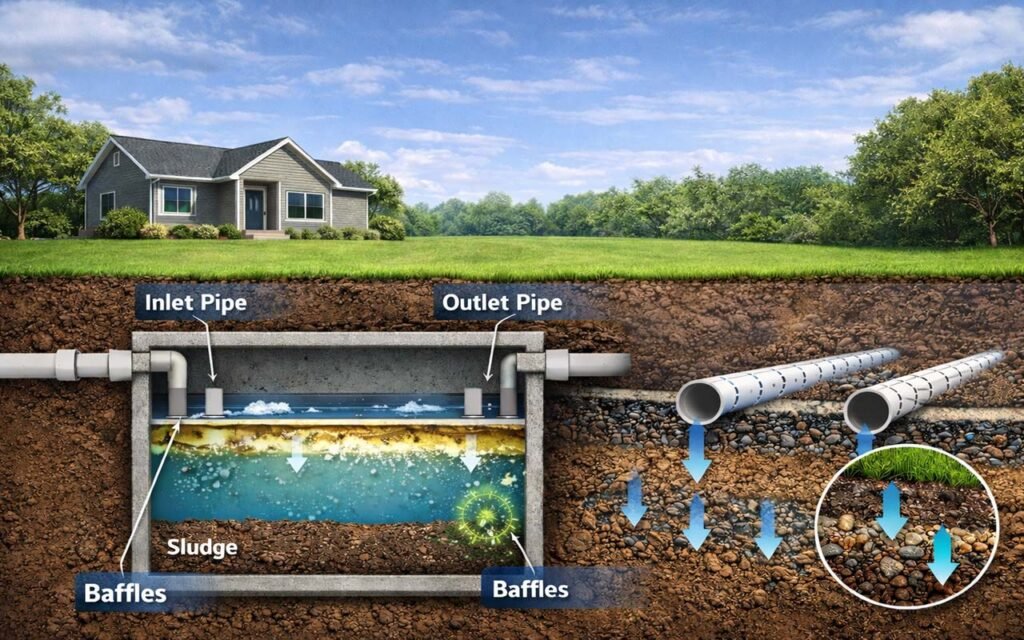
Understanding how does a septic system work starts with knowing its core components. Most conventional systems include four main parts that work together.
Septic Tank
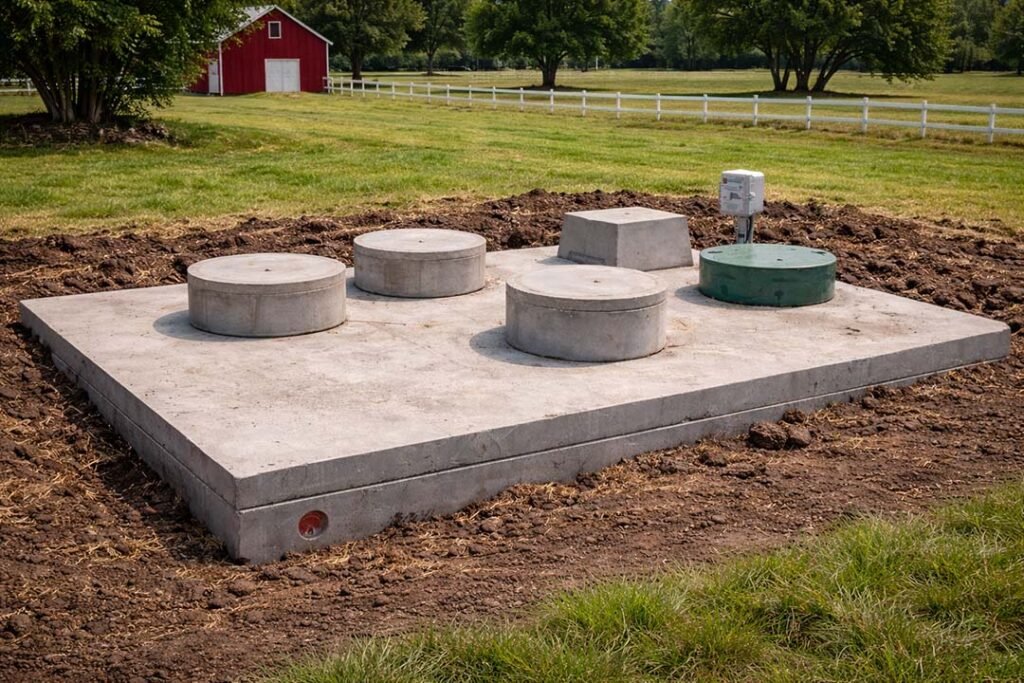
The septic tank is a watertight container, usually made of concrete, fiberglass, or polyethylene. Its primary role is to separate solids from liquids.
Typical residential tank sizes range from 1,000 to 1,500 gallons, depending on home size and usage.
Inlet and Outlet Pipes
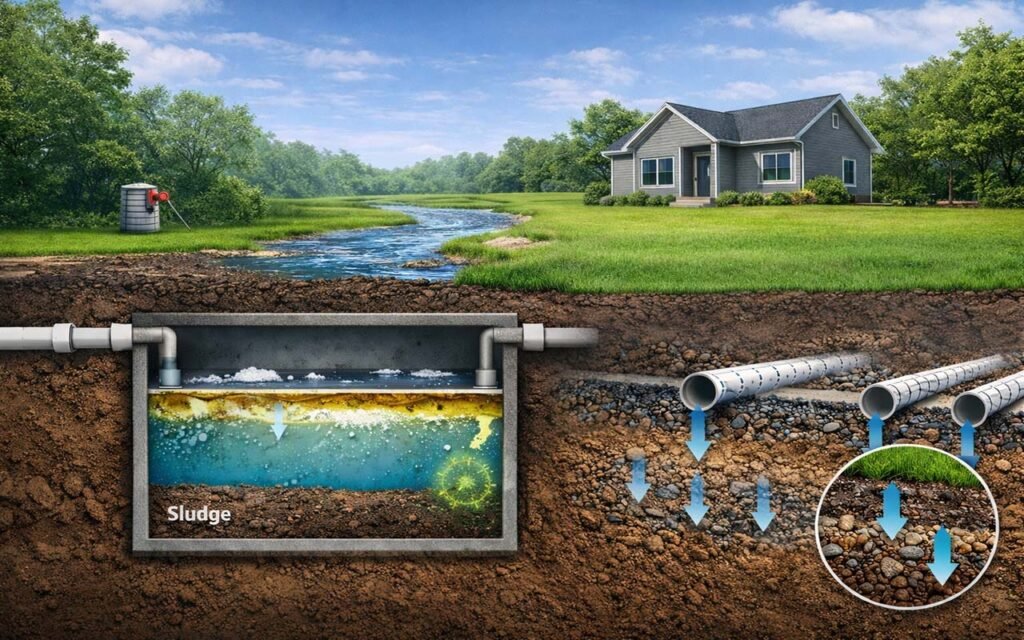
The inlet pipe carries wastewater from the home into the tank. The outlet pipe moves clarified liquid, known as effluent, from the tank to the drain field.
Baffles or Tees
Baffles slow down incoming wastewater and prevent solids from exiting the tank. They play a critical role in protecting the drain field.
Drain Field
The drain field, also called a leach field, disperses treated effluent into the soil where final treatment occurs naturally.
Step by Step How a Septic System Works
Wastewater Enters the Septic Tank
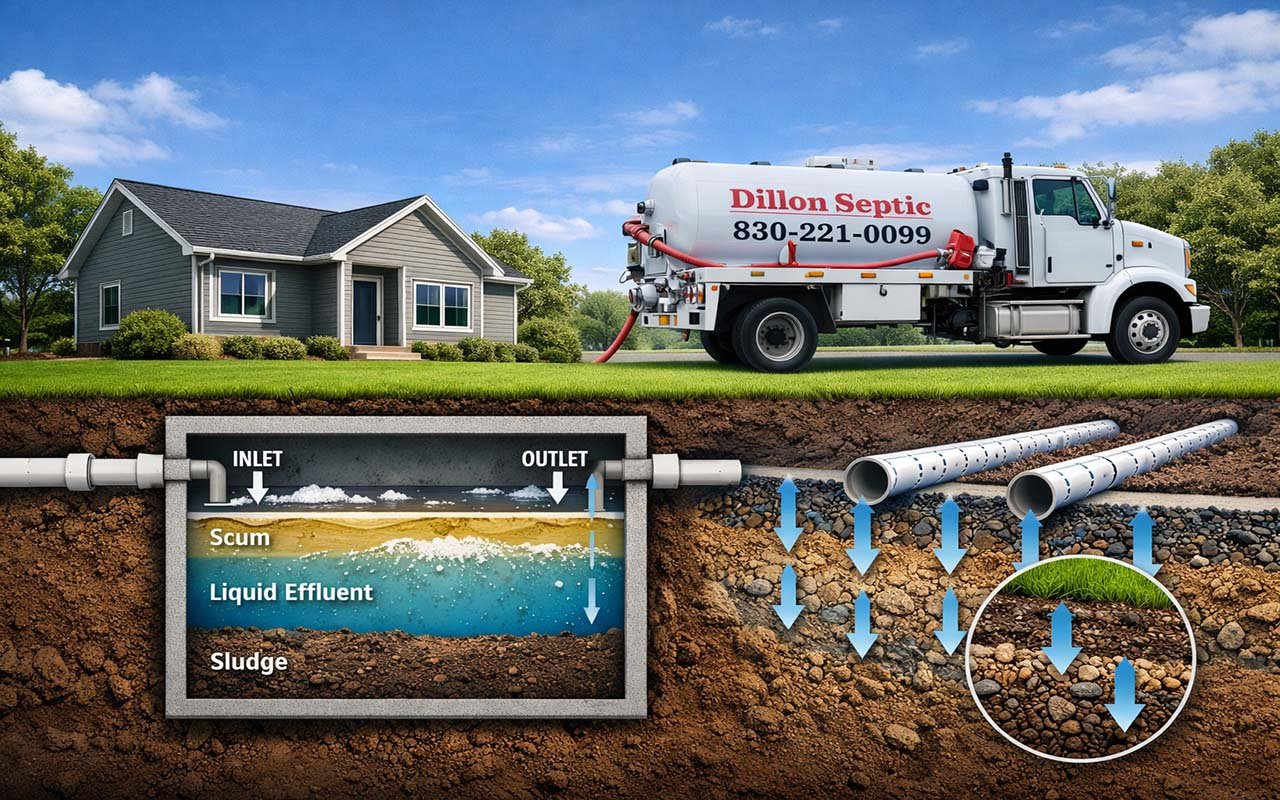
All wastewater from the home flows into the septic tank through the inlet pipe. Gravity does most of the work in standard systems.
Once inside the tank, wastewater begins to separate almost immediately.
- Heavy solids sink to the bottom forming sludge
- Oils and grease float to the top forming scum
- Liquid effluent remains in the middle layer
This separation process is critical and depends on adequate tank size and proper water usage.
Natural Bacterial Breakdown Begins
Inside the tank, anaerobic bacteria break down organic waste. These bacteria reduce the volume of solids and partially treat wastewater.
From field observations, tanks with healthy bacterial activity show slower sludge accumulation and improved system longevity. Harsh chemicals, antibacterial cleaners, and excessive bleach can disrupt this process.
Effluent Moves to the Drain Field
As new wastewater enters the tank, an equal amount of liquid effluent exits through the outlet pipe. Baffles ensure only clarified liquid leaves the tank.
The effluent flows into the drain field where it is distributed evenly through perforated pipes.
Soil Provides Final Treatment
The soil acts as a natural filter. As effluent percolates through soil layers, microorganisms remove harmful bacteria, viruses, and nutrients.
Studies from environmental agencies show that properly designed soil absorption systems remove up to 99 percent of pathogens before water reaches groundwater.
Septic System Process Summary Table
| Stage | Function | Key Measurement |
|---|---|---|
| Inlet Flow | Moves wastewater into tank | Gravity driven |
| Separation | Sludge and scum formation | 24 to 48 hours |
| Bacterial Action | Breaks down organic solids | Anaerobic process |
| Effluent Dispersal | Sends liquid to soil | Controlled flow |
| Soil Filtration | Final treatment stage | Up to 99 percent pathogen reduction |
Types of Septic Systems You May Encounter
Not all septic systems are identical. Soil conditions, lot size, and local regulations influence system design.
Conventional Gravity Systems
These are the most common and rely entirely on gravity and soil absorption. They are cost-effective and reliable when soil conditions are suitable.
Pressure Distribution Systems
These systems use pumps to distribute effluent evenly across the drain field. They are often used on sloped or shallow soil sites.
Aerobic Treatment Units
Aerobic systems introduce oxygen to accelerate bacterial treatment. They provide higher treatment levels but require electricity and regular monitoring.
Mound Systems
Mound systems elevate the drain field above natural soil when groundwater levels are high. They require precise installation and careful maintenance.
Signs Your Septic System Is Not Working Properly
Knowing how does a septic system work also means recognizing early warning signs of trouble.
Common indicators include:
- Slow drains throughout the home
- Sewage odors indoors or outdoors
- Pooling water near the drain field
- Lush grass over the drain field area
- Gurgling sounds in plumbing
Field experience shows that addressing these signs early can reduce repair costs by 50 percent or more compared to full system failure.
How Maintenance Keeps a Septic System Working
Routine maintenance is the most important factor in septic system longevity.
Septic Tank Pumping Frequency
Most residential tanks should be pumped every 3 to 5 years. Larger households or heavy water usage may require more frequent service.
| Household Size | Recommended Pumping Interval |
|---|---|
| 1 to 2 people | Every 5 years |
| 3 to 4 people | Every 3 to 4 years |
| 5 or more | Every 2 to 3 years |
Water Usage Management
Excessive water overwhelms the system and reduces treatment time. Simple habits can make a measurable difference.
- Fix leaks promptly
- Use high-efficiency fixtures
- Spread laundry loads throughout the week
Protecting the Drain Field
Never drive or park vehicles on the drain field. Avoid planting deep-rooted trees nearby. Compacted soil reduces absorption efficiency and leads to premature failure.
Real World Field Insights from Septic Professionals
From years of on-site inspections and repairs, one pattern is consistent. Most septic failures result from neglect, not poor design.
In many cases, homeowners were unaware their tank had not been pumped in over a decade. By the time symptoms appeared, solids had already damaged the drain field.
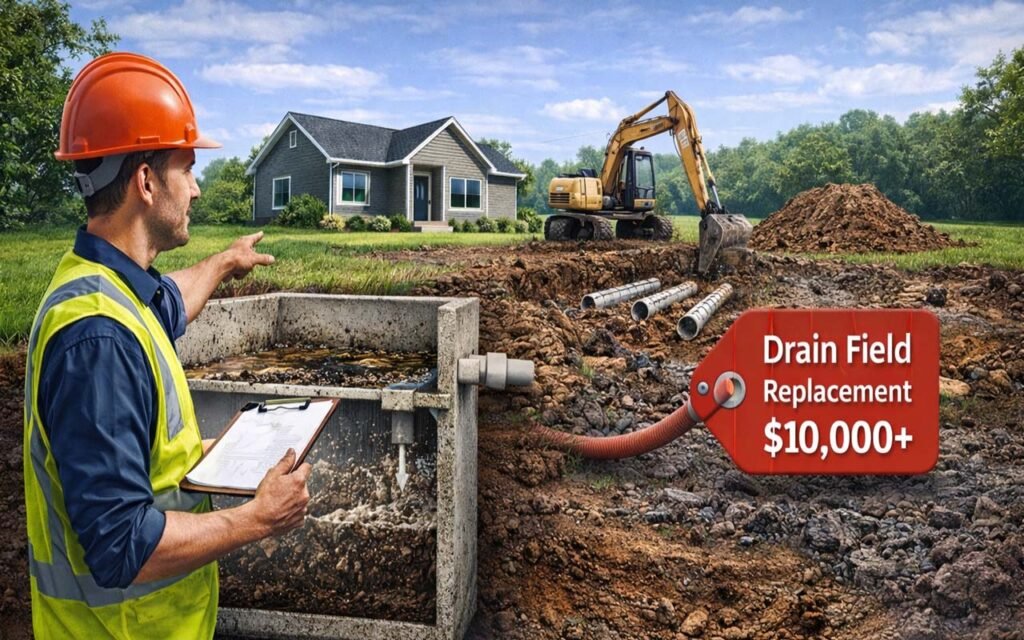
Proactive maintenance typically costs a few hundred dollars. Drain field replacement can exceed $10,000 depending on site conditions. The difference is awareness and routine care.
Environmental and Health Impact of Septic Systems
A properly functioning septic system protects public health and the environment. When systems fail, untreated wastewater can introduce bacteria like E. coli and viruses into soil and water.
According to guidance from the United States Environmental Protection Agency, septic systems that are maintained correctly are a safe and effective wastewater treatment option for millions of properties.
Common Myths About Septic Systems
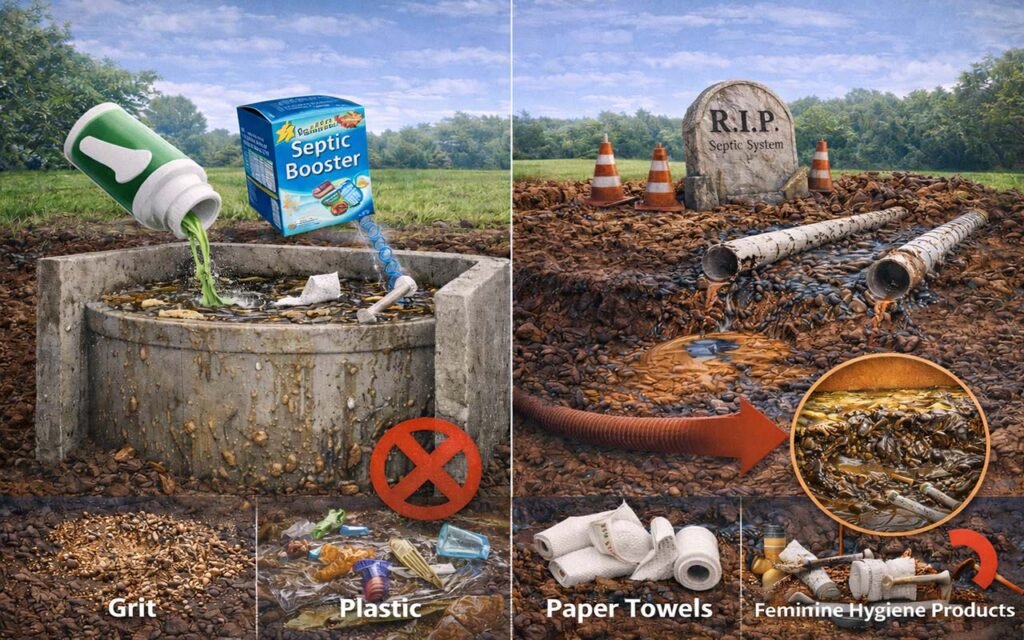
One common misconception is that septic additives can replace regular pumping. In reality, no additive can eliminate the need for routine septic tank pumping. Field testing and long-term system evaluations show that additives do not break down inert materials such as grit, plastics, or non-biodegradable waste. These materials continue to accumulate in the tank and must be physically removed to prevent system failure.
Another widespread myth is that septic systems last forever. While a well-maintained system can operate efficiently for decades, every septic system has a finite lifespan. Factors such as soil type, daily water usage, installation quality, and ongoing maintenance directly affect how long a system will last. Even properly cared-for systems will eventually require repairs or replacement over time.
Many people also believe that anything can be flushed down the drain without consequences. This assumption often leads to serious problems. Items such as wipes, paper towels, and feminine hygiene products do not break down like toilet paper. Instead, they contribute to excessive sludge buildup, clog pipes, and increase the risk of blockages and drain field damage.
How Climate and Soil Affect Septic Performance
Soil type directly impacts how efficiently effluent is treated. Sandy soils drain quickly, while clay soils absorb slowly.
Heavy rainfall can saturate drain fields and reduce treatment capacity. In these conditions, water conservation becomes even more important.
Professional site evaluations measure soil percolation rates to ensure proper system design.
When to Call a Septic Professional
If you notice warning signs or are unsure about your system condition, professional evaluation is essential.
Certified septic professionals can:
- Measure sludge and scum levels
- Inspect baffles and tank integrity
- Identify drain field saturation
- Recommend maintenance schedules
Early intervention often prevents costly emergency repairs.
Final Thoughts
Understanding how does a septic system work gives homeowners the knowledge needed to protect their investment. Septic systems are reliable, efficient, and environmentally sound when properly maintained.
By managing water usage, scheduling regular pumping, and responding quickly to warning signs, most systems will provide decades of dependable service.