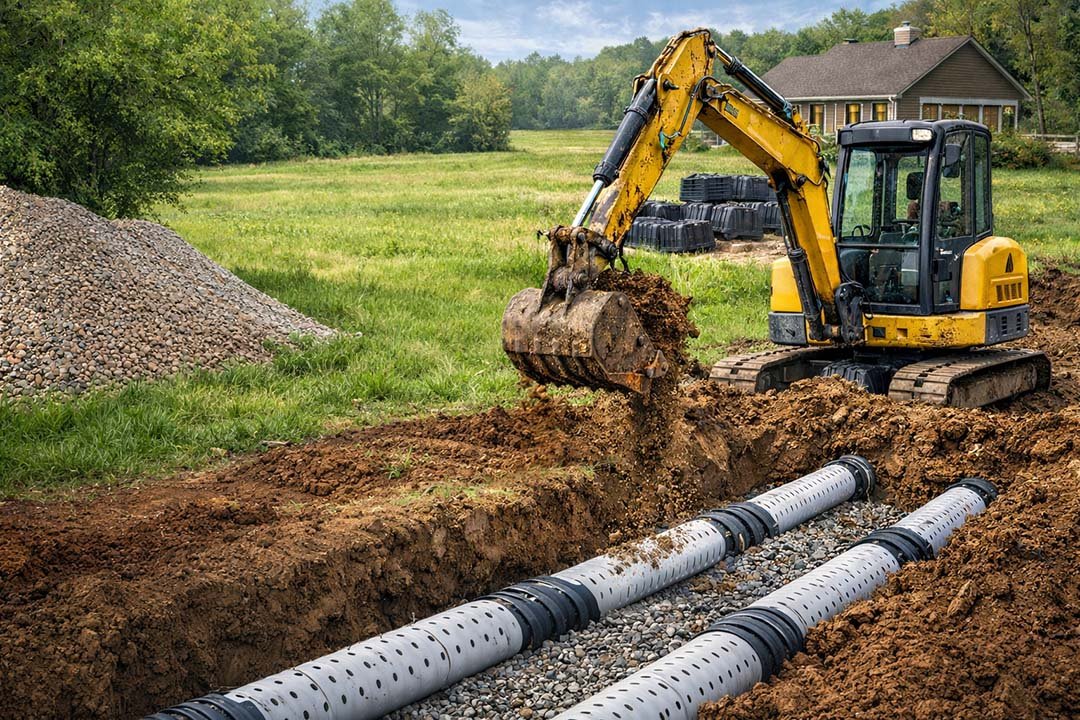
A septic drain field replacement cost can range from several thousand dollars to a five-figure project depending on the property, disposal method, site conditions, excavation requirements, permitting, and the extent of the work.
There is no reliable single price that applies to every Texas property.
Replacing a straightforward disposal area on an accessible site can be very different from replacing a failed drainfield on a rocky property that requires additional evaluation, a different disposal method, extensive excavation, or redesign.
It is also important to understand the terminology. Drain field, drainfield, septic field, and leach field are commonly used to describe the soil-based disposal portion of a septic system.
Before budgeting for replacement, the first step is determining whether the disposal area has actually failed and whether replacement, repair, or another correction is appropriate.
In Texas, this is particularly important because TCEQ states that repairing or replacing an existing drainfield requires a permit, and work on the disposal area must meet current standards.
How Much Does It Cost to Replace a Septic Drain Field?
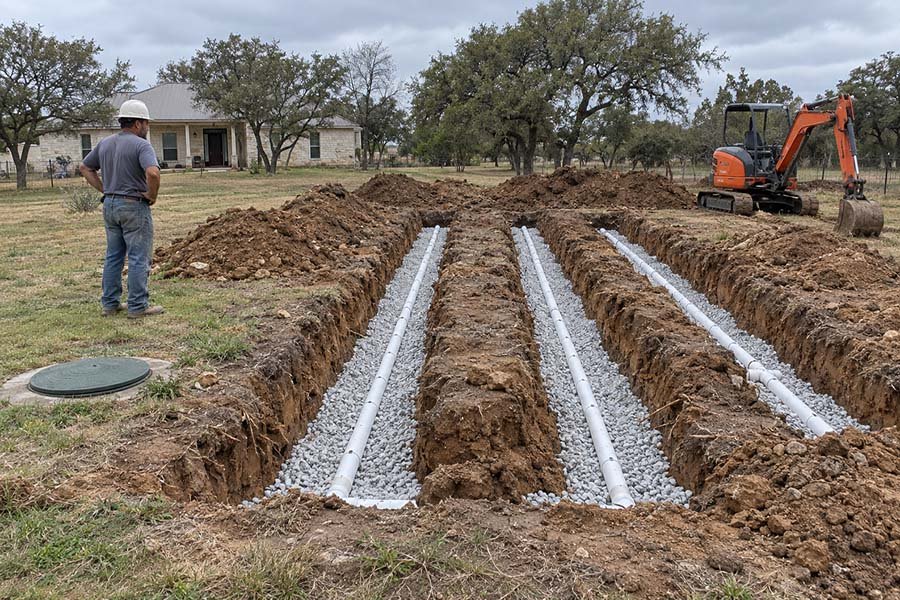
There is no single Texas drain field replacement price that can accurately cover every property.
A replacement can cost several thousand dollars, while a more complicated project can reach five figures when it requires substantial excavation, specialized disposal components, redesign, difficult access, or extensive site work.
Rather than relying on an unusually precise online price table, homeowners should look at the factors determining the scope of the project.
The biggest variables include the existing system, the condition of the disposal area, the property’s soil and subsurface conditions, the required replacement design, system capacity, accessibility, excavation, and local permitting requirements.
In some situations, the treatment portion of the septic system may remain usable and only the disposal area requires replacement.
In others, a broader system change may be necessary.
That distinction can substantially affect the final cost.
What Is Included in Drain Field Replacement Cost?
A drainfield replacement involves more than purchasing pipe and excavating trenches.
Depending on the property and approved design, the project can involve site evaluation, planning, permitting, excavation, disposal components, distribution components, labor, inspections, and site restoration.
Site Evaluation
The property must first be evaluated to determine what is causing the existing problem and what replacement options are appropriate.
TCEQ explains that OSSFs must be designed based on site evaluations that account for local conditions. Soil conditions can rule out some conventional disposal systems and influence which alternatives are suitable.
That means an existing conventional drainfield cannot always simply be removed and recreated in exactly the same way.
Planning and Design
The replacement disposal method must be appropriate for the property and meet applicable requirements.
A straightforward absorptive disposal area and a pressurized or alternative disposal system can involve very different components and installation requirements.
Permitting
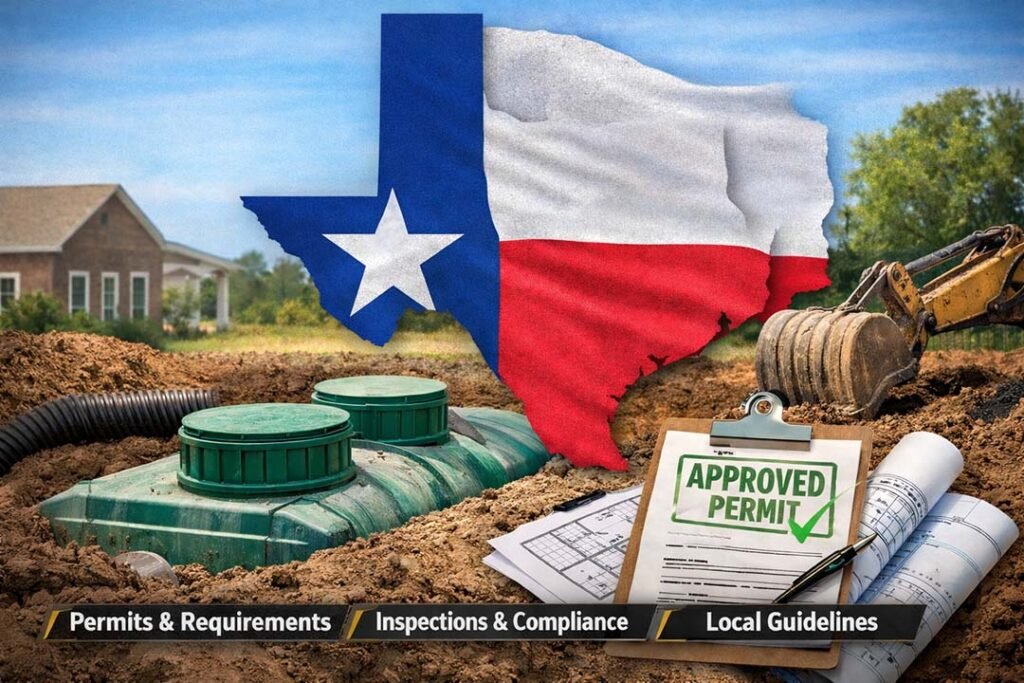
Texas requires a permit and approved plan to construct, alter, repair, extend, or operate an OSSF unless a specific exemption applies.
More specifically, TCEQ states that when an existing OSSF requires a drainfield to be repaired or replaced, a permit is required.
Excavation and Installation
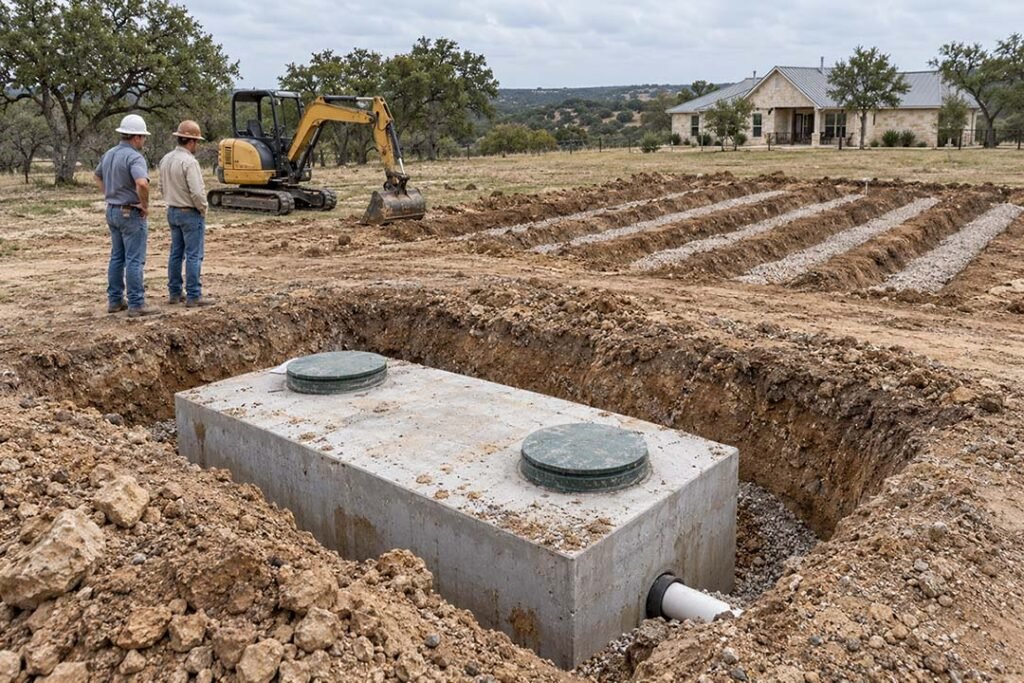
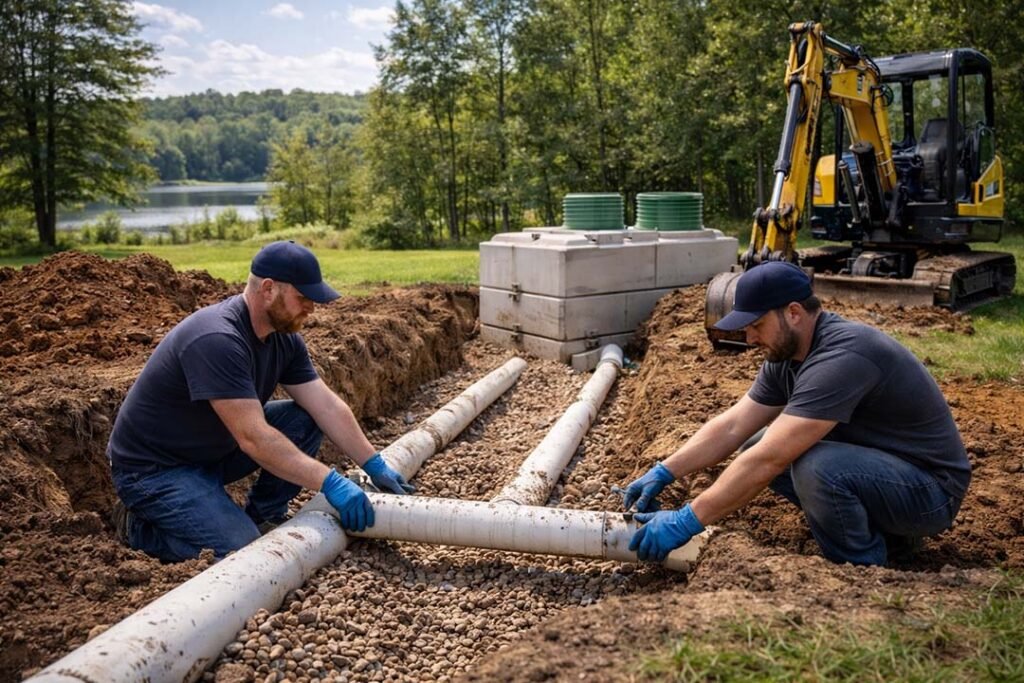
The existing field may need to be exposed or abandoned as required, and the new disposal area must be installed according to the approved design.
Rock, slope, soil conditions, limited access, existing landscaping, and the amount of excavation can all affect the amount of work involved.
Inspection and Approval
Required inspections and approvals depend on the applicable permitting authority and project.
Homeowners should therefore confirm what is included in an estimate rather than assuming every drainfield replacement quote covers exactly the same scope.
What Affects Septic Drain Field Replacement Cost?
Several factors can make one drainfield replacement considerably more expensive than another.
Soil and Site Conditions
A drainfield relies on the property and soil as part of the wastewater treatment and disposal process.
Unsuitable soils, high groundwater, restrictive conditions, excessive slopes, and other site characteristics can contribute to problems with soil-based systems. EPA specifically identifies inadequate soils, excessive slopes, and high groundwater tables as conditions associated with hydraulic failures.
These conditions can also influence the replacement design.
Type of Disposal System
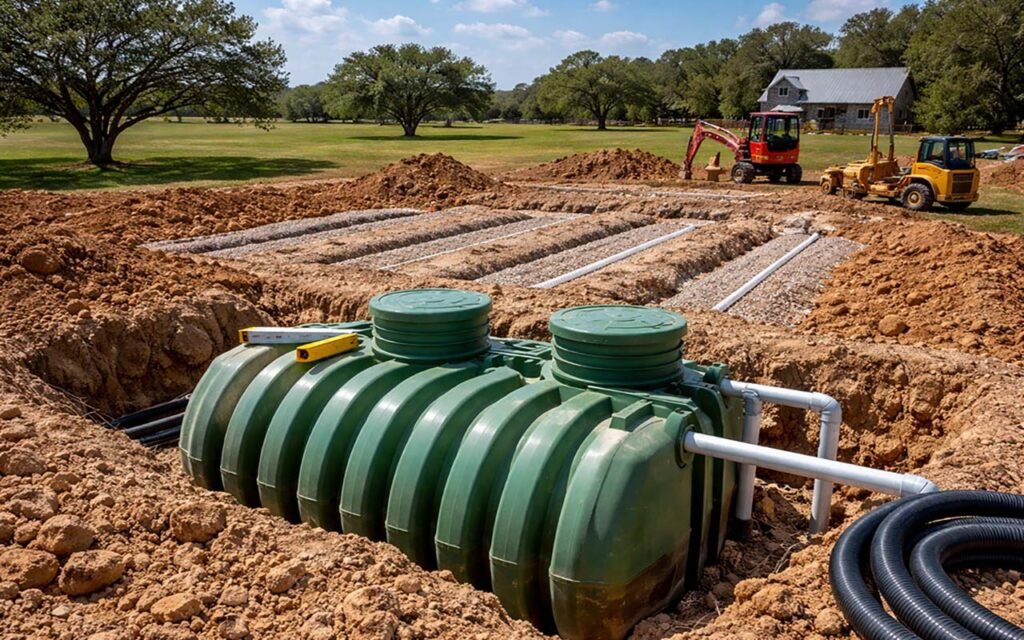
Not every replacement uses a conventional gravel trench.
Depending on the site and approved design, a Texas OSSF can use different disposal methods.
The required method affects the materials, equipment, design, and labor involved.
If you are unfamiliar with the available configurations, our guide to the types of septic systems in Texas explains treatment and disposal methods separately.
Size and Wastewater Load
The disposal area must be appropriate for the wastewater load and system design.
A property requiring greater treatment or disposal capacity may need a different scope of work from a smaller residential system.
Rock and Excavation
Excavation conditions can have a substantial effect on projects in Central Texas.
Rocky conditions, difficult grades, and restricted working areas can increase the labor and equipment needed to complete the installation.
Property Access
Heavy equipment needs sufficient access to the work area.
Fences, buildings, narrow gates, mature landscaping, slopes, utilities, and other obstacles can complicate excavation and installation.
Available Replacement Area
The property needs a suitable location for the approved disposal system.
An existing failed drainfield may occupy an area that cannot simply be reused for the same design.
The available space and site evaluation can therefore influence where the replacement goes and which disposal method is appropriate.
Local Requirements
TCEQ establishes statewide OSSF requirements, but local authorized agents administer many septic programs.
The permitting authority and applicable local requirements can therefore affect the project process.
Drain Field Repair vs Replacement
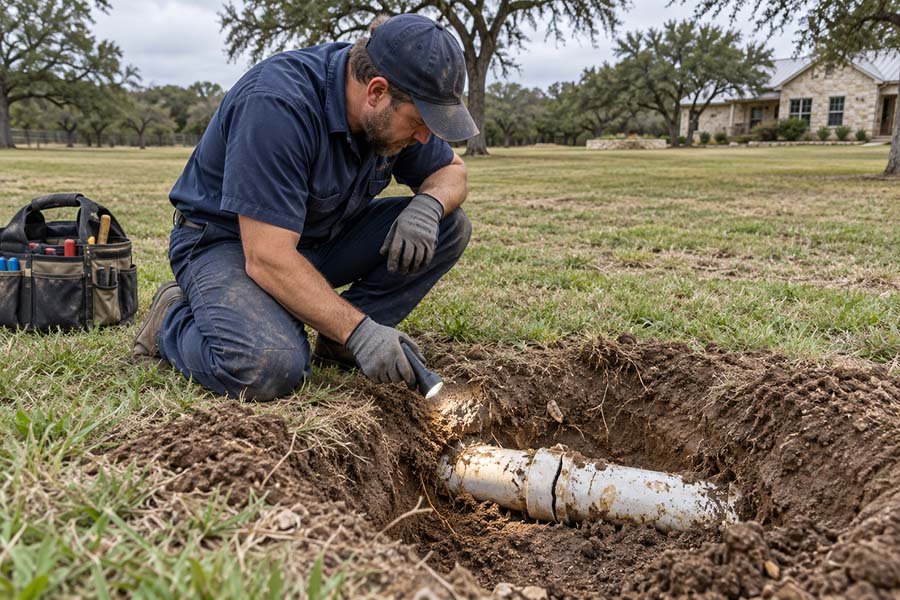
A septic problem does not automatically mean the entire drainfield needs replacement.
That distinction is important when homeowners search for septic drain field repair cost.
A problem may involve a damaged pipe, distribution component, hydraulic overload, excessive solids reaching the field, or another condition that needs to be diagnosed.
A genuinely failing disposal area can be different.
TCEQ identifies several possible causes of OSSF failure, including hydraulic overloading, misidentified soil or site conditions, organic overloading, poor maintenance, and age.
The appropriate correction depends on the cause.
For example, if water use substantially exceeds the system’s design capacity, reducing hydraulic loading may be part of correcting the problem.
If a component is damaged, repair may be possible.
If the disposal area can no longer accept and treat wastewater appropriately, replacement or another approved corrective action may be required.
This is why homeowners should be cautious about products or services claiming to “restore” every failing drainfield without first determining why it is failing.
Signs a Septic Drain Field May Be Failing
A failing drainfield can produce noticeable symptoms, but symptoms alone do not tell you whether the field needs repair or complete replacement.
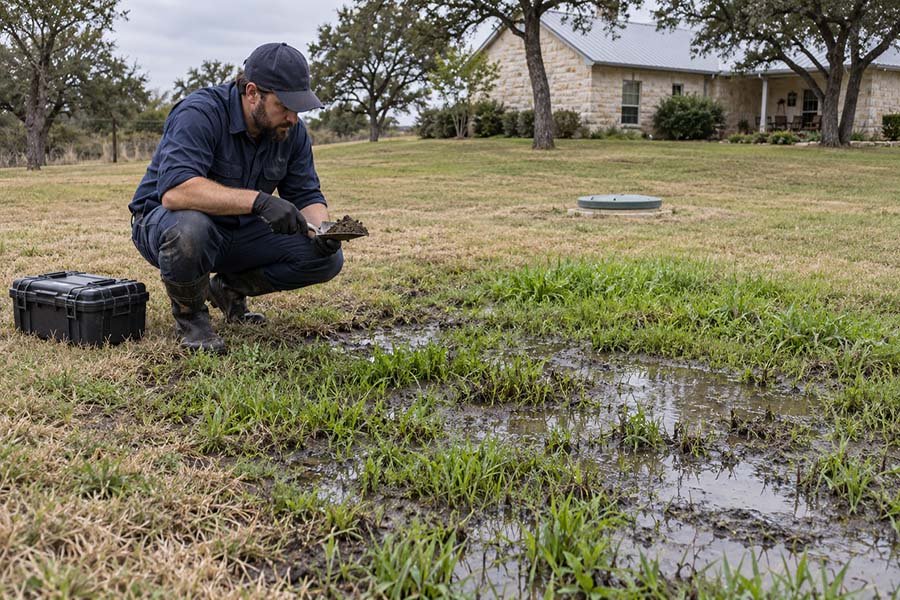
EPA identifies common warning signs that include slow household drains, sewage backups, plumbing gurgling, standing water or damp areas around the septic system, sewage odors, and unusually green or spongy grass over septic components.
Soft or wet soil over a drainfield during otherwise dry conditions can be particularly concerning.
- However, these symptoms can have different causes.
- Slow drains could involve household plumbing.
- Standing water could involve hydraulic loading or disposal-area failure.
- Odors can have several possible sources.
A proper evaluation is therefore more useful than assuming every symptom means the drainfield must immediately be replaced.
If the cause is unclear, a septic inspection can help determine which part of the system needs attention.
What Causes a Septic Drain Field to Fail?
Drainfield failure is rarely explained by one universal cause.
Several conditions can contribute.
Hydraulic Overloading
A septic system is designed to handle a particular wastewater load.
If significantly more wastewater enters the system than it was designed to manage, the disposal area can become hydraulically overloaded.
TCEQ recommends comparing actual water use with the amount specified in the system design when investigating possible hydraulic overload.
Leaks and unusually high household water use can contribute to unnecessary loading.
Unsuitable Site Conditions
Soil and subsurface conditions matter because the disposal area relies on the site to accept and treat effluent.
TCEQ notes that subsurface water flow, restrictive horizons, and seasonally saturated soils can contribute to OSSF failure.
EPA similarly identifies inappropriate soils, excessive slopes, and high groundwater as potential causes of hydraulic failure.
Excessive Organic Loading
Wastewater containing unusually high levels of food, grease, or other organic material can place additional demand on a system.
TCEQ identifies organic overloading as another potential cause of OSSF failure.
The septic tank protects the disposal area by retaining sludge and scum.
When accumulated solids are not removed when needed, they can migrate from the tank toward the drainfield.
EPA warns that inadequate routine maintenance can allow solids to reach and clog the drainfield.
Our septic tank pumping schedule guide explains how household size, tank capacity, and actual solids accumulation affect pumping frequency.
Age and Long-Term Use
Drainfields do not have one guaranteed lifespan.
Their useful life depends on design, installation, soil and site conditions, wastewater loading, maintenance, and other factors.
EPA notes that older drainfields can experience reduced soil absorption as the natural biomat in trenches or beds thickens over time.
This is why I would avoid promising that a particular drainfield type will last an exact number of years.
Can You Replace Only the Drain Field?
Yes, in some situations the disposal area can be replaced without replacing every component of the septic system.
But that depends on the condition and suitability of the remaining components and the approved replacement design.
For example, an existing septic tank may still be structurally and functionally appropriate while the disposal area has failed.
In another case, problems may affect multiple parts of the OSSF.
The evaluation needs to determine what can remain and what must change.
This distinction is important financially because drainfield replacement and complete septic system replacement are not the same project.
If the entire system is being considered for replacement, see our guide explaining how much it costs to replace a septic system.
Does Drain Field Replacement Require a Permit in Texas?
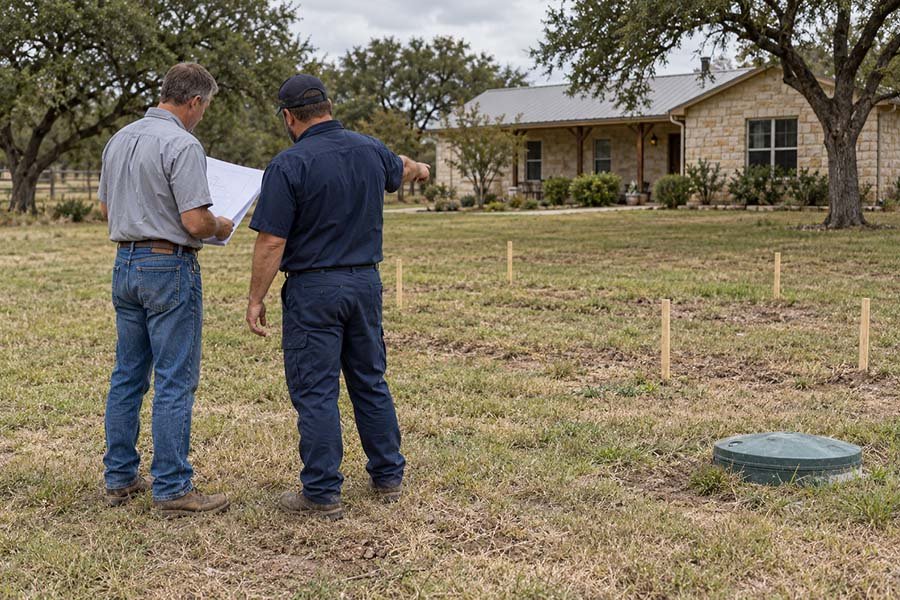
Yes, replacing or repairing a drainfield in an existing Texas OSSF generally requires a permit.
TCEQ specifically states that if an existing OSSF requires its drainfield to be repaired or replaced, a permit is required under 30 TAC §285.3. TCEQ also says work performed on a disposal area must bring the system into current standards.
This requirement matters when estimating replacement cost.
The project may involve more than excavating the existing field and installing new lines.
Depending on the property, the process can require evaluation, planning, permitting, an appropriate disposal design, installation, and inspection.
Local permitting authorities may administer the OSSF program, so homeowners should verify requirements for the property’s jurisdiction.
Our Texas septic system permit guide explains the permitting process in greater detail.
Can a New Drain Field Go in the Same Location?
Not necessarily.
Whether an existing drainfield area can be reused depends on the property, site conditions, cause of failure, applicable requirements, and approved replacement design.
If the existing soil is saturated, unsuitable, damaged, or otherwise unable to provide the required disposal function, simply installing new lines in the same area may not solve the underlying problem.
A replacement also has to meet current applicable requirements.
TCEQ states that work performed on an existing disposal area must bring the system into current standards.
The site evaluation and permitting process should therefore determine the appropriate location rather than assuming the new drainfield will automatically occupy the old footprint.
How Long Does Drain Field Replacement Take?
There is no reliable universal timeline for replacing a septic drainfield.
The physical installation may represent only one part of the overall process.
A replacement project can involve:
- site evaluation
- determining the cause of failure
- planning or design
- permit application
- approval
- scheduling
- excavation and installation
- required inspection
- final site work
The time needed for permitting and approval can vary by jurisdiction.
Project complexity also matters.
A straightforward replacement on an accessible property can move differently from a project requiring additional evaluation, a different disposal method, difficult excavation, or significant redesign.
For that reason, homeowners should ask for a project-specific schedule rather than relying on a generic promise that every drainfield can be replaced within a certain number of days.
How Can You Protect a New Septic Drain Field?
After replacement, proper septic-system use helps protect the new disposal area.
Pump the Septic Tank When Needed
The tank is designed to keep sludge and scum from entering the disposal area.
EPA says household septic tanks are typically pumped every 3 to 5 years, although actual frequency depends on tank size, household occupancy, wastewater use, and solids accumulation.
Pumping when needed reduces the risk of excessive solids moving downstream.
Use Water Efficiently
Avoid sending unnecessary volumes of water into the septic system.
Repair leaking toilets and faucets and spread high-water-use activities where practical.
Reducing unnecessary hydraulic loading helps the system operate within its intended capacity.
Keep Vehicles Off the Drain Field
Do not drive or park vehicles over the disposal area.
EPA specifically recommends keeping vehicles off drainfields because compaction and physical damage can interfere with system performance.
Keep Structures Off the Disposal Area
Do not treat the drainfield as a convenient location for buildings, patios, or other improvements without first understanding the system and applicable requirements.
Access and soil function need to be protected.
Direct Excess Water Away
EPA recommends keeping roof drains, sump pumps, and other rainwater drainage systems away from the drainfield because excess water can interfere with wastewater treatment in the soil.
Watch What Goes Down the Drain
Avoid flushing wipes, paper towels, hygiene products, grease, and other inappropriate materials.
Proper use of the septic tank helps reduce unnecessary solids loading on downstream components.
Drain Field Replacement vs Complete Septic System Replacement
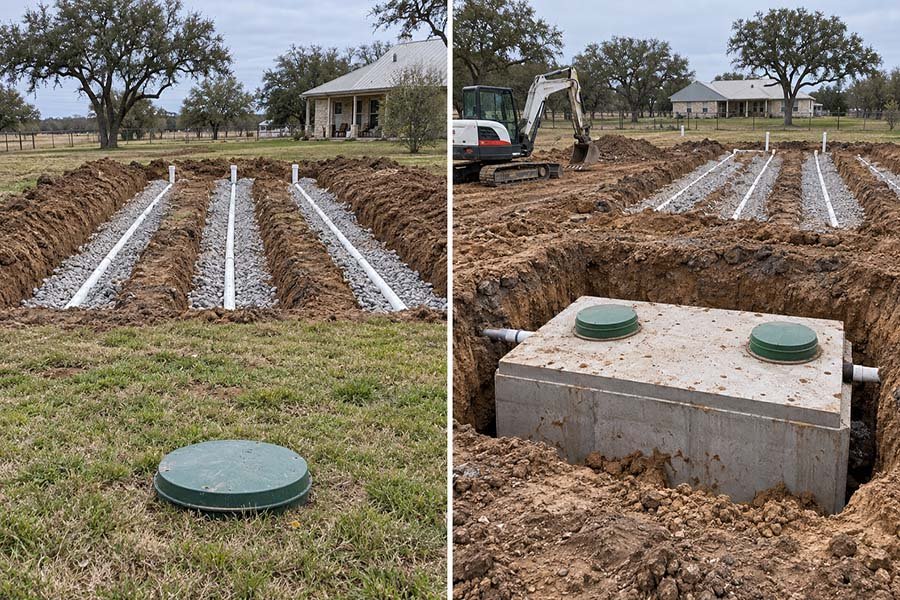
A failed drainfield does not automatically mean the septic tank and every other component need replacement.
A drain field replacement focuses on the disposal portion of the system.
A complete septic system replacement can involve treatment components, tanks, distribution equipment, disposal components, and other parts of the OSSF.
The correct scope depends on what has failed and what the approved replacement system requires.
This distinction is also important when comparing online prices.
A quote for a new drainfield should not be compared directly with a price for replacing an entire septic system.
For complete-system budgeting, read our septic system replacement cost guide.
For broader new-system pricing, see how much a septic system costs in Texas.
Frequently Asked Questions
Is a drain field the same as a leach field?
The terms drain field, drainfield, leach field, and septic field are commonly used for the soil-based disposal portion of a septic system. Terminology can vary, but these phrases frequently describe the area that receives effluent after treatment in the septic tank.
How much does a new leach field cost?
A new leach field can cost several thousand dollars, with more complex replacement projects reaching five figures. The actual cost depends on the property, disposal design, excavation, permitting, site conditions, and installation requirements.
Can a septic drain field be repaired instead of replaced?
Sometimes. A problem may involve an individual component or a correctable condition rather than complete disposal-area failure. The cause should be identified before deciding between repair and replacement. In Texas, TCEQ states that repair or replacement of an existing drainfield requires a permit.
Can a replacement drain field use the same location?
Not automatically. Site conditions, the reason for failure, available area, current requirements, and the approved replacement design determine whether an existing location can be reused.
What causes a septic drain field to fail?
Possible causes include hydraulic overloading, unsuitable soil or site conditions, organic overloading, poor maintenance, and age. Solids migrating from an inadequately maintained septic tank can also contribute to drainfield clogging.
How do you know if a drain field needs replacement?
Standing wastewater, persistently wet or spongy soil, sewage odors, slow drains, backups, or unusual vegetation can indicate a septic-system problem, but these symptoms do not prove replacement is necessary. EPA recommends evaluating the system to identify the actual cause.
Final Thoughts
A septic drain field replacement cost cannot be reduced to one dependable number for every property.
A replacement can involve several thousand dollars of work and may reach five figures when the project requires difficult excavation, additional planning, permitting, specialized disposal components, or significant site work.
More importantly, a wet yard, slow drains, odors, or a backup do not automatically mean the entire drainfield needs replacement.
The cause needs to be identified first.
Texas also requires drainfield repair and replacement work on existing OSSFs to go through the applicable permitting process, and TCEQ says work on the disposal area must meet current standards.
For Central Texas homeowners, the most useful estimate will therefore come after the existing system, property conditions, cause of failure, and appropriate replacement approach are understood.
That provides a much better basis for comparing drain field replacement cost than choosing a contractor or repair method based on a generic online price alone.