Texas continues to experience significant residential growth, with thousands of new homes being built each year across urban, suburban, and rural communities. While many buyers assume new construction homes are automatically connected to municipal sewer systems, that is not always the case. In many parts of the state, septic systems remain the preferred wastewater solution.
Understanding the percentage of new homes in Texas using septic systems helps property owners, builders, and land buyers make informed decisions. Septic systems play a critical role in areas where public sewer infrastructure is unavailable or cost-prohibitive. As Texas expands into previously undeveloped regions, onsite wastewater treatment systems continue to support residential growth.
From rural Hill Country properties to new developments outside major cities, septic systems remain an important part of Texas housing construction. This guide explores current trends, reasons for septic adoption, and what homeowners should know before building on land that requires private wastewater treatment.
Why Septic Systems Remain Common in Texas
Texas covers more than 268,000 square miles, making it one of the largest states in the country. Many regions have low population density and lack access to centralized wastewater infrastructure. As a result, septic systems provide an efficient and practical solution for managing household wastewater.
New housing developments often emerge in areas outside city limits where municipal sewer expansion would require significant investment. Installing a properly designed septic system is frequently more economical than extending sewer lines over long distances.
In our experience working with property owners throughout Texas, many people choose rural and semi-rural locations specifically because they offer larger lots, greater privacy, and fewer development restrictions. These same areas often rely on septic systems as their primary wastewater treatment method.
The continued growth of these communities contributes directly to the increasing number of new homes using onsite wastewater systems throughout the state.
What Percentage of New Homes in Texas Use Septic Systems?
While percentages vary by year and region, industry estimates and state wastewater data suggest that approximately 20 to 30 percent of new homes constructed in Texas utilize septic systems rather than municipal sewer connections.
This percentage can be considerably higher in rapidly developing rural counties and lower in densely populated metropolitan areas where sewer infrastructure is readily available. Some counties report a majority of new residential permits requiring onsite wastewater treatment systems due to limited municipal services.
The growing demand for acreage properties has further increased septic system installations in many regions. As buyers seek land outside urban centers, builders frequently design projects around private wastewater systems.
Although statewide percentages fluctuate with development patterns, septic systems continue to serve hundreds of thousands of Texas households and remain a significant component of residential construction across the state.
Factors That Influence Septic System Usage
Several factors determine whether a new home will require a septic system. The most important consideration is access to public sewer infrastructure.
Communities located beyond municipal service areas typically rely on onsite wastewater treatment. Land size also influences system selection. Larger properties generally provide enough space for drain fields and treatment areas required by state regulations.
Additional factors include:
- Soil composition and drainage characteristics.
- Groundwater conditions.
- Local permitting requirements.
- Development density.
- Cost of sewer line extensions.
In many situations, installing a septic system can save tens of thousands of dollars compared to extending sewer service to remote properties. Builders often evaluate these variables during the planning phase to determine the most practical wastewater solution for a project.
Texas Regions Where Septic Systems Are Most Common
Septic systems are widely used throughout Texas, but some regions depend on them more heavily than others. Areas experiencing rural residential growth often show the highest installation rates.
The Texas Hill Country is one example. Communities surrounding San Antonio, Johnson City, Spring Branch, Boerne, and other rapidly growing areas frequently utilize septic systems because development extends beyond municipal infrastructure.
East Texas, portions of Central Texas, and many rural counties across North and West Texas also rely heavily on onsite wastewater treatment. In these regions, new subdivisions often incorporate septic systems as a standard part of development planning.
Population growth continues to push residential construction into previously undeveloped areas. As a result, septic systems remain essential for supporting housing demand while maintaining effective wastewater management standards.
Comparison of Sewer and Septic System Usage
The following table highlights common differences between homes connected to municipal sewer systems and those using private septic systems.
| Feature | Municipal Sewer | Septic System |
|---|---|---|
| Wastewater Treatment | Centralized facility | Onsite treatment |
| Monthly Utility Bill | Yes | Usually No |
| Infrastructure Dependency | High | Independent |
| Common in Rural Areas | Rare | Very Common |
| Initial Installation Cost | Lower if available | Higher upfront |
| Long-Term Control | Utility managed | Homeowner managed |
| Suitable for Large Acreage | Limited | Excellent |
For many Texas property owners, the independence and flexibility offered by septic systems make them an attractive alternative to public sewer connections.
How Population Growth Is Affecting Septic Installations
Texas consistently ranks among the fastest-growing states in the nation. New residents continue to relocate from across the country, creating strong demand for housing.
Much of this growth occurs outside established urban centers. As available land within cities becomes scarce or expensive, developers increasingly focus on suburban and rural locations. These areas often lack existing wastewater infrastructure, making septic systems necessary for residential construction.
From a field perspective, we frequently see new developments being planned in locations where sewer expansion may take years or remain financially impractical. Septic systems allow builders to move forward with projects while still meeting environmental and public health requirements.
This trend suggests septic system installations will remain an important part of Texas residential development for the foreseeable future.
Septic System Regulations for New Texas Homes
Every septic system installed in Texas must comply with regulations established by the Texas Commission on Environmental Quality (TCEQ). These requirements help protect public health, groundwater resources, and surrounding properties.
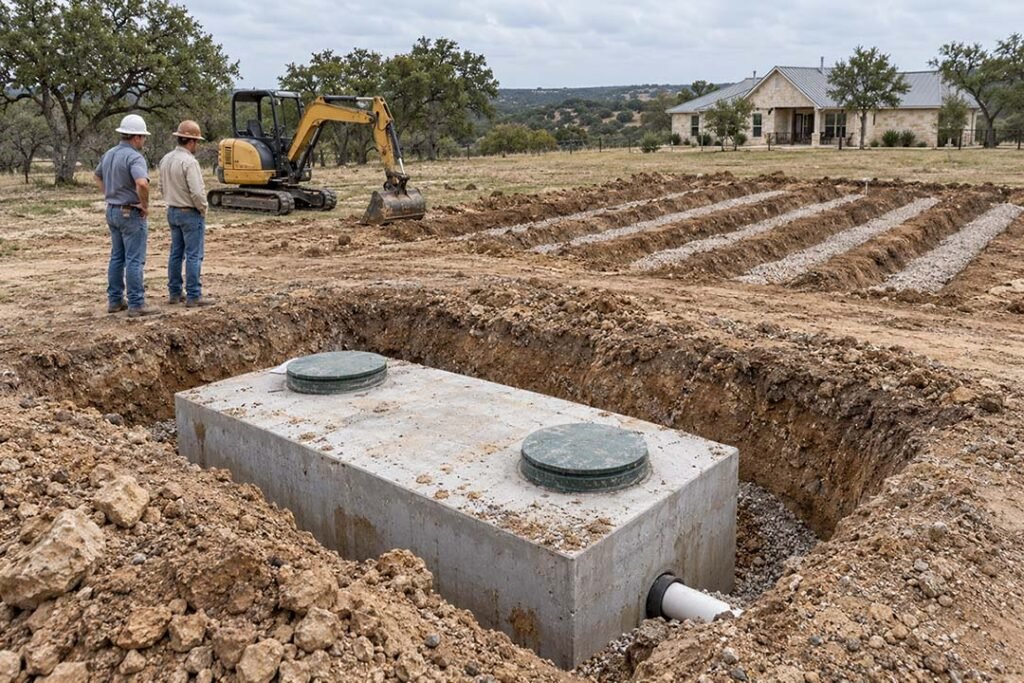
Before construction begins, property owners typically need a site evaluation to determine soil conditions, drainage characteristics, and system suitability. Licensed professionals use this information to design a system that meets both state and local requirements.
Permitting authorities review proposed plans before approving installation. The specific system type may vary depending on lot size, soil quality, and environmental conditions. Conventional septic systems work well in some locations, while aerobic treatment systems may be required in others.
Homeowners should understand that septic regulations are not designed to create obstacles. Instead, they ensure wastewater is treated safely and effectively for the long-term protection of the property and surrounding community.
Types of Septic Systems Commonly Installed in New Construction
Not all septic systems operate the same way. The most appropriate option depends on site-specific conditions and local requirements.
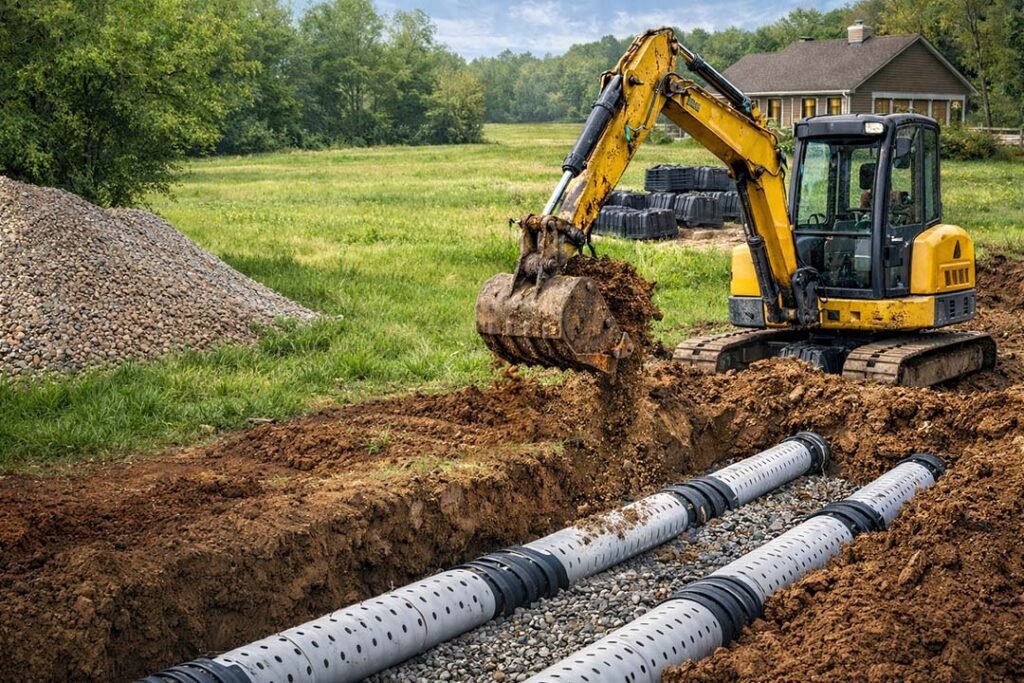
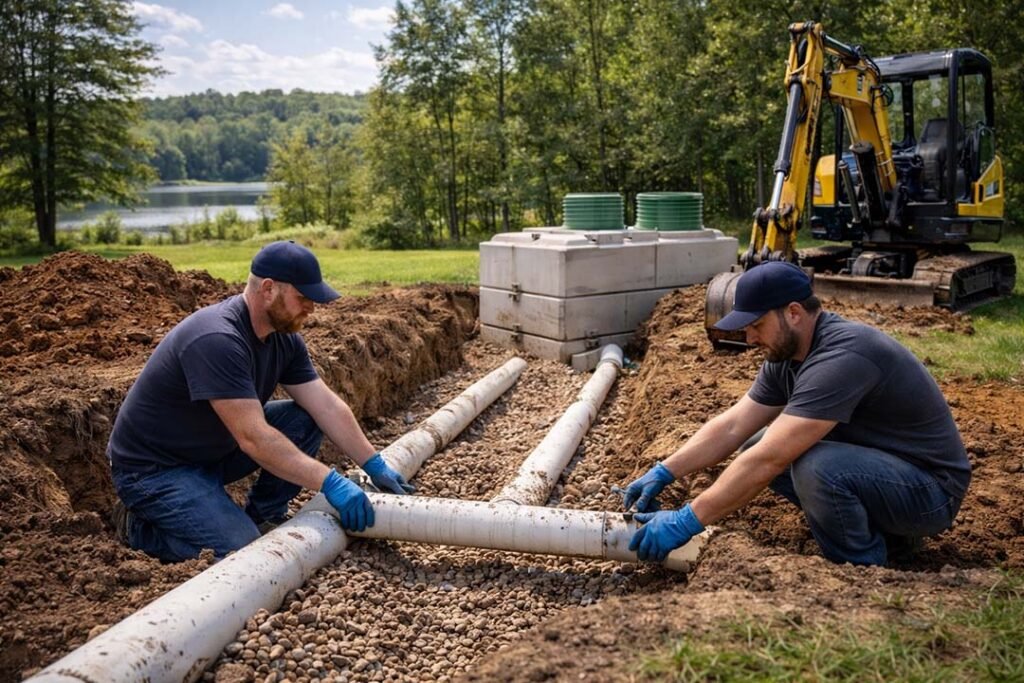
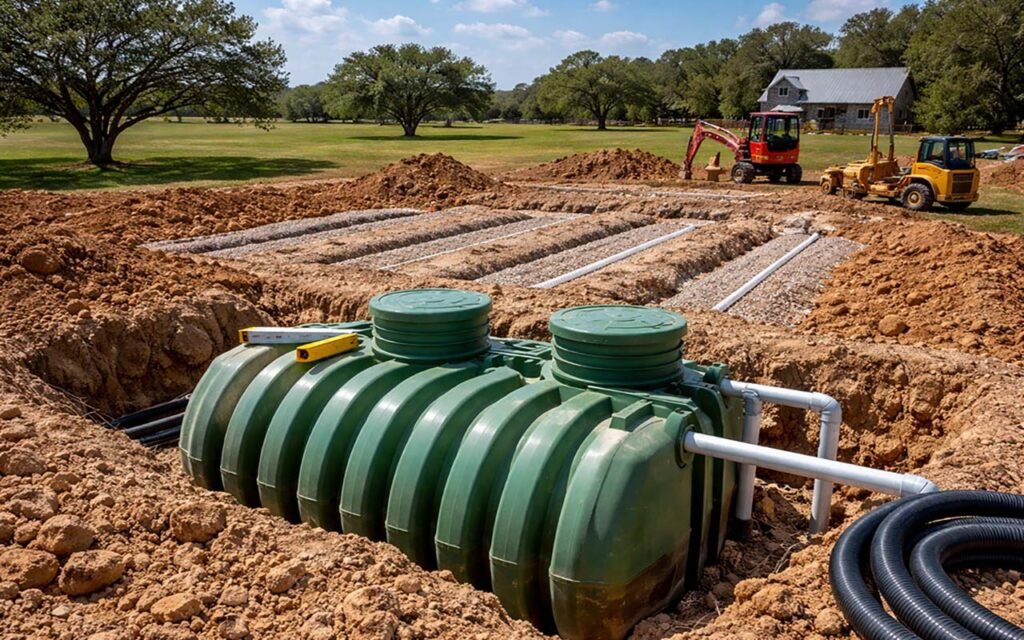
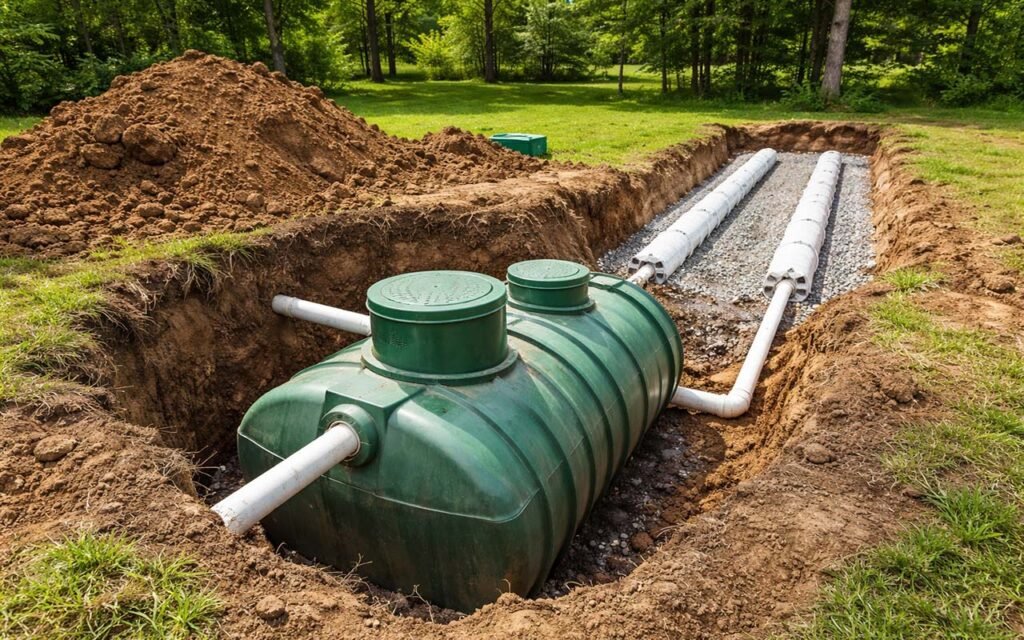
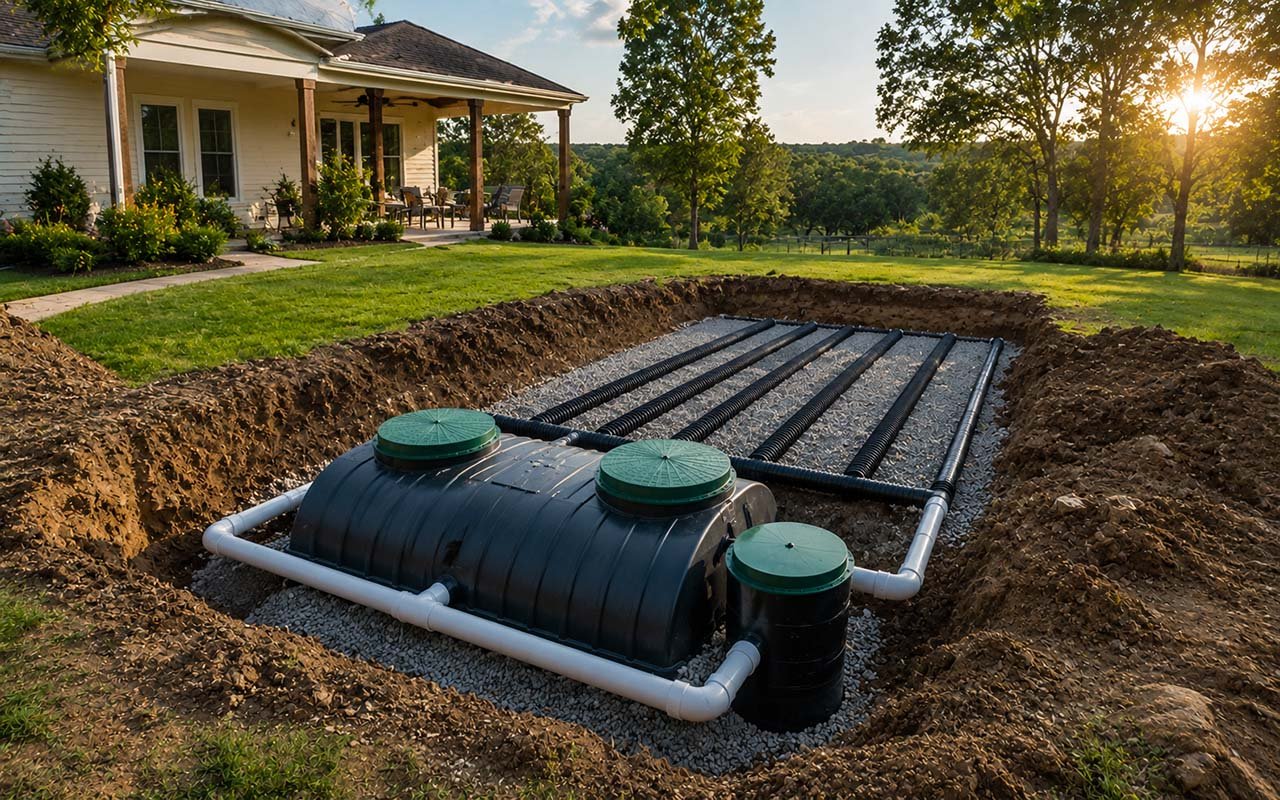
Conventional septic systems remain one of the most common choices where soil conditions support natural wastewater filtration. These systems generally consist of a septic tank and drain field.
Aerobic treatment systems provide a higher level of treatment and are often used where conventional systems are not suitable. They introduce oxygen into the treatment process, allowing beneficial bacteria to break down waste more efficiently.
Other specialized systems may include low-pressure dosing systems, drip irrigation systems, and mound systems designed for challenging soil conditions.
In our experience, many new construction projects in Central Texas utilize aerobic systems because they provide flexibility in areas with shallow soils or stricter environmental requirements.
Benefits of Septic Systems for New Homeowners
Many buyers initially view septic systems as a compromise compared to municipal sewer service. However, properly maintained systems offer several advantages.
A septic system gives homeowners greater independence because wastewater treatment occurs directly on the property. There are no monthly sewer utility charges, which can generate long-term savings.
Modern systems are highly reliable when designed and maintained correctly. Many systems operate efficiently for decades with routine inspections and pumping.
Additional benefits include:
- Reduced dependence on municipal infrastructure.
- Suitable for rural and acreage properties.
- Long service life with proper maintenance.
- Environmentally responsible wastewater treatment.
- Greater flexibility for development in remote areas.
For homeowners building on rural land, septic systems often provide the most practical and cost-effective wastewater solution available.
Common Misconceptions About Septic Systems
Several misconceptions continue to influence public perception of septic systems. One common myth is that septic systems constantly require repairs. In reality, most systems operate trouble-free for many years when maintained properly.
Another misconception is that septic systems create unpleasant odors. A healthy system should function without noticeable smells. Persistent odors often indicate maintenance issues that can be addressed quickly.
Some homeowners also believe septic systems are outdated technology. Modern systems incorporate advanced treatment methods, pumps, controls, and monitoring equipment that improve efficiency and performance.
We often meet property owners who are surprised by how simple septic ownership becomes once they understand basic maintenance requirements. Routine care generally involves periodic inspections, pumping, and responsible water usage practices.
Education plays an important role in helping homeowners maximize system performance while avoiding unnecessary problems.
Septic Maintenance and Long-Term Performance
Routine maintenance is one of the most important factors affecting septic system longevity. Even the best-designed system requires periodic care to continue operating efficiently.
Most residential septic tanks require pumping every three to five years, although the exact schedule depends on household size, water usage, and tank capacity. Regular inspections help identify potential issues before they become expensive repairs.
Homeowners should avoid flushing inappropriate materials, including wipes, grease, chemicals, and excessive household waste. These items can interfere with treatment processes and increase the risk of system failure.
Water conservation also contributes to long-term performance. Excessive water use can overload treatment components and reduce effectiveness.
From our field experience, systems that receive consistent maintenance often remain functional for 25 to 40 years or longer, providing excellent value over the life of the property.
Future Trends in Texas Septic System Growth
The future of septic systems in Texas appears closely connected to continued population growth and residential expansion. As more people move into suburban and rural communities, demand for onsite wastewater treatment is expected to remain strong.
Advances in treatment technology are also improving system efficiency. Modern aerobic units, monitoring systems, and environmentally sensitive designs allow septic systems to operate more effectively than ever before.
Many counties continue to experience rapid development beyond city utility boundaries. This trend creates ongoing opportunities for septic installations in new residential construction.
Industry professionals expect onsite wastewater treatment systems to remain a critical component of Texas infrastructure for decades to come. While municipal sewer systems will continue serving urban areas, septic systems will remain essential for supporting growth in less densely populated regions.
Their role in enabling responsible development makes them a valuable part of Texas housing expansion.
Frequently Asked Questions
What percentage of new homes in Texas use septic systems?
Industry estimates suggest that approximately 20 to 30 percent of new homes in Texas use septic systems. The percentage varies by region, with rural and rapidly developing counties often having a much higher reliance on onsite wastewater treatment systems.
Why do so many new Texas homes use septic systems?
Many new homes are built outside municipal sewer service areas. Septic systems provide an effective wastewater treatment solution for rural properties, acreage developments, and communities where extending sewer infrastructure would be expensive.
Are septic systems common in Texas Hill Country?
Yes. Septic systems are extremely common throughout the Texas Hill Country, including areas near Spring Branch, Johnson City, Boerne, and surrounding communities. Many properties in these regions rely on onsite wastewater treatment due to limited sewer access.
Do septic systems lower property value in Texas?
Not necessarily. A properly installed and maintained septic system can support property value, especially in rural markets where buyers expect homes to operate with private wastewater systems.
How long does a septic system last?
Most septic systems can last 25 to 40 years or longer when properly maintained. Regular inspections, tank pumping, and responsible water usage help maximize system lifespan.
Can I build a new home with a septic system in Texas?
Yes. Thousands of new homes are built with septic systems every year in Texas. Property owners must complete site evaluations, obtain permits, and install systems that comply with state and local regulations.
How often should a septic tank be pumped?
Most residential septic tanks should be pumped every three to five years. The exact schedule depends on household size, water usage, tank capacity, and system design.
Conclusion
The percentage of new homes in Texas using septic systems remains significant, particularly in rural and rapidly developing areas where municipal sewer infrastructure is unavailable. Industry estimates suggest that roughly one-quarter of new residential construction may rely on onsite wastewater treatment, although local percentages vary considerably.
As Texas continues to grow, septic systems will remain an essential solution for supporting housing development while protecting environmental resources. Modern systems offer reliability, efficiency, and flexibility for homeowners building outside traditional utility service areas.
Understanding local regulations, maintenance requirements, and system options helps property owners make informed decisions before construction begins. Whether you are purchasing land, building a custom home, or evaluating wastewater solutions, a properly designed septic system can provide decades of dependable performance.
For professional guidance on septic system installation, inspections, maintenance, or repairs, contact Dillon Septic. Our experienced team helps Texas homeowners navigate every stage of septic ownership with confidence.