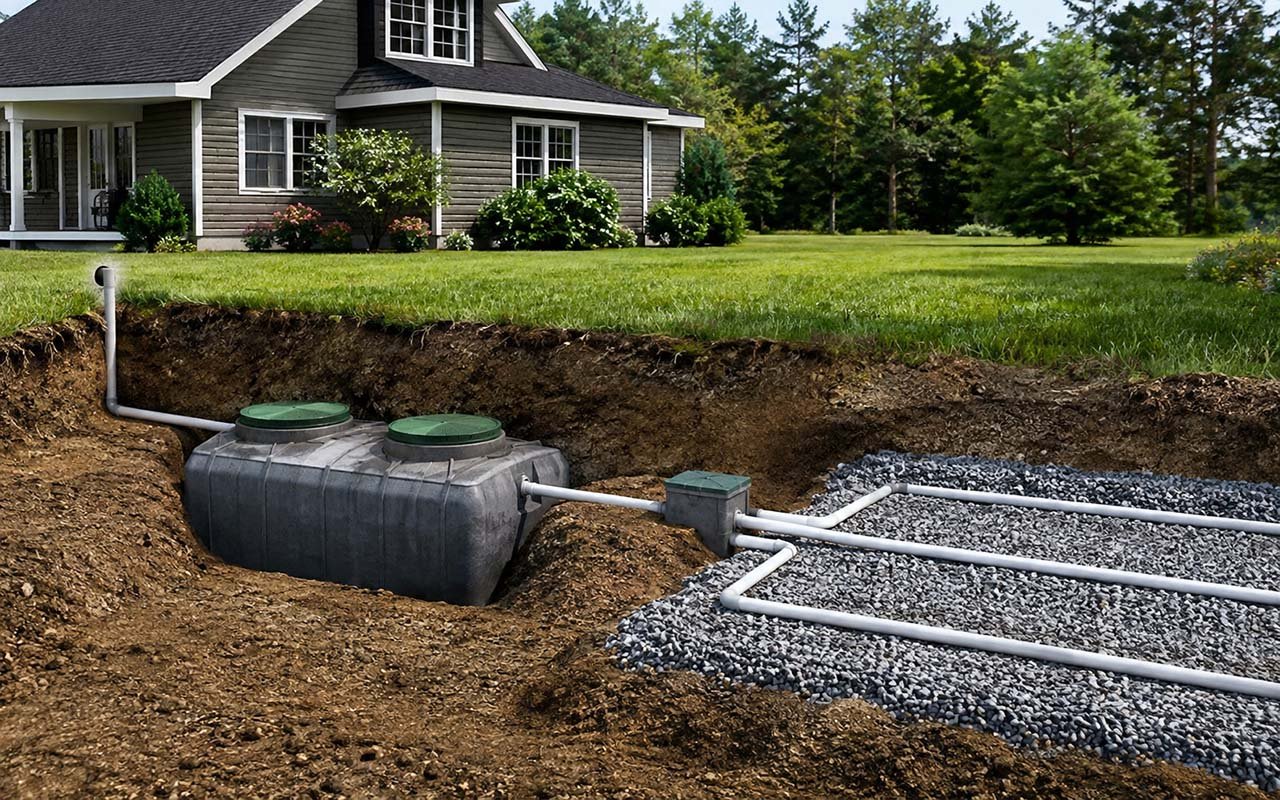
If your home is not connected to a municipal sewer system, your wastewater is likely treated right on your property. So, what are septic systems, and what happens to the water that goes down your sinks, showers, and toilets? A septic system is an underground wastewater treatment system commonly used by homes and businesses that do not have access to a public sewer network.
A septic system does much more than simply collect wastewater. It separates solid waste from liquids, treats the wastewater, and safely releases treated effluent into the surrounding soil. According to the U.S. Environmental Protection Agency, more than one in five households in the United States rely on an individual septic system or a small community wastewater system.
At Dillon Septic, we have found that homeowners who understand how their septic system works are better prepared to spot early warning signs, make informed maintenance decisions, and prevent avoidable problems.
What Are Septic Systems Made Of?
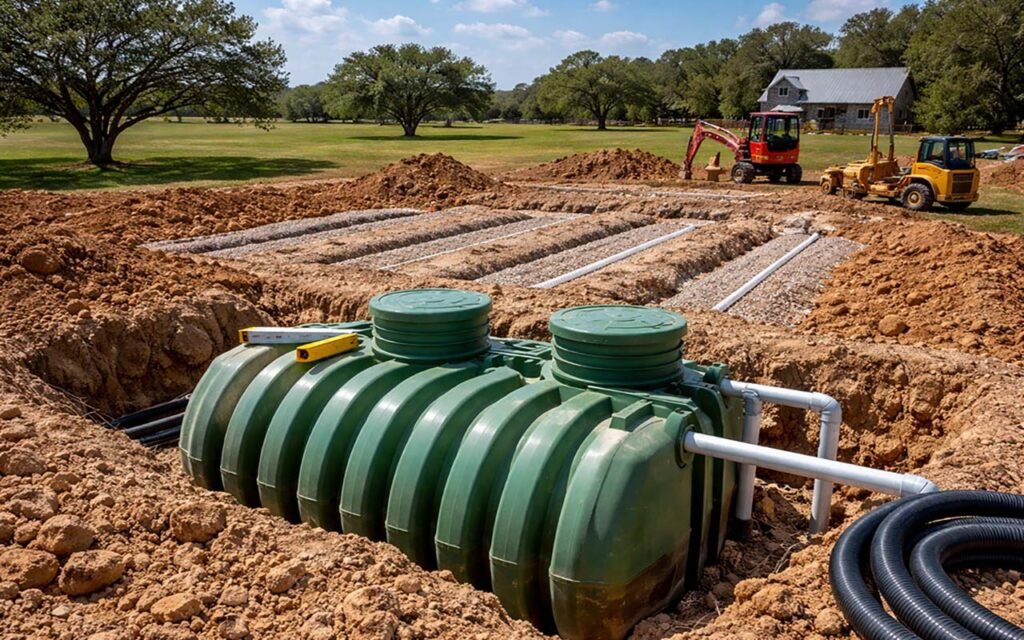
Most septic systems have two main parts, the septic tank and the drainfield. Underground pipes connect these components to the plumbing inside your home. While most of the system stays out of sight, each part has an important role in collecting, treating, and safely dispersing household wastewater.
The septic tank is a watertight container buried underground. Wastewater from toilets, showers, sinks, washing machines, and other plumbing fixtures flows directly into the tank. Once inside, heavier solids settle to the bottom, while grease, oils, and other lighter materials float to the top.
The liquid wastewater between these layers eventually flows out of the tank and into the drainfield. As the wastewater moves through the surrounding soil, natural processes provide additional treatment and help remove harmful bacteria, viruses, and some nutrients.
This process is what makes a septic system more than a simple storage tank. Each component works together to manage wastewater safely and efficiently.
How Do Septic Systems Work?
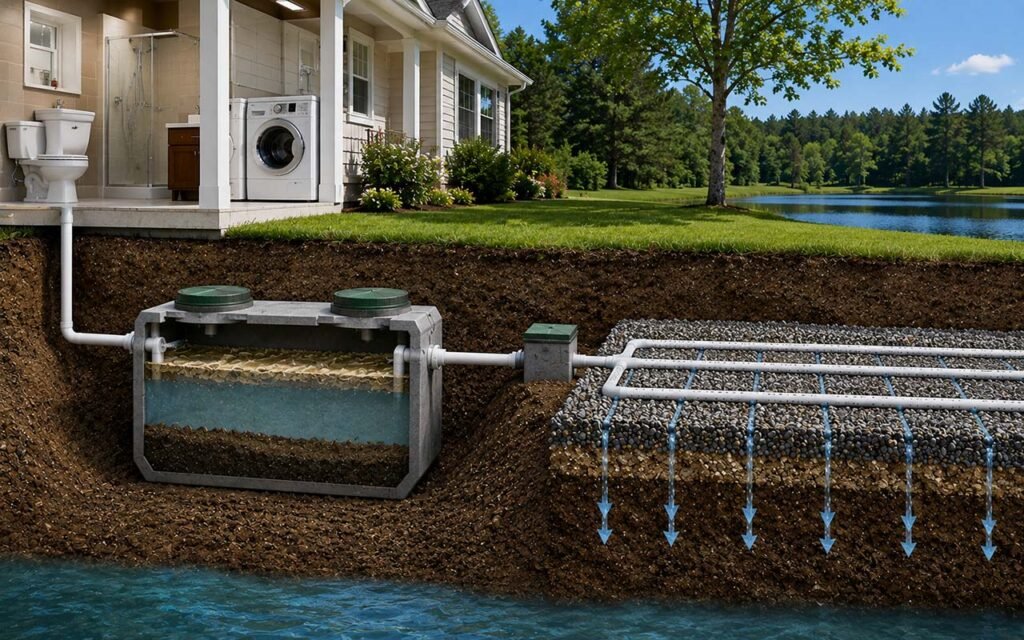
Understanding how septic systems work is easier when you follow the path wastewater takes from your home. Each time you flush a toilet, take a shower, run the washing machine, or use a sink, wastewater travels through the main drainage pipe and enters the septic tank.
Once inside the tank, the wastewater begins to separate naturally. Heavy solid waste settles at the bottom and forms a layer known as sludge. Oils, grease, and other lighter materials rise to the surface and create a layer called scum. Liquid wastewater remains between these two layers.
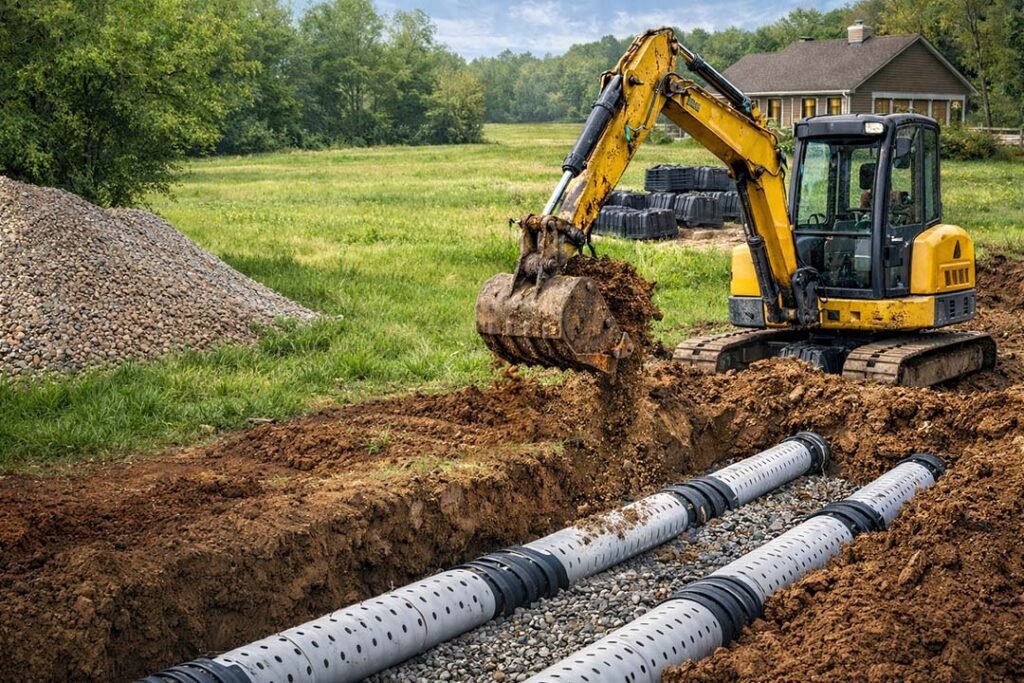
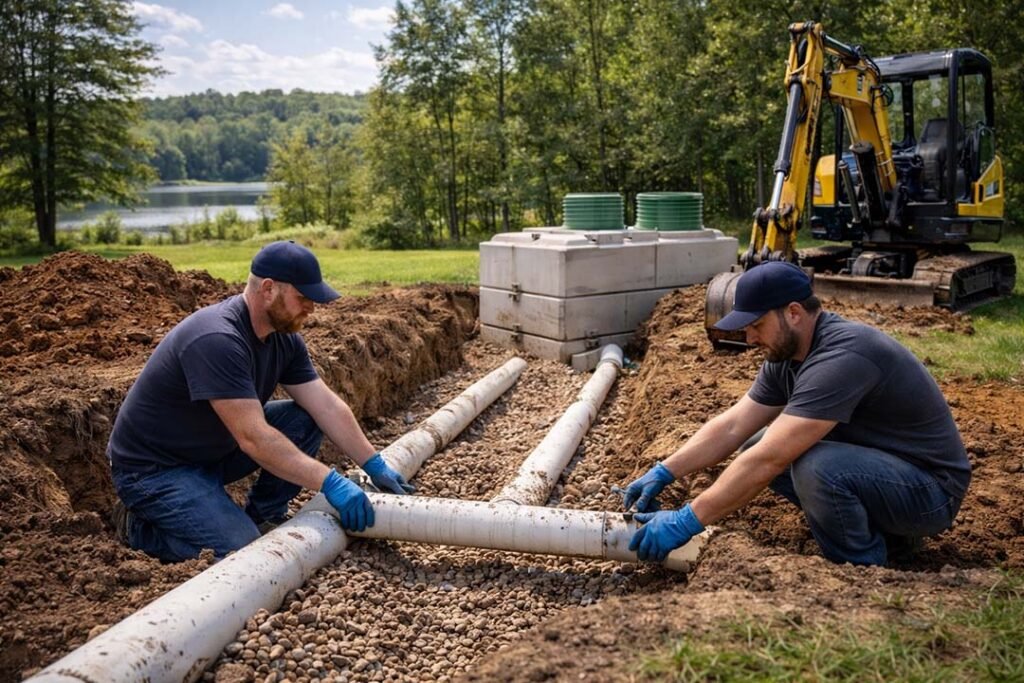
The liquid portion, known as effluent, then leaves the septic tank and moves into the drainfield. Depending on the system design, pipes or other distribution components spread the wastewater across the treatment area.
The soil provides the final stage of treatment as the wastewater slowly filters through it. This is why healthy soil and a properly functioning drainfield are essential for reliable, long-term septic system performance.
The Main Parts of a Septic System
A septic system is made up of several components that work together to collect, treat, and disperse wastewater. While the exact design can vary from one property to another, understanding the main parts can help homeowners see why proper maintenance involves much more than simply pumping the septic tank.
Each component has a specific purpose. If one part becomes damaged, clogged, or overloaded, it can affect the performance of the entire system.
| Component | Main Purpose | Why It Matters |
|---|---|---|
| Main sewer line | Carries wastewater away from the home | Connects household plumbing to the septic system |
| Septic tank | Separates solids, scum, and liquid wastewater | Helps prevent solid waste from entering the drainfield |
| Inlet and outlet | Directs wastewater into and out of the tank | Helps maintain proper wastewater flow |
| Effluent filter | Helps keep suspended solids inside the tank | Provides added protection for the drainfield |
| Distribution system | Carries effluent to the treatment area | Helps spread wastewater through the drainfield |
| Drainfield | Treats and disperses wastewater into the soil | Provides an important final stage of wastewater treatment |
Depending on the system design, a property may also have pumps, alarms, control panels, aerators, spray heads, or additional treatment chambers. For example, aerobic systems have more mechanical components than many conventional systems.
Knowing which type of septic system you have makes it easier to plan maintenance, understand service recommendations, and recognize when something may not be working properly.
Conventional and Aerobic Septic Systems
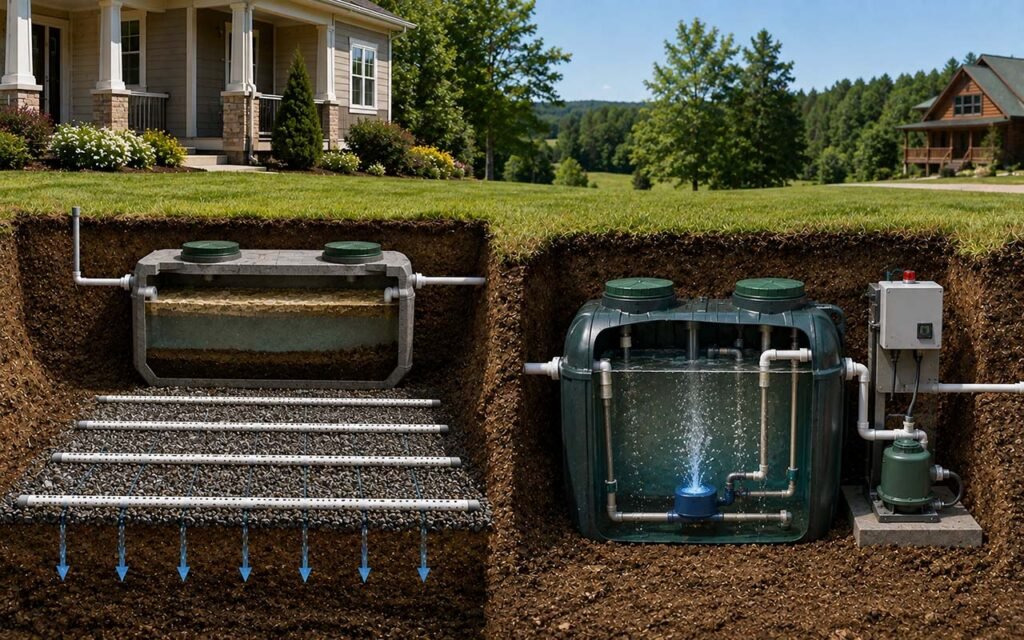
Not every property is suitable for the same type of septic system. The right design depends on several factors, including soil conditions, available space, property layout, wastewater volume, and local requirements.
A conventional septic system typically uses a septic tank connected to an underground drainfield. Wastewater enters the tank, where solids and liquids separate. The liquid effluent then flows into the drainfield, where the surrounding soil provides additional treatment before the water moves deeper into the ground.
An aerobic septic system works differently. It introduces oxygen into the wastewater treatment process. This oxygen supports aerobic microorganisms that help break down organic waste more effectively. Because aerobic systems often include pumps, aerators, alarms, and other mechanical parts, they usually require more regular monitoring and maintenance.
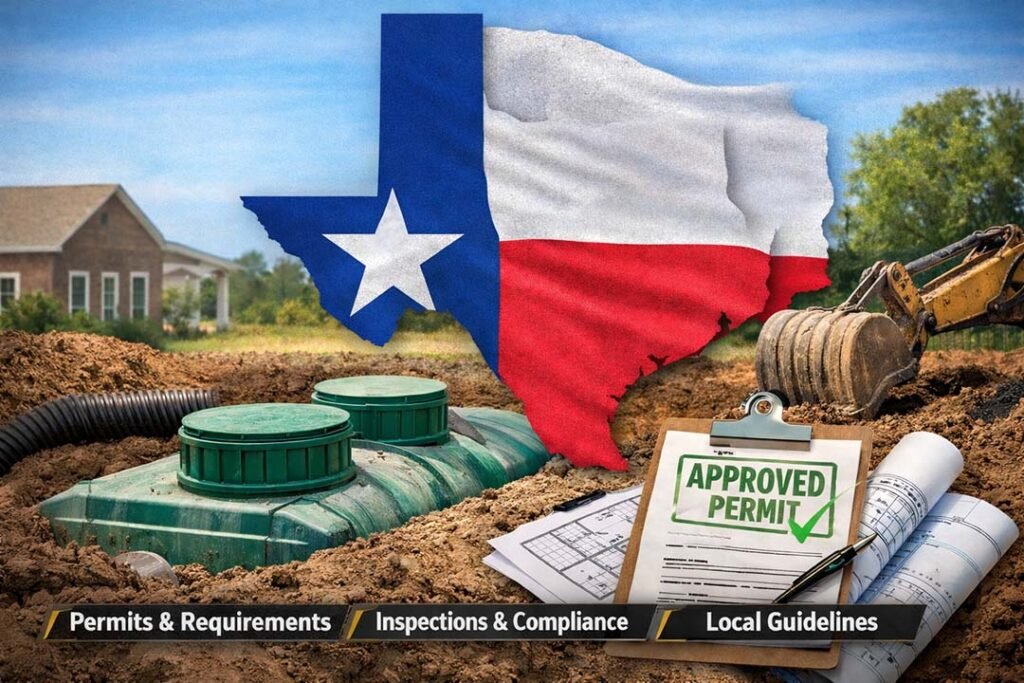
This is especially important in Texas, where soil conditions can vary greatly between properties. A professional site evaluation helps determine whether a conventional or alternative system is suitable.
The best septic system should be based on the property’s conditions, wastewater needs, local regulations, and professional evaluation.
Why Soil Conditions Matter So Much
The septic tank often gets most of the attention, but the soil around the drainfield is just as important. After wastewater leaves the tank, the drainfield distributes it into the soil. The soil then provides additional treatment as the wastewater slowly filters through the ground.
Different types of soil handle wastewater in different ways. Soil that drains too slowly can cause water to collect around the drainfield. On the other hand, soil that drains too quickly may allow wastewater to move through the ground before it receives enough natural treatment.
Other site conditions also matter. Seasonal groundwater levels, property slope, available space, and the location of nearby wells or water sources can all influence septic system design.
From our field experience, two neighboring properties can look very similar but require completely different septic solutions once the soil is evaluated.
This is why a professional site evaluation is an important step before installing or replacing a septic system. In Texas, the system design must consider the actual conditions of the property to support safe and reliable wastewater treatment.
What Happens to Waste Inside the Tank?
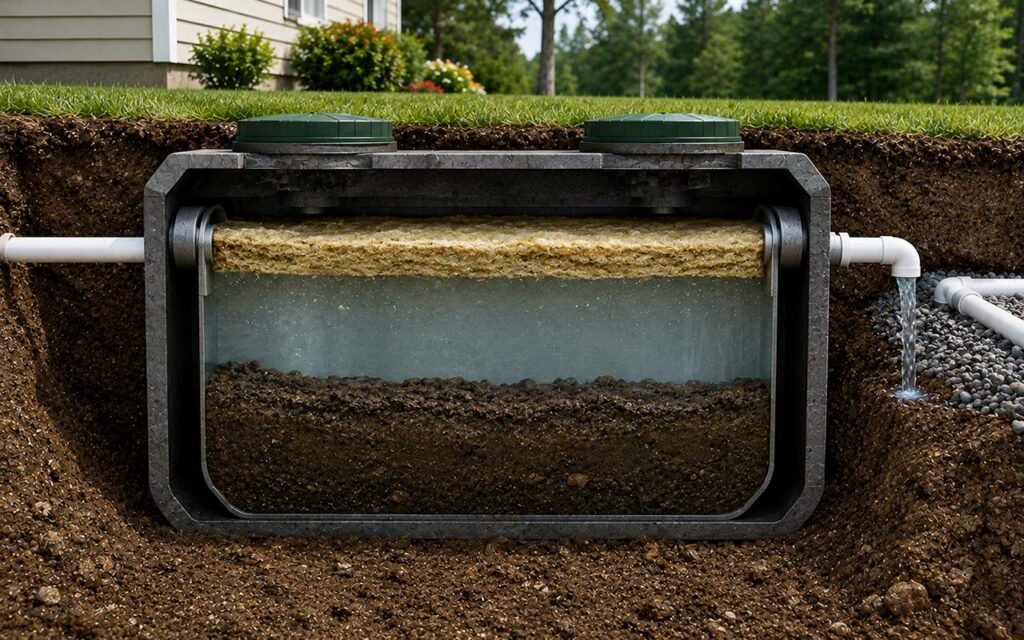
Once wastewater enters a septic tank, the natural separation process begins. The tank holds wastewater long enough for heavier and lighter materials to separate. However, the tank does not make all solid waste disappear, which is something every septic system owner should understand.
Inside the tank, waste typically separates into three layers. Heavy solids settle at the bottom and form sludge. Fats, oils, grease, and other lighter materials float to the surface and create a scum layer. Between these two layers is liquid wastewater, known as effluent, which eventually flows toward the drainfield.
Naturally occurring microorganisms help break down some of the organic waste inside the tank. However, they cannot break down everything. As time passes, sludge and scum gradually build up.
This is why regular septic system maintenance and pumping are important. Removing accumulated waste helps prevent solids from reaching the outlet and potentially causing problems in the drainfield.
How Long Can a Septic System Last?
There is no exact lifespan for every septic system. How long a system lasts depends on its design, installation quality, soil conditions, household water use, maintenance history, and the amount of wear it receives over the years.
The drainfield is especially important to the system’s long-term performance. Too much wastewater can overload the soil, while solids escaping from the tank can affect the drainfield’s ability to absorb and treat effluent. Tree roots, compacted soil, construction activity, and heavy vehicles can also damage septic components.
From our experience, age does not always tell the full story. An older system that has been properly maintained may perform better than a newer system that has been neglected or regularly overloaded.
Regular professional inspections provide a much better understanding of system condition. They can also help identify developing problems before they lead to larger and more expensive repairs.
Why Septic System Maintenance Is Important
A septic system works quietly in the background every day. Because most of it is underground, homeowners may not think about maintenance until slow drains, odors, alarms, or other problems appear.
Routine septic system maintenance helps keep wastewater moving and treating properly. It also gives a septic professional an opportunity to identify worn components, excessive solids, clogged filters, or other concerns before they become more serious.
A few simple habits can make a meaningful difference.
- Schedule inspections based on your system type and local requirements.
- Have the tank pumped when sludge and scum accumulation makes it necessary.
- Keep wipes, grease, hygiene products, and other unsuitable materials out of drains.
- Repair leaking toilets, faucets, and plumbing fixtures promptly.
- Avoid parking or driving heavy equipment over the tank and drainfield.
- Never ignore alarms, sewage odors, slow drains, or unusually wet areas.
Consistent care reduces unnecessary stress on the system and helps it continue working as designed.
Signs a Septic System May Need Professional Attention
Septic problems do not always happen suddenly. In many cases, a system gives homeowners warning signs before a major backup or failure occurs. Recognizing these changes early can make a problem easier to diagnose and address.
Slow drains throughout the home, gurgling sounds from plumbing fixtures, sewage odors, or wastewater backing up into sinks, tubs, or toilets should not be ignored. Wet or unusually soft ground around the septic tank or drainfield can also indicate that something is wrong.
You may also notice grass growing greener or faster over part of the drainfield. With an aerobic septic system, an alarm can indicate a problem involving the aerator, pump, electrical components, or treatment process.
These signs can have several possible causes. A professional inspection can determine whether the problem involves household plumbing, the tank, pipes, mechanical components, or the drainfield.
How Septic Systems Protect Your Property and Environment
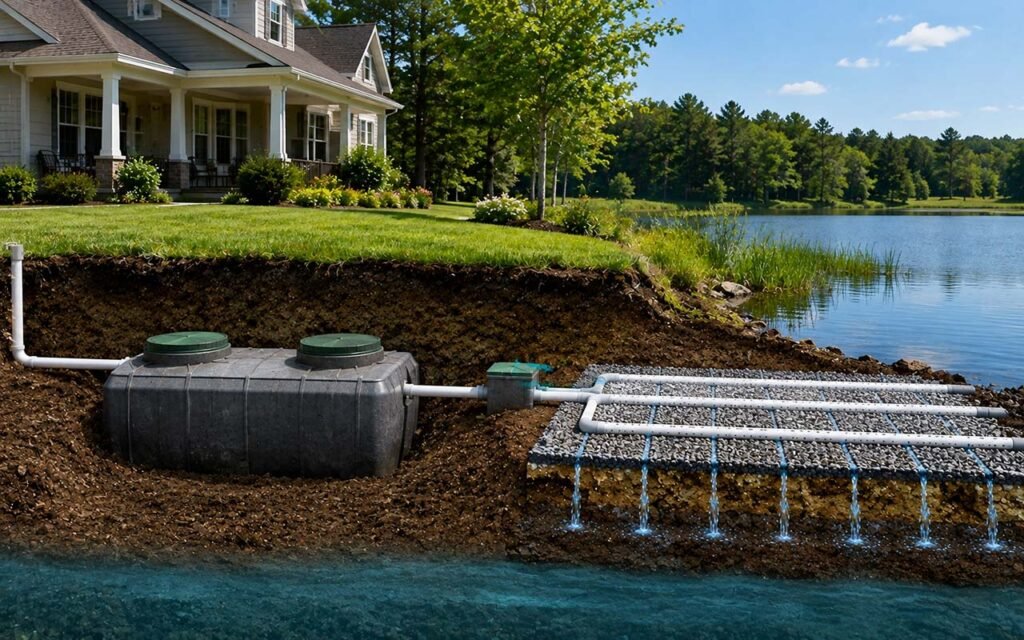
A properly functioning septic system does more than carry wastewater away from your home. It treats wastewater before releasing it back into the environment, helping protect your property and nearby water resources.
When a system fails, untreated or poorly treated wastewater can reach the ground surface or move into groundwater and nearby waterways. The CDC notes that failing septic systems can contaminate groundwater and surface water. The EPA also explains that malfunctioning systems can release harmful pathogens and nutrients into the environment.
Proper maintenance therefore goes beyond preventing unpleasant odors or sewage backups. It is also an important part of responsible wastewater management.
From a homeowner’s perspective, prevention is the best approach. Managing water use, protecting the drainfield, scheduling appropriate maintenance, and responding quickly to warning signs can help protect your home, your septic system, and the surrounding environment.
Expert Insight From the Field
One misconception we often hear is that a septic tank only needs attention when it becomes full. In practice, a healthy septic system depends on much more than the amount of waste inside the tank.
A tank may appear to be functioning normally while another part of the system is developing a problem. An effluent filter may be becoming restricted, a pump may be wearing out, or excessive water use may be putting unnecessary pressure on the drainfield.
At Dillon Septic, we encourage homeowners to treat septic care as regular property maintenance rather than something to think about only during an emergency. Knowing the location of your tank and drainfield is a good place to start.
It also helps to know what type of system you have and keep records of inspections, pumping, repairs, and other service. Good records make it easier to track system performance and identify changes over time.
Professional Septic Care From Dillon Septic
So, what are septic systems in practical terms? They are complete onsite wastewater treatment systems designed to collect, separate, treat, and disperse wastewater from homes and businesses. The septic tank begins the treatment process, while the drainfield and surrounding soil provide additional treatment before wastewater returns to the environment.
Understanding how these components work together can help homeowners make better decisions about pumping, inspections, water use, repairs, and long-term maintenance. Small preventative steps today can often help reduce the risk of larger problems later.
If your system needs professional attention, explore Dillon Septic’s septic services for pumping, inspections, repairs, maintenance, septic tank locating, and system installation.
You can also read our residential septic resources to learn more about maintaining your system and recognizing potential problems. Understanding your system before an emergency occurs can make septic ownership much easier.
For additional educational information, homeowners can review guidance from the U.S. Environmental Protection Agency and the Texas Commission on Environmental Quality.
How Often Should a Septic Tank Be Pumped?
There is no single pumping schedule that works for every home. According to the EPA, the average household septic system should generally be inspected at least every three years. Septic tanks are commonly pumped every three to five years, but some households may need service sooner.
Several factors affect how quickly solids build up inside the tank. These include tank size, household size, daily water use, and the amount of solid waste entering the system. A busy household may need more frequent pumping than a smaller household with a similar tank.
From our experience, keeping a record of inspections, pumping dates, and repairs makes septic maintenance much easier. These records help homeowners understand their system’s service history and give technicians useful information when evaluating its condition.
Rather than relying only on a fixed schedule, regular inspections can help determine when pumping is actually needed.
What Should Never Go Into a Septic System?
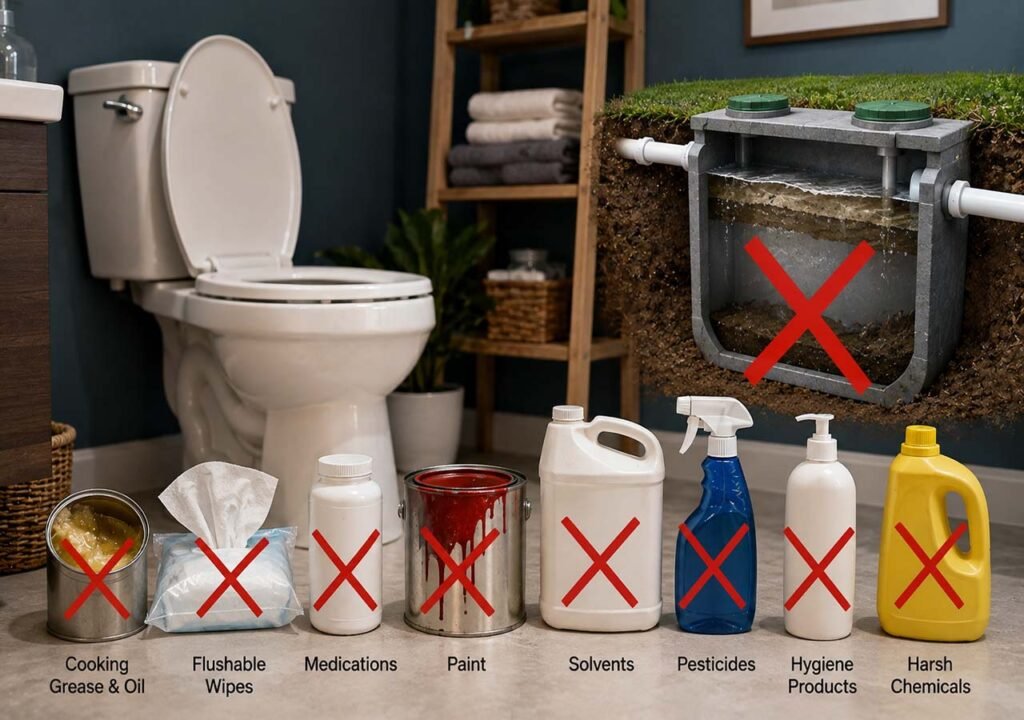
What goes down your drains can have a direct impact on the health of your septic system. Septic systems are designed to handle normal household wastewater, human waste, and toilet paper. They are not designed to handle every product that can fit down a toilet or drain.
Cooking grease and oil can collect inside plumbing and add to the scum layer in the septic tank. Disposable wipes can also cause problems because they do not break down as easily as toilet paper, even when they are marketed as flushable.
Paint, solvents, pesticides, medications, hygiene products, and harsh chemicals should also be kept out of the system. These materials may interfere with treatment or create problems within septic components.
A simple rule is to avoid using your drains as a trash can. Careful disposal habits can help protect the tank, pipes, filters, pumps, and drainfield.
How Water Usage Affects Septic System Performance
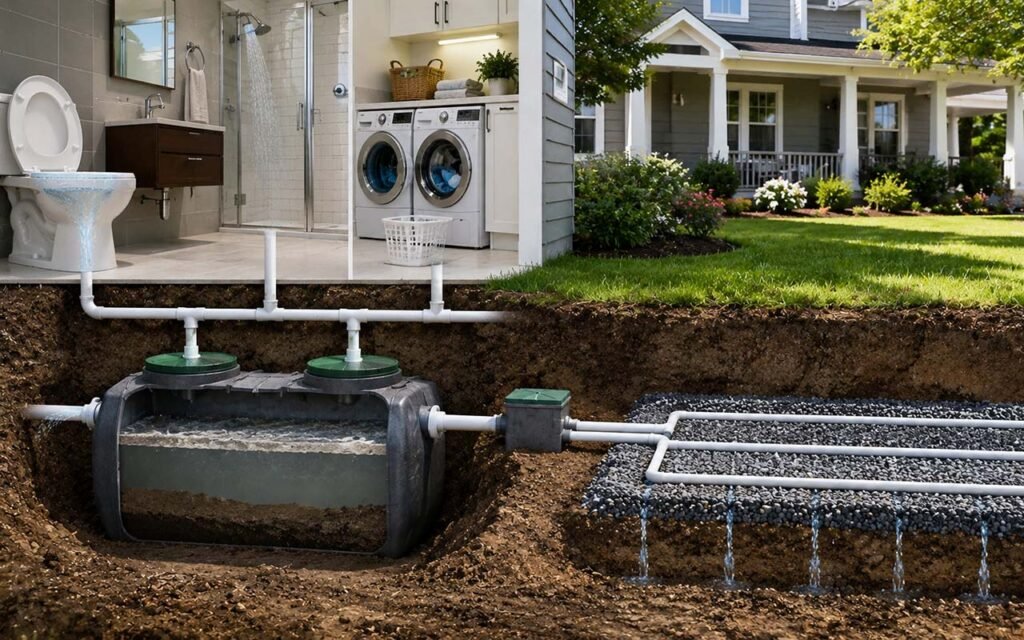
Every gallon of water used in a home must eventually leave through the plumbing. In a property with a septic tank system, that wastewater travels through the tank before moving into the treatment area.
Using too much water within a short period can place unnecessary pressure on the system. High wastewater flow may reduce the amount of time solids have to settle inside the tank. It can also send more water to the drainfield than the soil can comfortably handle at one time.
Spreading laundry loads throughout the week is one simple way to reduce sudden increases in wastewater flow. Repairing leaks is equally important. According to the EPA, a leaking toilet can waste up to 200 gallons of water each day.
Water-efficient fixtures, sensible household habits, and timely plumbing repairs can reduce unnecessary stress and help the septic system operate more effectively.
Frequently Asked Questions
Can a House Have a Septic Tank Instead of a Sewer Connection?
Yes. Many homes that do not have access to a municipal sewer system use septic systems to manage wastewater. Wastewater leaves the home through a main pipe and enters an underground septic tank. After initial treatment, liquid wastewater moves to a designated treatment area where the soil provides additional treatment.
Does Everything Inside a Septic Tank Break Down?
No. Naturally occurring microorganisms break down some organic waste, but they cannot eliminate everything that enters the tank. Solid material gradually collects at the bottom as sludge, while grease and other lighter materials form a scum layer near the surface. Over time, these materials must be removed through professional septic tank pumping.
Can Heavy Rain Cause Septic Problems?
Yes, prolonged or heavy rainfall can sometimes affect septic system performance. Saturated soil may have difficulty accepting additional wastewater from the drainfield. This can slow drainage and place additional stress on the system. During periods of heavy rain, reducing unnecessary household water use can help limit the amount of wastewater entering an already saturated treatment area.
Is It Safe to Drive Over a Septic Tank or Drainfield?
In most cases, vehicles and heavy equipment should be kept away from septic tanks and drainfields. The added weight can damage underground pipes, septic components, or the soil structure needed for proper wastewater treatment. Unless an area has been specifically designed to support vehicle loads, it is best to keep cars, trucks, trailers, and heavy machinery away from the septic system.
Should I Know Where My Septic Tank Is Located?
Yes. Every homeowner with a septic system should know where the tank, access points, and drainfield are located. Having this information makes routine inspections, pumping, maintenance, and repairs much easier. Keep septic permits, system drawings, inspection reports, pumping records, and repair documents in one place. These records can save time during future service visits and help professionals understand the history of your system.
Final Thoughts
Understanding what are septic systems and how they work can make caring for your property much easier. A septic system manages wastewater through several connected components, including the tank, distribution system, drainfield, and surrounding soil. Each part has an important role in the treatment process.
The septic tank is only one part of the complete system. Protecting the drainfield, controlling water use, arranging pumping when necessary, and responding to warning signs are just as important for long-term performance.
At Dillon Septic, we have seen how regular maintenance and good everyday habits can help homeowners prevent avoidable septic problems. Knowing your system type, understanding where its main components are located, and keeping accurate service records are simple steps that can make a real difference.
For more helpful information, explore our related septic guides to learn about pumping, inspections, maintenance, repairs, installation, and proper septic system care.