Understanding Texas septic system regulations is essential for homeowners, builders, and property buyers who rely on on-site wastewater treatment. Texas has strict rules designed to protect groundwater, public health, and the environment, and failing to follow them can lead to costly delays, fines, or system failure.
From first-hand field experience, many septic issues begin not with poor installation, but with misunderstanding local and state requirements. This guide breaks down the regulations in clear terms, explains why they matter, and helps you plan confidently whether you are installing, replacing, or maintaining a septic system in Texas.
Who Regulates Septic Systems in Texas
Septic systems in Texas are regulated at both the state and local levels. The primary governing authority is the Texas Commission on Environmental Quality, commonly referred to as TCEQ. While TCEQ sets statewide standards, local counties and authorized agents often enforce additional rules.
In practical terms, this means requirements can vary depending on where the property is located. Always confirm local regulations before starting any septic-related project.
When a Septic Permit Is Required
In Texas, a permit is required for most septic system activities, including new installations, replacements, and major repairs. Even changes to home size or plumbing fixtures can trigger permit requirements if they affect wastewater flow.
Permits are typically required for:
- New home construction using a septic system
- Replacing an existing septic system
- Modifying system components such as tanks or drain fields
- Installing aerobic treatment units
Permit costs generally range from $300 to $1,200 depending on county and system complexity.
Soil Testing and Site Evaluation Requirements
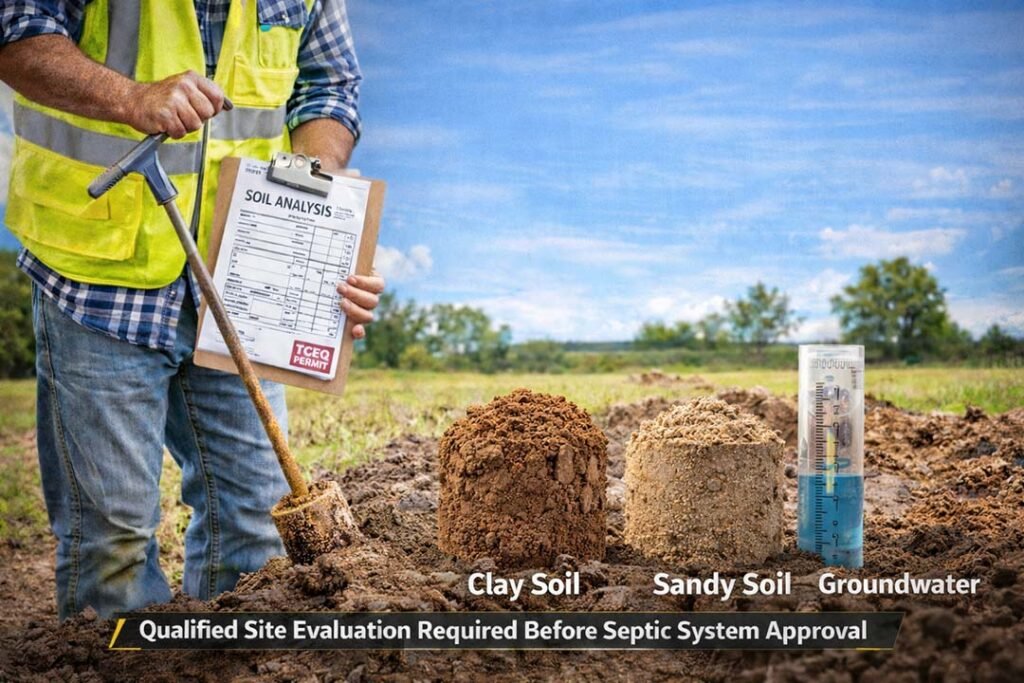
Before any septic system is approved, Texas regulations require a site evaluation. This evaluation determines soil type, absorption rate, groundwater depth, and slope.
Why Soil Testing Matters
Soil conditions directly influence which septic systems are allowed. Clay-heavy soil drains slowly and often requires advanced treatment systems. Sandy soil drains well but may need additional setbacks to protect groundwater.
A licensed professional conducts the soil analysis, and results are submitted as part of the permit application. Skipping this step is one of the most common reasons permits are denied.
How Texas Regulations Apply to Tanks and Drain Fields
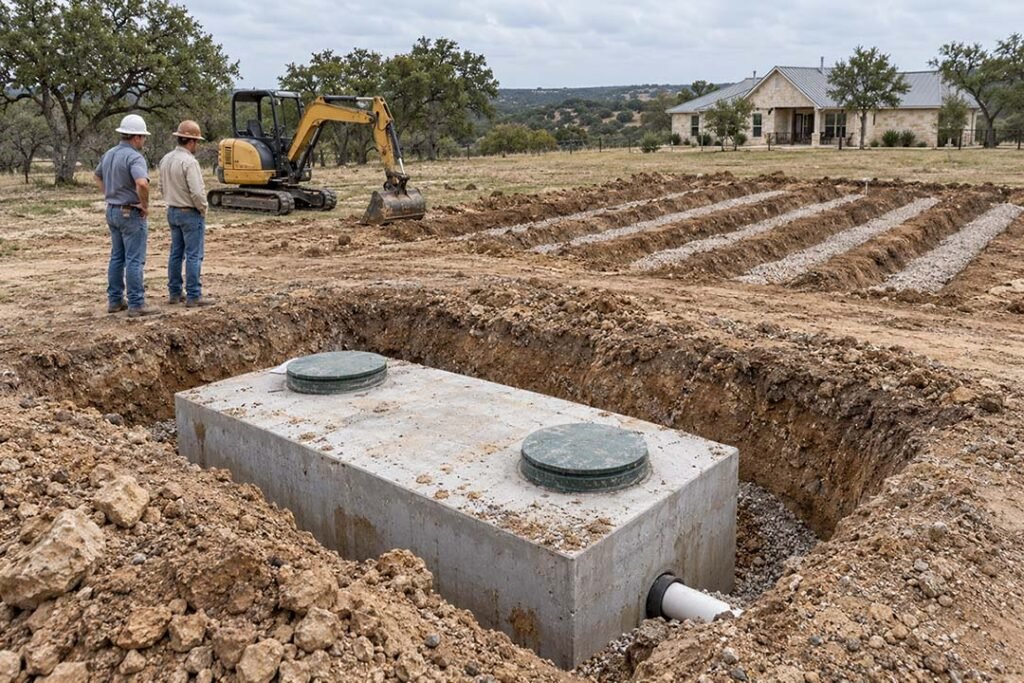
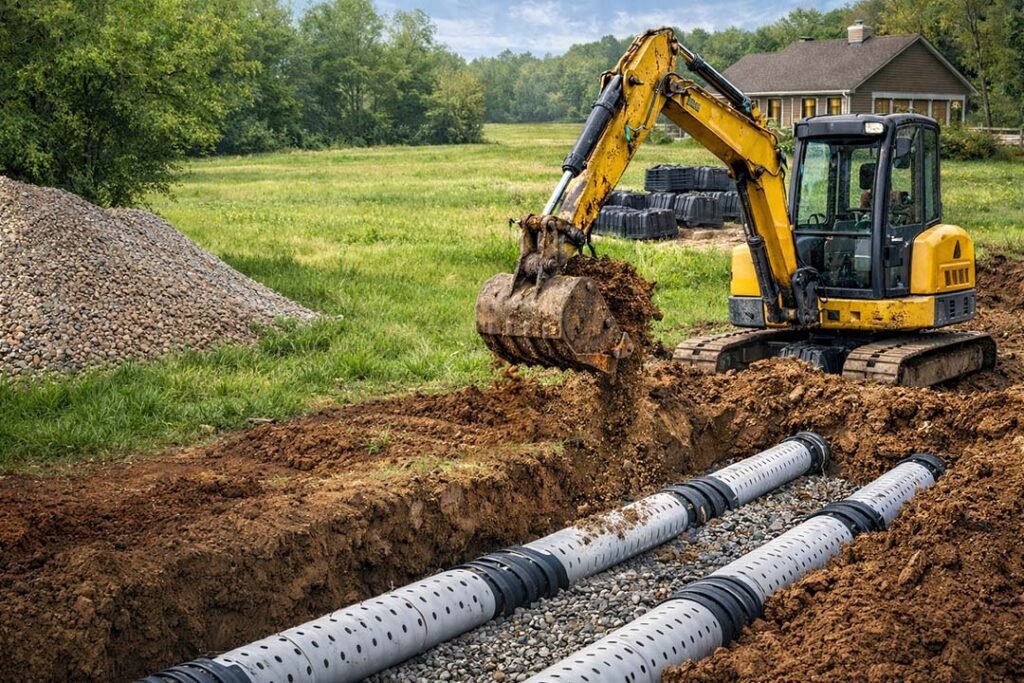
Texas regulations apply to the complete on-site sewage facility, not only the septic tank. The approved design must account for the tank, wastewater piping, distribution equipment, and drain field or other disposal area.
The tank must have the capacity and access required by the approved plan. The drain field must be placed in suitable soil and follow applicable separation distances from wells, buildings, property boundaries, and water sources.
Property owners should not build, park heavy vehicles, or make major landscaping changes over the tank or drain field. Repairs, expansions, and changes that affect wastewater flow may require approval from the local permitting authority.
Approved Septic System Types in Texas
Texas allows several septic system designs, but not all systems are approved for every property.
Commonly Approved Systems
- Conventional gravity systems
- Aerobic treatment units
- Drip irrigation systems
- Mound systems
Each system type has specific design and maintenance requirements outlined under Texas septic system regulations. Aerobic systems are often required in areas with small lot sizes or poor soil conditions.
Aerobic System Regulatory Requirements
Aerobic treatment units generally require more oversight than conventional systems because they contain mechanical and electrical components. Requirements vary according to the approved system, permit conditions, and local authorized agent.
Common requirements may include:
- A maintenance agreement when required by the permit or local authority
- Scheduled service visits based on the approved maintenance plan
- Functional electrical components and alarm systems
- Proper disinfection when required by the system design
Ongoing maintenance needs vary by system design, permit conditions, and local requirements. Property owners should follow the approved service schedule and keep records of inspections, maintenance visits, and component repairs.
Minimum Setback Distances and Property Rules
Texas regulations require septic systems to be installed specific distances away from structures and environmental features.
These figures are general examples only. Required separation distances depend on the septic component, water source, approved system design, and local permitting authority. Property owners should confirm the applicable requirements before planning an installation.
Typical Setback Requirements
| Feature | Minimum Distance |
|---|---|
| Water wells | 50 to 150 feet |
| Property lines | 5 to 10 feet |
| Buildings | 5 feet |
| Streams and ponds | 50 to 100 feet |
Local authorities may require greater distances depending on site conditions.
Septic System Installation Standards

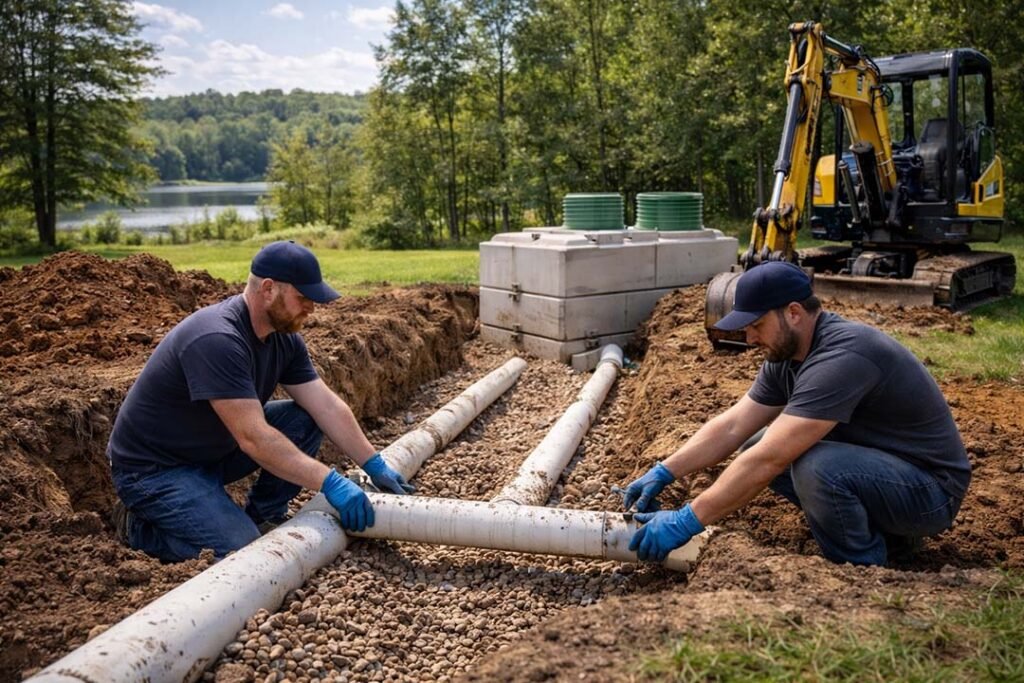
All septic systems in Texas must be installed by licensed professionals unless the homeowner qualifies for an exemption. Installation must follow the approved design exactly.
Inspections are conducted during and after installation to ensure:
- Proper tank placement
- Correct pipe slopes
- Adequate drain field construction
- Compliance with approved plans
Systems cannot be covered until inspections are completed and approved.
Maintenance and Inspection Regulations
Texas septic system regulations emphasize long-term system performance, not just installation.
Maintenance Requirements
- Septic tanks must be pumped as needed to prevent solids overflow
- Aerobic systems may require a documented maintenance agreement and service reports based on permit conditions and local requirements
- Inspection and maintenance records should be retained and provided when required by the permit or local authority
Neglecting required maintenance can result in enforcement actions or permit violations. The Environmental Protection Agency offers supplemental guidance.
Septic System Replacement Rules in Texas
Replacing an existing system often triggers updated regulatory requirements. Older systems that were compliant when installed may no longer meet current standards.
Common replacement requirements include:
- Reviewing whether the existing design meets current requirements
- Replacing or resizing the septic tank when necessary
- Redesigning or relocating the drain field
- Installing an aerobic or alternative system when site conditions require it
- Correcting wastewater contamination or unsafe discharge
Replacement projects frequently cost more due to removal and remediation requirements.
Selling a Home With a Septic System

A septic inspection may be requested during a property sale, and some local authorities or transaction conditions may require additional documentation. Sellers should keep permits, maintenance records, inspection reports, and system-location information available for buyers.
Real-World Compliance Example
A homeowner in Central Texas planned to add a bedroom to an existing home. While the septic system was functioning properly, regulations required a system capacity review.
The existing tank was undersized for the increased wastewater load. The owner was required to upgrade to a larger tank and install additional drain field lines to remain compliant.
This type of scenario is common and highlights why regulatory knowledge matters before renovations.
Penalties for Non-Compliance
Failure to follow Texas septic system regulations can result in:
- Permit denial or revocation
- Mandatory system replacement
- Fines from local authorities
- Legal liability for environmental damage
In severe cases, non-compliant systems may be ordered shut down until corrected.
Tips for Staying Compliant
From field experience, the most successful septic projects follow these principles:
- Work with licensed local professionals
- Confirm county-specific rules early
- Keep all permits and inspection records
- Maintain systems according to requirements
Preventive compliance is far less expensive than corrective action.
For professional septic system installation and inspections in Texas, Dillon Septic provides reliable, code-compliant service backed by local expertise. Our experienced team ensures every system is installed correctly, inspected thoroughly, and meets all state and county regulations.
Frequently Asked Questions
Are septic systems legal everywhere in Texas?
Yes, septic systems are legal statewide, but must meet state and local regulations. Some areas restrict certain system types.
Do all Texas homes with septic systems need inspections?
No. Inspection requirements depend on the system, permit conditions, type of work, and local authority. Inspections are generally required during new installation and certain permitted repairs or alterations. A septic inspection may also be requested during a property transaction, but it is not an automatic statewide requirement for every sale.
Can homeowners install their own septic system?
Some counties allow homeowner installations under strict conditions, but most require licensed installers.
How often must aerobic systems be inspected?
The required schedule depends on the system, maintenance agreement, permit conditions, and local authorized agent. Many aerobic systems receive several service visits each year, but property owners should follow the schedule established for their specific system.
Final Thoughts
Texas septic system regulations are designed to protect public health, property value, and the environment. While the rules may seem complex, they are manageable with proper planning and professional guidance.
Understanding requirements before installation or replacement helps prevent delays, unexpected costs, and compliance issues. With the right approach, septic systems can operate efficiently and legally for decades.