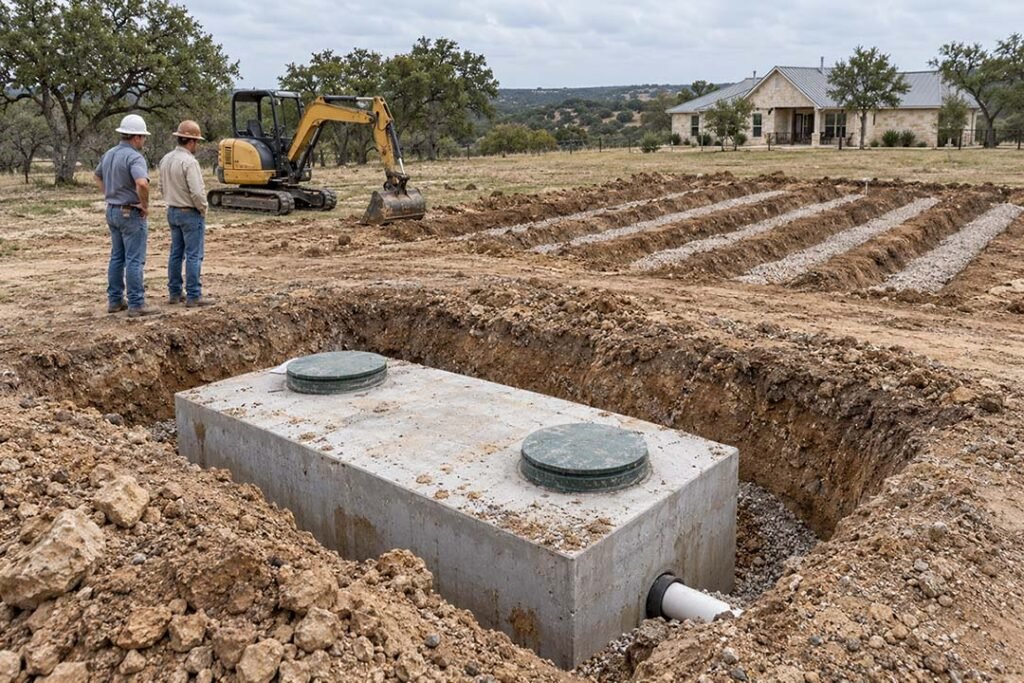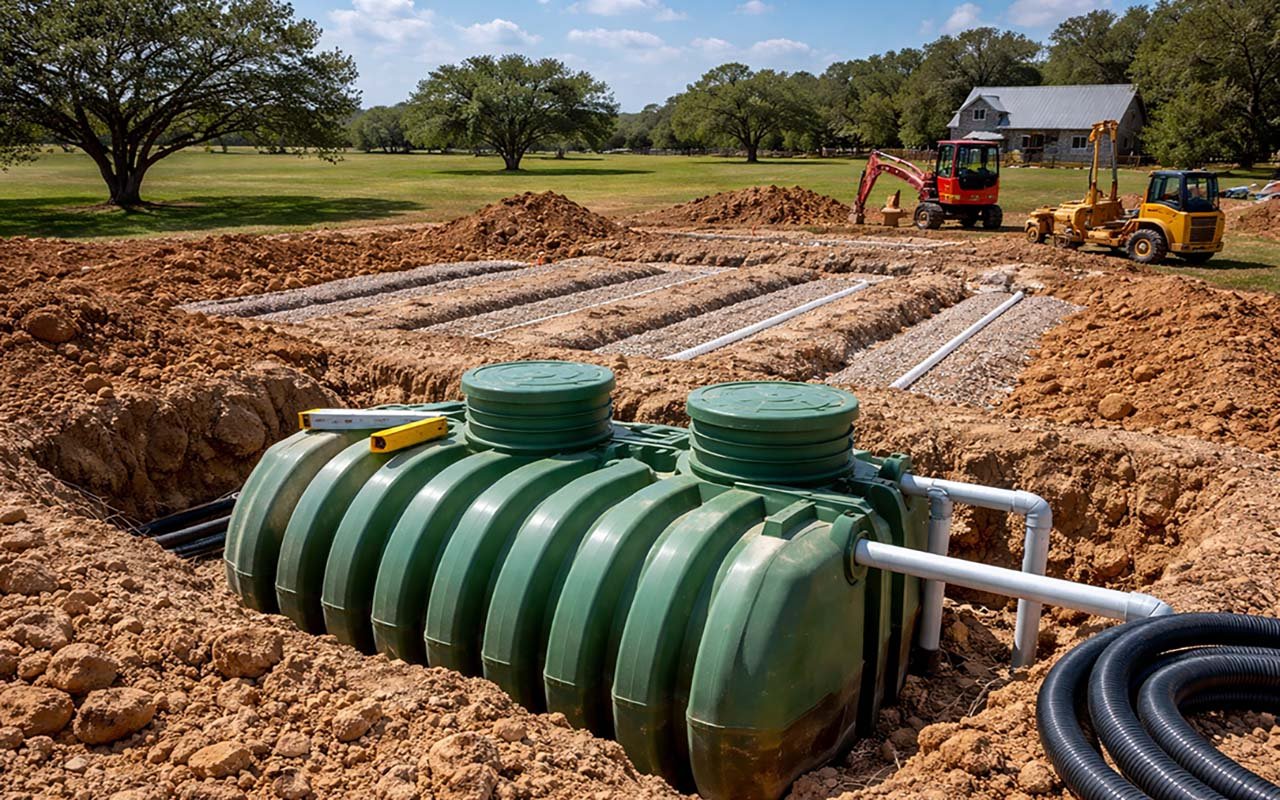
A new residential septic system in Texas can represent a significant investment. For many projects in Central Texas, a reasonable planning range is approximately $10,000 to $20,000, while more complicated installations can reach $26,000 or more.
Those figures should be treated as budgeting ranges rather than fixed prices.
The actual septic system cost depends on the type of system, site evaluation, property conditions, required treatment and disposal method, excavation, system capacity, permitting requirements, accessibility, and other project-specific work.
A relatively straightforward conventional system on a suitable property may cost considerably less than an aerobic or engineered system requiring pumps, electrical components, specialized disposal methods, or difficult excavation.
Texas does not have one septic system or one statewide installation price. TCEQ requires system selection to account for site conditions, and the appropriate treatment and disposal method depends on the results of the property’s site evaluation.
That is why the best way to budget for a septic system is to understand what type of system the property needs and what is included in the project, rather than relying on one statewide average.
Average Septic System Cost in Texas
For preliminary budgeting, many Central Texas residential projects can fall around $10,000 to $20,000 for a complete septic installation.
Some relatively straightforward conventional installations may fall closer to $7,000 to $12,000.
Aerobic systems commonly require a larger budget, with approximately $10,000 to $20,000 being a useful planning range for many residential projects.
More complicated installations can reach $26,000 or more when the property requires additional design work, difficult excavation, specialized treatment or disposal components, or other site-specific work.
A simple planning table looks like this:
| Septic System | Planning Range |
|---|---|
| Conventional septic system | $7,000 to $12,000 |
| Aerobic septic system | $10,000 to $20,000 |
| Many complete Central Texas projects | $10,000 to $20,000 |
| More complex projects | Up to $26,000+ |
These are planning ranges, not quotes or statewide averages published by TCEQ.
TCEQ does not establish a standard Texas septic installation price. Instead, its homeowner guidance recommends considering the initial capital cost together with operation, maintenance, repair, and replacement expenses when choosing a system.
This distinction is important because two properties requiring systems of similar capacity can still have very different project costs.
Conventional Septic System Cost in Texas
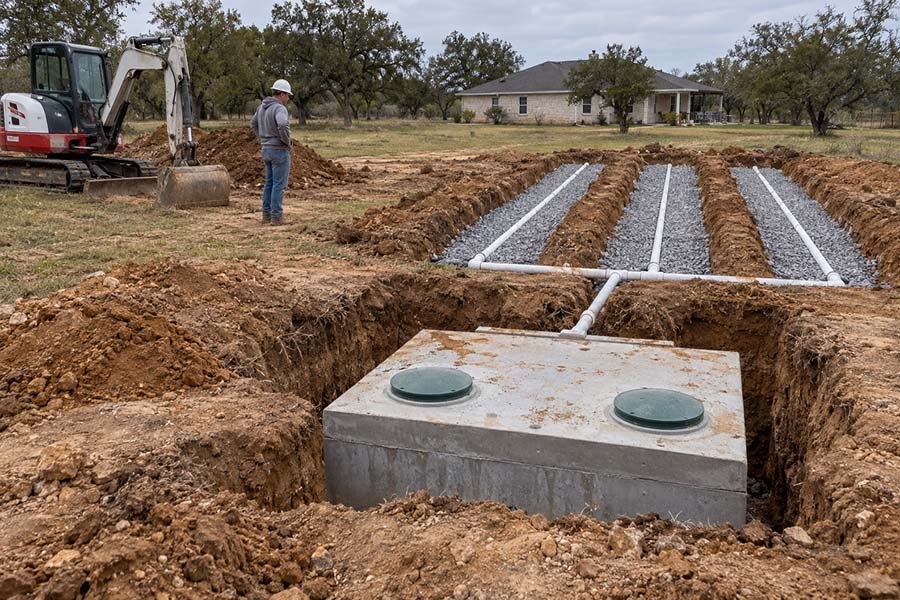
A conventional septic system can be one of the more economical options when the property is suitable for it.
A planning range of approximately $7,000 to $12,000 can be useful for many conventional residential projects, but actual pricing depends on the property and approved design.
A conventional system typically uses a septic tank for primary treatment followed by an appropriate soil absorption area.
Because a basic gravity system can have fewer mechanical and electrical components than an aerobic or pressurized system, initial and ongoing expenses may be lower.
However, a homeowner cannot assume that a conventional system will be approved simply because it costs less.
TCEQ’s system-selection guidance considers soil texture, fractured rock, groundwater, restrictive horizons, slope, and the proposed treatment and disposal method.
If site conditions do not support a conventional absorptive drainfield, another configuration may be necessary.
For more information about how this type of system works, read our guide to conventional septic systems.
Aerobic Septic System Cost in Texas
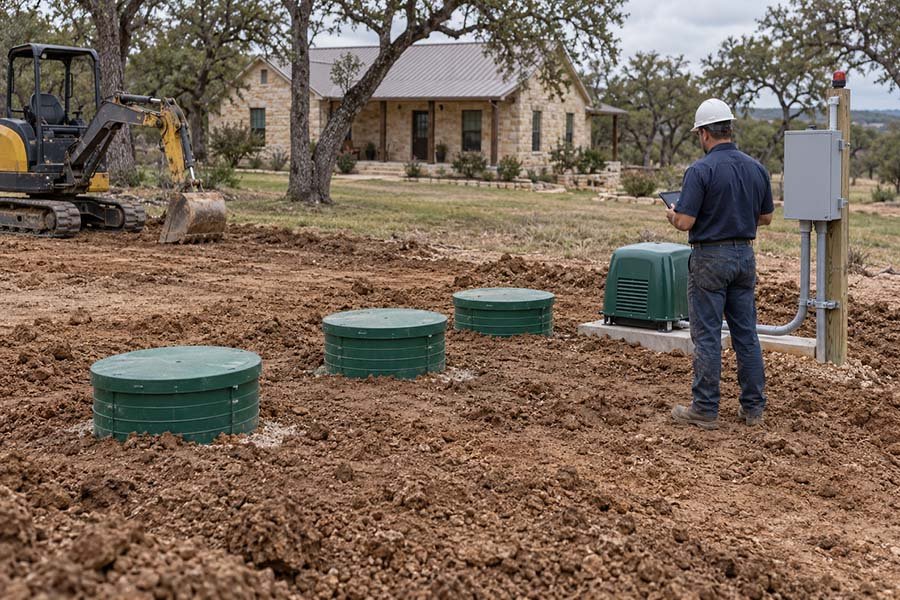
Aerobic systems generally involve more mechanical equipment than conventional gravity systems.
For preliminary planning, approximately $10,000 to $20,000 is a reasonable range for many residential aerobic septic projects in Central Texas.
An aerobic treatment unit introduces oxygen into the wastewater treatment process. Depending on the approved system, additional components can include pumps, controls, alarms, disinfection equipment, and a suitable disposal system.
Those components affect both the initial installation budget and long-term ownership expenses.
Aerobic systems also require electricity to operate mechanical equipment and can require more active maintenance than a conventional gravity system.
Because we have a separate article dedicated to this topic, I would not duplicate detailed aerobic pricing here.
See our complete aerobic septic system cost in Texas guide for a more detailed breakdown.
What Affects Septic System Cost in Texas?
The system type is important, but it is only one part of the final cost.
Property conditions and project requirements can change the amount of work considerably.
Site Evaluation
Before an OSSF is constructed, installed, altered, extended, or repaired in Texas, TCEQ says the site must first be evaluated by a licensed site evaluator or licensed professional engineer.
The evaluation helps determine which treatment and disposal methods are suitable for the property.
This matters financially because site conditions can determine whether a relatively simple system is appropriate or whether the project requires a more specialized design.
Soil and Subsurface Conditions
The soil below the property plays an important role in system selection.
TCEQ’s suitability table considers soil texture, fractured rock, groundwater, restrictive horizons, and other conditions when evaluating disposal methods.
Central Texas properties can also present difficult excavation conditions.
Rock, slope, restricted working space, or other site characteristics can increase the labor and equipment required for installation.
Treatment Method
Different treatment systems involve different components.
A septic tank providing primary treatment is considerably different from an aerobic treatment unit with mechanical aeration.
The treatment requirements therefore affect equipment, installation, electricity, maintenance, and eventual repair costs.
Disposal Method
The drainfield or disposal portion of the OSSF can also change the project budget.
Texas recognizes multiple disposal methods, including absorptive drainfields, evapotranspiration systems, pumped effluent drainfields, leaching chambers, gravel-less pipe, drip irrigation, low-pressure dosing, mounds, surface application, and soil substitution.
Not every method is suitable for every property.
Our guide to the types of septic systems in Texas explains these options in more detail.
System Capacity
The wastewater load the system is designed to handle can affect tank capacity, treatment requirements, and disposal-area sizing.
A system serving a larger household or property may therefore have different requirements from one designed for a smaller residential wastewater load.
Capacity should be determined through the applicable design and permitting process rather than by simply choosing a tank size from an online chart.
Excavation
Excavation can be a major variable in Central Texas.
A property with relatively accessible soil conditions can present a different installation environment from one containing substantial rock or difficult grades.
The amount of excavation also depends on the system design.
This is one reason estimates should be based on the actual property rather than a generic statewide installation price.
Electrical Components
Some systems require pumps, controls, alarms, aerators, or other electrical equipment.
Those components can increase installation complexity and also introduce long-term electricity and maintenance expenses.
A basic gravity system may have fewer mechanical components, although the actual configuration depends on the approved design.
Property Access
Equipment needs to reach the installation area.
Gates, buildings, landscaping, slopes, narrow access points, existing utilities, and other property features can affect how easily excavation and installation equipment can operate.
A difficult site can therefore cost more even when the system itself is similar to one installed on an easily accessible property.
Local Requirements
TCEQ establishes statewide OSSF requirements, but local authorized agents administer septic programs in many parts of Texas.
TCEQ notes that local permitting programs can be more stringent than state minimums.
This is another reason homeowners should not expect the same permitting process or project cost in every Texas county.
How Much Does a New Septic System Cost?
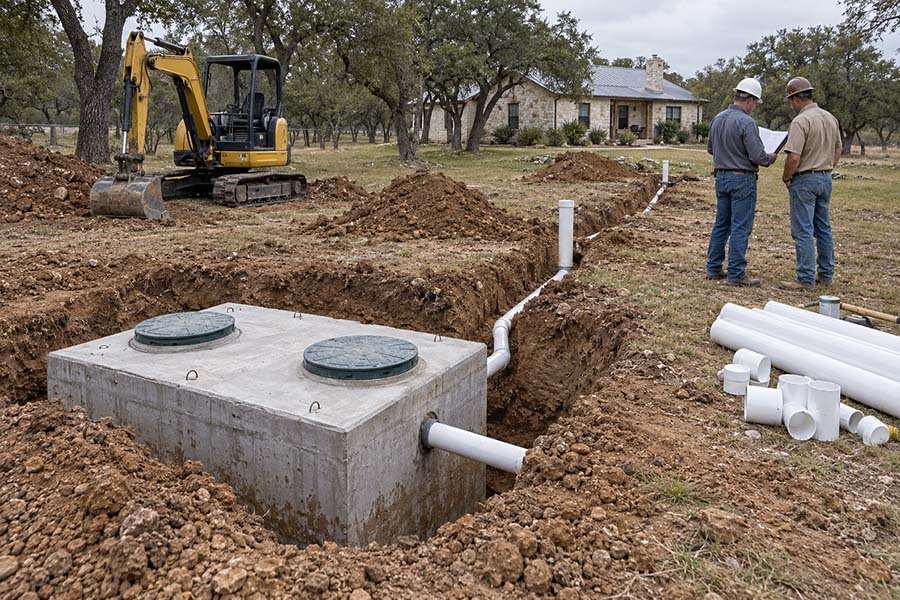
A complete new septic system involves more than purchasing a tank.
The project can include site evaluation, system design or planning, permitting, treatment components, disposal components, excavation, installation, inspection, electrical work where applicable, and final site work.
For many Central Texas residential projects, approximately $10,000 to $20,000 is a useful starting budget.
But a straightforward conventional installation and a complicated aerobic or engineered system should not be expected to cost the same.
The appropriate system must first be determined for the property.
If your main question is specifically about new installation cost, read our average septic system installation cost in Texas guide.
That page goes deeper into installation budgeting while this article remains the broader septic-system cost resource.
Does Home Size Affect Septic System Cost?
Home size can influence the project, but the number of bedrooms should not be converted into a simple universal price chart.
A three-bedroom home does not automatically mean the septic system will cost a particular amount.
System design depends on applicable wastewater-flow assumptions, property conditions, treatment requirements, and the disposal method.
A project requiring greater treatment or disposal capacity can involve different equipment and installation requirements.
So if you are searching for the cost of a septic system for a three-bedroom house, the bedroom count provides useful design context but is not enough to determine the final price.
The property still needs to be evaluated and the appropriate system selected.
Septic System Installation vs Replacement Cost
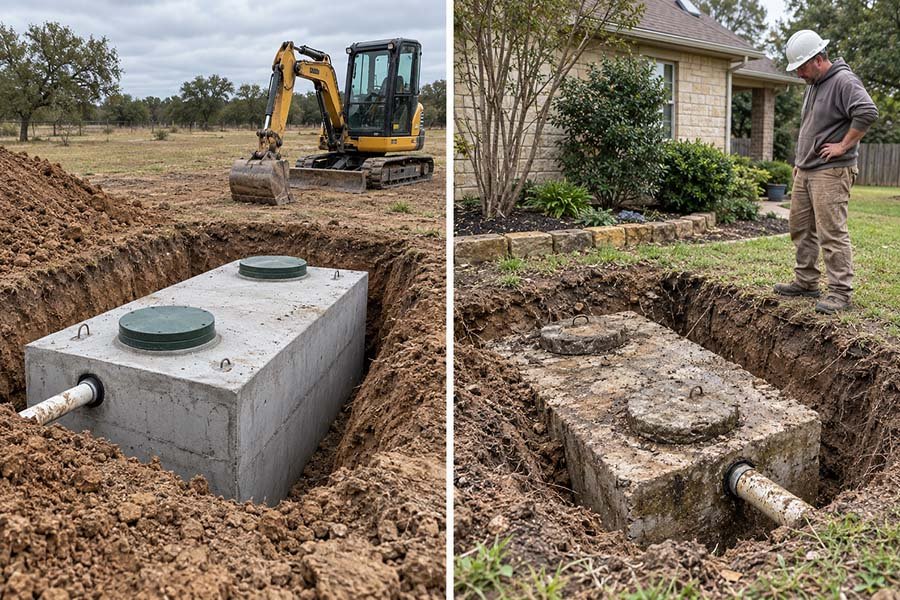
Installing a septic system on a new property and replacing an existing failed or outdated system are not necessarily the same project.
A new installation starts with the property’s site conditions and the approved system design.
A replacement project may also involve existing tanks, damaged components, an old disposal area, accessibility issues, removal or abandonment requirements, and determining what portions of the existing system can or cannot remain.
In some cases, replacement can involve more complicated site work than a new installation.
In others, only a specific component may need replacement rather than the entire OSSF.
Because replacement is a separate search intent, we maintain dedicated resources for it.
Read how much it costs to replace a septic system for full-system replacement information.
If the issue is specifically the tank, see our septic tank replacement cost guide.
Septic Permit and Design Costs in Texas
Permitting is another part of the overall project budget, but there is no single permit fee that applies throughout Texas.
TCEQ states that a permit and approved plan are required to construct, alter, repair, extend, and operate an OSSF, although limited exemptions exist. TCEQ also tells property owners to check with their local permitting authority because local programs may impose requirements beyond state minimums.
Applications and planning materials are generally submitted to the applicable permitting authority.
The authority may be a county, city, river authority, public health district, or TCEQ regional office depending on the location.
Design requirements can also vary with the system.
For example, TCEQ requires professional design for several secondary-treatment and nonstandard configurations.
Because of these differences, I would not use one universal dollar amount for Texas permits or design work.
For a complete explanation of the process, see our Texas septic system permit guide.
What Does a Septic System Cost After Installation?
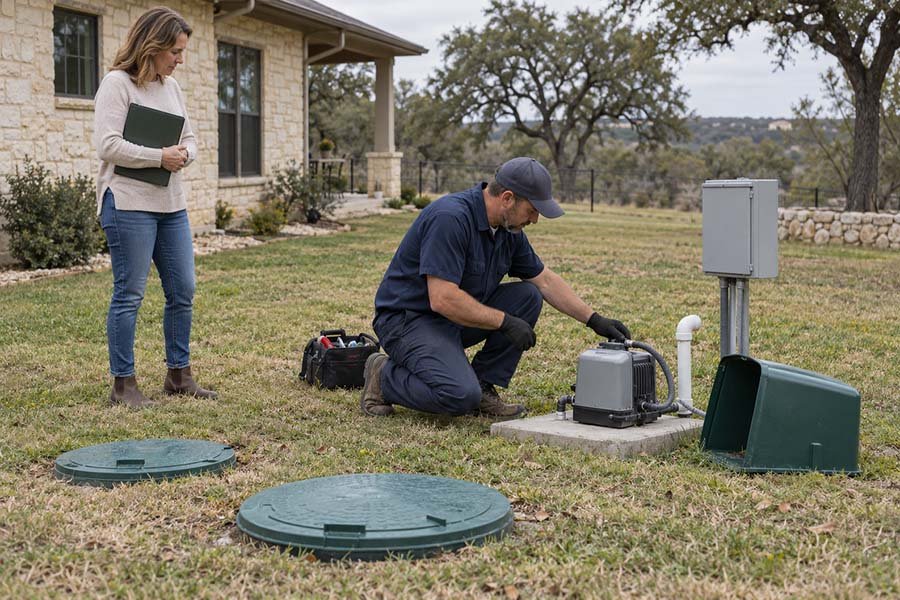
The purchase and installation price is only part of septic ownership.
TCEQ recommends that homeowners consider ongoing operation and maintenance expenses when selecting a system, including routine repairs and replacement of mechanical parts.
Potential long-term expenses can include septic pumping, inspections, maintenance, electricity, disinfection where required, and repair or replacement of mechanical components.
The actual expenses depend heavily on the system.
Septic Pumping
Systems containing septic tanks eventually require solids removal.
TCEQ’s general homeowner guidance recommends pumping conventional septic tanks periodically rather than allowing solids to accumulate indefinitely.
If you are budgeting for that maintenance, see our guide explaining how much it costs to pump a septic tank.
Inspection
Periodic evaluation can help homeowners understand system condition and maintenance needs.
Inspection can be particularly valuable when buying a property, investigating possible problems, or when maintenance history is unknown.
Electricity
Systems with aerators, pumps, controls, or other powered components use electricity.
A conventional gravity system may have little or no comparable mechanical energy requirement, depending on its configuration.
Mechanical Repairs
Pumps, aerators, alarms, control panels, floats, and other mechanical or electrical components can eventually require service or replacement.
This is why a system with a higher initial cost may also have different long-term expenses.
The lowest installation quote is not necessarily the lowest lifetime ownership cost.
How to Compare Septic System Quotes
Do not compare septic estimates based only on the number at the bottom of the page.
First determine whether the contractors are quoting the same scope of work and the same approved system.
One proposal might include excavation, electrical work, permitting assistance, disposal components, startup, and other project work while another excludes some of those items.
TCEQ recommends obtaining at least three estimates, comparing them, and investigating significant differences between bids.
When reviewing quotes, ask what is included and what could create additional charges.
Useful questions include whether the estimate covers site work, system components, excavation, electrical work, permitting-related work, final inspection requirements, and restoration of disturbed areas.
Also ask about ongoing maintenance.
A system that costs more initially may have different long-term operating requirements from a simpler system.
Understanding both numbers gives you a much better picture of the real cost.
How to Budget for a Septic System in Texas
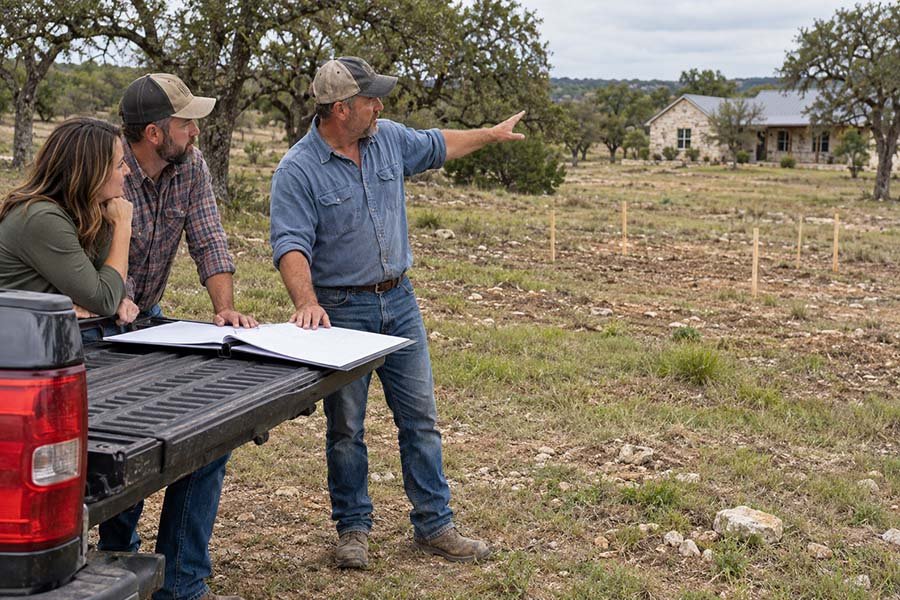
Start with the property, not the price chart.
For many Central Texas homeowners, $10,000 to $20,000 is a useful preliminary budget for a complete residential septic project.
If conditions are favorable and a conventional system is appropriate, the project may fall closer to the $7,000 to $12,000 planning range.
Aerobic systems often require approximately $10,000 to $20,000, while complicated projects can reach $26,000 or more.
But do not choose a system based solely on which range looks cheapest.
The site evaluation determines which treatment and disposal methods are suitable.
Once the appropriate system is known, obtain detailed estimates based on that design.
This gives you a much more useful budget than trying to determine the final price before anyone has evaluated the property.
Frequently Asked Questions
What is the average septic system cost in Texas?
There is no single statewide price that accurately represents every Texas property. System type, soil and subsurface conditions, treatment requirements, disposal method, capacity, excavation, accessibility, design, and local permitting requirements can all affect cost.
How much does a conventional septic system cost in Texas?
Approximately $7,000 to $12,000 can be used as a preliminary planning range for many conventional residential installations. Actual pricing depends on the property and approved system design.
How much does an aerobic septic system cost in Texas?
Approximately $10,000 to $20,000 is a useful planning range for many residential aerobic installations in Central Texas. More complicated projects can cost more. See our aerobic septic system cost guide for detailed information.
How much does a new septic system cost?
Many complete residential projects in Central Texas can fall around $10,000 to $20,000, but the final cost depends on the system and property. Difficult excavation, specialized treatment, pressurized disposal, electrical components, and other requirements can increase the budget.
What makes a septic system more expensive?
Important cost factors include system type, site conditions, rock and excavation, treatment requirements, disposal method, system capacity, electrical components, difficult property access, design requirements, and local permitting requirements.
Is an aerobic septic system more expensive than a conventional system?
Aerobic systems often have a higher initial and ongoing cost because they contain mechanical and electrical treatment components. However, the appropriate system should be determined by property conditions and the approved design rather than price alone.
Are septic permits included in installation cost?
It depends on the contractor’s estimate. Ask whether permitting-related costs and services are included. Texas does not have one universal OSSF permit fee because the applicable permitting authority and local requirements vary.
Final Thoughts
So, how much does a septic system cost in Texas?
For preliminary budgeting in Central Texas, approximately $10,000 to $20,000 is a reasonable planning range for many complete residential projects.
A conventional system may fall closer to $7,000 to $12,000, while aerobic systems often require approximately $10,000 to $20,000. More complicated projects can reach $26,000 or more.
But the price range should come second to determining what the property actually needs.
Texas requires site evaluation as part of determining system suitability, and soil conditions, fractured rock, groundwater, treatment method, disposal method, capacity, excavation, access, and local requirements can all influence the final project.