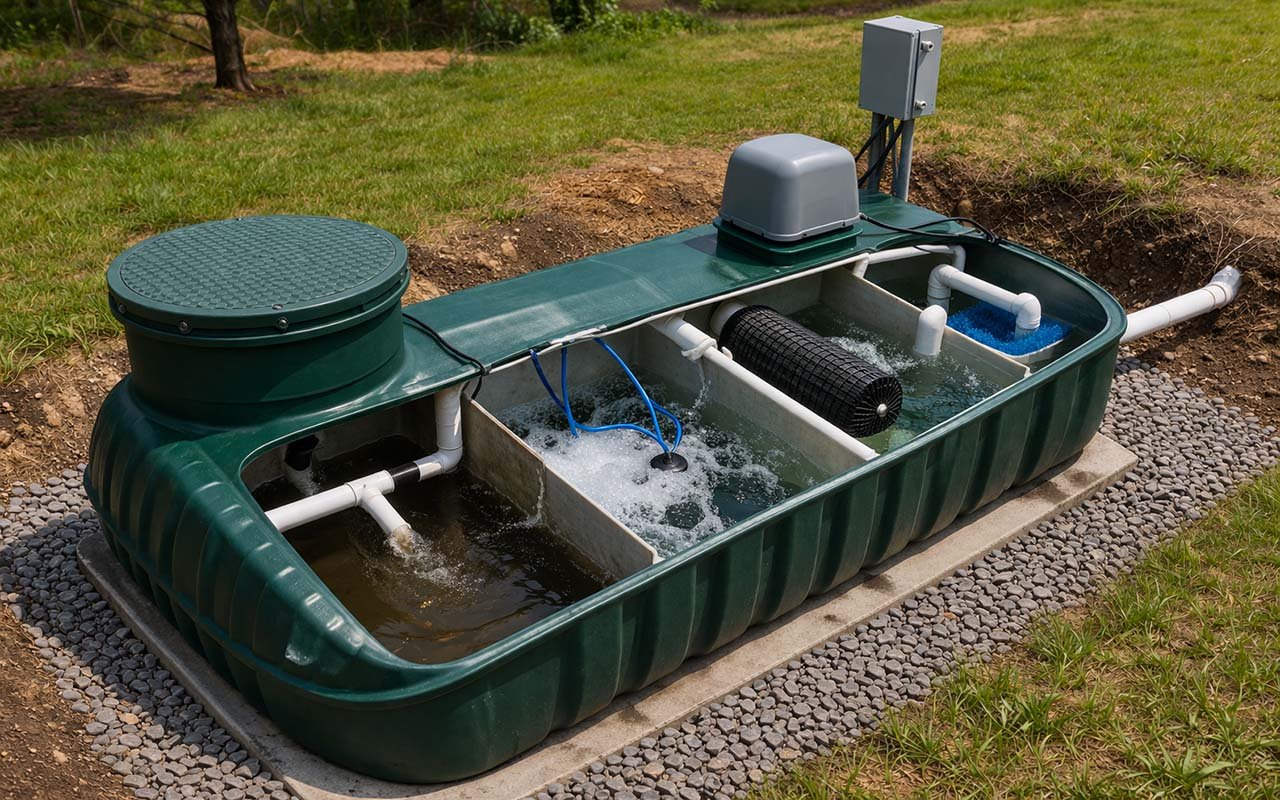
If you are buying a home or planning a septic installation, you may be asking what is an aerobic septic system and how it differs from a regular septic tank. The main difference is oxygen. An aerobic system adds air to wastewater so bacteria can help break down waste before the water moves to an approved disposal area.
The equipment that performs this treatment is called an aerobic treatment unit, or ATU. It is one part of the complete system. Other parts may handle solids, separate treated water, disinfect it, or move it to the disposal area.
For homeowners, the practical difference is ongoing care. An aerobic system usually relies on powered equipment and needs regular service. Understanding those responsibilities helps you choose a suitable system and look after one already on your property.
How Does an Aerobic Septic System Work?
An aerobic septic system treats water from toilets, sinks, showers, and other household drains. The layout varies by manufacturer, but the process generally involves several stages. Some designs combine these stages within one structure, while others use separate tanks.
Separating Larger Solids
In systems with a pretreatment tank, wastewater first enters a chamber where heavier solids settle and lighter materials rise. This helps prepare the wastewater for the next treatment stage. Solids still build up over time, so the system will need pumping when appropriate.
Adding Oxygen
An aerator supplies air to the treatment chamber. This supports bacteria that use oxygen to break down waste. The EPA’s guide to septic system types explains that ATUs use processes similar to those used in municipal wastewater plants, but on a much smaller scale.
Separating and Disinfecting Effluent
After treatment, the system separates solids from the liquid according to its design. The liquid, called effluent, may then pass through a disinfection stage. Some systems use this additional step to reduce pathogens before disposal. The method depends on the equipment and approved plan.
Disposing of Treated Wastewater
Treatment does not remove the need for a disposal area. Effluent must still go somewhere suitable. The approved system may use surface application, subsurface distribution, or another permitted method. An aerobic treatment unit and a disposal system have different jobs, even though they work together.
What Parts Does an Aerobic System Have?
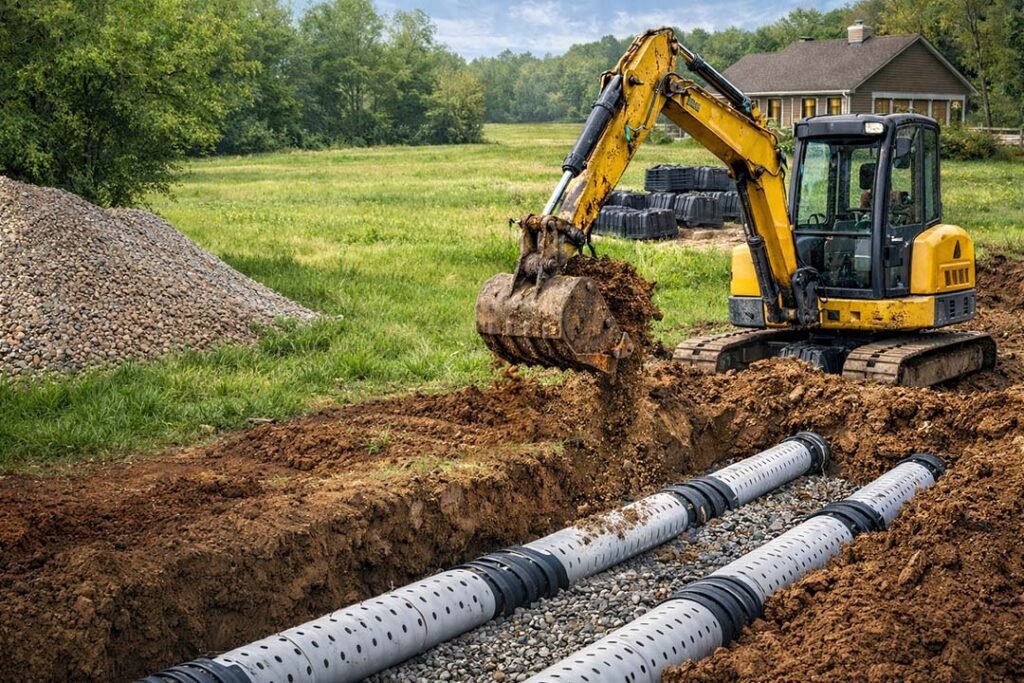
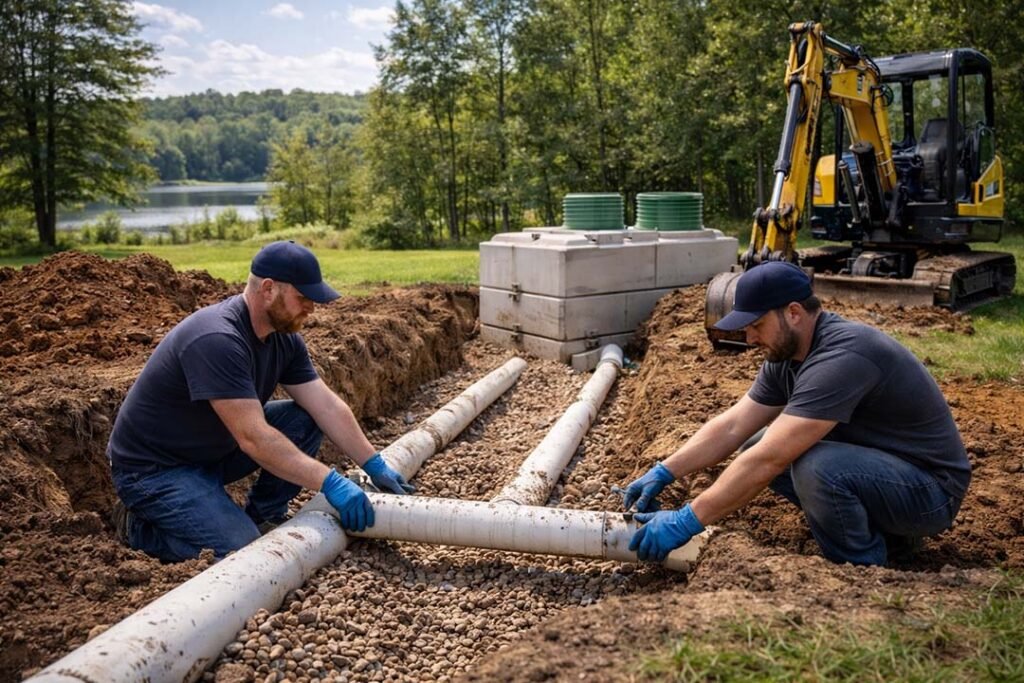
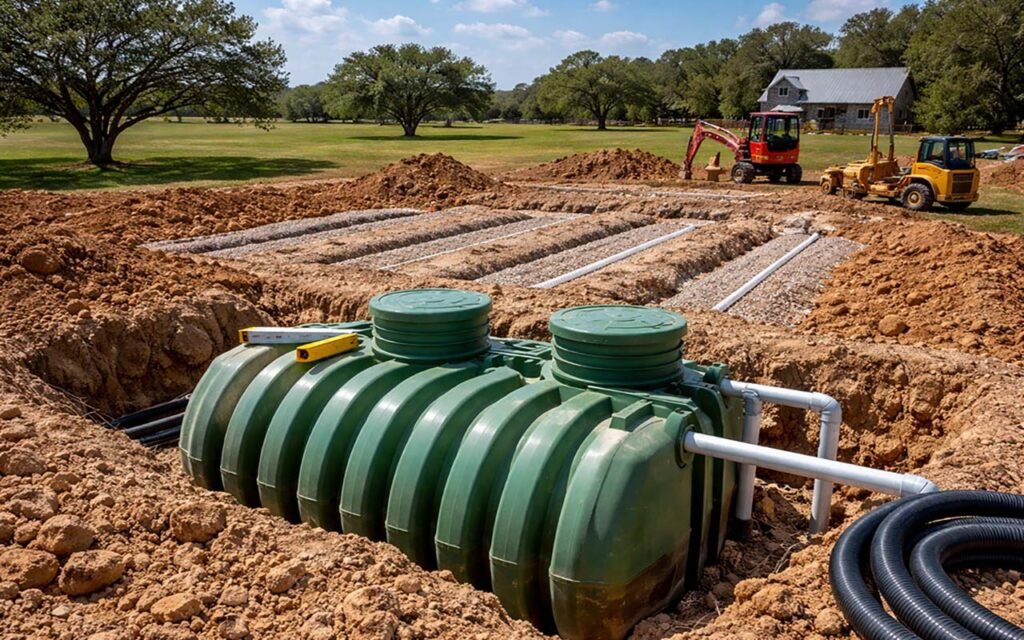
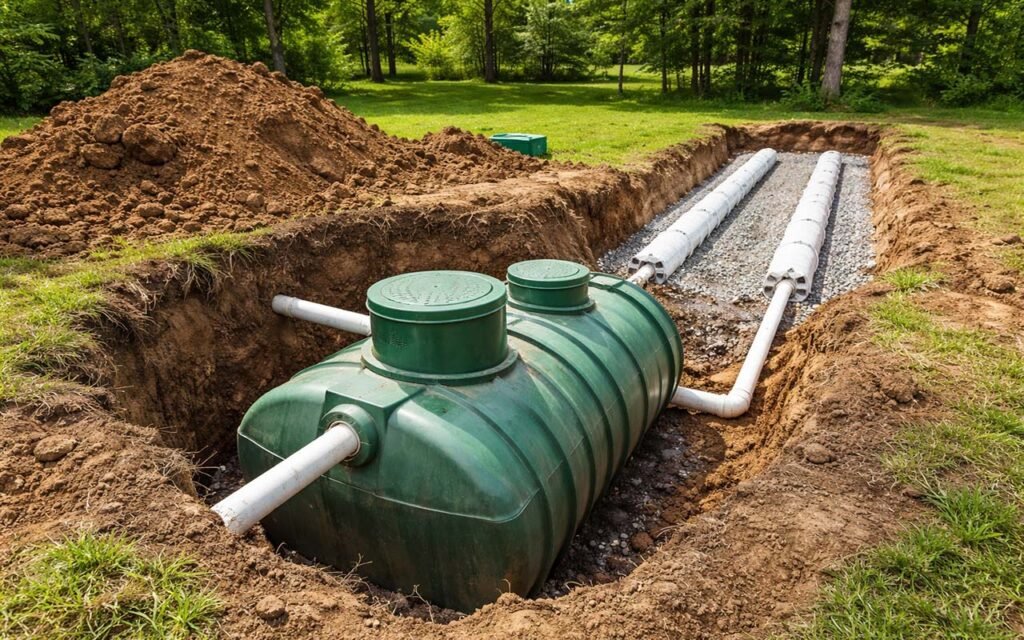
Your system may include a pretreatment tank, an aerobic chamber, a clarification area, and a pump tank. It may also have disinfection equipment and components that distribute treated effluent. Not every installation has the same layout or number of visible access lids.
The aerator supports the treatment process. Pumps move wastewater where needed, while floats and controls help manage operation. Alarms warn you about certain faults, such as high water levels or equipment problems, depending on the model.
Keep the manufacturer’s manual and a copy of the system plan. These help you identify equipment, understand service needs, and explain problems to a maintenance provider. Avoid using another homeowner’s instructions simply because their system looks similar from the lawn.
Aerobic Septic System vs Conventional Septic System
A conventional septic tank separates solids from wastewater and provides initial treatment. The liquid then moves to a drainfield, where soil plays an important role in further treatment and dispersal. A basic gravity system can operate without powered treatment equipment.
An aerobic system adds an active oxygen-based treatment stage. That means more equipment to monitor and service. However, some conventional systems also use pumps, so electricity alone does not tell you which type of system a property has.
Neither option is the right choice for every home. The useful comparison is how well each approved design suits the property, along with installation costs, routine maintenance, electricity use, and future repairs. A simpler system is only helpful if it can work properly on the site.
Why Might a Home Need Aerobic Treatment?
EPA identifies aerobic treatment as an option for certain properties with limited space, unsuitable soil, high groundwater, or nearby waters sensitive to nutrient pollution. These conditions can make additional treatment useful. They do not automatically make an aerobic system suitable for every affected property.
The disposal area still needs to fit the site. Adding treatment equipment does not mean wastewater can be released anywhere in the yard. A property evaluation and system design help determine how treatment and disposal can work together.
For Texas homeowners, TCEQ’s guidance on choosing a septic system explains treatment and disposal options. Aerobic systems are not automatically required statewide. Confirm what your property and local permitting authority require before planning work. Our guide to aerobic septic systems in Texas explores those local considerations.
Does an Aerobic Septic System Need Electricity?
Generally, yes. The aerator needs power, and many systems also have electrical pumps, controls, and alarms. These components support normal operation, so a power problem can affect treatment or wastewater movement.
During an outage, reduce unnecessary water use and follow the manufacturer’s instructions. Postpone large laundry loads and other high-water-use tasks when possible. There is no single number of hours that every system can manage without power because tank capacity, equipment, and household use differ.
Once power returns, watch for alarms or changes in operation. If a warning remains active, contact your maintenance provider. Silencing an alarm does not correct the fault that triggered it. Keep a record of the warning and when it appeared.
What Maintenance Does an Aerobic System Need?
An aerobic system needs ongoing attention to both treatment performance and equipment condition. Service may involve checking aeration, pumps, floats, alarms, sludge levels, disinfection components, and the disposal area. The exact work depends on your unit and its maintenance requirements.
TCEQ’s maintenance guidance notes that local authorities may set stricter homeowner maintenance requirements. Ask your permitting authority and maintenance provider what applies to your installation rather than assuming you can handle every task yourself.
Between service visits, use water sensibly and keep unsuitable waste out of drains. Wipes, grease, and food scraps add avoidable problems. Keep access points reachable and protect system components from vehicles and landscaping work. Report unusual odours, wet areas, or alarms rather than waiting for the next scheduled visit.
How Often Should an Aerobic System Be Pumped?
There is no universal pumping interval for every aerobic treatment unit. TCEQ says pumping depends on sludge depth and the manufacturer’s recommendations. That differs from applying a general conventional-tank schedule without checking the actual system.
A maintenance provider can assess solids buildup and advise when pumping is needed. Household size, water use, equipment capacity, and waste habits all provide useful context. Pumping removes accumulated material, but it does not fix an aerator fault or replace routine equipment checks.
Keep pumping records with inspection reports. Knowing which tanks were serviced and when helps avoid confusion during future maintenance. For general background, see our guide to how often to pump a septic tank.
Do Aerobic Systems Need Chlorine?
Some systems use chlorine for disinfection, while others have different approved arrangements. Check your equipment before adding any product. Chlorine is part of a specific treatment stage, not a general additive to pour into the tank.
TCEQ warns against swimming-pool chlorine tablets in wastewater disinfection equipment. Use the product specified for your approved system and follow its handling instructions. If you are unsure about the disinfectant, ask your maintenance provider before making a substitution.
What Should You Budget for Ownership?
Compare the complete installation, including treatment equipment, disposal components, site work, electrical connections, and applicable permitting. A tank-only price will not describe the full project. Our aerobic septic system cost in Texas guide covers pricing separately.
Also allow for electricity, service visits, pumping, and eventual component repairs. Tanks and mechanical equipment can have different service lives. Replacing an aerator or pump does not necessarily mean the whole installation needs replacement. Our guide to septic system lifespan explains that distinction.
Frequently Asked Questions
Is treated aerobic wastewater safe to drink?
No. An aerobic septic system treats household wastewater for approved disposal. It does not produce drinking water. Keep people and pets away from wastewater and follow the restrictions for the disposal area.
Does every aerobic system use sprinklers?
No. Surface application is one possible disposal method. Other approved designs use different arrangements. The treatment unit does not determine the disposal method by itself.
Can I turn off the aerator to save electricity?
Do not switch off treatment equipment as a routine cost-saving measure. Follow the operating instructions for your unit. If power use seems unusual, have the equipment assessed.
Final Thoughts
An aerobic septic system uses oxygen to support additional wastewater treatment. Its value depends on a suitable design and consistent care. Understand the equipment, keep service records, and respond to warnings early.
For septic installation, inspection, pumping, maintenance, or repair needs in Dillon Septic’s Central Texas service area, contact our team to discuss your property and the next practical step.