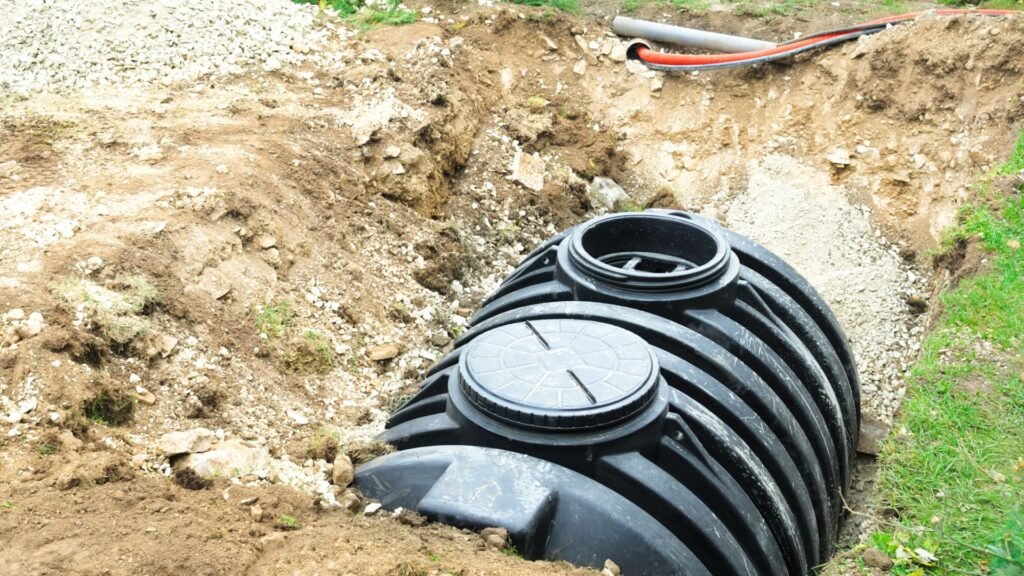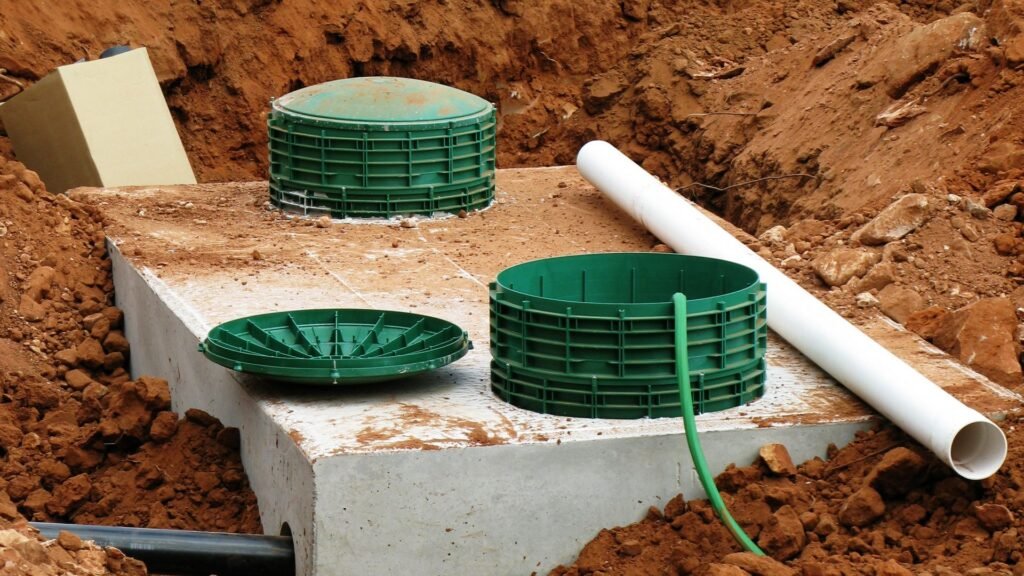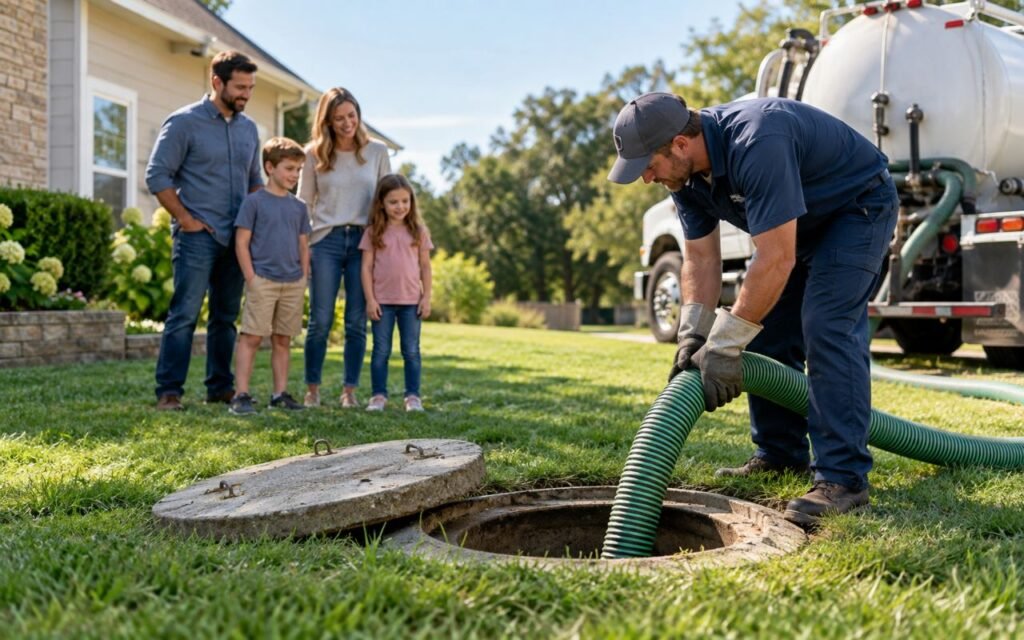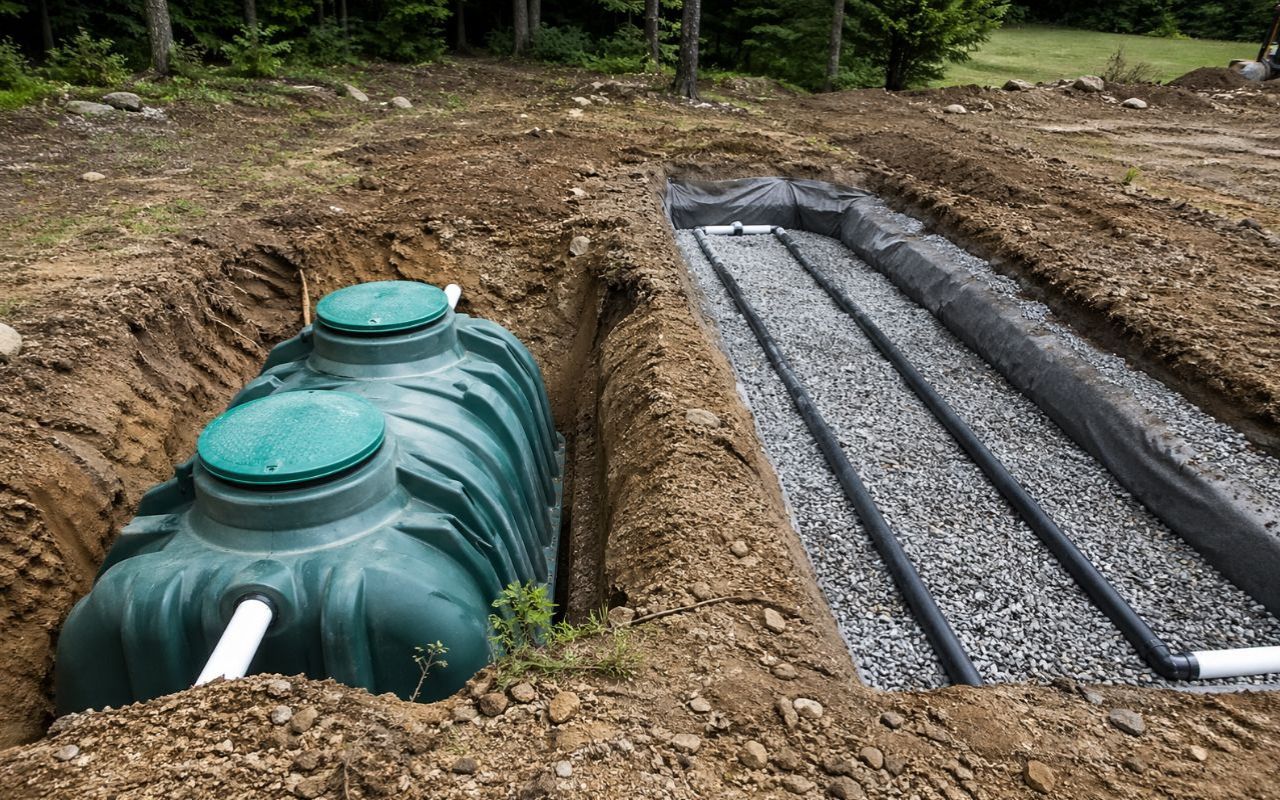
The cost to install a septic tank and leach field depends on the property, system capacity, soil and subsurface conditions, excavation, accessibility, permitting requirements, and the type of disposal system approved for the site.
For preliminary planning, a relatively straightforward conventional septic system in Central Texas may fall around $7,000 to $12,000. Many complete residential septic installations can fall around $10,000 to $20,000, while difficult or more complex projects can cost more.
These are planning ranges rather than guaranteed prices or statewide averages published by Texas regulators.
It is also important to understand that not every Texas property can use a traditional septic tank and conventional leach field. TCEQ requires a site evaluation before an OSSF is constructed or installed, and the results help determine which treatment and disposal systems are suitable for the property.
That is why a reliable installation estimate starts with the property rather than a generic online price.
How Much Does It Cost to Install a Septic Tank and Leach Field?
For a property suitable for a conventional septic system, approximately $7,000 to $12,000 can be used as an early planning range for the complete project.
The actual price can fall outside that range.
A property with straightforward excavation, suitable soil, good equipment access, and a conventional disposal design may have fewer installation challenges than a site with rock, restrictive soil conditions, limited space, difficult access, or a need for a different disposal method.
Across broader residential septic installations in Central Texas, approximately $10,000 to $20,000 is a useful preliminary planning range. Complex projects can reach approximately $26,000 or more.
The key word is planning.
These ranges should help homeowners establish a preliminary budget. They should not be treated as quotes for a particular property.
TCEQ itself advises homeowners planning an OSSF installation to consider the initial capital cost along with ongoing operation, maintenance, repairs, and possible mechanical-component replacement. TCEQ also recommends obtaining at least three estimates.
What Does a Septic Tank and Leach Field Installation Include?
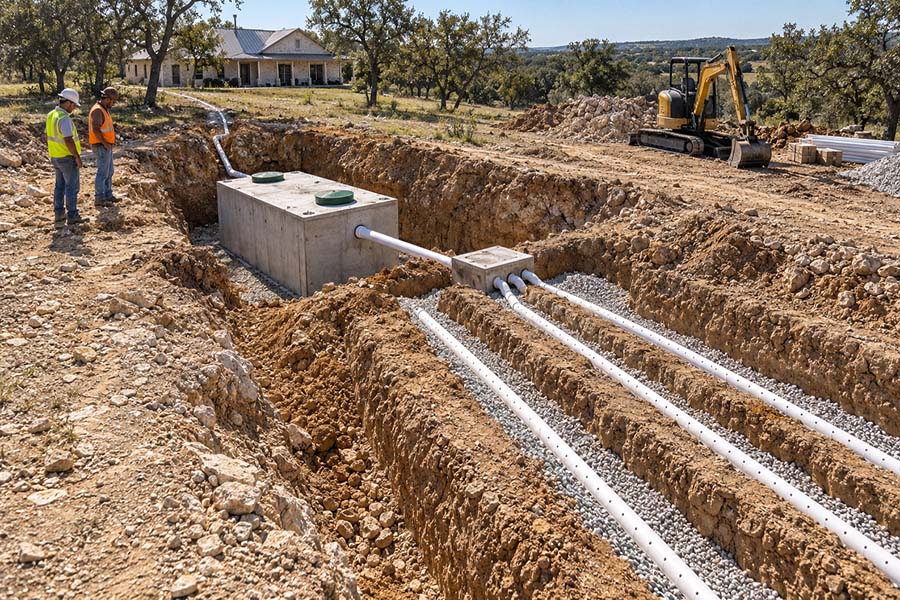
A conventional septic system does more than store wastewater in a tank.
Wastewater leaves the home and enters the septic tank. Inside the tank, solids settle and scum separates from the liquid wastewater.
The liquid effluent then moves from the tank toward the disposal area.
In a conventional absorptive drainfield, the effluent is distributed into the field, where the soil becomes part of the wastewater treatment and disposal process.
TCEQ identifies a septic tank with an absorptive drainfield as one of the treatment and disposal combinations that may be suitable when site conditions meet the applicable criteria.
A complete installation can therefore involve several parts of the project, including:
- site evaluation
- planning and design where required
- permit application
- septic tank
- inlet and outlet piping
- distribution components
- drainfield or other disposal components
- excavation
- installation labor
- required inspections
- final site work
The exact scope depends on the approved system.
This is why comparing a tank-only price with a complete septic-system quote can be misleading.
How Much Does a Leach Field Cost to Install?
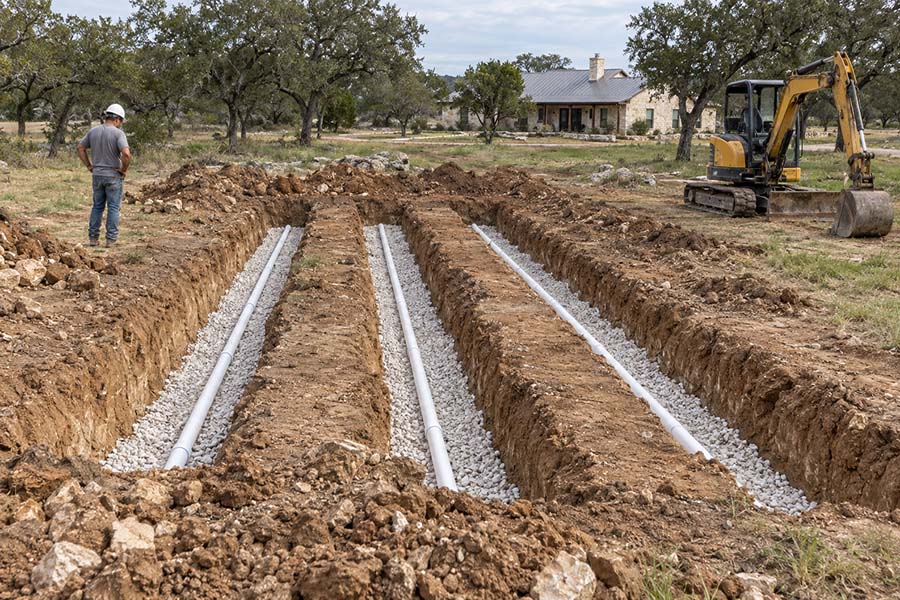
There is no single reliable leach field installation cost for every property.
The price depends heavily on the site and the disposal method.
A conventional absorptive drainfield on a suitable property can be very different from a project requiring pressurized distribution, drip irrigation, a mound, or another disposal method.
TCEQ’s suitability guidance considers factors such as soil texture, fractured rock, groundwater, restrictive horizons, and the treatment method when determining whether a particular disposal system is suitable.
That makes the site evaluation especially important.
Instead of budgeting for a leach field as an isolated product, homeowners should determine:
- what disposal method is appropriate
- how large the disposal area needs to be
- what site conditions affect installation
- what excavation is required
- what distribution components are needed
- what permitting authority requirements apply
Those factors provide a better foundation for estimating cost than a generic per-foot or per-bedroom price.
Is a Leach Field the Same as a Drain Field?
In everyday homeowner terminology, leach field, drain field, drainfield, and septic field are often used to describe the soil-based disposal portion of a septic system.
However, not every septic system uses the same disposal method.
TCEQ uses more specific terminology when describing Texas OSSF options.
For example, its system-selection guidance identifies absorptive drainfields, leaching chambers, gravel-less pipe, pumped effluent drainfields, low-pressure dosing, drip irrigation, mounds, surface application, evapotranspirative systems, and other disposal approaches.
So while “leach field” is a useful general homeowner term, the actual disposal system installed on a Texas property depends on the approved design.
What Affects Leach Field Installation Cost?
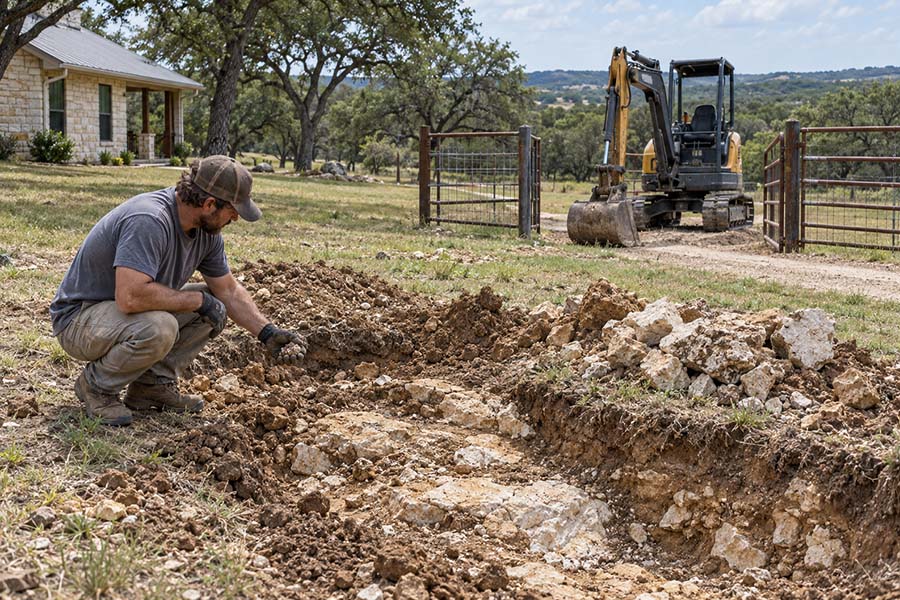
The disposal area is one of the most site-dependent parts of a septic installation.
Several factors can affect the work required.
Soil Conditions
Soil is not simply the material surrounding a drainfield. It is part of the treatment and disposal process.
TCEQ requires site conditions to be evaluated before selecting an OSSF, and soil texture is one of the factors used to determine system suitability.
This means a conventional absorptive drainfield cannot automatically be installed on every property.
Rock
Rock can affect both system suitability and physical excavation.
TCEQ specifically includes fractured rock in its suitability criteria for OSSF treatment and disposal combinations.
On the construction side, difficult excavation can also increase the equipment and labor required.
Groundwater and Restrictive Horizons
TCEQ’s suitability guidance establishes groundwater and restrictive-horizon considerations for different disposal methods.
These conditions can influence which disposal options are appropriate.
Available Space
The property needs sufficient suitable area for the proposed disposal system.
Lot layout, structures, property boundaries, wells, utilities, slopes, and other site features can influence where components can be installed.
System Capacity
The disposal area must be appropriate for the wastewater load and approved system design.
A larger wastewater load can change system sizing and disposal requirements.
Property Access
Excavation equipment needs access to the installation area.
Narrow gates, fences, buildings, landscaping, steep terrain, and other obstacles can increase project complexity.
Does Every Septic System Have a Traditional Leach Field?
No.
A traditional absorptive drainfield is only one disposal option.
Texas OSSF systems combine a treatment method with an appropriate disposal method. recognizes numerous configurations rather than requiring every property to use a septic tank connected to a conventional leach field.
Depending on site conditions and the approved design, disposal options can include conventional absorptive drainfields, leaching chambers, pumped effluent drainfields, low-pressure dosing, drip irrigation, mound systems, and other methods.
Some systems also use secondary treatment rather than relying solely on a conventional septic tank.
This distinction matters when researching cost.
A homeowner searching for the cost of a new septic tank and leach field may discover after the site evaluation that a different treatment or disposal configuration is appropriate for the property.
For a broader explanation, read our guide to the types of septic systems in Texas.
How Site Evaluation Affects Tank and Leach Field Cost
The site evaluation should happen before the final system is selected.
TCEQ states that before an OSSF can be constructed or installed, the site must first be evaluated by a licensed site evaluator or licensed professional engineer.
For the permitting process, TCEQ explains that the preconstruction evaluation includes a survey of the lot, soil analysis in the proposed disposal area, and identification of other criteria necessary to determine system suitability.
The information obtained can affect both system selection and cost.
For example, the evaluation may help determine whether the property is suitable for a conventional septic tank and absorptive drainfield or whether another treatment or disposal approach is appropriate.
This is one reason an exact installation quote made before understanding the property can be unreliable.
The installer needs to know what is actually being installed.
Septic Tank Size and Installation Cost
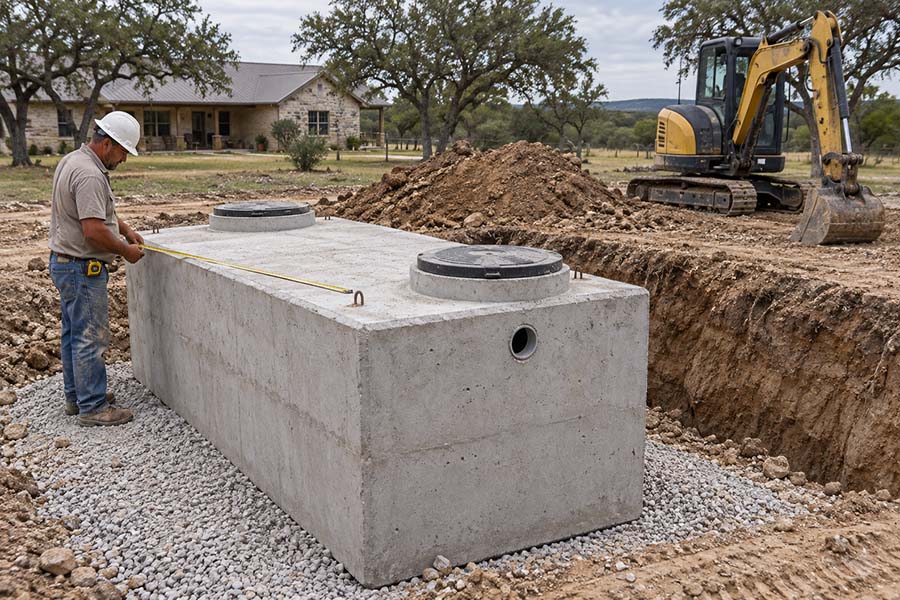
Tank capacity can affect the project, but homeowners should be cautious about simple online charts that assign a universal tank size and price based only on the number of bedrooms.
Texas OSSF sizing and planning need to follow applicable requirements and the approved design.
A tank is also only one component of the overall system.
A larger tank can affect material, excavation, handling, and installation requirements, but increasing tank size does not automatically solve limitations involving the disposal area or site conditions.
When comparing estimates, verify what tank is included and why that capacity and configuration are appropriate for the proposed system.
For more information about tank options, see our guide to the types of septic tanks.
Do You Need a Permit to Install a Septic Tank and Leach Field in Texas?
Generally, yes.
TCEQ states that a permit and approved plan are required to construct, alter, repair, extend, or operate an OSSF. Texas does provide limited exemptions, including circumstances that can qualify under the state’s 10-acre rule, but those exemptions have specific conditions.
Homeowners should therefore check with the applicable permitting authority before beginning construction.
TCEQ also notes that local permitting programs can have requirements more stringent than state minimums.
Permit fees and procedures can consequently vary by jurisdiction.
For a detailed explanation, read our Texas septic system permit guide.
Conventional Drainfield vs Alternative Disposal Methods
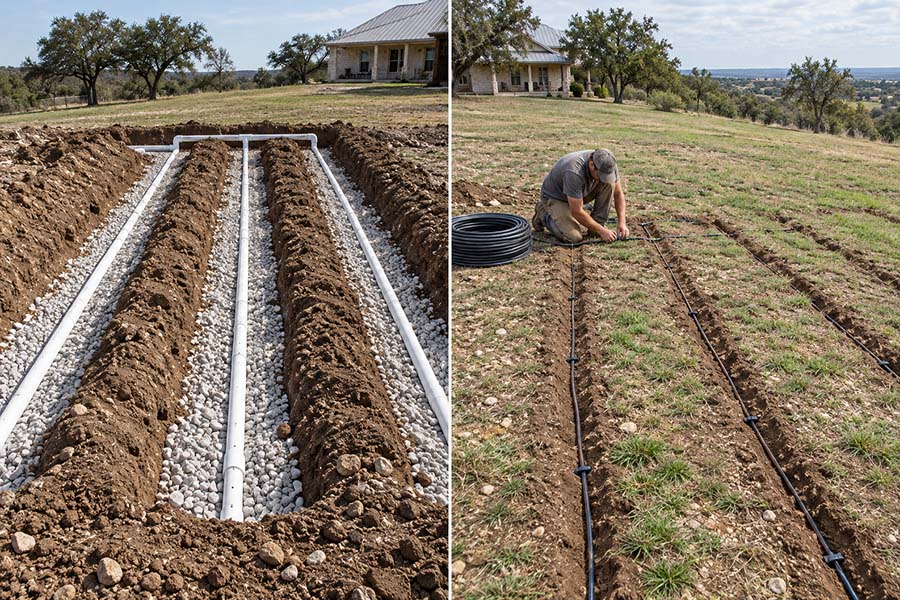
A conventional absorptive drainfield can be a practical disposal method when the site is suitable.
But it is not the correct solution for every property.
TCEQ’s suitability table demonstrates why.
Different disposal methods have different suitability criteria involving soil texture, fractured rock, groundwater, restrictive horizons, and treatment level.
If a conventional absorptive drainfield is unsuitable, another approved disposal method may be considered.
That can change installation cost because different systems can require additional equipment, design, pumps, controls, distribution components, or excavation.
This is also why searches for drip distribution septic system cost or mound septic system cost should not be answered by simply adding a fixed surcharge to a conventional leach field price.
They are different system configurations with different requirements.
New Leach Field Installation vs Leach Field Replacement
Installing a leach field as part of a new septic system and replacing an existing failed drainfield are different projects.
This page focuses primarily on a new septic tank and disposal field installation.
A replacement starts with an existing OSSF.
The contractor may need to determine why the current field is failing, whether other system components can remain, where a replacement disposal area can be located, and what current requirements apply.
That creates a different search intent and potentially a different project scope.
If you already have a septic system and the disposal area may be failing, see our guide to septic drain field replacement cost.
Tank and Leach Field Cost vs Complete Septic Installation Cost
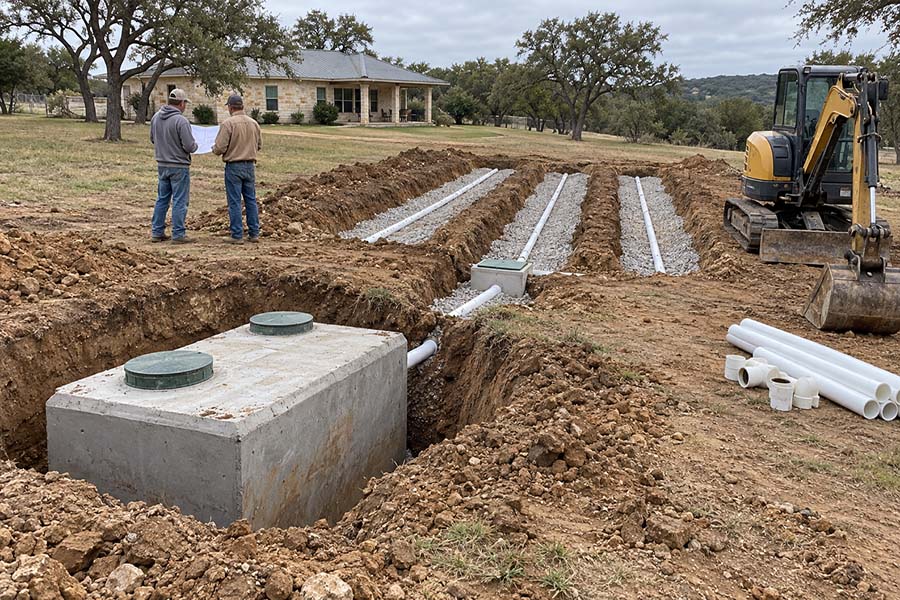
A septic tank and conventional leach field can represent major components of a septic installation, but not every project consists only of those two items.
A complete installation may also involve:
- site evaluation
- planning and design
- permitting
- distribution equipment
- pumps where applicable
- electrical equipment where applicable
- alternative treatment components
- specialized disposal components
- inspection
- additional site work
This distinction is important when comparing prices.
One estimate may describe the tank and disposal area, while another includes a broader turnkey installation.
Make sure you know what is included before comparing the final numbers.
For a broader installation-cost discussion, read our guide to the average cost to install a septic system in Texas.
Can You Install Your Own Septic Tank and Leach Field in Texas?
Texas does allow owner installation in certain circumstances, but it is not an unrestricted DIY option.
TCEQ says this depends on the local permitting authority. Where allowed, the OSSF must serve a single-family dwelling owned by the installer, the installer must also own the property, the property cannot be developed for sale or lease, and all applicable permitting, construction, and maintenance requirements must be met.
There is another important limitation.
If another person assists with installation work, such as excavation or trenching, TCEQ says that person generally must hold the appropriate installer license, with specific exceptions such as certain electrical work or tank delivery and placement.
Some systems can also have manufacturer-specific installation requirements.
Homeowners considering owner installation should therefore contact the applicable permitting authority before doing any work.
Planning a Septic Tank and Leach Field Installation in Central Texas
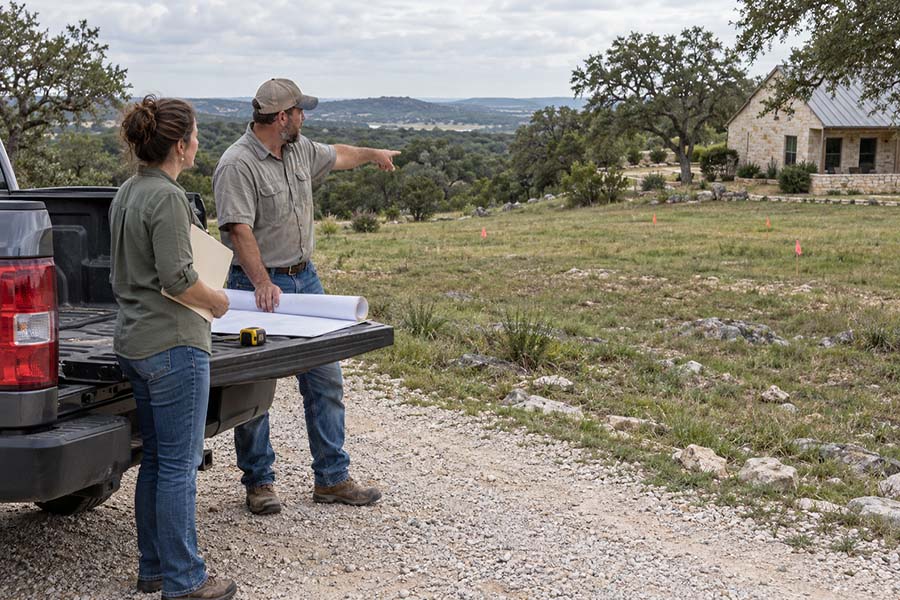
If you are budgeting for a new septic system, start with the property rather than choosing a tank and leach field based solely on price.
For a property suitable for a conventional system, approximately $7,000 to $12,000 can be used as an early planning range.
Across complete residential septic projects in Central Texas, approximately $10,000 to $20,000 is a useful broader planning range, while more complicated installations can reach $26,000 or more.
The final cost depends on what the site actually requires.
Before comparing estimates, determine:
- the results of the site evaluation
- the appropriate treatment method
- the appropriate disposal method
- required system capacity
- permitting requirements
- excavation conditions
- property access
- what each contractor’s estimate includes
Dillon Septic provides septic installation services within our Central Texas service area.
Frequently Asked Questions
How much does it cost to install a septic tank and leach field?
For preliminary planning, a relatively straightforward conventional septic system in Central Texas may fall around $7,000 to $12,000. Many complete residential septic projects can fall around $10,000 to $20,000, while complicated installations can cost more. The actual price depends on the property, approved system, excavation, access, permitting, and project scope.
Is a leach field included in septic system installation cost?
Usually, a complete conventional septic-system installation includes an approved disposal area as part of the project. However, contractor estimates vary. Confirm whether the quoted price includes the tank, complete disposal system, excavation, permitting-related work, inspections, and other required components.
Is a drain field the same as a leach field?
The terms leach field, drain field, drainfield, and septic field are commonly used for the soil-based disposal portion of a septic system. Texas OSSFs can use several different disposal methods, so not every system uses a traditional absorptive drainfield.
Does every septic system have a leach field?
No. Texas recognizes multiple OSSF disposal methods. Depending on the site evaluation and treatment system, the approved design may use an absorptive drainfield, leaching chambers, pumped effluent drainfield, drip irrigation, low-pressure dosing, mound, surface application, or another suitable method.
What affects the cost of a new leach field?
Important factors include the approved disposal method, required disposal area, soil texture, rock, groundwater or restrictive conditions, slope, excavation, system capacity, available space, and property access.
Final Thoughts
The cost to install a septic tank and leach field depends on the entire project, including soil conditions, system design, permits, excavation, and labor. For preliminary budgeting, a straightforward conventional installation in Central Texas may cost around $7,000 to $12,000. Many complete residential septic projects fall between $10,000 and $20,000, while complicated installations can reach $26,000 or more.
These figures are starting points, not a quote for your property. A site evaluation helps determine which system is suitable and what the installation will require. Before choosing a contractor, request a written estimate that clearly explains what is included. Dillon Septic can help you understand your options and plan an installation that fits your property, wastewater needs, and budget with greater confidence.