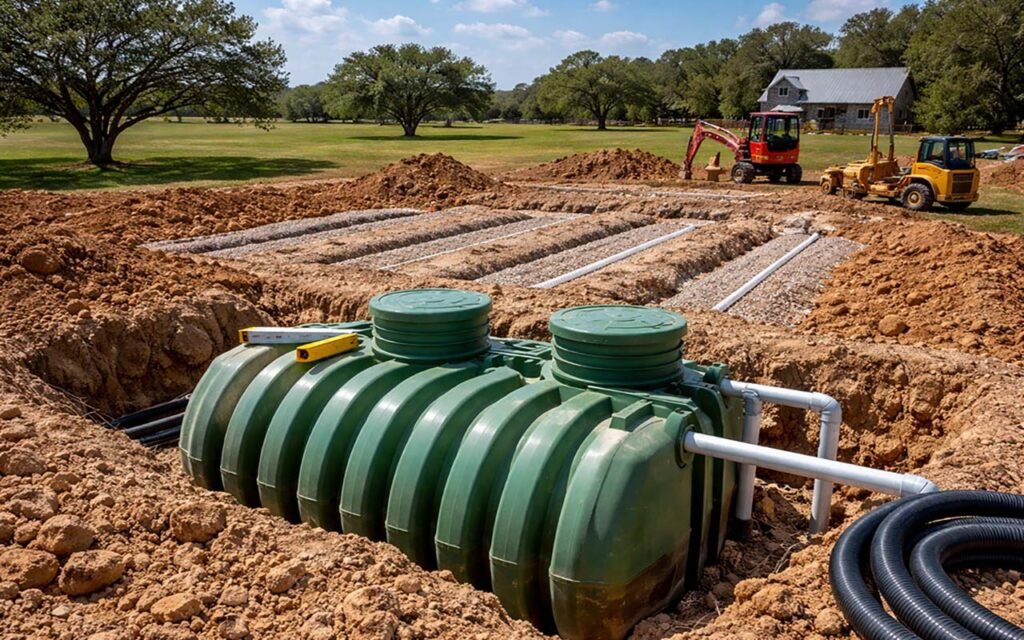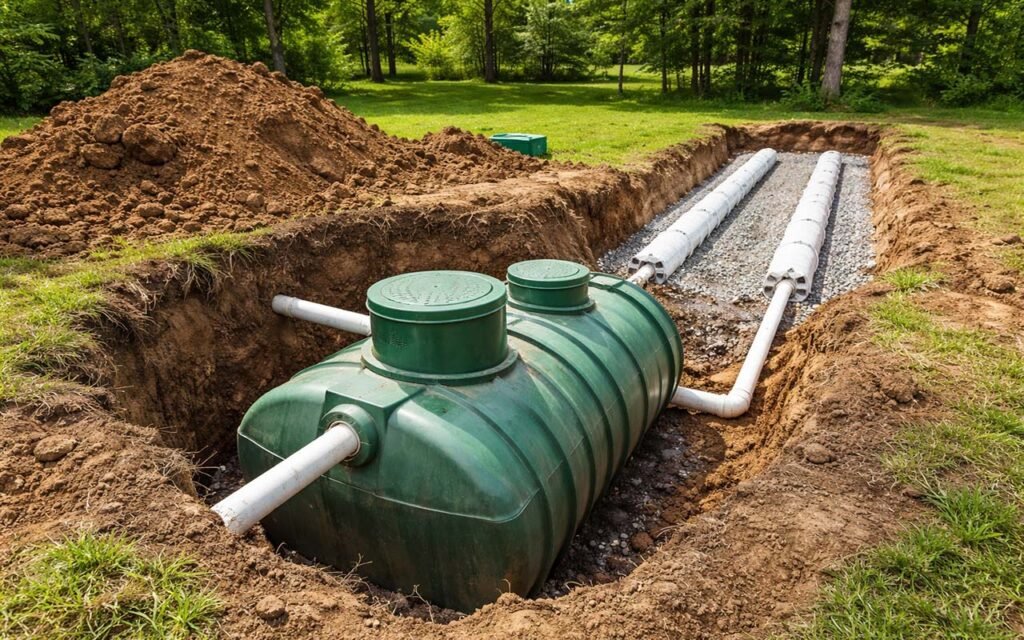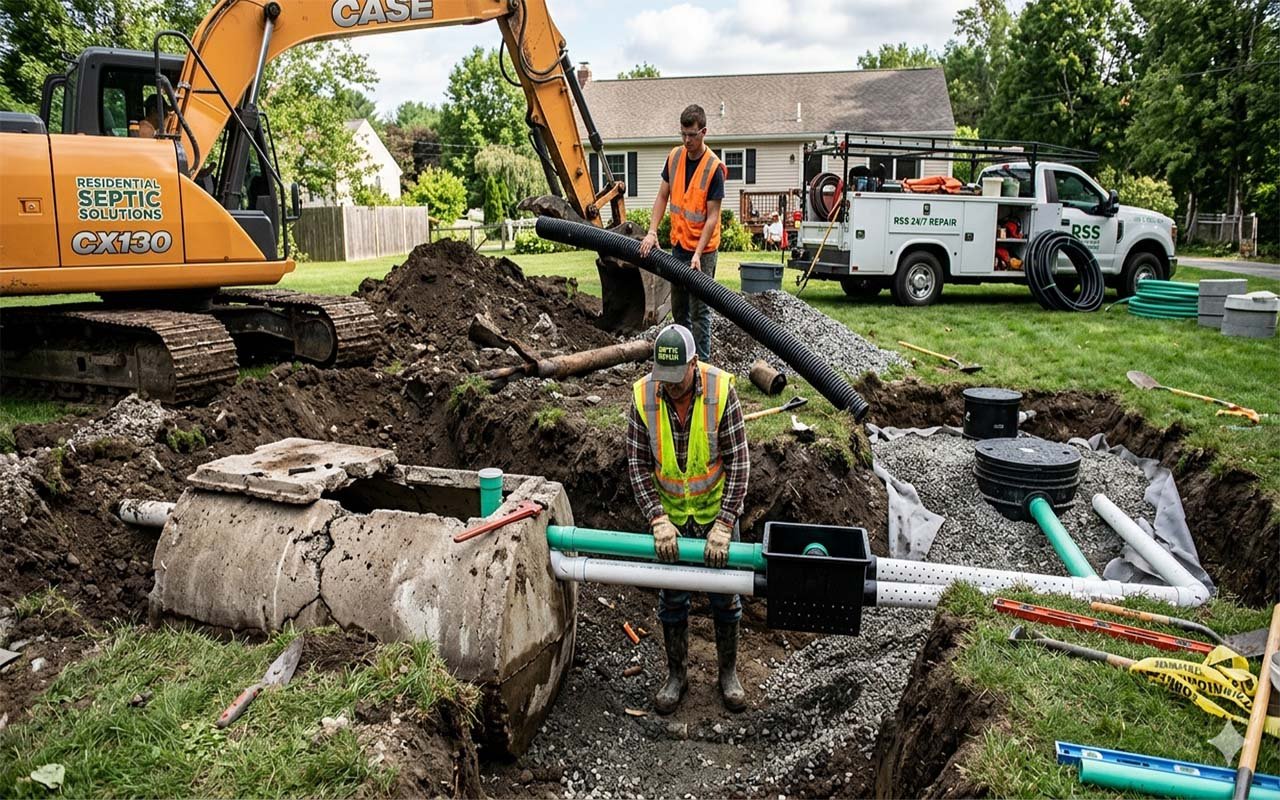
Septic system repair cost depends on what has failed, the type of septic system, how difficult the damaged component is to access, whether excavation is required, the parts and labor involved, and whether the work requires permitting or additional inspection.
There is no reliable single price that applies to every septic repair.
A damaged lid, line, riser, pump, alarm, or other individual component can involve a very different scope of work from a damaged septic tank or failing drainfield. Before estimating the repair, the first step should be identifying the actual problem.
This is particularly important because common symptoms such as slow drains, sewage odors, gurgling plumbing, backups, or wet areas near a septic system do not identify the failed component by themselves. EPA recommends evaluating the system to determine the cause of a malfunction rather than assuming one particular repair will solve it.
For homeowners in Central Texas, understanding what needs repair and why it failed provides a much better foundation for estimating cost than relying on a generic online repair-price table.
How Much Does Septic System Repair Cost?
Septic system repair costs can vary significantly depending on the problem and the work required to correct it. A minor component repair may be relatively straightforward, while problems involving the septic tank, drainfield, or other major components can require excavation and more extensive work.
The final cost can depend on the type of septic system, the component that has failed, the extent of the damage, and how easily the system can be accessed. Replacement parts, equipment, excavation, electrical work, septic tank pumping, permit requirements, inspections, and site restoration can also affect the total cost.
For example, repairing or replacing an accessible lid or riser is very different from repairing a damaged tank or addressing a failed disposal area. Because every septic system and repair situation is different, the most accurate estimate comes after the system has been properly evaluated and the required scope of work is clearly understood.
What Affects Septic System Repair Cost?
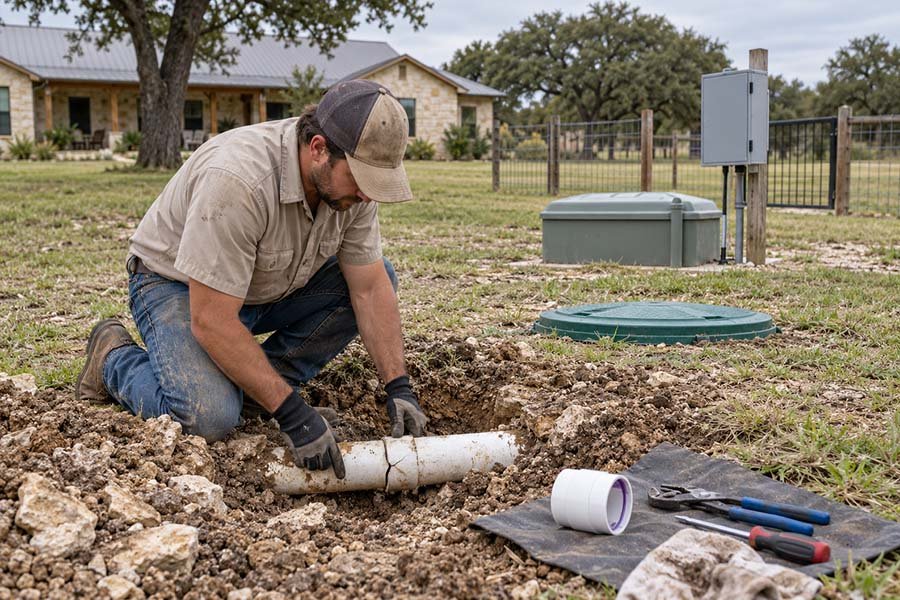
The type of failure is usually the biggest factor, but several other conditions can affect the final repair price.
Type of Problem
A septic system contains multiple components.
Depending on the system, these can include a tank, inlet and outlet components, solid lines, distribution equipment, pumps, alarms, aerators, controls, disinfection equipment, drip components, and a disposal area.
Problems with each component require different repairs.
Septic System Type
Conventional and aerobic systems do not have identical components.
A conventional gravity system may have fewer mechanical parts. An aerobic treatment system can include pumps, an aerator, controls, alarms, disinfection equipment, and other mechanical components.
The system type therefore influences both diagnosis and repair.
Accessibility
A component that can be accessed easily may require less excavation than one buried beneath significant soil cover or located in a difficult working area.
Fences, structures, landscaping, slopes, rock, and limited equipment access can also affect the work.
Excavation
Some repairs can be performed through existing access points.
Others require excavation to reach lines, tanks, distribution components, or other buried parts of the OSSF.
The amount and difficulty of excavation can influence labor and equipment requirements.
Replacement Components
Repair cost can also depend on whether an existing component can be corrected or needs replacement.
A damaged lid, pump, alarm, riser, line, or other component can require different materials and labor.
Electrical Work
Aerobic and other mechanically assisted systems can contain electrical components.
A malfunction involving pumps, controls, aerators, alarms, or wiring can therefore involve a different repair process from a problem with a conventional gravity system.
Permitting
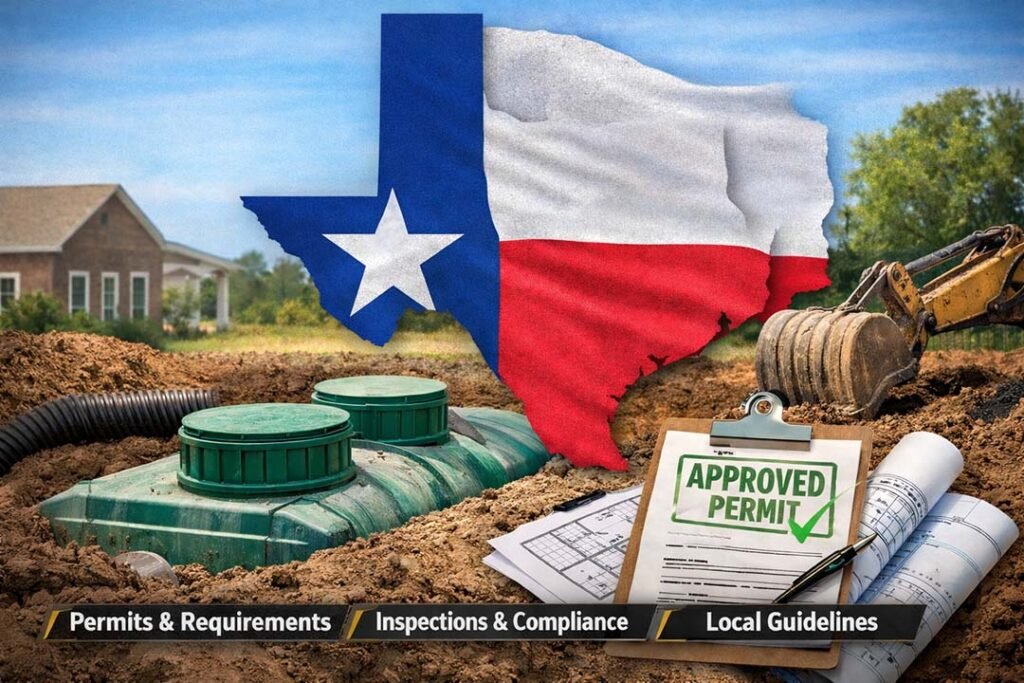
Texas generally requires a permit and approved plan to repair an OSSF, although certain qualifying emergency repairs can be performed without a permit and then reported to the permitting authority. Local requirements can also be more stringent than state minimums.
The type of repair therefore matters when determining the administrative requirements and overall project scope.
Common Septic System Repairs
Not every septic problem means the complete system needs replacement.
Many problems involve individual components.
Septic Tank Lids and Risers
A damaged, cracked, unsecured, or deteriorated lid can require replacement.
Risers and riser caps can also become damaged.
Texas specifically identifies replacing tank lids and repairing risers and riser caps among examples of emergency repairs that may be performed without a permit when the work meets the applicable emergency-repair requirements. Written notification to the permitting authority is required within 72 hours after the repair begins.
If the problem specifically involves the lid, read our guide to septic tank lid replacement.
Inlet and Outlet Components
Wastewater enters and leaves the tank through inlet and outlet components.
Damage to these components can interfere with the movement of wastewater through the system.
Replacing inlet and outlet devices is also included among TCEQ’s examples of qualifying emergency repairs.
Septic Lines
Buried solid lines can develop damage, separation, blockage, or other problems.
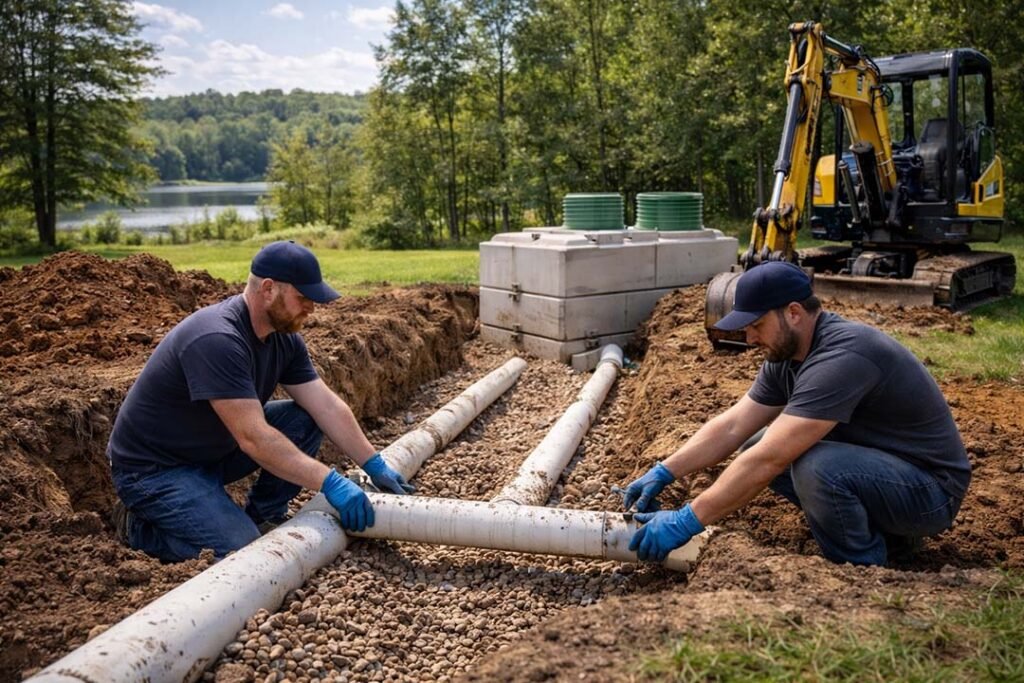
The appropriate repair depends on the condition and location of the affected line.
TCEQ includes repair of solid lines among its examples of emergency repairs.
For line-specific service information, see our septic line repair services.
Pumps
Some septic systems rely on pumps to move wastewater or treated effluent between components.
Pump problems can result from the pump itself, electrical supply, controls, floats, or other related components.
Diagnosis should therefore come before automatically replacing the pump.
Alarms and Controls
An alarm can indicate a problem that needs attention, but the alarm itself is not always the underlying failure.
For example, a high-water alarm may be associated with a pump problem, electrical issue, excessive water entering the system, or another condition.
The cause should be identified before deciding what needs repair.
Aerators
Aerobic treatment units rely on mechanical equipment to support the treatment process.
If an aerator stops operating properly, the problem needs to be evaluated and corrected rather than ignored.
Drip Components
Some Texas OSSFs use drip irrigation for disposal.
TCEQ specifically identifies repair of damaged drip irrigation tubing as an example of an emergency repair under its rules.
Septic Tank Repair Cost

Septic tank repair cost depends on what is wrong with the tank and whether it can be repaired in place.
A tank problem can involve access components, inlet or outlet devices, structural damage, leaks, or other conditions.
TCEQ makes an important distinction between repairing a tank and replacing one.
If a tank can be repaired without removing it, TCEQ says the work can be considered an emergency repair. A permit is not required for qualifying emergency repair, but the work must be reported to the permitting authority within 72 hours after repairs begin.
Tank replacement is different.
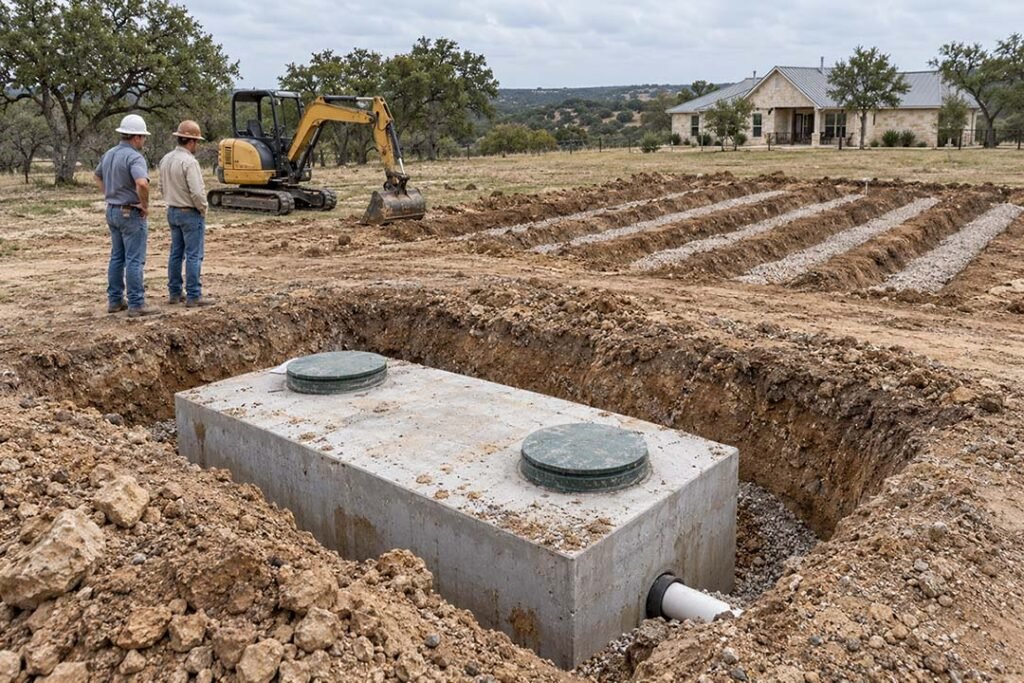
TCEQ states that when an existing OSSF requires the tank to be replaced, a permit is required.
This distinction can significantly change the scope of the project.
If the tank itself needs replacement rather than repair, see our septic tank replacement cost guide.
Septic Line Repair Cost
A septic line problem can occur between the house and tank or elsewhere within the system’s solid piping.
The cost depends on the location of the damage, accessibility, excavation requirements, pipe condition, and how much of the line needs work.
A short accessible repair and a deeply buried line requiring substantial excavation should not be expected to cost the same.
The first step is locating the affected area and determining whether the problem involves blockage, physical damage, separation, or another condition.
Texas rules list repair of solid lines as one type of emergency repair, subject to the applicable requirements and notification rules.
If you suspect a line problem, learn more about Dillon Septic’s septic line repair service.
Aerobic Septic System Repair Cost
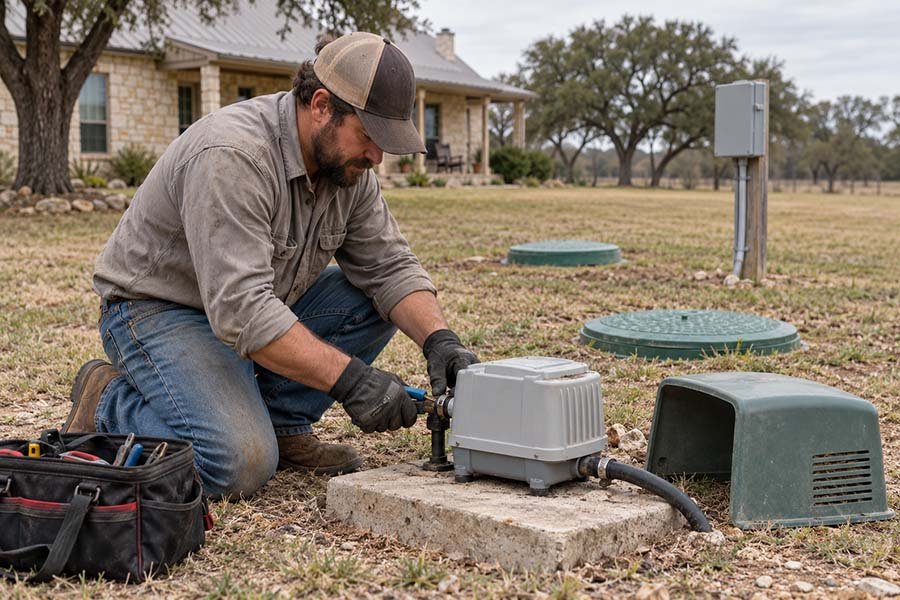
An aerobic septic system can have more mechanical and electrical components than a basic conventional system.
Depending on the configuration, an aerobic treatment unit can involve an aerator, pumps, floats, alarms, controls, disinfection equipment, and disposal components.
That means an aerobic septic system repair cost depends heavily on which component is malfunctioning.
An alarm, for example, does not automatically mean the entire treatment unit needs replacement.
The alarm is a warning that the system needs attention.
Likewise, a pump problem and an aerator problem are different repairs.
Texas also has maintenance and inspection requirements for systems using secondary treatment, nonstandard treatment, drip irrigation, or surface application. TCEQ notes that homeowners may maintain qualifying systems themselves after the initial two-year period where allowed, while some local permitting authorities impose more stringent requirements.
The repair estimate should therefore identify the failed component rather than treating every aerobic-system problem as the same repair.
Septic Drain Field Repair Cost
A drainfield problem needs careful diagnosis.
Standing wastewater, unusually wet or spongy soil, sewage odors, slow drains, or backups can indicate a septic malfunction, but these symptoms do not establish that the disposal field itself needs replacement.
EPA identifies standing water, damp spots, sewage odors, slow drains, gurgling plumbing, backups, and unusually green or spongy grass around septic components as common signs of system malfunction.
The underlying cause can vary.
TCEQ recommends investigating why an OSSF is failing before determining the corrective action. Potential causes include hydraulic overloading, site or soil conditions, organic overloading, poor maintenance, and age.
If the disposal area actually needs repair or replacement, the scope changes substantially.
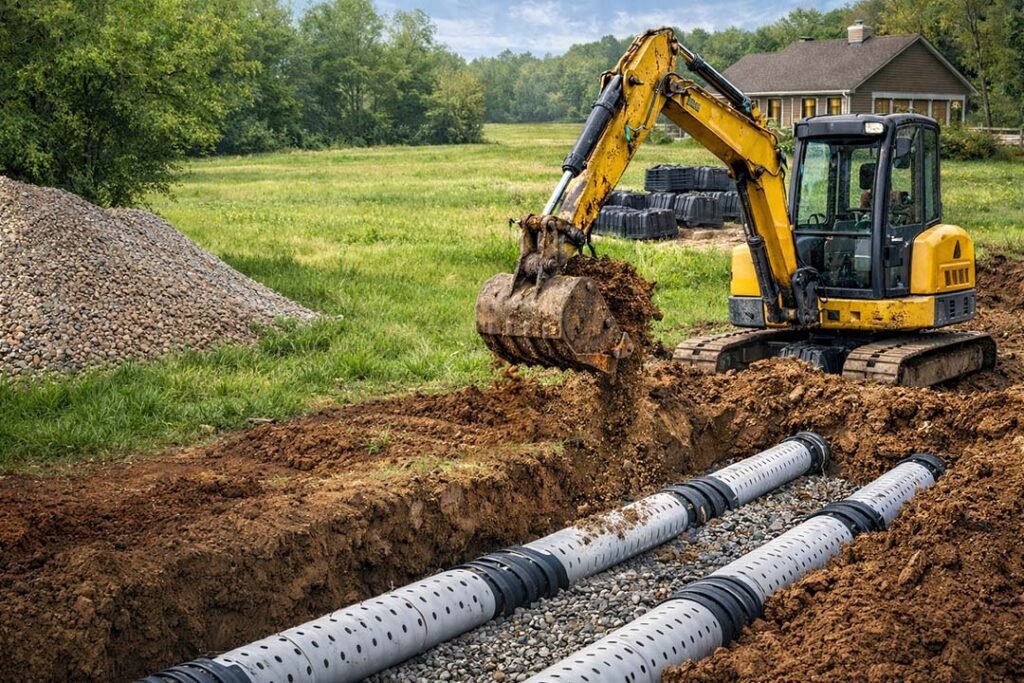
TCEQ states that repair or replacement of an existing drainfield requires a permit, and work on the disposal area must bring the system into current standards.
For a project involving replacement of the disposal area, read our septic drain field replacement cost guide.
What Causes a Septic System to Fail?
Understanding the cause of failure is important because fixing a symptom without correcting the underlying problem can leave the system malfunctioning.
TCEQ identifies several potential causes.
Hydraulic Overloading
A septic system is designed to handle a certain wastewater load.
Excessive water entering the system can overwhelm its ability to treat and dispose of wastewater properly.
TCEQ recommends checking actual water use against the design capacity when investigating hydraulic overload.
Site or Soil Problems
The treatment and disposal system must be appropriate for the property.
EPA notes that inadequate soils, excessive slopes, and high groundwater can contribute to hydraulic failures in soil-based septic systems.
TCEQ likewise recommends investigating site and soil conditions when diagnosing OSSF failure.
Organic Overloading
TCEQ identifies excessive organic material entering the system as another potential cause of failure.
Large amounts of food, grease, or similar material can increase the organic load entering the septic tank and disposal system.
Poor Maintenance
Septic systems require ongoing maintenance.
For conventional systems, accumulated sludge and scum need to be removed from the tank before excessive solids move toward the disposal area.
TCEQ recommends septic tank pumping every three to five years as a general guideline. Actual needs vary by household use, tank capacity, and solids accumulation.
Age
System components do not last forever.
TCEQ includes age among the factors to investigate when an OSSF is failing.
Age by itself, however, does not tell you which component has failed or whether complete replacement is necessary.
The system still needs to be evaluated.
Signs Your Septic System May Need Repair
Septic problems often provide warning signs before they become more serious. Recognizing these symptoms early can help you determine when your system needs professional attention.
Common signs of a septic system problem include:
- Slow drains throughout the home
- Gurgling sounds from plumbing fixtures
- Sewage backing up into sinks, tubs, or toilets
- Persistent sewage odors indoors or outdoors
- Standing water near the septic tank or other components
- Wet or unusually spongy soil over the drainfield
- Unusually green or fast-growing grass over the septic area
- A septic system alarm
- Visible damage to lids, risers, or accessible components
These warning signs can indicate a problem, but they do not necessarily identify the cause. For example, slow drains do not automatically mean the septic tank needs pumping. An alarm does not always mean the pump needs replacement, and wet soil does not necessarily mean the entire drainfield has failed.
A proper evaluation helps determine what is causing the symptoms before repairs are recommended. If the source of the problem is unclear, a septic inspection can help assess the system and identify areas that may need attention.
Septic Repair vs Septic Tank Pumping
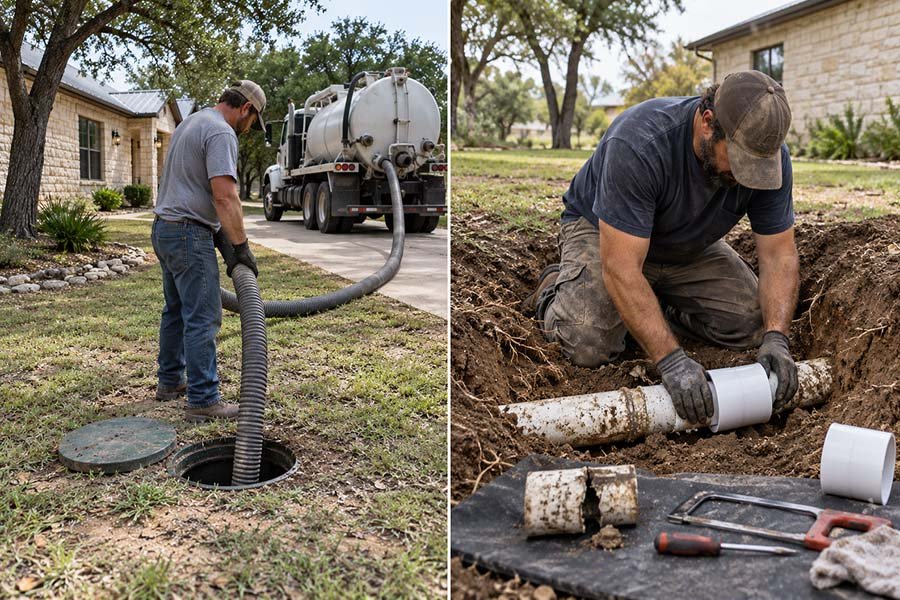
Septic tank pumping and septic repair are both important services, but they address different needs. Understanding the difference can help homeowners avoid paying for a service that does not solve the actual problem.
Septic pumping removes accumulated sludge and scum from the tank as part of routine system maintenance. A tank with high solids may simply need to be pumped and may not require any repairs. Regular pumping can also help reduce the risk of solids moving into other parts of the septic system.
Septic repair, on the other hand, addresses damaged, failed, or malfunctioning components. Problems such as a damaged pipe, broken lid, failed pump, electrical issue, or malfunctioning system component may require repair even when the septic tank has recently been pumped.
Pumping alone will not repair damaged components or correct a failing disposal area. If you are experiencing slow drains, sewage backups, unusual odors, or other warning signs, the system should be evaluated to identify the underlying cause.
For information about pumping prices and the factors that affect them, read our guide on how much it costs to pump a septic tank.
Septic System Repair vs Replacement
Not every malfunction requires a complete septic system replacement.
If an individual component is damaged and the rest of the system remains functional, a targeted repair may be appropriate.
Replacement becomes a different question when a major component can no longer be repaired or when the approved corrective work requires replacing part or all of the OSSF.
For example:
- A damaged riser may be repairable.
- A damaged solid line may be repairable.
- A malfunctioning mechanical component may be replaceable.
- A tank with a repairable issue may not need complete replacement.
- A tank that needs replacement becomes a permitted replacement project.
- A failed drainfield requiring replacement becomes a permitted disposal-area project.
- A system with multiple major failures may require broader replacement.
TCEQ specifically states that tank replacement and drainfield repair or replacement require a permit.
If the entire OSSF may need replacement, see our guide explaining how much it costs to replace a septic system.
Do Septic Repairs Require a Permit in Texas?
Many septic repairs in Texas require a permit, but there is an important exception for qualifying emergency repairs.
TCEQ states that a permit and approved plan are required to construct, alter, repair, extend, or operate an OSSF. Local permitting programs can also have requirements more stringent than state minimums.
However, Texas rules allow certain emergency repairs without first obtaining a permit when the repair addresses an immediate serious health hazard and does not alter the system’s approved planning materials and function.
Examples identified by TCEQ include:
- replacing tank lids
- replacing inlet and outlet devices
- repairing risers and riser caps
- repairing or replacing disinfection devices
- repairing damaged drip irrigation tubing
- repairing solid lines
The person authorized to make the emergency repair must notify the permitting authority in writing within 72 hours after starting the work and provide information about the methods and materials used. The permitting authority can also require an inspection.
Major work is different.
TCEQ specifically says a permit is required when an existing OSSF needs a tank replaced or a drainfield repaired or replaced.
Because local requirements can be more stringent, confirm the requirements with the applicable permitting authority before starting non-emergency repair work.
How to Get an Accurate Septic Repair Estimate
A useful repair estimate should begin with diagnosis rather than guessing from symptoms.
First determine what has failed.
Then determine what is required to correct it.
When reviewing an estimate, ask what component is being repaired, whether replacement parts are included, whether excavation is required, whether pumping is necessary to access or evaluate the system, whether electrical work is involved, and whether permitting or inspection is required.
Also ask what happens to the site after excavation.
Backfilling and basic restoration may be included in one estimate and treated separately in another.
For larger projects, compare the scope carefully rather than choosing only by the lowest number.
TCEQ recommends obtaining at least three estimates for OSSF installation work and investigating significant differences between bids. The same comparison principle can be useful when evaluating substantial septic work.
A clear estimate should help you understand both what is being repaired and why the proposed work is necessary.
Septic System Repair in Central Texas
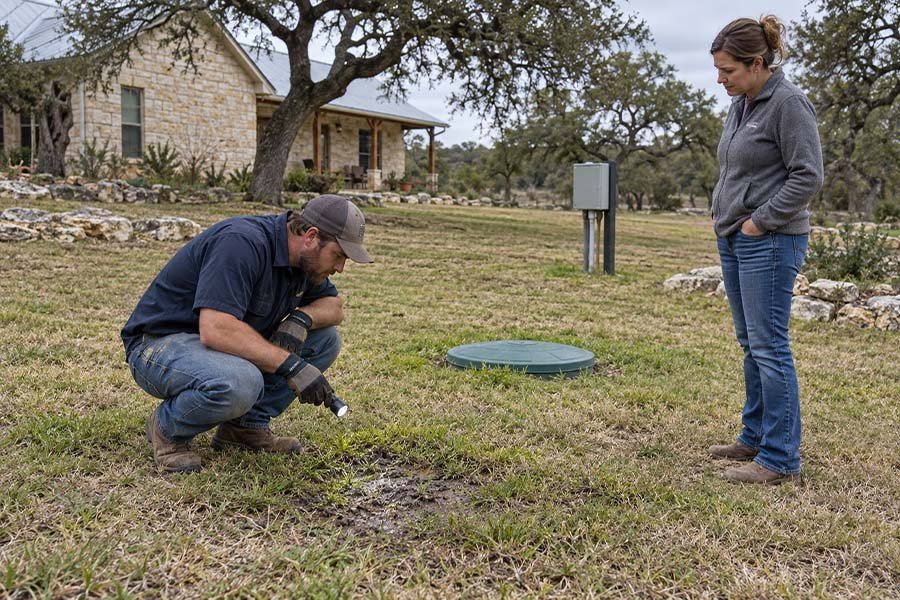
Septic problems can look similar from the surface even when the underlying causes are very different.
A slow drain could be related to household plumbing, tank conditions, a line problem, or another part of the system.
A septic alarm can indicate a condition requiring investigation rather than one predetermined repair.
Wet soil around a disposal area can be a warning sign, but it does not tell you by itself whether the problem requires repair, operational changes, or replacement.
That is why diagnosis should come before the repair estimate.
Dillon Septic provides septic repair services within our Central Texas service area. The goal is to identify the problem and determine the appropriate scope of work rather than assuming every septic malfunction requires the same solution.
Frequently Asked Questions
How much does septic system repair cost?
There is no single reliable septic repair price. Cost depends on the failed component, system type, extent of damage, accessibility, excavation, replacement parts, electrical work where applicable, permitting, and the scope of the repair. An accurate estimate usually requires identifying the problem first.
What is the most expensive part of a septic system to repair?
There is no universal answer because systems and failures vary. Major work involving a tank, disposal area, extensive excavation, or multiple system components can be much more involved than repairing an accessible lid, line, riser, or mechanical component.
How much does septic tank repair cost?
Septic tank repair cost depends on the type and extent of damage, tank accessibility, excavation requirements, and whether the tank can be repaired in place. TCEQ says a tank that can be repaired without removal may qualify as an emergency repair, while tank replacement requires a permit.
Does pumping fix a septic system problem?
Not necessarily. Pumping removes accumulated sludge and scum from the tank. It does not repair a damaged pipe, broken lid, failed pump, electrical problem, damaged tank, or failed drainfield. The cause of the problem should be identified before assuming pumping is the solution.
How do I know what part of my septic system is failing?
Symptoms alone may not identify the failed component. Slow drains, backups, odors, gurgling, wet areas, and alarms can have different causes. An inspection or system evaluation can help identify which component needs attention. EPA recommends evaluation of malfunctioning systems rather than relying on symptoms alone.
When does a septic system need complete replacement?
Complete replacement may be considered when major components can no longer be appropriately repaired, multiple parts of the system have failed, or the required corrective work calls for a new system. Age alone does not determine whether complete replacement is necessary. The existing OSSF and cause of failure should be evaluated first.
Final Thoughts
Septic system repair cost depends primarily on what has failed and what is required to correct the problem.
A damaged lid, riser, line, pump, alarm, or other component is a different project from replacing a septic tank, repairing a drainfield, or replacing an entire OSSF.
That is why diagnosis should come before price.
Homeowners should also avoid assuming that every backup requires pumping, every alarm means a failed pump, or every wet drainfield requires complete replacement. EPA and TCEQ guidance both support evaluating the system and identifying the cause of a malfunction before determining the corrective work.
Texas permitting requirements also depend on the repair. Some qualifying emergency repairs can be completed without a permit when the state’s requirements and reporting rules are followed, while tank replacement and drainfield repair or replacement require permitting.