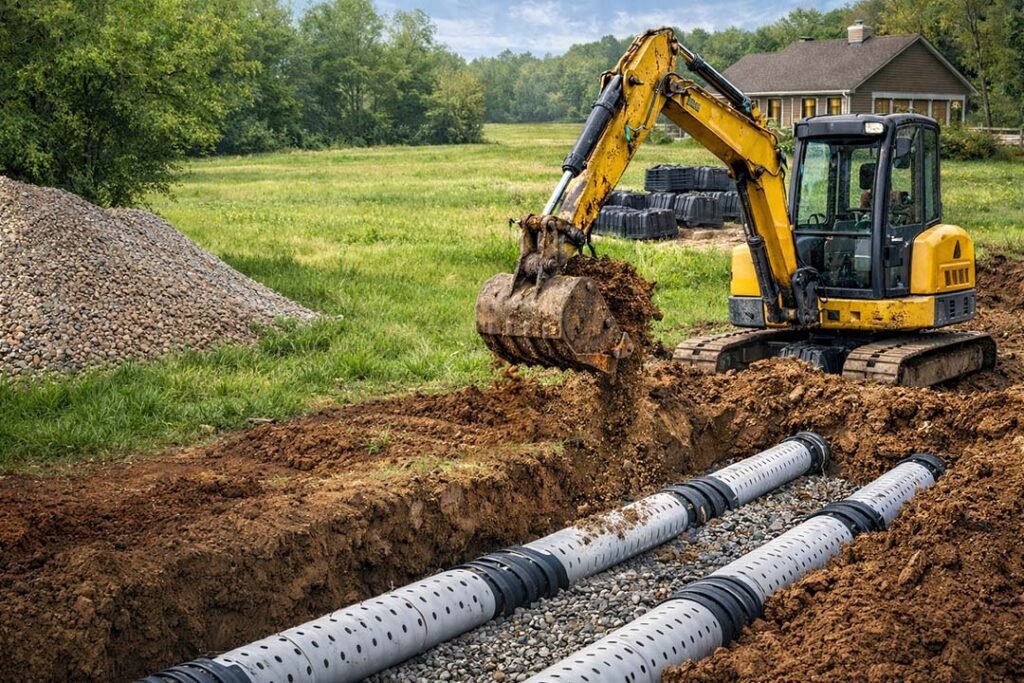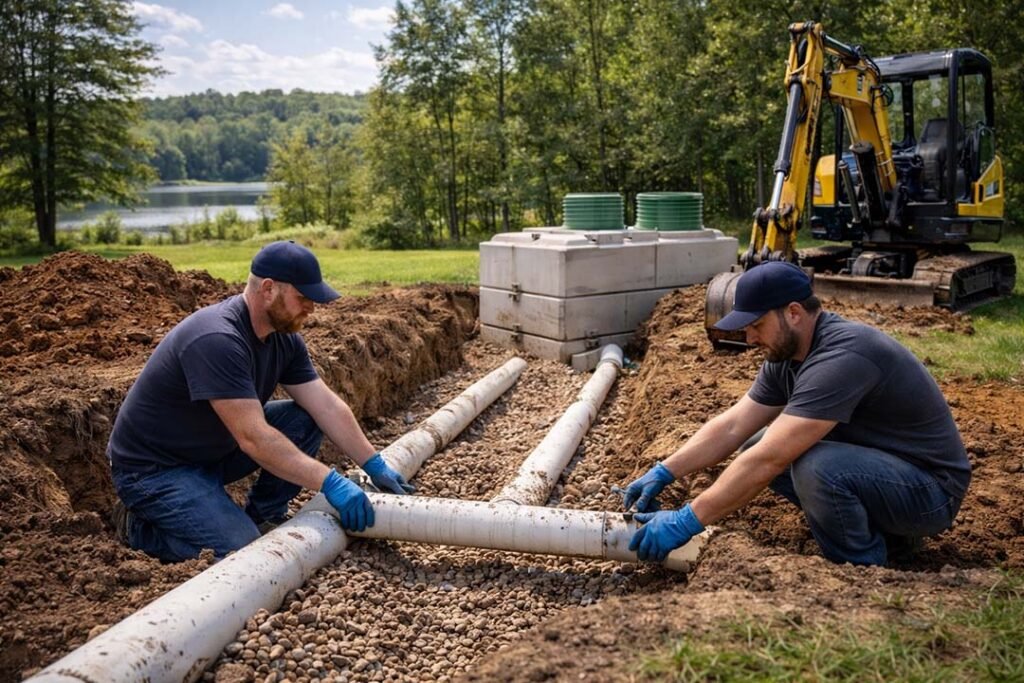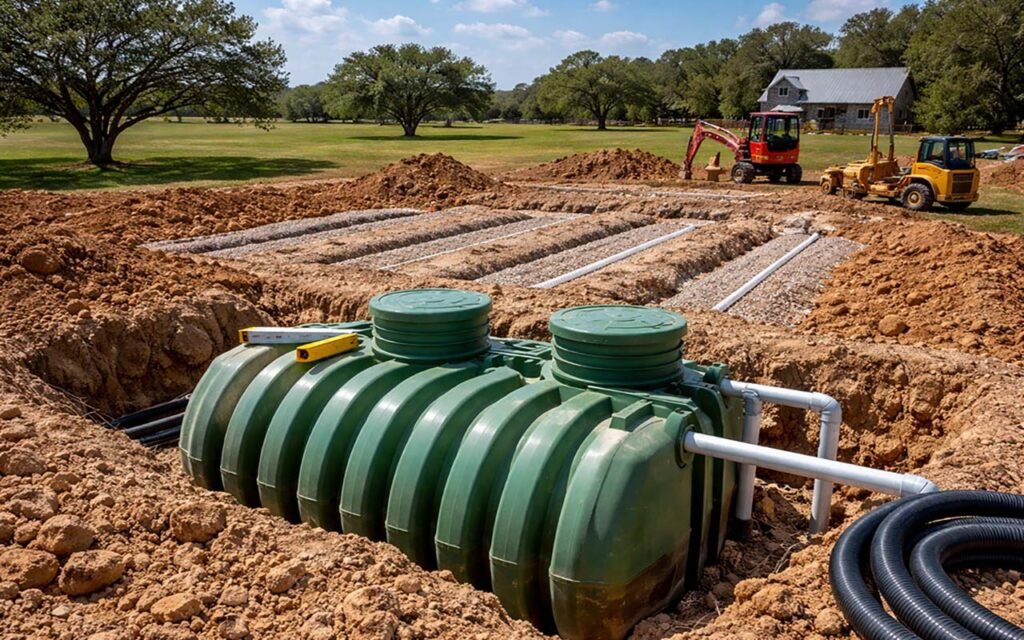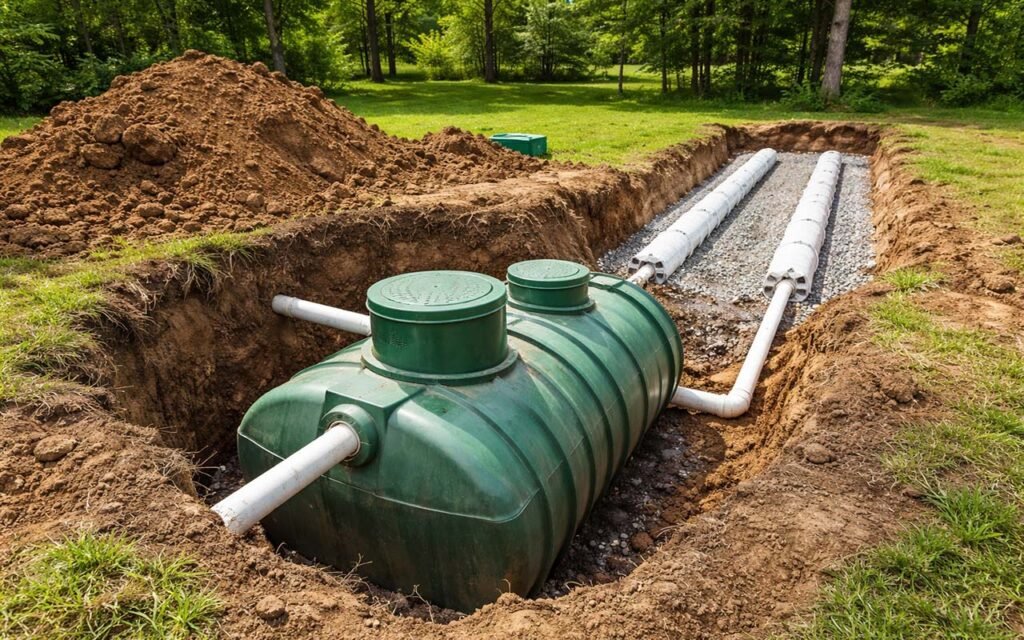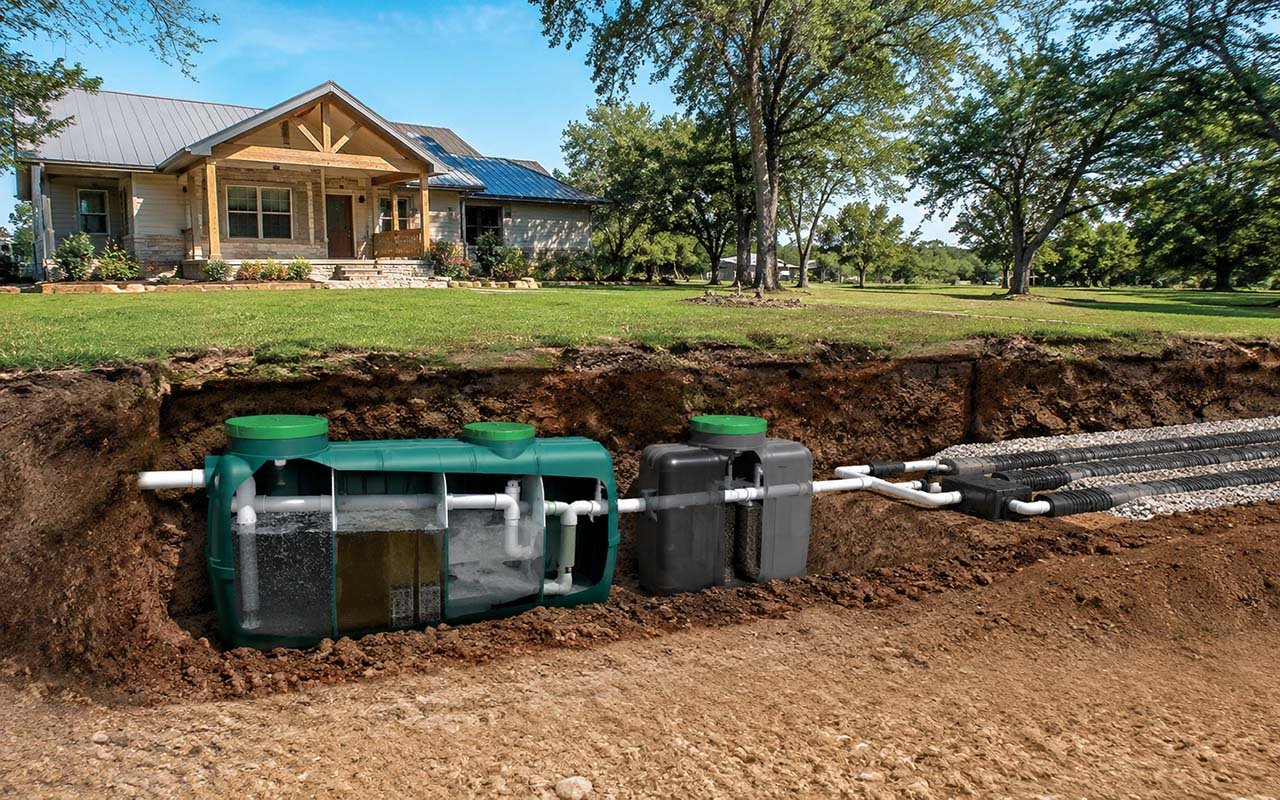
Aerobic septic systems in Texas are one of the treatment options used for on-site sewage facilities, commonly called OSSFs. TCEQ classifies proprietary aerobic treatment units as a secondary treatment option. Whether an aerobic system is appropriate for a property depends on site conditions, the approved system design, the disposal method, and applicable local requirements.
Unlike a basic conventional septic tank, an aerobic treatment unit introduces oxygen into the wastewater treatment process. This supports aerobic biological activity and provides additional treatment before the effluent moves to an approved disposal system.
Aerobic treatment is not automatically required for every Texas property. Texas recognizes multiple OSSF treatment and disposal options. The appropriate system should be determined through proper site evaluation and design rather than simply choosing an aerobic system because it provides additional treatment.
How Do Aerobic Septic Systems Work?
An aerobic treatment unit introduces oxygen into wastewater to increase aerobic bacterial activity. The treatment process provides a higher level of treatment than primary treatment in a conventional septic tank.
Depending on the approved system, wastewater may move through pretreatment, aerobic treatment, clarification, disinfection when required, and final disposal.
Aerobic treatment and wastewater disposal are not the same thing. The aerobic treatment unit treats the wastewater. After treatment, the effluent still needs to be distributed through the disposal method specified in the approved system design.
This distinction matters because an aerobic septic system should not automatically be described as a sprinkler system. The treatment unit may be combined with surface application, drip irrigation, or another suitable disposal method depending on the property and approved design.
For a detailed explanation of the treatment process and system components, read What Is an Aerobic Septic System?.
Why Are Aerobic Septic Systems Used in Texas?
Aerobic treatment provides an additional level of wastewater treatment and can be appropriate when site conditions or the proposed disposal method call for secondary treatment.
However, homeowners should avoid general assumptions about when an aerobic system is necessary.
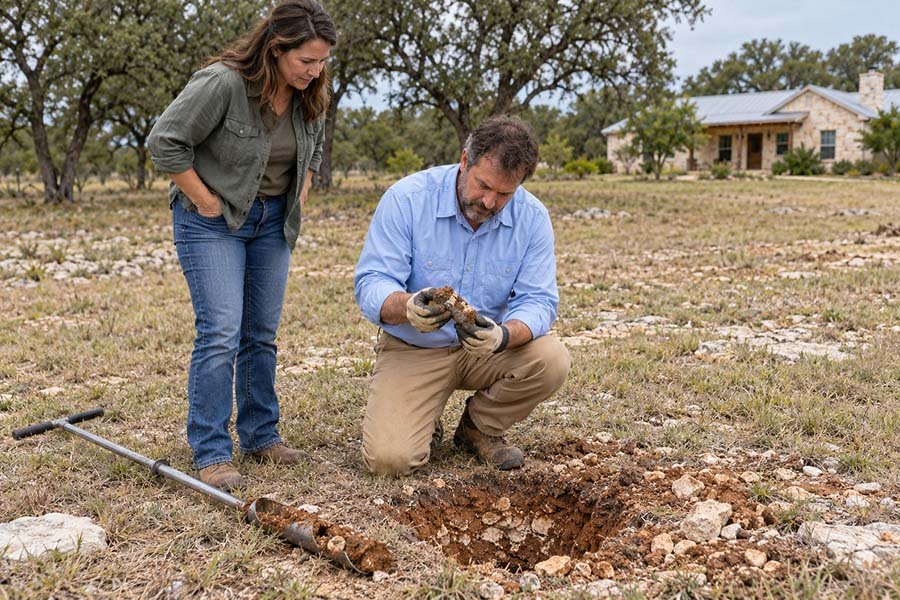
For example, having clay, rocky soil, a small lot, or another challenging site characteristic does not by itself establish that an aerobic system must be installed. The complete site conditions and applicable requirements need to be considered.
TCEQ requires a site evaluation before an OSSF is constructed, installed, altered, extended, or repaired. That evaluation helps determine which treatment and disposal options are suitable for the property.
For homeowners comparing different designs, our guide to the types of septic systems in Texas explains conventional, aerobic, drip, mound, and other OSSF options in more detail.
Are Aerobic Septic Systems Required in Texas?
No statewide rule requires every Texas property using an OSSF to have an aerobic treatment unit.
TCEQ recognizes different treatment and disposal methods. Which options are suitable depends on the site evaluation, approved design, applicable state requirements, and requirements administered by the local permitting authority.
An aerobic system may therefore be appropriate for one property while a different treatment and disposal configuration is appropriate for another.
Local requirements also matter. Texas allows authorized agents to administer OSSF programs locally, and local authorities can adopt requirements that are more stringent than the state’s minimum requirements in certain circumstances.
For a deeper discussion of this specific question, see Are Aerobic Septic Systems Required in Texas?.
Site Evaluation for an Aerobic Septic System in Texas
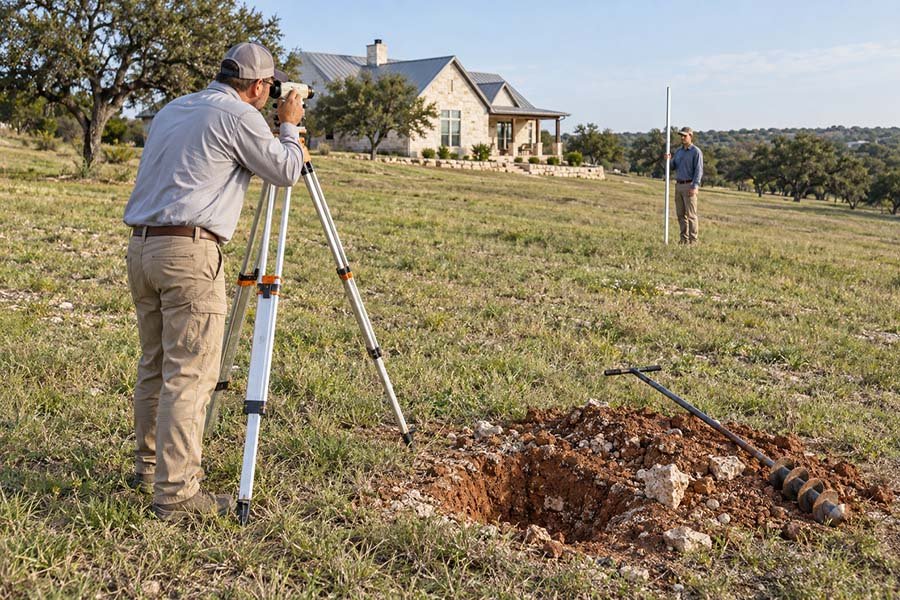
Site evaluation is an important part of selecting an OSSF in Texas.
TCEQ states that a site evaluation must be performed before an OSSF is constructed, installed, altered, extended, or repaired. The evaluation must be performed by a licensed site evaluator or licensed professional engineer.
The evaluation considers property conditions that affect which treatment and disposal methods are suitable.
This is why septic-system selection should not be based solely on what a neighboring property uses. Even properties in the same general area can have different site characteristics, system designs, wastewater requirements, and permitting considerations.
For an aerobic system, the treatment unit also needs to be considered together with the proposed disposal method. The objective is to create an OSSF design suitable for that particular site rather than selecting one component in isolation.
Aerobic Treatment and Disposal Methods Are Different
One of the most important concepts for Texas homeowners is the difference between wastewater treatment and wastewater disposal.
TCEQ treats these as separate parts of OSSF design.
A conventional septic tank is a form of primary treatment. A proprietary aerobic treatment unit can provide secondary treatment. After wastewater has been treated, the effluent must still be distributed using an appropriate disposal method.
Depending on the approved system, disposal options can include methods such as surface application or drip irrigation.
This means an aerobic treatment unit should not automatically be described as a system that sprays treated wastewater through sprinklers. Some aerobic systems may use surface application, while others can be designed with another disposal method.
The complete approved design determines how the wastewater is treated and where the treated effluent goes.
Do You Need a Permit for an Aerobic Septic System in Texas?

Texas generally requires authorization before constructing or operating an OSSF, although limited exemptions exist under state rules.
For most residential projects, homeowners should expect the permitting process to involve an approved plan before the system is constructed. Alterations, repairs, extensions, and other changes can also trigger permitting requirements depending on the work involved.
TCEQ is not necessarily the agency that directly processes a homeowner’s permit.
Many areas have a local authorized agent that administers the OSSF program. Depending on the property, this may be a county, municipality, river authority, or another approved local authority.
Homeowners should therefore identify the permitting authority for the property’s location before planning installation or significant modifications.
For a detailed explanation, read our Texas septic system permit guide.
Who Can Install an Aerobic Septic System in Texas?
Texas places specific requirements on the design and installation of secondary-treatment systems.
TCEQ’s system-selection guidance states that secondary treatment using a proprietary aerobic treatment unit must be designed by a professional engineer or professional sanitarian and can only be installed by an Installer Class II.
These requirements are important because aerobic treatment units are more complex than basic conventional treatment.
An aerobic system can include mechanical, electrical, treatment, pumping, alarm, disinfection, and disposal components that need to work together according to the approved design.
Homeowners should not treat an aerobic treatment unit as a simple tank that can be substituted for a conventional septic tank without considering the complete OSSF design and permitting requirements.
Does Texas Approve Specific Aerobic Treatment Units?
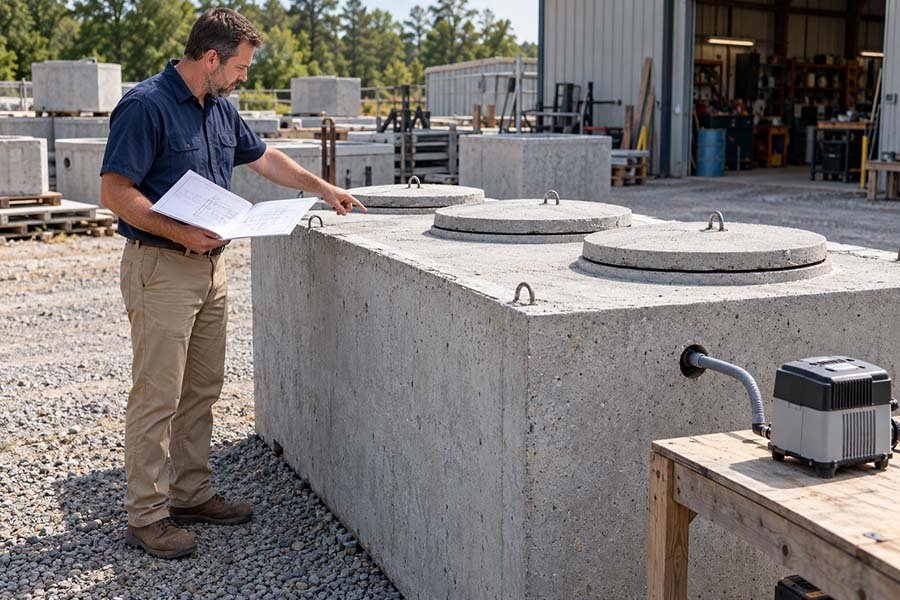
Texas maintains information on approved OSSF treatment products.
TCEQ’s approved-product resources identify treatment systems by manufacturer, model, capacity, and other product information. This helps ensure that proprietary treatment equipment used in an OSSF meets applicable requirements.
The presence of an approved product does not mean that product is automatically suitable for every property.
System capacity, site conditions, wastewater characteristics, disposal method, approved design, permitting requirements, and manufacturer specifications still need to be considered.
For homeowners, the important point is that system selection should be based on the approved OSSF design rather than choosing an aerobic unit solely by brand, tank size, or price.
Aerobic Septic System Maintenance Requirements in Texas
Maintenance is particularly important with aerobic systems because they contain treatment and mechanical components that must continue functioning correctly.
TCEQ describes aerobic systems as more complex than conventional anaerobic systems and notes that they require more maintenance.
Maintenance can involve checking treatment components, pumps, aeration equipment, controls, alarms, disinfection equipment when present, and other parts specified by the manufacturer or approved design.
Texas also has requirements covering maintenance providers and reporting for systems subject to maintenance contracts.
TCEQ’s maintenance guidance describes inspections, testing, reporting, and response requirements that apply to maintenance providers. Required reports are generally submitted to the permitting authority and system owner at least once every four months, although qualifying electronically monitored systems can have different reporting arrangements.
Homeowners should follow the requirements that apply to their particular OSSF rather than assuming all Texas aerobic systems have an identical maintenance schedule.
Do Aerobic Septic Systems Require a Maintenance Contract in Texas?
Maintenance-contract requirements need to be explained carefully because the answer can depend on the system and local authority.
The initial period after installation has specific maintenance requirements. After that period, Texas rules can allow homeowner maintenance for certain qualifying systems.
TCEQ states that two years after initial installation, homeowner maintenance may be possible for qualifying systems using secondary treatment, non-standard treatment, drip irrigation, and surface application disposal.
However, this does not mean every Texas homeowner can automatically take over maintenance after two years.
Local permitting authorities can adopt more stringent requirements. TCEQ notes that some local authorities may require homeowner training or prohibit homeowner maintenance.
Homeowners should therefore verify the requirements with the permitting authority responsible for their property before changing an existing maintenance arrangement.
How Often Should an Aerobic Septic System Be Pumped in Texas?
There is no single pumping schedule for every aerobic septic system in Texas. TCEQ recommends pumping conventional septic tanks about every three to five years, but aerobic treatment units should be pumped according to sludge depth and manufacturer recommendations.
Homeowners should avoid applying a conventional tank’s schedule without checking their aerobic system. Household size, wastewater use, system capacity, solids buildup, and maintenance history can affect when pumping is needed. Regular service visits help assess these conditions and identify the appropriate timing.
Ask your maintenance provider to check sludge levels and explain which tanks need pumping. Keep service records and follow the equipment instructions. Pumping should respond to your system’s actual condition rather than a fixed date on the household calendar.
Disinfection and Chlorine in Texas Aerobic Systems
Some aerobic septic systems include disinfection before treated effluent is dispersed.
When chlorine tablets are used for required wastewater disinfection, homeowners need to use the correct product.
TCEQ says chlorine tablets used for wastewater disinfection must be made from calcium hypochlorite and certified by EPA for wastewater disinfection.
TCEQ also specifically warns homeowners not to use swimming-pool chlorine tablets in an OSSF disinfection system. Pool chlorine tablets are not designed for this application and can create safety concerns when used incorrectly.
Not every aerobic system necessarily uses the same disinfection method, so homeowners should follow the requirements for their specific system.
How to Care for an Aerobic Septic System in Texas
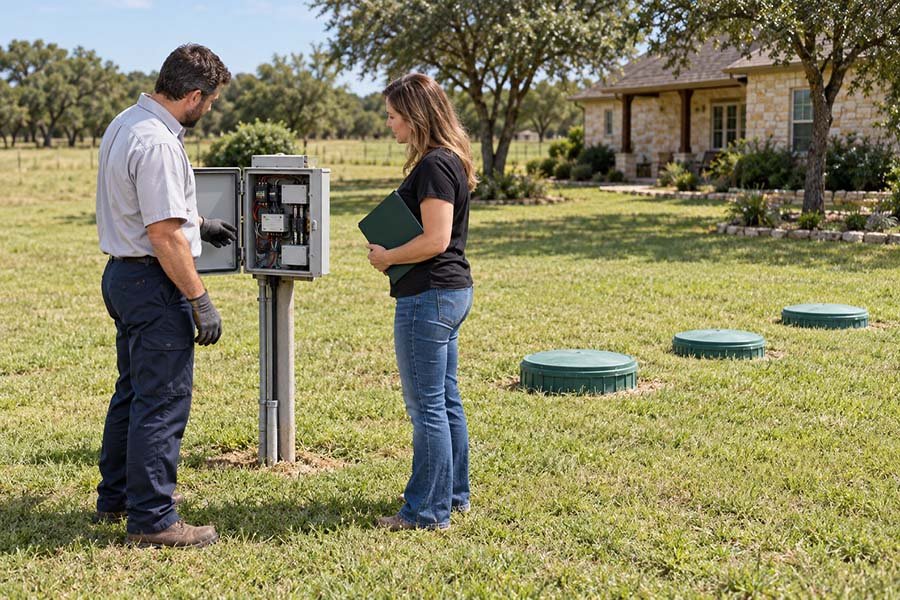
Proper operation starts with understanding that an aerobic OSSF is a wastewater treatment system, not simply a buried tank.
TCEQ recommends conserving water and repairing leaking plumbing fixtures because excessive wastewater can hydraulically overload an OSSF. Homeowners should also avoid using toilets as trash cans because inappropriate materials increase the solids load entering the system.
TCEQ advises against adding chemical additives or so-called enzymes to an OSSF. The agency notes that some additives can be harmful to the tank’s operation.
The physical area around the OSSF also needs protection. TCEQ advises homeowners not to drive or park vehicles over the system and not to build driveways, storage buildings, patios, sidewalks, or similar structures over OSSF components.
For an aerobic system, homeowners should also pay attention to alarms and mechanical equipment. An alarm should be treated as an indication that the system needs attention rather than simply being disabled.
Keeping installation, pumping, maintenance, inspection, and repair records can also make it easier to understand the history of an older system.
How Much Does an Aerobic Septic System Cost in Texas?
The cost of an aerobic septic system in Texas depends on much more than the treatment unit itself.
The complete project can involve site evaluation, system design, treatment equipment, disposal method, capacity, excavation, electrical work, permitting, property access, and other site-specific requirements.
Aerobic systems also contain mechanical and treatment components that can create ongoing operating and maintenance expenses after installation.
For planning purposes, Dillon Septic generally uses approximately $10,000 to $20,000 as a broad range for many residential aerobic installations in Central Texas. More complicated projects can exceed that range. These are planning figures rather than TCEQ statewide averages or guaranteed quotes.
For a complete breakdown, read our guide to aerobic septic system cost in Texas.
How Long Does an Aerobic Septic System Last?
There is no single expiration date for an entire aerobic septic system.
An aerobic OSSF contains multiple components, and those components can age at different rates. Tanks, aerators, pumps, controls, alarms, treatment equipment, and disposal components do not necessarily require replacement at the same time.
The EPA says many pumps and controls used in septic systems may need replacement every 10 to 20 years. Manufacturer information should be used for the expected lifespan and warranty of specific advanced treatment equipment.
Replacing an aerator, pump, control, or another component does not necessarily mean the entire aerobic system needs replacement.
For a component-by-component discussion, see our guide explaining how long a septic system lasts.
Choosing an Aerobic Septic System for a Texas Property

Choosing an aerobic septic system starts with understanding your property. Texas requires a site evaluation before installation to identify suitable treatment and disposal options. Soil conditions, available space, wastewater needs, and applicable requirements should guide the design and equipment selection.
Consider ownership costs alongside installation. Aerobic systems need electricity, regular maintenance, inspections, and pumping based on sludge levels and manufacturer guidance. Pumps, aerators, controls, and other components may also need repairs or replacement as the equipment ages.
Check local permitting and maintenance requirements early because rules can vary by jurisdiction. For homeowners in Dillon Septic’s Central Texas service area, the goal is an approved system suited to the property, with clear service responsibilities understood before construction and installation work begins.
Frequently Asked Questions
Do aerobic septic systems require a maintenance contract in Texas?
Maintenance-contract requirements depend on the system and applicable local requirements. TCEQ allows homeowner maintenance for certain qualifying systems after the initial two-year period, but local permitting authorities can impose stricter requirements.
How often should an aerobic septic system be pumped?
TCEQ says pumping an aerobic treatment unit depends on sludge depth and manufacturer recommendations. The general three-to-five-year recommendation for conventional tanks should not automatically be applied to every aerobic treatment unit.
Can I use swimming-pool chlorine tablets in my aerobic system?
No. TCEQ specifically warns against using swimming-pool chlorine tablets in an OSSF disinfection system. When chlorine tablets are used for wastewater disinfection, the appropriate wastewater-disinfection product must be used.
Does an aerobic septic system need electricity?
Typically, yes. Aerobic treatment depends on mechanical equipment that introduces oxygen into the treatment process. Many systems also use electrical pumps, controls, and alarms.
Do I need a permit for an aerobic septic system in Texas?
In most cases, an OSSF requires permitting and an approved plan, subject to limited exemptions under Texas rules. The responsible permitting authority is often a local authorized agent rather than TCEQ directly.
Final Thoughts
Aerobic septic systems in Texas use oxygen to improve wastewater treatment, but the treatment unit is only part of the system. The property also needs a suitable disposal method, an approved design, and compliance with state and local requirements.
Not every Texas property needs an aerobic system. A site evaluation helps identify suitable options, while local authorities may apply stricter rules. Check the requirements for your property before planning installation or making changes to an existing system.
Long-term performance depends on consistent care. Keep mechanical equipment working, follow pumping recommendations based on sludge levels, and meet applicable maintenance requirements. Use approved disinfection products when needed, avoid swimming-pool chlorine tablets, and protect septic components from vehicles, construction, and other preventable damage.