If you are planning to install a fence, build a patio, plant a tree, or complete excavation work, you may wonder, does 811 mark septic lines in Texas? The short answer is usually no. Texas 811 helps coordinate the marking of underground facilities owned or operated by participating utility companies. Privately owned septic components are generally not included.
Your septic tank, building sewer, treatment components, and drainfield are normally located within private property and belong to the property owner. Because they are not usually operated by a participating public utility, they may remain unmarked after an 811 request.
However, contacting Texas 811 is still an important step before digging. It helps identify participating underground utilities that could be damaged during excavation. Septic components may then require a separate review using property records, visible system features, or professional locating methods.
What Does Texas 811 Mark?
Texas 811 is a notification service that connects people planning excavation with participating underground facility operators. When you submit a locate request, Texas 811 identifies the member utilities that may have facilities near the proposed work area.
Texas 811 does not normally send its own employees to mark the property. Instead, it notifies the relevant utility operators. Those companies or their contracted locators respond by marking the underground facilities they operate.
The markings may identify participating facilities such as:
- Natural gas lines
- Electric lines
- Communication cables
- Water mains
- Public sewer lines
- Pipelines operated by participating companies
The Texas 811 homeowner guidance states that homeowners or their contractors should contact 811 two business days before digging. Weekends and holidays are not included in that waiting period.
Contacting 811 is free, but it does not guarantee that every buried pipe, wire, tank, or system on private property will be identified.
Does 811 Mark Septic Lines in Texas?
In most situations, 811 does not mark the private piping that connects a house to its septic tank. It also does not usually mark the line leading from the tank to the treatment or disposal area.
These components are part of an onsite wastewater system owned by the property owner. They are different from public utility lines operated by a municipality, cooperative, or utility company participating in the 811 system.
A completed 811 request may therefore result in several colored markings around a property while the septic lines remain unmarked. The absence of a mark does not mean that the ground is clear or that no septic component is present.
From our experience, this is where homeowners can become confused. They see utility flags near the street or house and reasonably assume that every buried line has been located. In reality, private septic piping may run directly through the planned work area without any visible marking.
Does 811 Mark Septic Tanks?
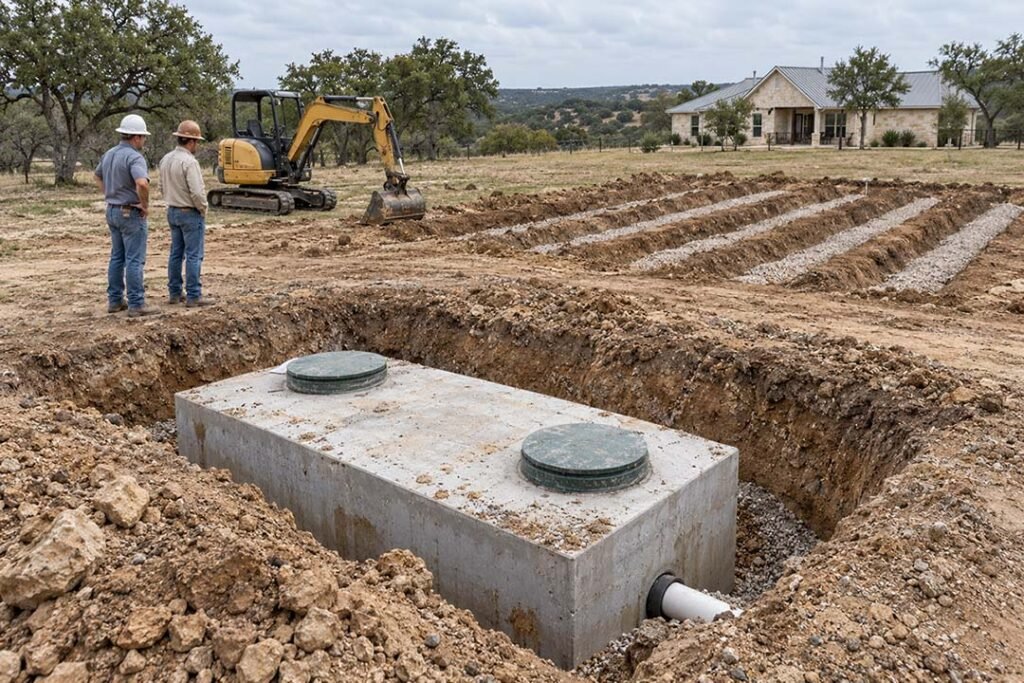
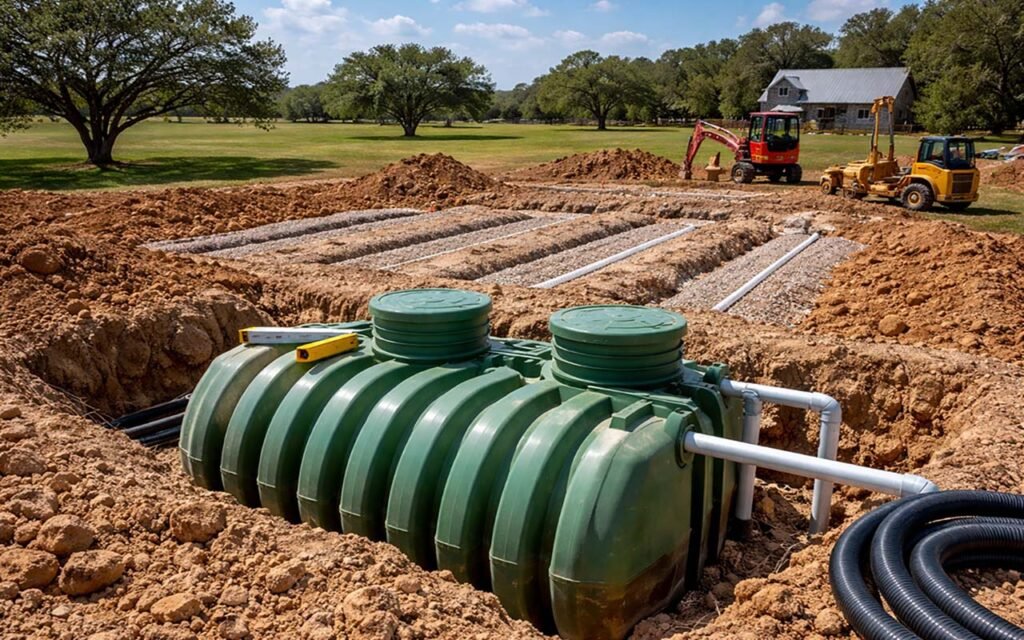
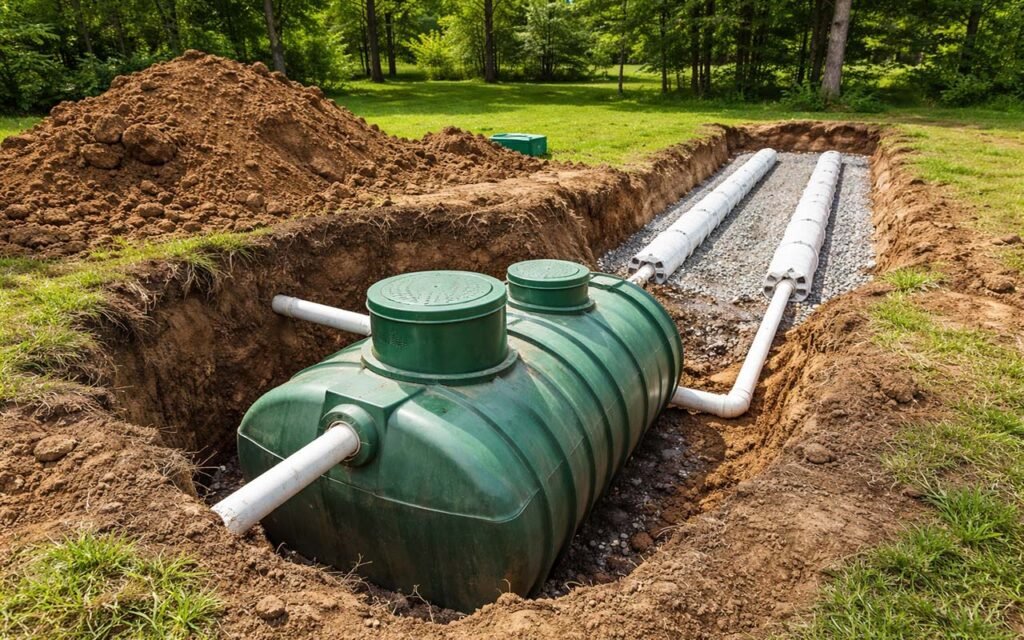
Texas 811 generally does not locate or mark privately owned septic tanks. It also may not identify treatment units, pump tanks, distribution boxes, spray lines, or drainfield components.
A septic tank is part of the property’s private wastewater system. Its location may be shown on an approved site plan or an as-built drawing, but those records are not always complete or immediately available.
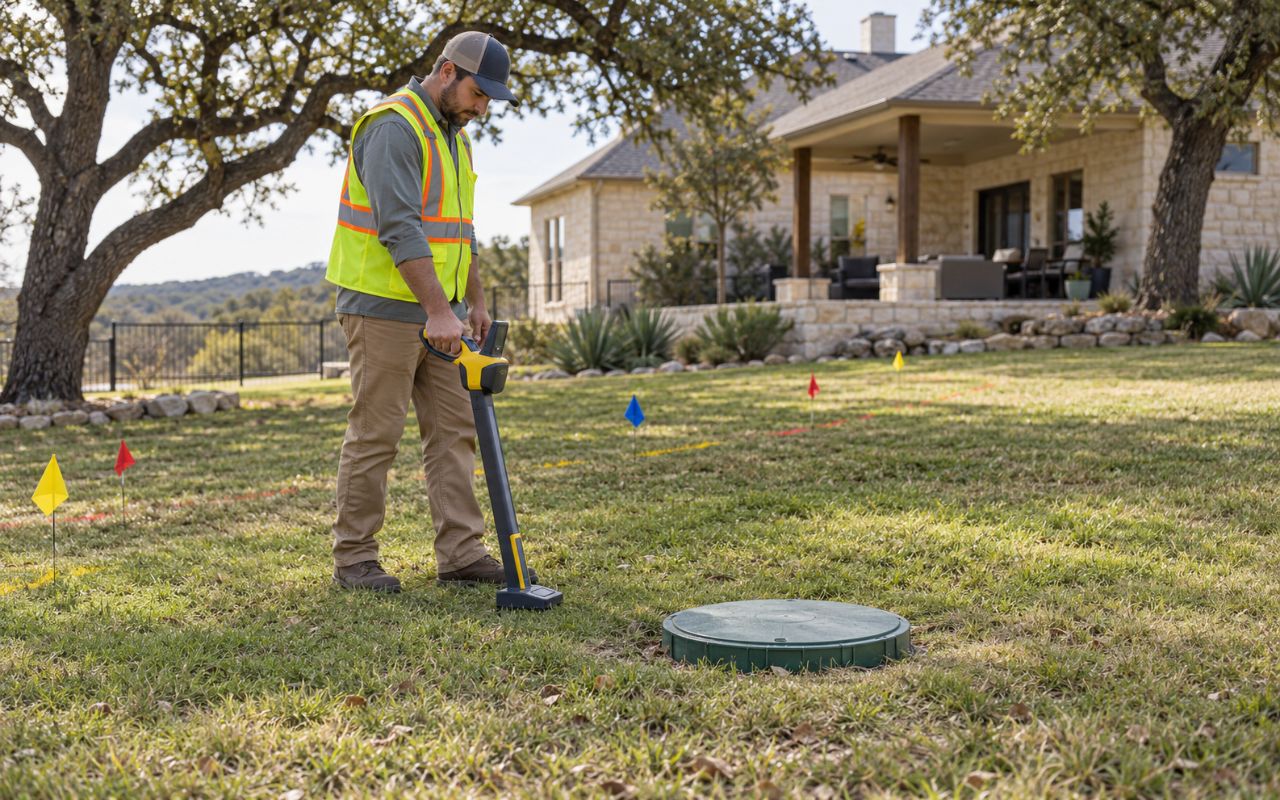
Some tanks have visible access risers or lids that make them easier to find. Older tanks may have buried access covers with no obvious surface indication. Landscaping, soil, construction changes, and years of property use can make the original system layout difficult to recognize.
Never assume that the tank is directly behind the house or in the lowest part of the yard. System placement depends on the original design, property layout, soil conditions, setbacks, access, and the approved disposal area.
What Texas 811 May and May Not Identify
| Underground component | Commonly covered by 811 | May require private locating |
|---|---|---|
| Participating electric line | Yes | Sometimes |
| Participating natural gas line | Yes | Sometimes |
| Communication cable | Yes | Sometimes |
| Public water or sewer facility | Often | Sometimes |
| Building sewer to a septic tank | No | Yes |
| Septic tank or treatment unit | No | Yes |
| Septic effluent line | No | Yes |
| Drainfield or spray components | No | Yes |
| Private water or irrigation line | No | Yes |
Coverage can vary because facility ownership and participation determine which lines receive a response. Always review the positive responses connected with the locate request rather than relying only on the paint or flags visible in the yard.
Why You Should Still Contact 811 Before Digging
Even though 811 may not mark septic components, submitting a request remains essential. A property with a septic system can also contain electric, gas, water, communication, or pipeline facilities.
The Railroad Commission of Texas recommends contacting 811 before any project involving digging, regardless of depth. Its Pipeline Damage Prevention Program also explains that Texas law requires notification before certain excavation work deeper than 16 inches.
A septic locating service is not a replacement for contacting 811. The two processes serve different purposes. Texas 811 coordinates responses from participating underground facility operators. A septic professional focuses on the private wastewater system and its components.
Taking both steps can provide a clearer understanding of what may be underground before excavation begins.
How to Locate Private Septic Lines and Tanks
Start by gathering any available information about the property. The original septic permit, site plan, inspection report, or as-built drawing may show the tank and disposal area. Depending on the location, records may be available from the county, local authorized agent, previous property owner, or septic service provider.
You can also look for physical clues around the property. These may include access risers, lids, cleanouts, control panels, sprinkler heads connected to an aerobic system, or changes in the ground surface.
The following process can help narrow the search safely:
- Review the septic permit and as-built drawing.
- Find where the main waste pipe leaves the building.
- Look for access risers, lids, cleanouts, and control equipment.
- Compare visible components with the recorded system layout.
- Arrange professional locating when the layout remains uncertain.
Avoid driving metal rods into the ground without knowing what is below. Probing in the wrong location could damage piping, wiring, tank components, or other buried facilities.
Our guide on how to find a septic tank explains these steps in greater detail.
When Professional Septic Locating Is Worthwhile
Professional assistance is useful when records are unavailable, access lids are buried, landscaping has changed, or the system layout cannot be confirmed confidently. Locating may also be appropriate before adding a structure, driveway, pool, fence, irrigation system, or major landscaping feature.
In the field, we often find that the visible lid does not tell the complete story. A property may contain more than one tank, an additional treatment compartment, buried piping, or a disposal area extending beyond the location homeowners expect.
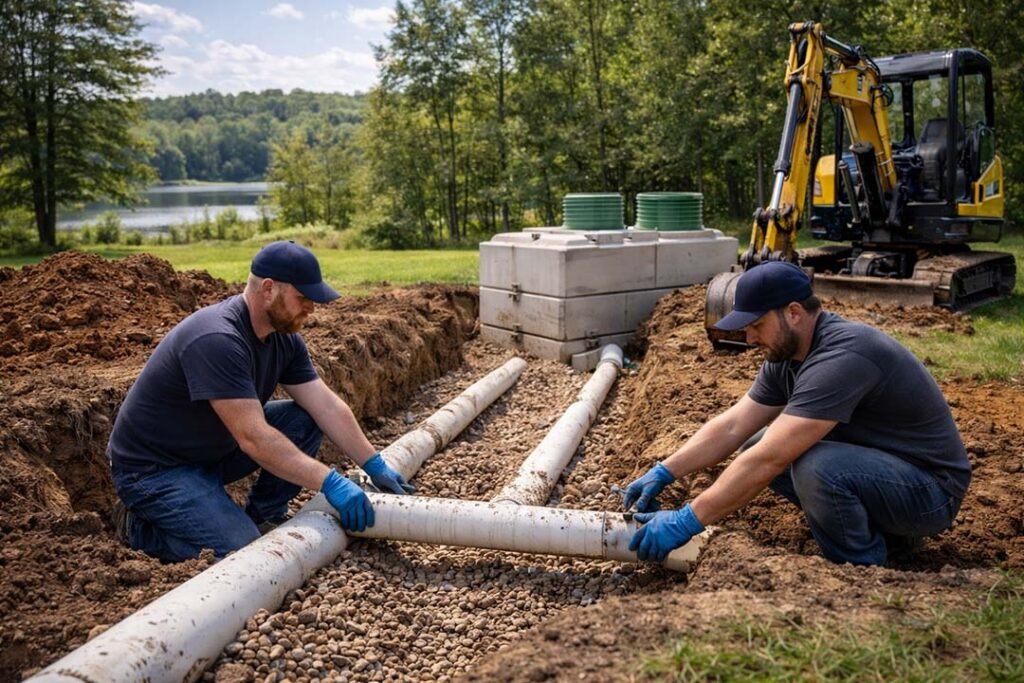
A professional can assess the available records, plumbing direction, visible components, and property layout. Appropriate locating methods can then be used to identify accessible parts of the system without random excavation.
Dillon Septic provides septic tank locating services in Texas for properties within our Central Texas service area.
What to Do Before Starting an Excavation Project
Contact Texas 811 before digging and allow the required response period. Confirm that all notified utilities have provided a positive response. Do not begin simply because one company has marked its lines.
After the participating utility facilities have been addressed, determine whether private components may cross the work area. This includes septic piping, tanks, drainfield components, irrigation lines, private electric cables, and water lines.
Before excavation begins:
- Keep all utility flags and paint markings visible
- Review every response connected with the 811 request
- Locate private septic components separately
- Explain the known system layout to the contractor
- Keep machinery away from tanks and drainfields
- Stop work if an unidentified pipe or cable is exposed
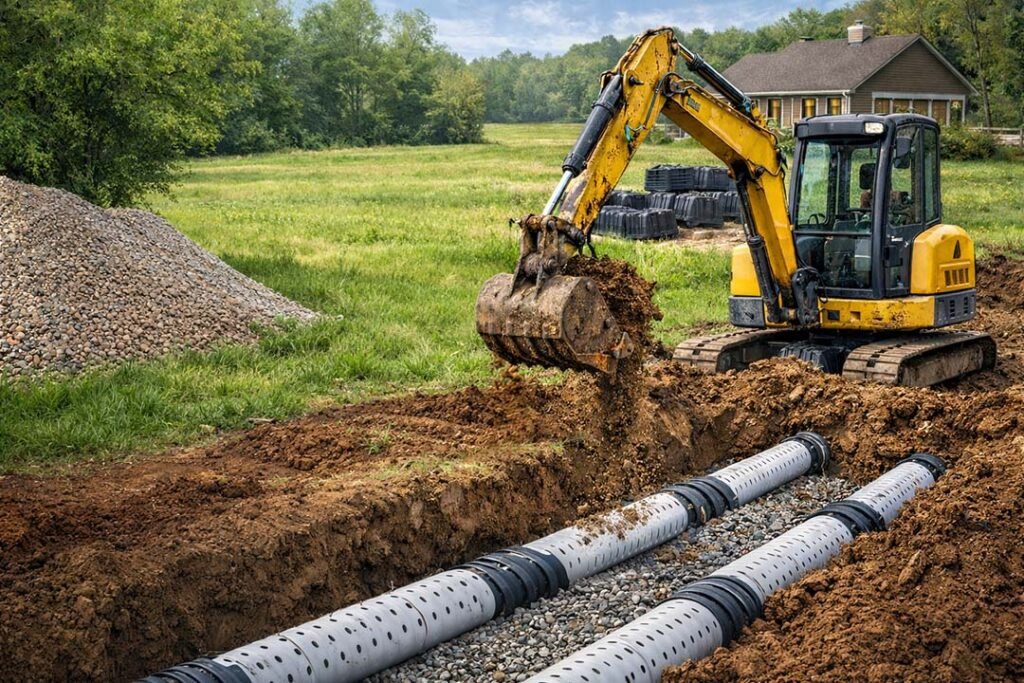
Heavy equipment can damage a septic tank or compact the soil in a drainfield even when no digging occurs directly over it. Planning access routes is therefore just as important as marking the excavation area.
What If a Septic Line Is Damaged?
Stop work if excavation exposes or damages a septic pipe, tank, electrical connection, or treatment component. Keep people away from the affected area and avoid using large amounts of water inside the property until the problem has been assessed.
A damaged septic line can release wastewater into the soil and prevent the system from operating correctly. The appropriate response depends on the location, material, extent of damage, and condition of the surrounding components.
Dillon Septic offers septic line repair services when an accessible septic line has been damaged or is no longer functioning properly.
Frequently Asked Questions
Is Texas 811 free for homeowners?
Yes. Homeowners can submit a locate request without paying a fee. Participating facility operators are notified and arrange responses for the underground facilities they operate.
How long should I wait after contacting Texas 811?
Texas 811 directs homeowners to contact the service at least two business days before digging. Weekends and holidays do not count toward this waiting period.
Will 811 find my septic drainfield?
Usually not. A drainfield is a privately owned part of the onsite wastewater system. Records or professional septic locating may be needed to identify its approved location.
Can I dig after the public utilities are marked?
Do not start until all notified operators have responded and you have considered private facilities. Public utility markings do not confirm that septic pipes, irrigation lines, or other owner-installed components are absent.
Can Dillon Septic locate buried septic components?
Dillon Septic can help locate septic tanks and accessible system components within its Central Texas service area. The appropriate approach depends on the property, available records, and system configuration.
Final Thoughts
So, does 811 mark septic lines in Texas? In most cases, the answer is no. Texas 811 coordinates the marking of underground facilities operated by participating utilities, while septic tanks, building sewers, and disposal components are generally privately owned.
Contact 811 before excavation, wait for every required response, and preserve the markings. Then investigate the private septic system separately through records, visible components, or professional locating. This combined approach reduces guesswork and helps protect utilities, septic components, property, and the people completing the work.