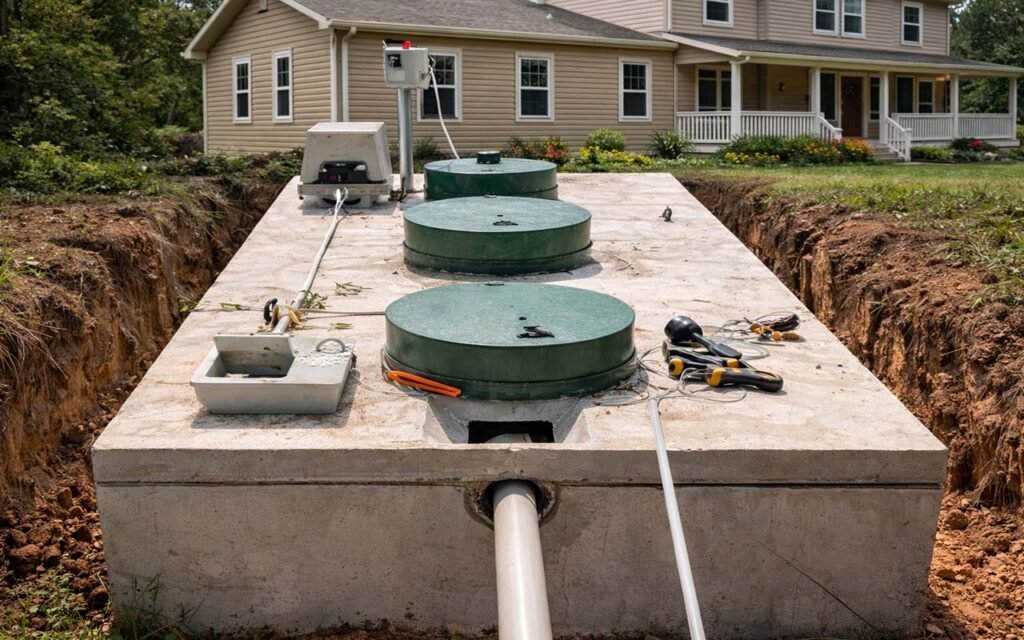
If you are planning a new septic installation or replacing an existing system, one of the first questions is usually how much an aerobic septic system costs in Texas. There is no single price that applies to every property because the final cost depends on the system design, site conditions, treatment capacity, distribution method, permitting requirements, and installation complexity.
For planning purposes, a residential aerobic septic system in Central Texas may cost approximately $10,000 to $20,000 for installation. More complicated projects can reach $26,000 or more when additional design work, difficult excavation, specialized distribution, or other site-specific requirements are involved.
These figures should be treated as planning ranges rather than fixed prices. The most reliable way to determine the cost for a particular property is to evaluate the site and determine what type of system can be approved and installed there.
How Much Is an Aerobic Septic System in Texas?
A typical aerobic septic system involves more equipment than a basic conventional gravity system. Instead of relying primarily on a septic tank and soil absorption area, an aerobic treatment system uses mechanical components to introduce oxygen into the wastewater treatment process.
That additional equipment is one reason the initial investment can be higher.
For many residential projects, a reasonable starting budget is approximately $10,000 to $20,000. A relatively straightforward installation may fall within this range, while a difficult property can cost more.
The total price can be influenced by rocky ground, difficult equipment access, system capacity, electrical requirements, the approved disposal method, excavation needs, and local permitting requirements.
A homeowner should therefore be cautious about comparing septic quotes based only on the final number. Two estimates may represent very different system designs or scopes of work.
If you are still deciding which system may be appropriate for your property, our guide to types of septic systems in Texas explains the major system categories in more detail.
What Is Included in Aerobic Septic System Installation Cost?
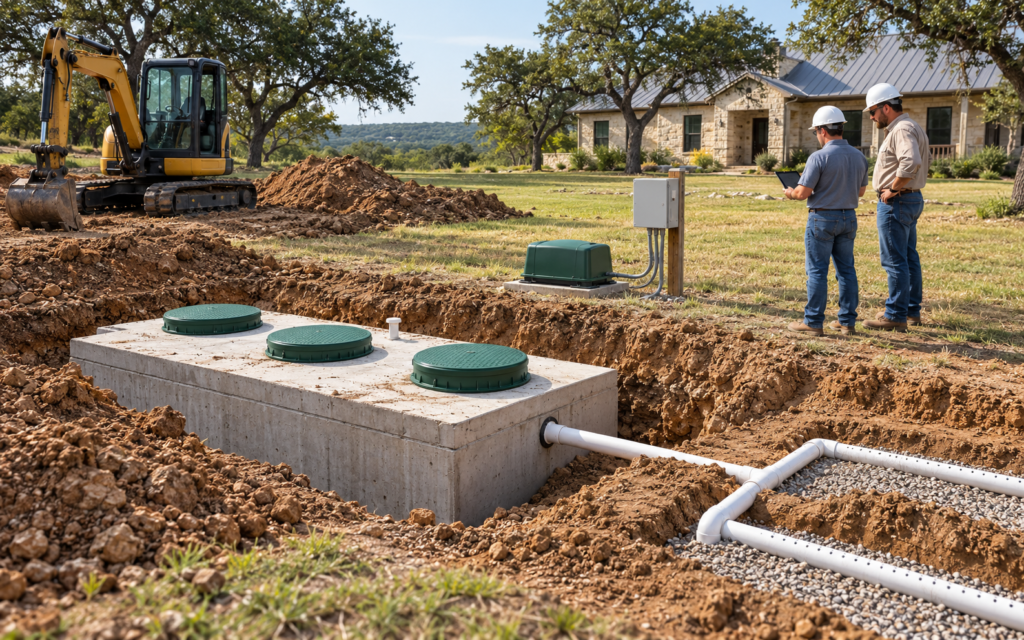
An aerobic septic installation is a complete wastewater treatment project rather than simply the purchase of a tank.
Depending on the approved design, the project may involve site evaluation, system planning, permitting, tanks, treatment equipment, pumps, controls, electrical connections, distribution components, excavation, installation labor, and required inspections.
The exact components vary from one property to another.
An aerobic treatment unit uses oxygen as part of the treatment process. Depending on the particular system and design, additional components may be required to move, treat, disinfect, or distribute wastewater.
This is why comparing the price of the tank alone with the price of a completed septic installation can be misleading.
Homeowners should ask what is actually included in an estimate. A lower initial quote may simply exclude work that appears separately later.
If you want a deeper explanation of the treatment process itself, read our guide on what an aerobic septic system is.
What Affects Aerobic Septic System Cost in Texas?
Two similar homes can receive very different septic estimates because the house is only one part of the design. The property itself can have a major effect on the final cost.
Site and Soil Conditions
Site conditions help determine what type of OSSF can be designed for a property.
Soil characteristics, available space, slope, drainage conditions, property features, and other site limitations can affect both the system design and the amount of work required during installation.
A property that can be accessed and excavated easily may present a very different installation project from a rocky Hill Country site.
System Size and Design
The system must be designed for the property’s wastewater requirements and applicable permitting standards.
A larger or more complex installation may require different equipment, tank capacity, pumps, controls, or distribution components than a smaller residential project.
This is one reason an online aerobic septic system price should never be treated as a guaranteed quote.
Excavation
Excavation can have a substantial effect on installation complexity.
Rocky ground can require additional equipment and labor. Limited equipment access can also make excavation and material placement more difficult.
Central Texas properties vary significantly, so this part of the project needs to be evaluated on site rather than estimated from the house size alone.
Electrical Requirements
Aerobic treatment systems depend on mechanical equipment, which means electrical service is part of the installation and ongoing operation.
The exact requirements depend on the approved system and its components.
If electrical work is required to serve the equipment, that work needs to be considered when comparing project estimates.
Permitting and Local Requirements
Texas OSSFs are regulated at the state level, but many permitting and administrative responsibilities are handled by local authorized agents.
TCEQ advises property owners to submit the required planning materials to the local permitting authority before construction begins. Local requirements can therefore affect the steps involved in getting a project approved.
Our Texas septic system permit guide explains this process in more detail.
Property Accessibility
Installation equipment needs practical access to the work area.
Fences, landscaping, structures, steep grades, narrow entrances, existing utilities, and other property features can make installation more complicated.
Good planning before excavation begins can help identify these issues early.
Spray vs Drip Aerobic System Cost
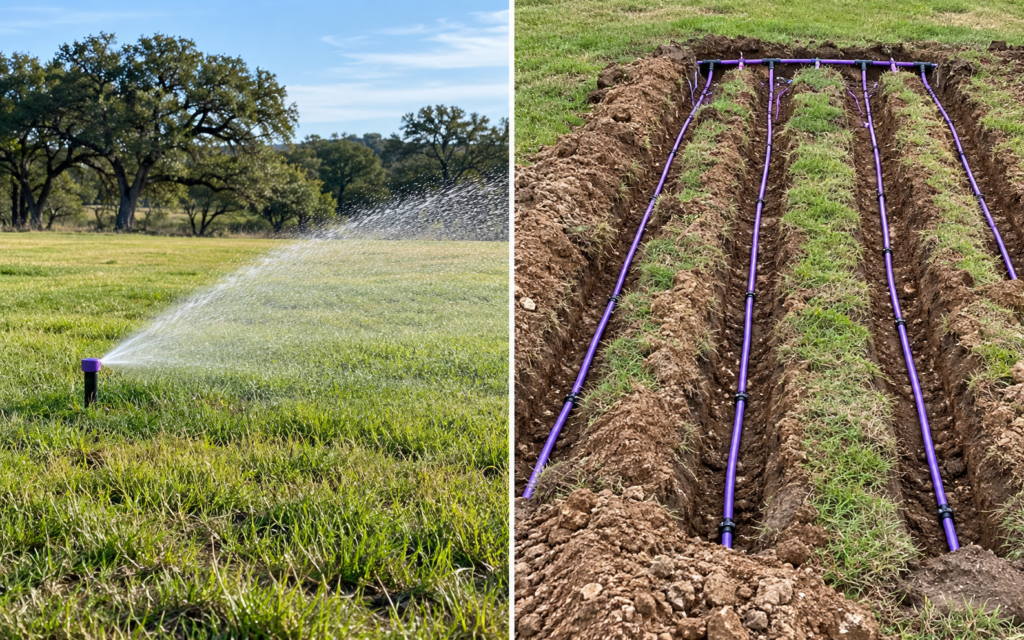
The method used to distribute treated effluent can influence the overall aerobic septic system cost.
Some approved aerobic systems use surface application, while other designs use subsurface distribution such as drip irrigation. The appropriate method depends on the site, system design, applicable rules, and approval from the relevant permitting authority.
A drip system may involve additional distribution components and a different installation process. The layout and amount of tubing required can also depend on the property and approved design.
Surface application has its own design and operational requirements.
For this reason, homeowners should not select spray or drip distribution solely according to which appears cheaper online. The appropriate approach should come from the approved design for the property.
If a contractor recommends a particular distribution method, ask why it is appropriate for your site and whether all necessary components are included in the estimate.
Aerobic vs Conventional Septic System Cost
Aerobic septic systems often have a higher initial cost than conventional gravity systems because they contain more mechanical and treatment components.
A basic conventional system generally relies on settling in the septic tank followed by treatment and dispersal in the soil. An aerobic system actively introduces oxygen into the treatment process and typically incorporates additional mechanical equipment.
That difference affects more than installation price.
| Cost Consideration | Conventional System | Aerobic System |
|---|---|---|
| Initial installation | Often lower when the site is suitable | Often higher |
| Mechanical components | Fewer in a basic gravity system | More |
| Electricity | Usually limited for a basic gravity design | Required for treatment equipment |
| Routine maintenance | Required | More active maintenance requirements |
| Mechanical repairs | Fewer mechanical components | Pumps, aerators or controls may eventually require service |
| Site suitability | Depends on property conditions | Depends on property conditions and approved design |
This does not mean one system is universally better than the other.
A conventional system may be appropriate for one property while an aerobic system may be appropriate for another. Site evaluation, applicable regulations, and the approved design should guide that decision.
For a broader comparison, see our guide to aerobic septic systems in Texas.
Ongoing Aerobic Septic System Costs
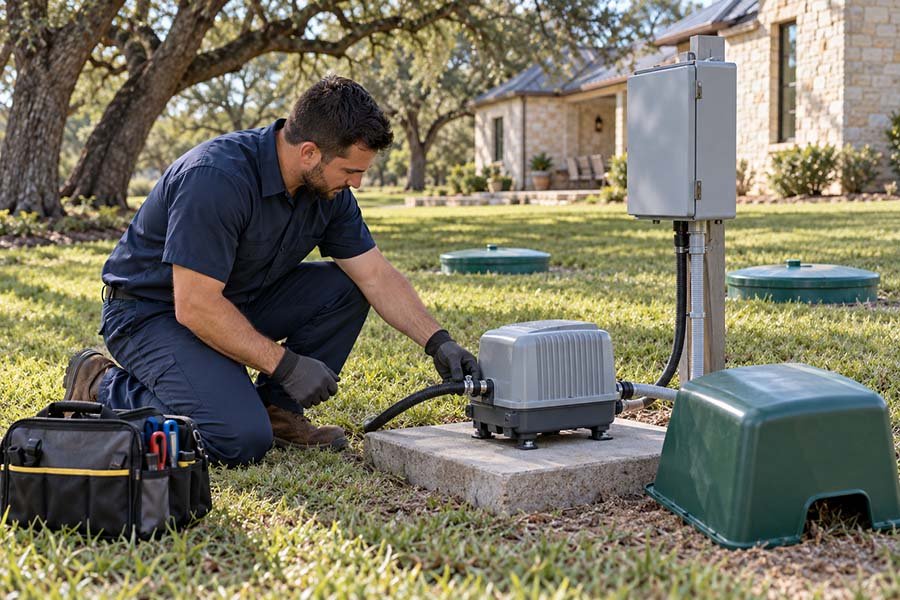
The purchase and installation price is only part of the financial picture.
Aerobic systems use mechanical components, so homeowners should consider ongoing operation and maintenance when planning their budget.
Electricity
Aerobic treatment relies on electrical equipment to operate components such as the aerator, pumps, and controls.
The actual electricity use depends on the equipment and system configuration, so it is more useful to consider electricity as an ongoing operating expense than to assume one universal monthly amount.
Routine Maintenance
Aerobic systems require attention to their mechanical and treatment components.
TCEQ specifically advises property owners considering an OSSF to account for ongoing operation and maintenance expenses, including maintenance contracts when required, routine repairs, and replacement of mechanical parts.
Maintenance requirements can depend on the system and local permitting authority.
Mechanical Components
Aerators, pumps, alarms, controls, and other mechanical components do not necessarily last for the entire life of the septic system.
A homeowner planning long-term costs should therefore allow for eventual component service or replacement.
That does not mean these parts will fail on a fixed schedule. Their condition, equipment type, use, installation, and maintenance all influence service life.
Disinfection
Some aerobic systems and disposal methods include disinfection as part of their operation.
Where applicable, the cost and responsibility for maintaining the disinfection component should be included when considering ongoing ownership expenses.
Texas Aerobic Septic Maintenance Requirements
Texas requirements deserve careful explanation because the rules are more nuanced than saying every aerobic system owner must always maintain the same service contract.
TCEQ states that after the initial two-year period for an aerobic treatment unit, homeowners of qualifying single-family systems may be able to maintain their own systems under state provisions. However, local permitting authorities can adopt more stringent requirements, including homeowner training requirements or restrictions on homeowner maintenance.
That means homeowners should verify the requirements that apply to their particular system and permitting jurisdiction.
If a maintenance contract applies, TCEQ says it should identify what the contract covers, routine maintenance frequency, required testing and reporting, complaint-response time frames, and responsibility for maintaining the disinfection unit.
This matters when calculating the true cost of owning an aerobic system.
Do not evaluate a new installation only by its upfront price. Ask what maintenance obligations will apply after installation and what mechanical components may require service over time.
How to Compare Aerobic Septic Installation Quotes
A good comparison begins with scope rather than price.
If one quote is significantly different from another, determine whether both contractors are pricing the same work.
Ask whether the estimate includes the approved treatment unit, tanks, pumps, aeration equipment, control equipment, distribution components, excavation, electrical work, permits, inspections, startup, and other work required for the project.
Also ask what is not included.
TCEQ recommends that homeowners obtain at least three estimates when selecting an OSSF installer and investigate why estimates differ substantially.
This is more useful than automatically choosing the lowest or highest price.
A difference in cost does not by itself prove that one contractor is better. One proposal may simply include work or equipment that another proposal excludes.
Written estimates make those differences easier to identify.
If you are ready to move from cost research to project planning, Dillon Septic’s septic installation services in Texas page explains our installation service in more detail.
Is an Aerobic Septic System Worth the Cost?
The answer depends on the property.
An aerobic system should not be viewed simply as a more expensive upgrade to a conventional septic system. It is a different wastewater treatment approach with different equipment, operating requirements, maintenance considerations, and potential applications.
For some properties, a conventional system may be an appropriate solution. For others, site conditions or the approved design may lead to an aerobic treatment system.
The better question is whether the proposed system is appropriate for the property and whether the homeowner understands both the initial and ongoing costs.
Before making a decision, consider installation price, electricity, maintenance responsibilities, potential mechanical repairs, property conditions, and local permitting requirements together.
That gives you a more realistic picture than comparing installation prices alone.
Frequently Asked Questions
How much does an aerobic septic system cost in Texas?
For planning purposes, a residential aerobic septic system in Central Texas may cost approximately $10,000 to $20,000 to install. Complex projects can reach $26,000 or more depending on site conditions, system design, excavation, distribution method, accessibility, electrical requirements, and other project-specific factors. A site-specific estimate is necessary for accurate pricing.
Why does an aerobic septic system cost more than a conventional system?
Aerobic systems typically contain additional treatment and mechanical equipment, such as aeration components, pumps, controls, and distribution equipment. They also use electricity and have ongoing maintenance considerations that a basic gravity system may not have.
How much does aerobic septic system maintenance cost?
There is no single maintenance price that applies across Texas. Cost depends on the system, required maintenance, local requirements, service provider, mechanical condition, and whether repairs or replacement components are needed. TCEQ recommends considering maintenance contracts, routine repairs, and replacement of mechanical parts when evaluating ongoing OSSF costs.
Does an aerobic septic system use electricity?
Yes. Aerobic treatment systems use electrical equipment to operate components involved in treatment and distribution. The amount of electricity used depends on the particular system and equipment.
Does aerobic septic installation cost include permits?
It depends on the estimate. Homeowners should ask whether permitting, design, inspections, electrical work, excavation, and other project requirements are included rather than assuming every quote covers the same items.
Is a maintenance contract required for an aerobic septic system in Texas?
Requirements depend on the system, stage of ownership, property type, and local permitting authority. TCEQ explains that qualifying owners of certain single-family systems may maintain their own systems after the initial two-year period, while local authorities may impose stricter requirements. Homeowners should verify the requirements with their local permitting authority.
Does a drip aerobic septic system cost more than a spray system?
It can, but there is no universal price difference. The cost depends on the approved design, distribution area, materials, site conditions, installation requirements, and other property-specific factors. The distribution method should be selected according to the site’s approved design rather than price alone.
Can rocky Texas soil increase septic installation costs?
Rocky conditions can increase excavation difficulty and may require additional labor or equipment. The effect on total cost depends on the property, depth and extent of excavation, system design, and site accessibility.
Final Thoughts
The aerobic septic system cost in Texas involves more than the price of the treatment unit itself.
For planning purposes, approximately $10,000 to $20,000 can be a useful starting range for a residential aerobic installation in Central Texas, while complex projects may reach $26,000 or more. These figures are not fixed quotes.
Site conditions, system design, excavation, distribution method, electrical requirements, permitting, accessibility, and the components included in the installation can all affect the final price.
Long-term expenses matter as well. Electricity, routine maintenance, mechanical components, and applicable maintenance requirements should be considered alongside the initial installation cost.
Dillon Septic provides septic installation services in Texas within our Central Texas service area. A property-specific evaluation can determine what type of installation is appropriate and provide a clearer understanding of the work involved.