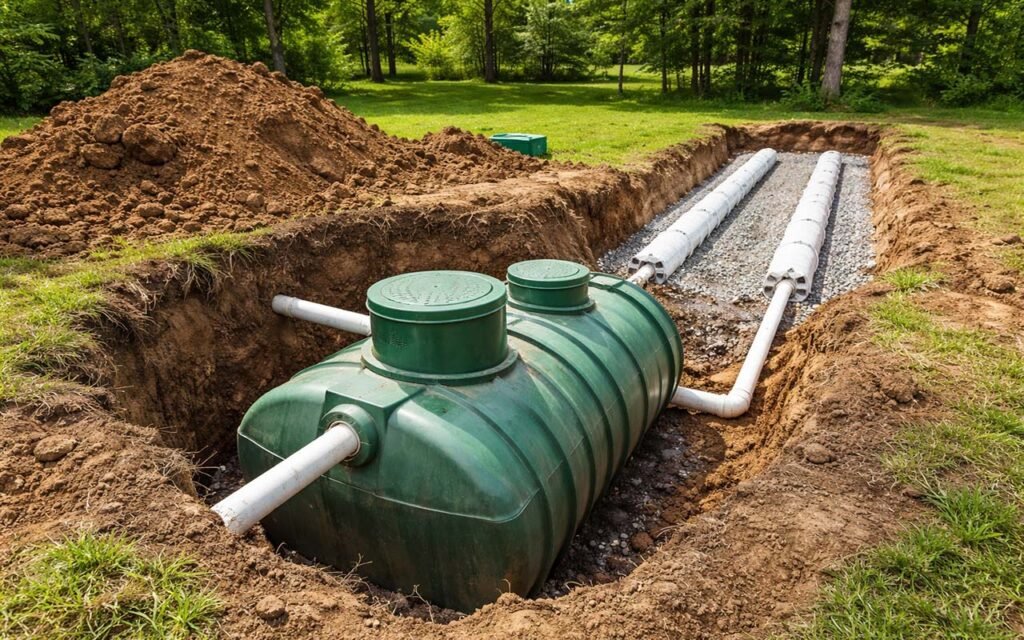
If you have never owned a home with septic, you may wonder what does a septic system look like and whether you can actually see it in your yard. In most cases, much of a septic system is underground, so a properly functioning system may not be very noticeable from the surface.
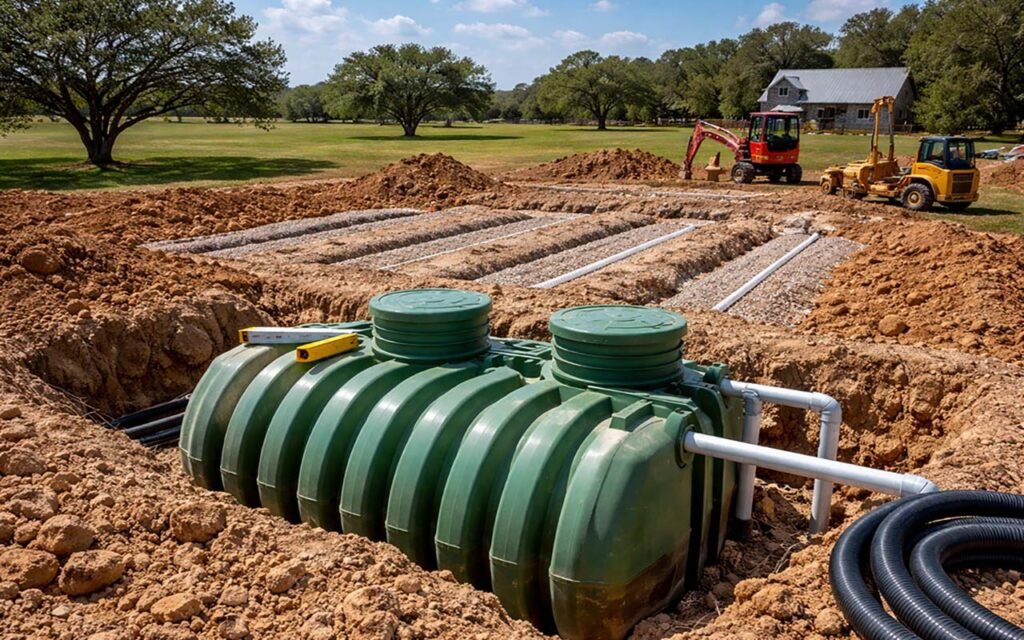
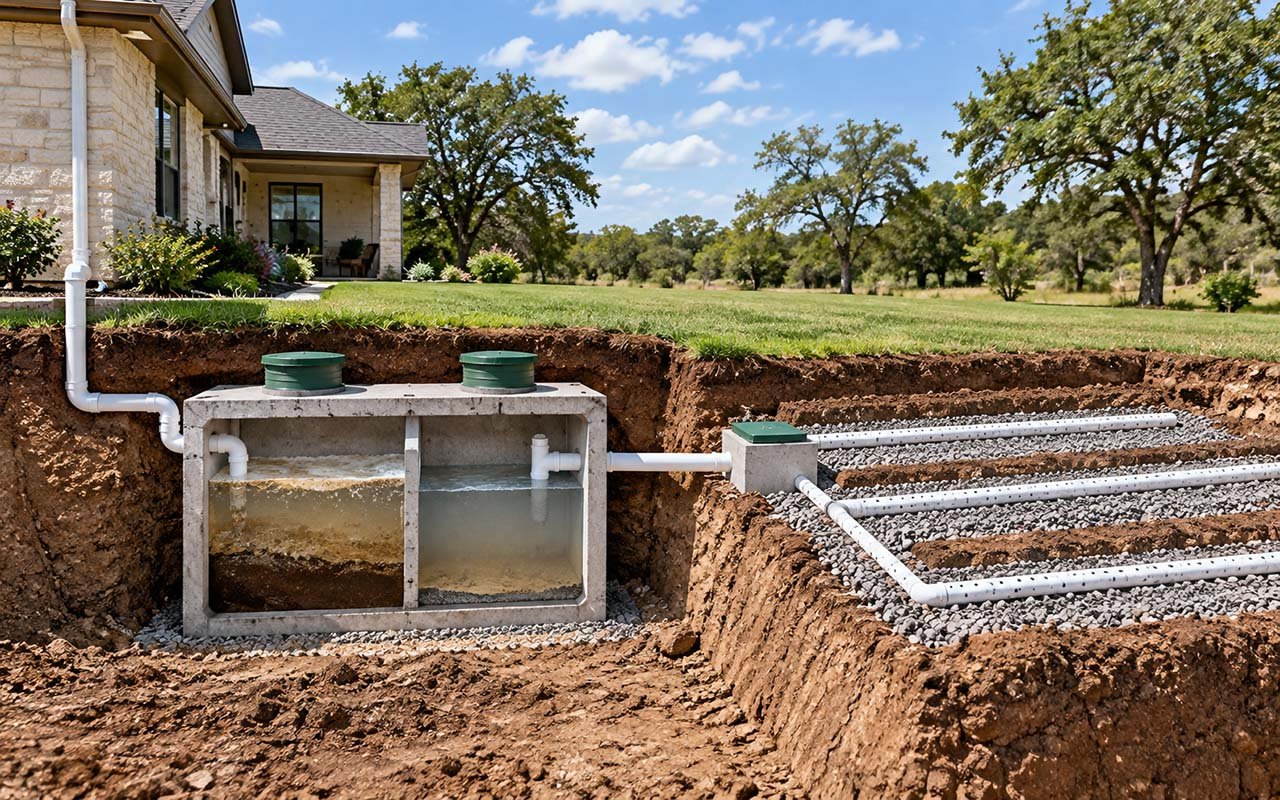
A typical conventional septic system includes a pipe carrying wastewater from the home, an underground septic tank, and a drainfield where liquid effluent is distributed into the soil. Depending on the system design, there may also be a distribution box, pumps, access risers, filters, treatment equipment, or other components.
What you see above ground can therefore be very different from what exists below the surface. Understanding the basic layout can help homeowners identify septic components, protect the system, and know what they are looking at during pumping, inspection, or maintenance.
What Does a Septic System Look Like Underground?
A conventional septic system can be easier to understand when you picture it as a path that wastewater follows from the house into the soil.
The basic layout looks something like this:
House → Main Drainage Pipe → Septic Tank → Drainfield → Soil
Wastewater from toilets, showers, sinks, laundry, and other household plumbing leaves the house through a main drainage pipe and enters the septic tank. The tank is buried underground and holds wastewater long enough for solids and liquids to separate.
Inside the tank, heavier solids settle at the bottom and form a sludge layer. Fats, oils, grease, and other lighter materials can form a scum layer near the top. Liquid wastewater remains between these layers and eventually leaves the tank as effluent.
In a conventional system, that effluent then travels toward the drainfield. The drainfield contains underground components that distribute wastewater into the surrounding soil, where additional treatment occurs.
Some systems have additional components between these major stages, so not every property will match this simple layout exactly.
What Does a Septic System Look Like Above Ground?
A healthy conventional septic system may be surprisingly difficult to identify from above ground.
You normally will not see the septic tank itself because it is buried. The drainfield is also generally below the surface.
Depending on the installation, you may notice septic tank risers or access lids. These provide access to the tank for inspection, pumping, and maintenance. Some access points are easy to see while others may be closer to the ground surface or covered.
The drainfield may simply look like a grassy portion of the yard.
It should not normally look like an open sewage area.
Standing wastewater, sewage surfacing on the ground, or unusually wet conditions around a drainfield can indicate a system problem rather than being a normal visual characteristic. EPA identifies surfacing sewage and standing water around a septic system as potential signs of malfunction.
If you are trying to locate a system rather than simply identify its components, see our guide on how to find your septic tank.
What Does a Septic Tank Look Like?
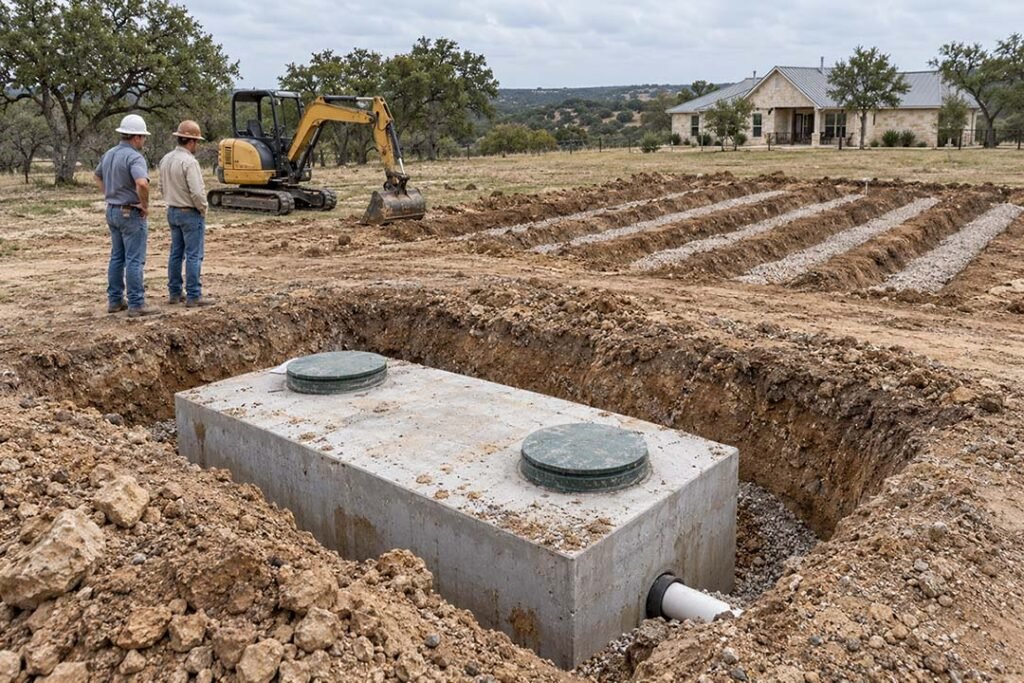
A septic tank is a watertight underground container designed to receive and partially treat household wastewater.
Septic tanks can be constructed from materials such as concrete, fiberglass, or polyethylene. The shape, dimensions, number of compartments, and access configuration can vary by tank design.
From outside, a tank may look like a large rectangular or cylindrical container with inlet and outlet connections and one or more access openings.
Once installed, however, homeowners generally do not see the body of the tank. What may be visible from the yard is an access lid or riser.
Inside the tank are three important zones during normal operation. Solids settle toward the bottom as sludge, lighter materials collect near the top as scum, and liquid wastewater remains between them before leaving the tank.
The tank is only one part of the septic system. It should not be confused with the drainfield or the complete onsite wastewater treatment system.
For more information about the tank itself, read What Is a Septic Tank?.
What Does a Septic Tank Lid Look Like?
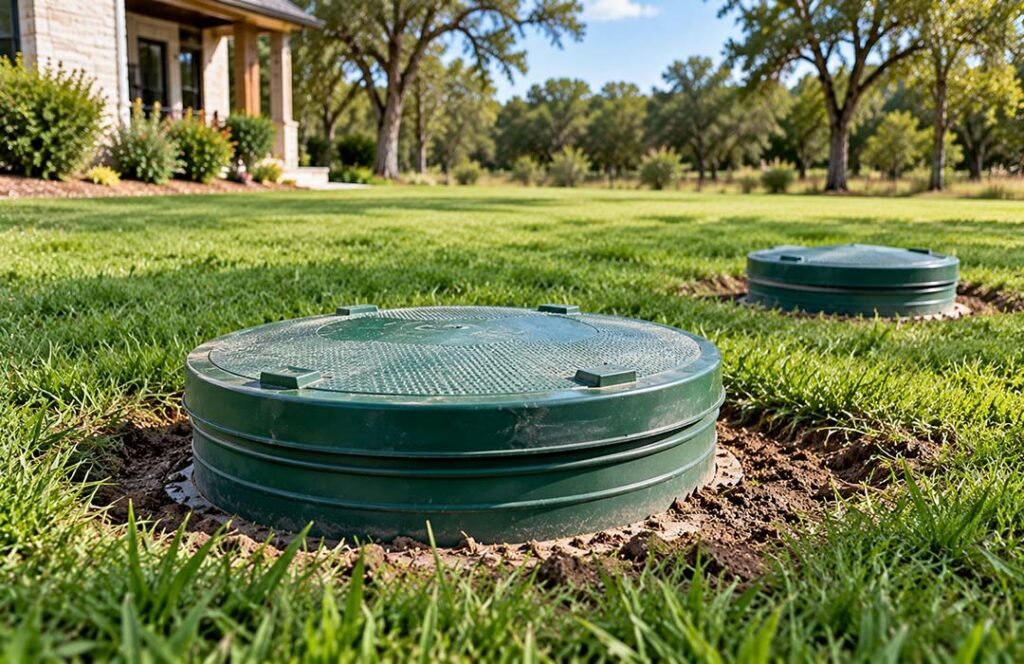
A septic tank lid covers an access opening used for inspection, pumping, and servicing the tank.
The appearance varies depending on the tank and access system. Some properties have round access covers attached to risers that are visible near ground level. Other systems can have access points that are less noticeable.
You may also find more than one access point associated with a tank.
A visible lid should not automatically be considered a problem. Accessible openings can make inspection and pumping easier because a technician does not have to excavate as much soil to reach the tank.
A damaged or unsecured lid is different. Tank access should remain properly secured for safety.
If you have found an old or damaged cover, see our guide to septic tank lid replacement.
What Does a Septic Drain Field Look Like?
A conventional drainfield usually does not look like a large mechanical structure from the surface.
It is an area of the property containing shallow underground trenches, pipes, chambers, or another approved wastewater distribution configuration.
EPA describes a conventional drainfield as a shallow, covered excavation in unsaturated soil. Pretreated wastewater enters the drainfield and is distributed through the system before moving through the soil for additional treatment.
From above ground, a healthy drainfield may simply look like part of the yard covered with grass or other appropriate shallow-rooted vegetation.
You should not expect to see open wastewater.
EPA advises homeowners not to park or drive over the drainfield. It also recommends keeping roof drains, sump pumps, and other sources of excess water away from the area.
Knowing where the drainfield is located can therefore be just as important as knowing where the septic tank is located.
What Does a Drainfield Look Like Underground?
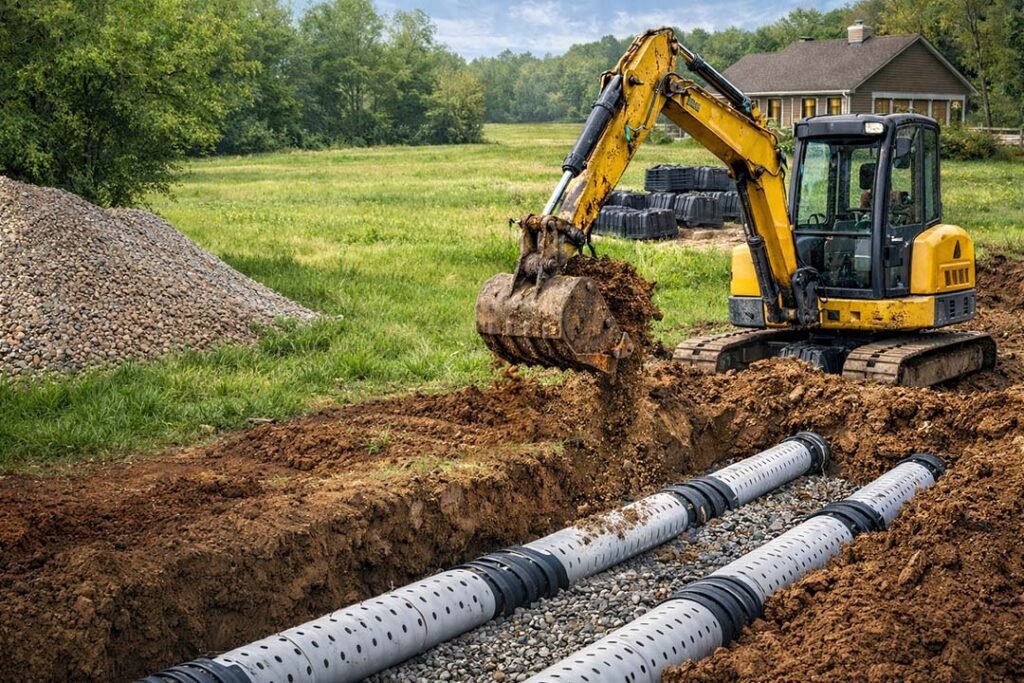
Underground, a traditional drainfield can consist of trenches containing perforated distribution piping and gravel or stone.
Liquid effluent from the septic tank is distributed through the drainfield and then moves into the surrounding soil. The soil provides additional wastewater treatment as the effluent moves through it.
However, not all drainfields look the same underground.
EPA identifies several septic-system configurations, including conventional gravel systems, chamber systems, drip distribution systems, mound systems, and other alternative technologies.
A chamber system, for example, can use connected chambers rather than the traditional gravel-and-pipe configuration.
This is one reason homeowners should not assume their underground system matches a generic septic diagram exactly.
What Does a Conventional Septic System Look Like?

A conventional system is one of the easiest configurations to visualize.
The home connects to an underground septic tank through the main drainage pipe. Wastewater is held in the tank while solids separate from the liquid. Effluent then leaves the tank and travels toward the drainfield.
Depending on the design, a distribution box may help distribute the effluent into drainfield laterals.
Those laterals are installed underground, so from the surface the disposal area may simply appear to be part of the yard.
EPA describes a conventional decentralized system as consisting of a septic tank and a subsurface wastewater infiltration system commonly called a drainfield.
A conventional system is therefore much more than the large tank people often picture when they hear the word “septic.”
What Does an Aerobic Septic System Look Like?
An aerobic septic system can look more complex than a conventional system because it uses additional treatment equipment.
An aerobic treatment unit, commonly called an ATU, introduces oxygen into the treatment process. EPA explains that the added oxygen increases natural bacterial activity and provides additional treatment. Some aerobic systems can also include pretreatment and final treatment components, including disinfection.
Depending on the design, an aerobic system may include multiple treatment compartments or tanks, an aerator, pumps, electrical controls, an alarm, and disinfection equipment.
The disposal method is a separate part of the overall design.
In Texas, TCEQ distinguishes between OSSF treatment methods and disposal methods. A proprietary aerobic treatment unit is a secondary-treatment option, while disposal can be handled through an appropriate approved method for the site and design.
This means you should not assume every aerobic system looks like a tank connected to lawn sprinklers.
For a complete explanation, read What Is an Aerobic Septic System? and our guide to aerobic septic systems in Texas.
What Does a Septic System Look Like in a Yard?
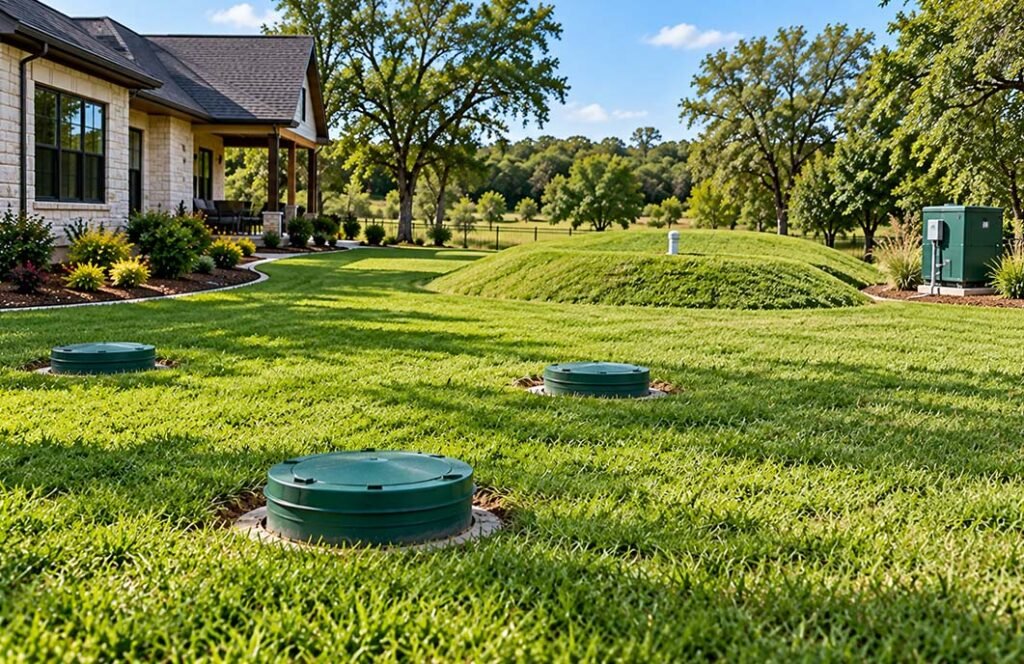
For many homeowners, the answer is simple. It may look like an ordinary yard.
Most of the important treatment and disposal components are underground. Depending on the system, you might see access lids, risers, electrical control equipment, or other above-ground components.
The exact appearance depends heavily on the type of system installed.
A conventional drainfield can blend into a grass-covered yard. A mound system can create a more noticeable raised area because its drainfield is constructed within a sand mound. An aerobic system can have visible access covers and controls depending on its design.
The system should not be identified by unhealthy conditions such as sewage odors, standing wastewater, or surfacing sewage. Those conditions can indicate a problem that needs attention.
What Do Septic Pipes Look Like?
Several types of piping can be part of a septic system.
The main building sewer carries wastewater from the house to the septic tank. Another connection carries liquid effluent away from the tank toward the disposal system.
Within a conventional drainfield, perforated piping may distribute effluent through underground trenches.
Other septic systems can use different piping arrangements.
A drip distribution system, for example, uses small distribution laterals installed relatively shallowly in the soil and generally requires additional components such as a dose tank and electrical equipment.
Because these pipes are normally underground, homeowners should not expect to identify their complete route simply by looking across the yard.
Why Do Septic Systems Look Different From One Property to Another?
There is no single septic-system design that works for every property.
EPA notes that septic-system design and size can vary because of household size, soil type, site slope, lot size, proximity to sensitive water bodies, weather conditions, and local regulations.
Texas also evaluates system suitability based on property conditions.
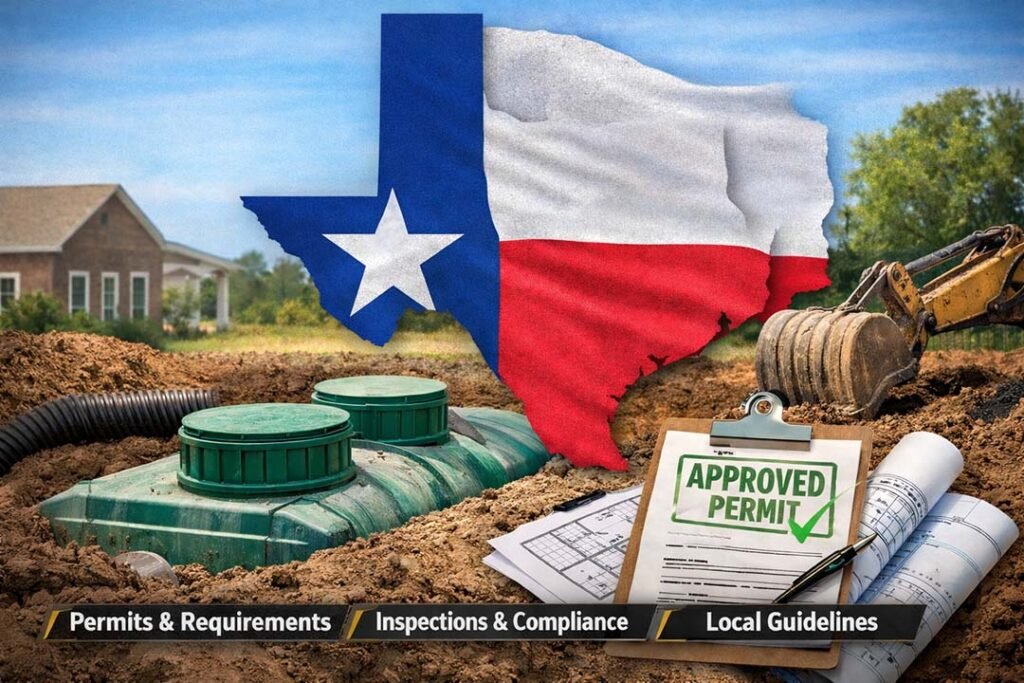
TCEQ requires a site evaluation before an OSSF is constructed, installed, altered, extended, or repaired. The evaluation helps determine which treatment and disposal systems are suitable for the property.
This is why two homes in the same community may have septic systems that look different underground.
One property may use a conventional septic tank and drainfield, while another may use an aerobic treatment unit with a different disposal method.
For a broader comparison, see Types of Septic Systems in Texas.
How Can You Tell Where a Septic System Is Located?

Because most septic components are underground, visual inspection alone may not reveal the complete system.
One of the best starting points is the property’s as-built drawing or septic records. These documents may show the approximate locations of the tank, disposal area, and other components.
You can also look for access lids and risers and identify the direction in which the main waste line leaves the home.
If you still cannot determine where the system is located, a septic professional can help locate it.
Our detailed guide on how to find a septic tank explains the process without relying on unsafe excavation or guesswork.
What Does a Failing Septic System Look Like?
A failing septic system does not always have an obvious visual sign, but certain conditions deserve attention.
EPA identifies several potential signs of septic-system malfunction, including slow household drains, plumbing backups, gurgling sounds, sewage odors, standing water or damp areas near the tank or drainfield, and unusually bright green or spongy grass over the drainfield.
These symptoms do not tell you which component has failed.
For example, standing water does not automatically mean the septic tank needs pumping. The problem could involve hydraulic overloading, the drainfield, piping, a pump, another component, or a combination of issues.
If you see sewage surfacing in the yard or experience a sewage backup, avoid direct contact with wastewater and arrange for the system to be evaluated.
What Should a Healthy Septic System Look Like?
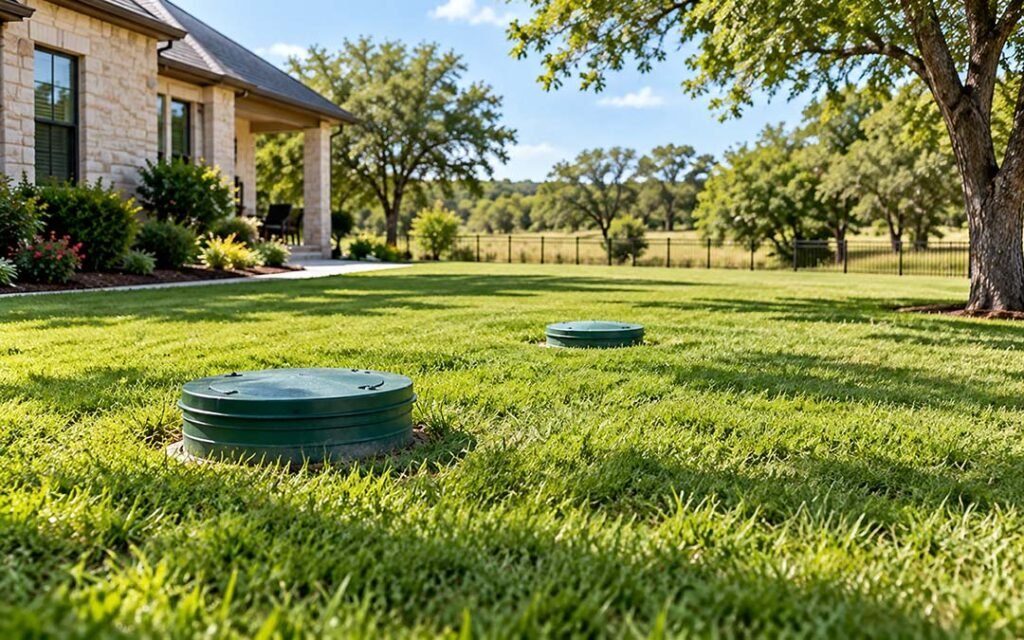
A properly operating septic system often attracts very little attention.
You should not normally have sewage surfacing in the yard, persistent wastewater odors, or standing wastewater around the disposal area.
The tank and most piping remain underground. Access points should be secure. The drainfield should remain protected from vehicles, heavy structures, and excessive water.
EPA recommends keeping maintenance records, having the system inspected appropriately, pumping the tank when needed, and protecting the drainfield from activities that can damage it.
Understanding what your particular system looks like makes those maintenance tasks easier.
If you do not know where your tank is located, start with your property’s septic records or as-built drawing. You can also review our guide on how to find your septic tank or contact Dillon Septic for professional septic services within our Central Texas service area.
Frequently Asked Questions
What does a septic system look like above ground?
A conventional septic system may look like an ordinary grass-covered yard with one or more visible access covers or risers. The exact appearance varies by system type and installation.
What does a septic system look like underground?
A basic conventional layout consists of the home’s main drainage pipe connecting to a buried septic tank, followed by piping that carries effluent toward a drainfield. The drainfield distributes wastewater into the soil for additional treatment.
What does a septic tank look like?
A septic tank is a large watertight underground container. Tanks can be made from materials such as concrete, fiberglass, or polyethylene and can vary in shape, size, compartments, and access configuration.
What does a septic drain field look like?
Above ground, a healthy conventional drainfield may simply look like a grass-covered area of the yard. Underground, it can contain trenches and perforated distribution pipes, chambers, or another approved dispersal configuration.
What does an aerobic septic system look like?
An aerobic system can contain multiple treatment compartments, aeration equipment, pumps, controls, alarms, and sometimes disinfection equipment. The exact layout depends on the treatment unit and disposal method.
Are septic tanks visible above ground?
Usually the tank itself is buried. Depending on the installation, access lids or risers may be visible at or near ground level.
Is the drainfield the same as the septic tank?
No. The septic tank provides initial wastewater treatment and separation. In a conventional system, liquid effluent then moves to the drainfield, where it is distributed into the soil for additional treatment.
Does every septic system look the same?
No. System design varies according to site conditions, household needs, soil, lot characteristics, local requirements, and the treatment and disposal methods used.
What does a failing septic system look like?
Possible warning signs include standing wastewater, sewage surfacing in the yard, unusually wet or spongy areas, or unusually green grass over the drainfield. Indoor symptoms can include slow drains, gurgling, sewage odors, and backups. These symptoms require further evaluation because they do not identify the failed component by themselves.
Final Thoughts
If you are wondering what does a septic system look like, remember that most of what makes the system work is hidden underground. A typical conventional system connects the home’s wastewater plumbing to a buried septic tank and then to a drainfield, where effluent receives additional treatment in the soil. From the yard, you may see little more than access lids or risers.
The appearance also depends on the type of system installed. Conventional, chamber, aerobic, drip distribution, mound, and other systems can have very different components and layouts. This is why a generic septic diagram is useful for understanding the basics but may not perfectly represent the system installed on your property.
Knowing what your septic system looks like and where its major components are located can make pumping, inspection, maintenance, and future repairs easier. It also helps you protect the tank and drainfield from vehicles, construction, excessive water, and other activities that could damage the system.